

Achieving Chrome: Precision Surface Preparation for Plating Success
Views: 3 Author: Allen Xiao Publish Time: 2025-05-16


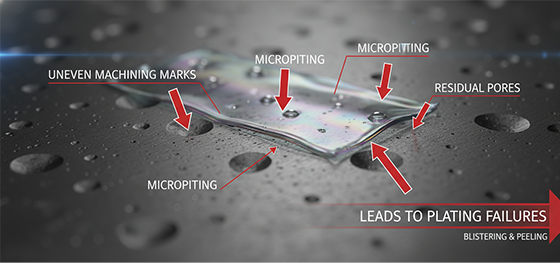
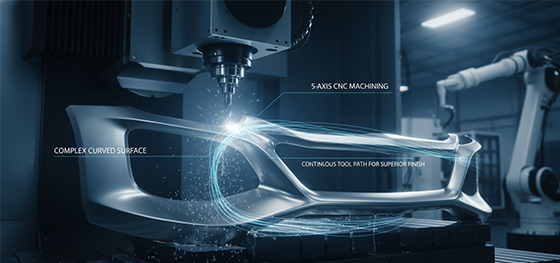
The iconic gleam of chrome plating—often seen on automotive bumpers, decorative trim, and high-end industrial fixtures—is not a simple coating. It is the end result of highly technical preparation. For B2B buyers, securing a perfect, durable chrome finish depends almost entirely on the Precision Surface Preparation performed by the CNC machine shop before the part even reaches the plating tank. The biggest risk in plating complex, multi-curved metal parts is surface defect transfer. Any imperfection, micro-scratch, or internal porosity left by the CNC machining process will be magnified by the chrome layer. This guide details the essential role of multi-axis CNC technology and specialized finishing in creating a flawless plating base. content: Chrome plating (electroplating) deposits metal onto the surface of the component. The plating layer is thin—often only a few microns thick—meaning it will follow the exact contour of the underlying surface: The Mirror Effect: The desired mirror finish can only be achieved if the base metal surface is already mirror-smooth. If the CNC machining leaves visible tool marks or slight roughness (high Ra value), the chrome will magnify these flaws. Adhesion Failure: Any porosity, oil residue, or micro-crack on the surface will prevent the chrome layer from adhering properly, leading to blistering, peeling, and corrosion (rusting) of the base material shortly after the part is put into service. Material Choice: Chrome plating is most often applied to brass, copper, steel (mild steel), or specialized nickel-plated surfaces. The base material must be structurally sound, as the plating does not contribute significantly to the part's strength. Complex curved parts, such as automotive bumpers and contoured decorative elements, present the greatest challenge to surface preparation. Multi-axis CNC Machining is crucial for managing this complexity: Continuous Tool Path: 5-Axis CNC Machining allows the tool to maintain continuous contact with the complex surface, significantly reducing the number of starts and stops in the machining path. This minimizes the risk of generating 'cusps' or step-overs that are difficult to polish out. Reduced Setup: Using 4-Axis or 5-Axis machines minimizes the need for the operator to flip and re-clamp the part. Every manual re-clamping risks introducing alignment errors that can only be corrected by expensive, labor-intensive grinding later. Tooling Strategy: Finishing passes must be performed with fresh, sharp tools and a fine step-over to achieve the best possible surface finish *directly from the machine*, reducing the time and cost of subsequent polishing. After CNC Machining, the part must be polished to remove any microscopic marks, preparing the surface for the plating process. This is a critical, often manual, step: Multi-Stage Polishing: Polishing typically involves multiple stages, starting with coarse abrasives to remove machining marks and gradually progressing to ultra-fine compounds to achieve a true mirror finish (the equivalent of an SPI A-1 polish). Automation vs. Manual: While simple surfaces can be automated, complex contours (like automotive bumpers) often require highly skilled manual polishing to ensure uniform finish across curved areas without removing too much material and distorting the part's geometry. Cleanliness: Absolute cleanliness is mandatory after polishing. Any remaining polishing compound or finger oils will ruin the plating process, causing the chrome to peel immediately. The highest-quality chrome parts are achieved when the CNC Machining and the plating process are managed by a single, integrated quality system, minimizing the transfer risk: One-Stop Accountability: Working with a manufacturer that manages the entire process—from 5-axis CNC Machining through polishing and final plating/coating—ensures single-source accountability. There are no finger-pointing issues between the machinist and the plater. Quality Control Checkpoints: Critical inspection checkpoints must be placed *before* the polishing stage (to verify CNC accuracy) and *before* the plating stage (to verify cleanliness and surface roughness). Prototype Success: Utilizing this full-spectrum approach for early prototypes allows for immediate diagnosis of any plating defect, quickly determining if the failure is due to CNC machining marks or the plating chemistry itself. Achieving a lasting, mirror-finish chrome component is a testament to the quality of the underlying metal preparation. Jucheng Precision Technology offers the full-service integration of multi-axis CNC Machining and specialized surface preparation, ensuring your plating base is flawless. Secure the ultimate surface finish for your plated components. Contact us today to discuss the precision CNC Machining and polishing strategy for your automotive and high-end decorative parts.The Plating Base: Why Surface Integrity is the Foundation of Chrome
The Role of 4 and 5-Axis CNC in Complex Curved Parts
Polishing Strategy: Removing Micro-Imperfections Before Plating
Integrated Quality: Seamless CNC to Plating Workflow
The Plating Base: Why Surface Integrity is the Foundation of Chrome
The Role of 4 and 5-Axis CNC in Complex Curved Parts
Polishing Strategy: Removing Micro-Imperfections Before Plating

Integrated Quality: Seamless CNC to Plating Workflow


ㆍPrivacy: We respect your privacy. Here you can find an example of a non-disclosure agreement. By submitting this form, you agree to our terms & conditions and privacy policy.
