
ABS CNC Machining
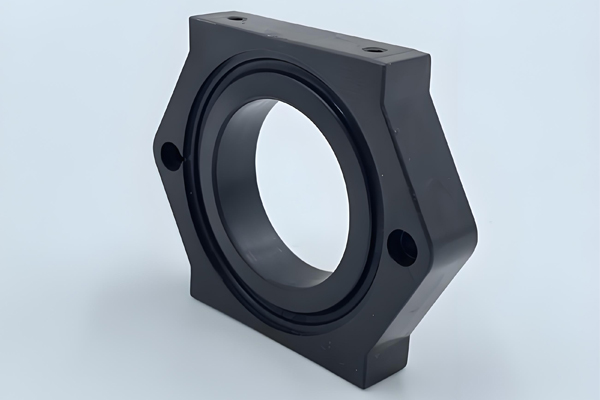
CNC Machining ABS is a reliable bridge between design and manufacturing. It combines excellent mechanical properties, low cost, and superior machinability, making it a top choice for creating functional prototypes, low-volume end-use parts, and tooling jigs. By controlling cutting parameters—especially to avoid overheating—you can efficiently produce high-quality plastic components.
ABS CNC Machining
ABS Material Overview
ABS (Acrylonitrile Butadiene Styrene) is a widely used thermoplastic polymer. It is a terpolymer, meaning its properties come from three monomers:
- A (Acrylonitrile): Provides hardness, strength, heat, and chemical resistance.
- B (Butadiene): Provides toughness and impact resistance.
- S (Styrene): Provides rigidity, ease of processing, and a glossy surface finish.
Advantages of CNC Machining ABS
CNC machining ABS is popular because its material properties are highly compatible with machining requirements:
| Advantage | Description |
| Excellent Machinability | ABS offers a great balance of strength and hardness. It machines cleanly without being too difficult (like metal) or too soft/gummy (like some plastics), resulting in a good surface finish. |
| Good Dimensional Stability | ABS has low moisture absorption, meaning it won't swell or warp easily during machining, helping to maintain precise part dimensions. |
| High Strength & Toughness | The machined parts can withstand structural loads and impacts, making them suitable for functional prototypes and end-use parts. |
| Ease of Post-Processing | ABS parts can be easily sanded, polished, painted, plated, or bonded to achieve the desired appearance and functionality. |
| Cost-Effectiveness | ABS is an inexpensive material, and its ease of machining keeps overall production costs low. |
Technical Parameters & Material Properties
The following table outlines key properties of ABS that influence machining strategy and part performance:
| Property | Typical Value/Range | Test Standard | Machining Implication |
| Density | 1.02 - 1.06 g/cm³ | ASTM D792 | Results in lightweight parts. |
| Tensile Strength | 40 - 50 MPa | ASTM D638 | Indicates a sturdy material; requires appropriate cutting parameters. |
| Flexural Strength | 65 - 70 MPa | ASTM D790 | Parts have good resistance to bending. |
| Impact Strength (Izod Notched) | 20 - 25 kJ/m² | ASTM D256 | High toughness means it's less prone to cracking or chipping during machining. |
| Rockwell Hardness | R 105 - 115 | ASTM D785 | Provides decent surface wear resistance. |
| Heat Deflection Temperature (HDT) | 90 - 105 °C | ASTM D648 | Critical Parameter: Heat generated during cutting must be kept below this to prevent softening. |
| Shrinkage Rate | 0.4 - 0.7% | - | Primarily relevant for injection molding, not CNC machining. |
CNC Machining Guidelines for ABS
To achieve the best results, follow these key practices:
Tool Selection:
Tool Selection:
- Type: Use 2-flute or 3-flute end mills.
- Material: Carbide tools are sufficient for most jobs. For high-volume or high-finish requirements, diamond-coated tools offer longer life and a superior surface finish.
- Geometry: Sharp cutting edges and good flute volume aid in efficient chip evacuation, preventing heat buildup.
- Cutting Speed (SFM): Medium to high speeds.
- Feed Rate: Use medium to high feed rates. Feeding too slowly causes friction and heat, melting the plastic instead of shearing it, leading to a poor surface finish.
- Depth of Cut: Can handle moderate depths of cut.
- Coolant: Compressed air is highly recommended. It cools the tool/workpiece and evacuates chips. Avoid water-based coolants as ABS can absorb moisture, which can affect subsequent bonding or painting.
Application Scenarios
CNC machined ABS is widely used across industries for producing high-precision, strong plastic parts rapidly:
- Functional Prototypes: For testing form, fit, function, and durability.
- Mechanical Components: Gears, bearing housings, enclosures, jigs, and fixtures.
- Automotive Parts: Interior prototypes, vents, ducts.
- Electronics Housings: Prototypes and low-volume production for radios, remotes, instruments.
- Consumer Products: Design and validation of toys, household items.
Physical Properties Table
Depending on specific needs, consider these alternatives:
| Requirement | Recommended Alternative |
| Higher Heat Resistance | PC (Polycarbonate), PEEK, Nylon |
| Higher Stiffness/Hardness | PC (Polycarbonate), PMMA (Acrylic) |
| Better Chemical Resistance | PP (Polypropylene), POM (Acetal/Delrin) |
| Higher Impact Toughness | PC (Polycarbonate), ABS/PC Blend |
Learn more about ABS material resources

Request Your DFM & Quote – Upload Your Drawings
ㆍFill in your requirements and upload your 2D&3D file, we will feedback your project quotation and DFM within 24 hours.ㆍFile types: STEP, STP, IGES, IGS, SLDPRT, 3DM, SAT, X_T, DWG, DXF, STL, PDF, ZIP and more. File size: < 128 MB Part size: < 1500*1500*1500 mm
ㆍPrivacy: We respect your privacy. Here you can find an example of a non-disclosure agreement. By submitting this form, you agree to our terms & conditions and privacy policy.
ㆍPrivacy: We respect your privacy. Here you can find an example of a non-disclosure agreement. By submitting this form, you agree to our terms & conditions and privacy policy.
