


A medical device supplier audit checklist should test whether a supplier can repeatedly make the specified component and show how it knows. A certificate, clean shop floor, and persuasive presentation can support that decision, but none demonstrates what happened to a particular drawing revision, material lot, tool, or shipment. For a machined frame or molded housing, the useful audit follows one real part through the route.
This guide is for OEM procurement and quality teams assessing a component or contract-manufacturing supplier. It is not a universal regulatory checklist, an audit score, or proof that any named factory is approved. Define the device, component criticality, contractual scope, and applicable requirements before deciding which evidence is necessary.
Start With a Part, Not a Wall of Certificates

Choose one representative part number and a recent build. Ask the supplier to locate the released drawing, revision, purchase requirements, material identification, route, inspection plan, disposition, and shipping record. If the discussion jumps immediately to a generic quality manual, return to that part. The point is to see whether the approved requirements survive contact with actual production.
A useful sample can be a bracket with several datum-related dimensions, an injection-molded enclosure with a sealing interface, or an assembled subcomponent with two external operations. Select the sample according to what you intend to buy. An audit of a polished prototype will not answer how a later production lot is identified and released.
The broader question of how to choose a medical device manufacturer includes commercial fit, communication and capacity. This audit narrows the lens to objective manufacturing evidence: what was specified, what was done, what was measured, and what was released.
Before the visit, send a short scope statement. Identify the part family, processes, anticipated quantities, customer-specified standards, critical characteristics, and whether the supplier may subcontract finishing or cleaning. That allows the supplier to prepare relevant records without asking it to disclose unrelated customer information.
Follow the Drawing Into the Work Area

At the machine, press, or assembly bench, compare the available work instructions with the approved drawing revision. Check how an operator recognizes a superseded revision and who can authorize a deviation. A correct file in the office is insufficient if a shop-floor traveler or CNC program still points to the old configuration.
Ask how the supplier translates functional dimensions into operation controls. A slot width may be easy to inspect but less important than its position relative to a mating surface. A molded snap arm may look acceptable while assembly force has shifted. The audit should reveal whether the team understands the component’s actual interface, not just a list of nominal sizes.
For CNC-machined components, review setup identification, in-process checks and how material stock connects to the finished part. For a molded component, examine tool identification, cavity or lot segregation when relevant, and how process changes are authorized. Do not apply a CNC-only checklist to molding, or vice versa.
A Seven-Point Evidence Checklist
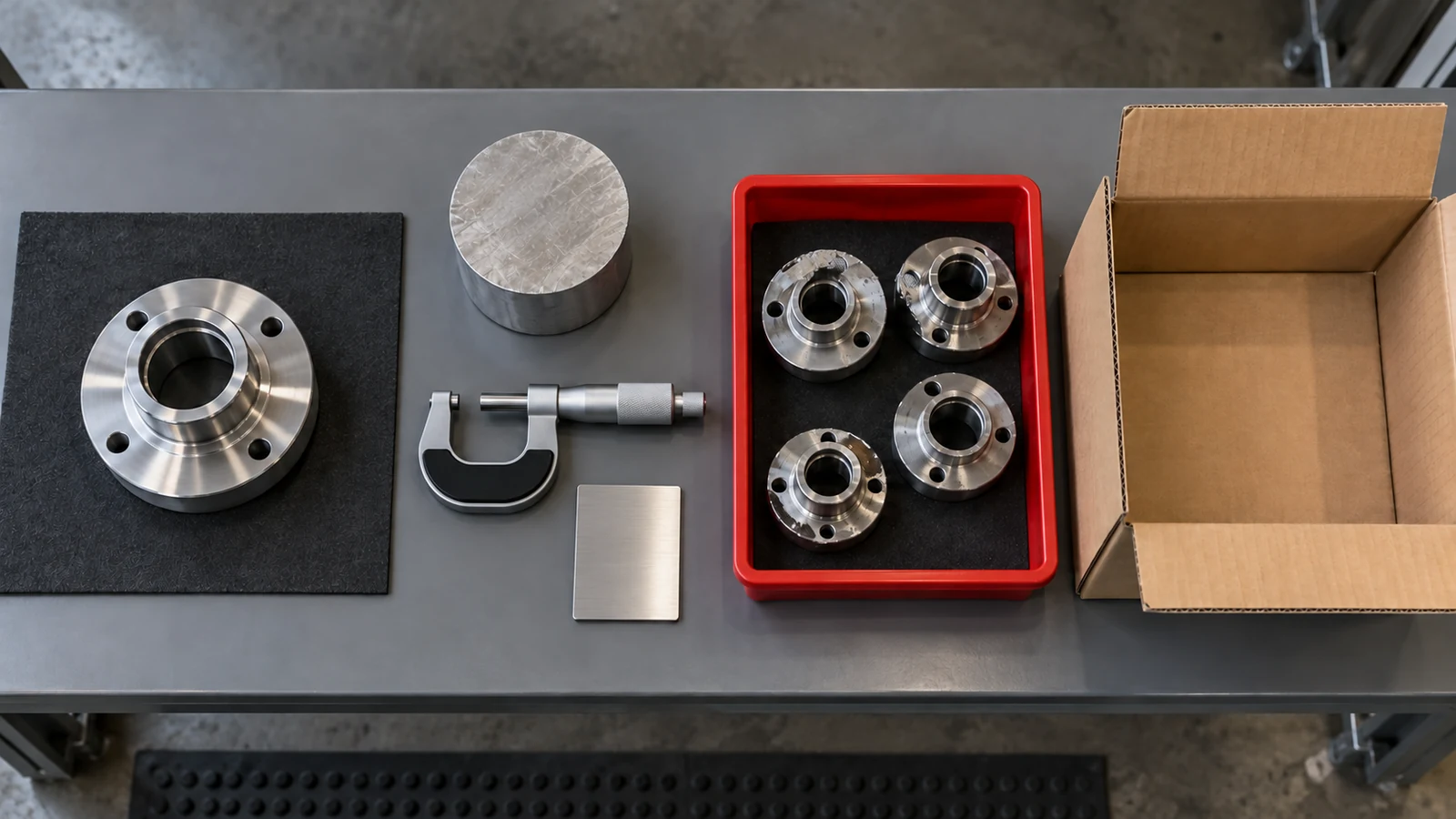
Use the table as a conversation guide. The expected record and depth depend on the component, the agreed manufacturing scope, and the device owner’s risk assessment.
| Audit question | Evidence to request | What a gap might mean |
|---|---|---|
| Is the released configuration identifiable? | Current drawing, revision and controlled traveler | An obsolete instruction may be used |
| Can purchased material be traced to this build? | Lot identity, specification and receiving decision | An unassessed substitution may be hidden |
| Are special processes in scope? | Approved provider and finishing requirements | A critical operation may be uncontrolled |
| Are measuring methods suitable? | Datum setup, gauge status and sample results | Numbers may not represent the function |
| Are nonconforming parts segregated? | Hold, disposition and rework authorization | Rejected parts may re-enter the flow |
| Are changes communicated? | Change request, approval and effective-lot record | Buyer and supplier may ship different revisions |
| Can shipment be reconstructed? | Release record, quantity and lot identification | A field issue may be hard to contain |
Do not convert this table into a pass/fail score by counting yes answers. One missing control on a critical seal can outweigh several well-organized administrative records. Record the observation, the specific component risk and the evidence needed to close the finding.
Test the Measurement, Not Just the Inspection Report

Pick one reported dimension or acceptance test and ask to see the method. Which datums locate the part? How is a thin wall supported? Does the gauge contact a coated or uncoated surface? What happens when an operator obtains a borderline result? These questions often reveal more than a stack of completed reports.
A measurement system is useful only when it matches the drawing and the feature’s function. For example, a caliper reading on an irregular slot may vary with jaw angle. A coordinate-measuring-machine report may be precise yet reference the wrong datum construction. The supplier and OEM should agree the acceptance method where ambiguity could affect disposition.
Compare a first-article result with subsequent in-process or final checks. A first article confirms a defined configuration at one time; it does not by itself demonstrate that the process stayed stable across tool wear, material lots or setups. The existing medical device dimensional inspection guide discusses this distinction in more detail.
Trace a Defect Through Containment and Release
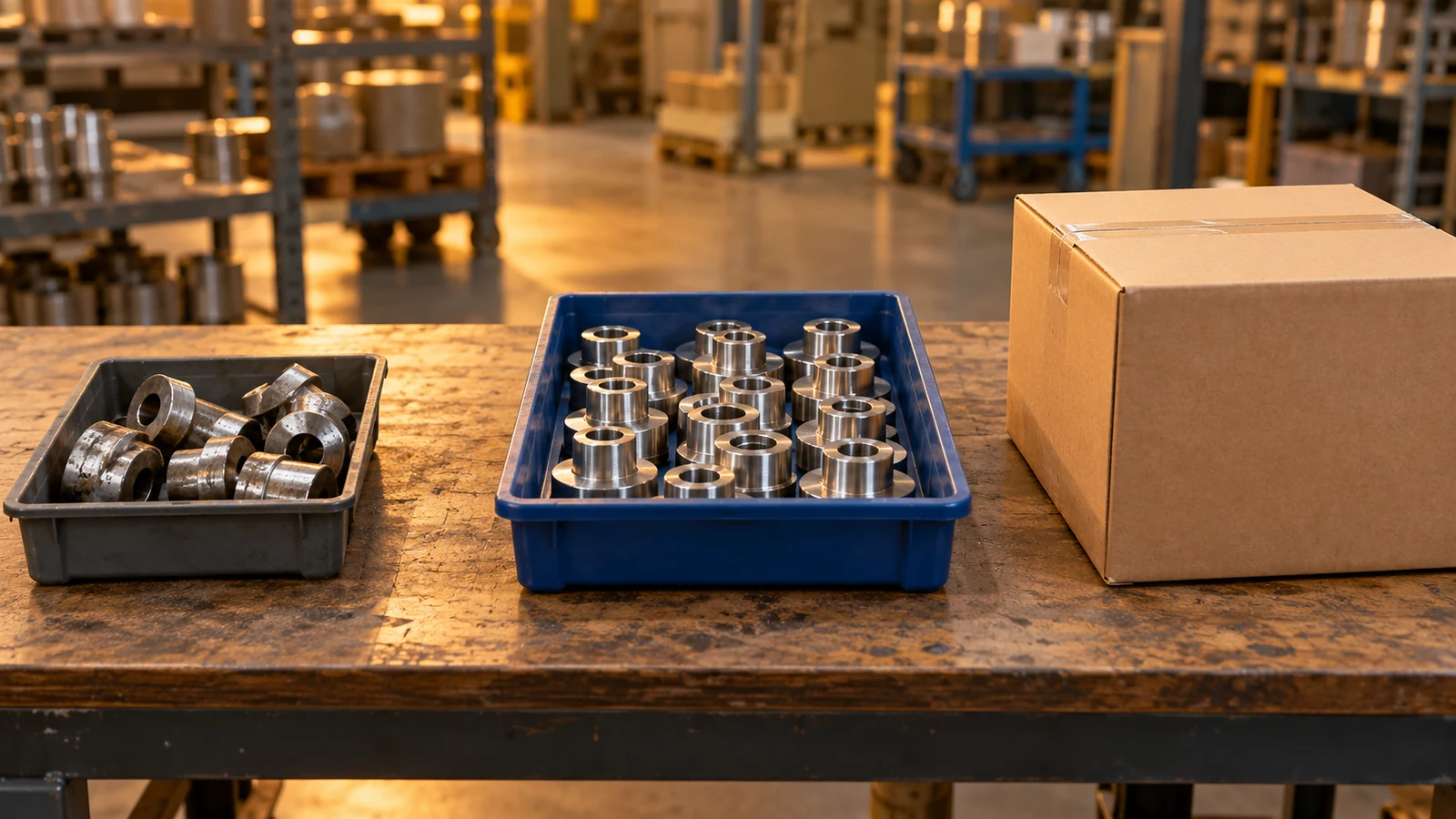
Ask the supplier to walk through a real, anonymized nonconformance or a clearly identified hypothetical exercise. Where was the issue found? Which units were held? Who approved rework, concession or scrap? How did the team decide whether already-shipped parts might be affected? If no suitable example can be shared, avoid treating an invented story as evidence of historical performance.
Look for separation of detection from correction. Sorting a lot may protect the next shipment, but it does not explain why the defect appeared or whether the process changed. Conversely, a root-cause report is not a substitute for physically containing affected inventory. The audit should establish how the supplier does both.
Subcontracted operations deserve the same trace. If a plating or cleaning provider changes its process, the buyer needs a defined notification path. Ask who owns acceptance at each handoff and whether the supplier can identify which shipped lots used a particular external provider.
Close Findings With Owners and Evidence

Write each finding as an observable gap, not a vague judgment such as “weak quality culture.” Name the affected part or process, the expected requirement, the observed evidence and the follow-up owner. Agree whether a missing document is an administrative omission or a product-risk issue before assigning corrective work.
The FDA’s current QMSR overview explains the U.S. quality-system framework and its effective date. Applicability to the finished device manufacturer and responsibilities allocated to suppliers must be assessed by qualified personnel; a component audit does not itself certify compliance or grant market authorization.
For a Jucheng component quote, a buyer can supply the controlled drawing, material and finish requirements, expected quantity, critical features and required evidence. The manufacturing conversation can then focus on the actual part route and the records needed to accept it. A worthwhile supplier audit ends with a decision the OEM can explain, not simply a completed checklist.
Should every supplier receive the same audit?
No. The scope should reflect what the supplier provides, the potential effect of a failure and the buyer’s applicable requirements. A commodity item, a sealing component and a critical assembly do not present the same questions.
Does a certificate replace a part-level audit?
No. A certificate may establish a defined system scope, but the buyer still needs to know whether the specific drawing, material, process and inspection responsibilities are controlled. Verify the certificate’s issuer, validity and scope rather than assuming its meaning.