


What the finish must accomplish
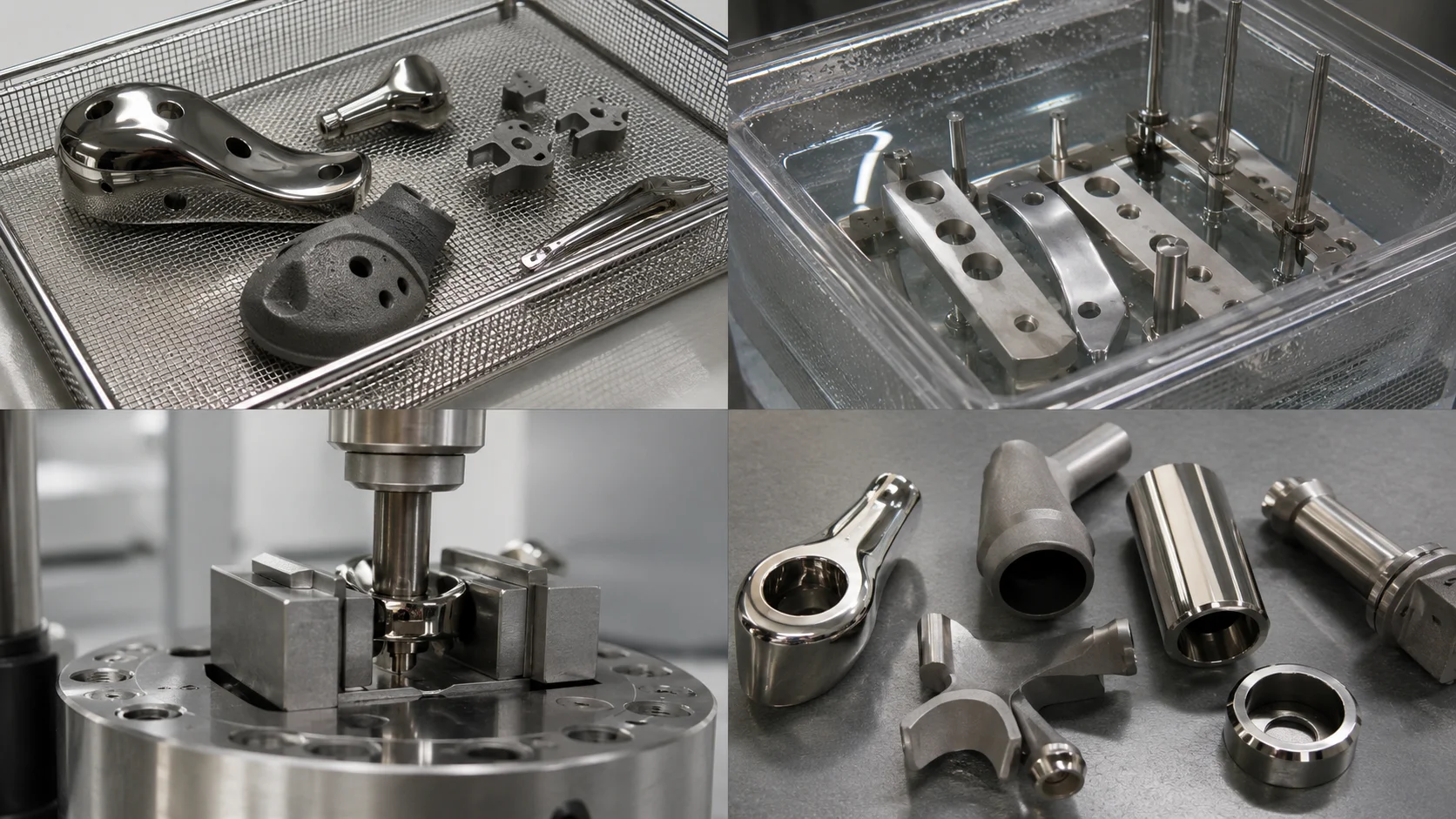
Two parts made from the same alloy may need different finishes because they serve different roles. An external cover may be judged by appearance and cleanability. A sliding component may need a controlled surface condition and protected edges. A stainless instrument component may require passivation after machining, while an aluminum enclosure may need a finish that balances appearance, handling, and corrosion protection.
| Requirement | Finishing question | Design consequence |
|---|---|---|
| Cleanability | Can the surface be wiped without trapping residue? | Control roughness, seams, burrs, and recesses. |
| Corrosion resistance | What chemicals, moisture, or cleaning cycles are expected? | Choose substrate and treatment as a system. |
| Wear resistance | Will the surface slide, clamp, or contact another part? | Define contact zones and coating thickness. |
| Appearance | Which faces are visible to the operator? | Specify grain, gloss, color, and allowable variation. |
Passivation is not a universal cleaning substitute
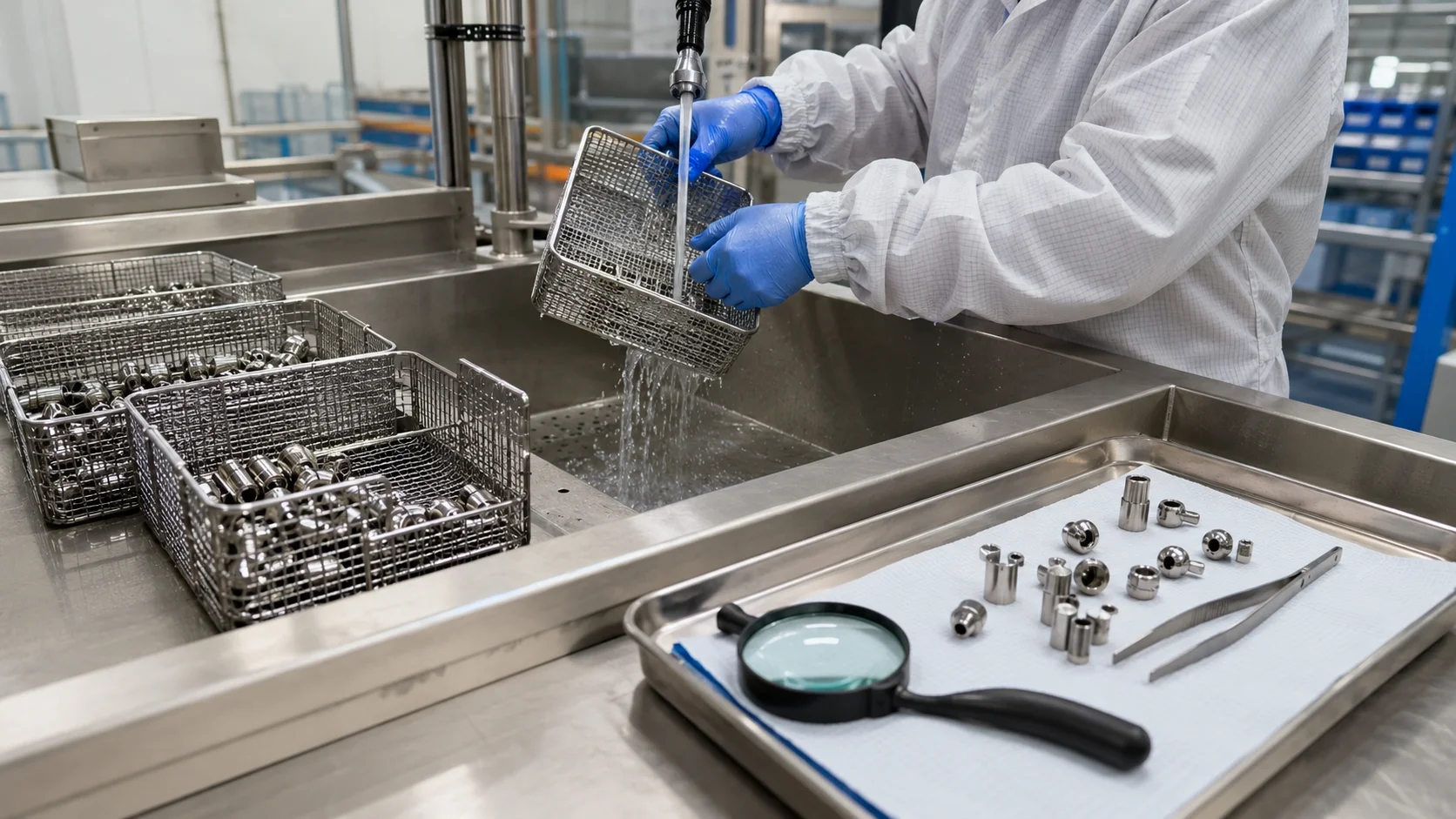
Passivation is commonly associated with stainless steel parts because it supports the removal of free iron and helps the surface form a more stable passive condition. It does not repair poor machining, remove heavy burrs, correct embedded contamination, or make an unsuitable alloy appropriate for every medical application. The pre-treatment condition matters: deburring, cleaning, handling, and rinsing should be defined before the part enters the passivation step.
When passivation is specified, the drawing or purchase order should identify the material grade, required process standard if applicable, masking areas, appearance expectations, and any verification documents. Avoid using the word “passivated” as the entire specification. The supplier needs to know which surfaces are critical and how the finished part will be inspected or accepted.
Polishing, blasting, brushing, and electropolishing solve different problems
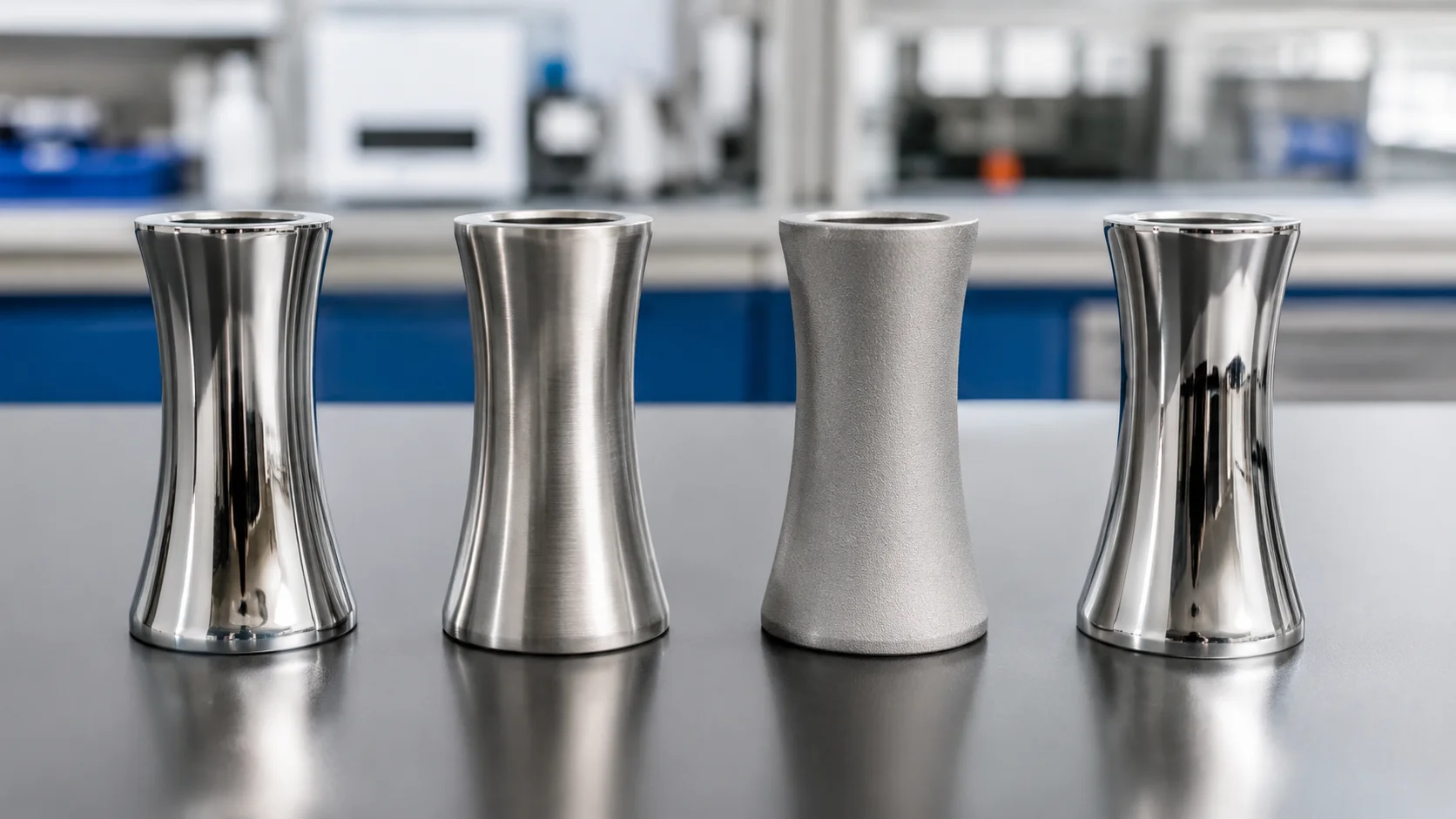
Mechanical polishing can reduce visible tool marks and create a smoother appearance, but it may change edge shape and local dimensions if applied aggressively. Brushing creates a directional texture that can help maintain a consistent visual finish on enclosures, although the grain direction must be controlled across adjacent panels. Bead blasting produces a diffuse appearance and can hide minor visual variation, but it changes surface texture and requires careful masking.
Electropolishing removes a controlled amount of material from a conductive surface and can improve smoothness and cleanability when the part, geometry, and process are suitable. It is not a replacement for sound design or correct machining. Internal passages, sharp corners, threads, and trapped volumes should be reviewed because the treatment may not affect every area equally.
Our surface finishing services overview can be used to organize the comparison between mechanical and chemical post-processing options before the RFQ is released.
Coatings add protection but also add variables
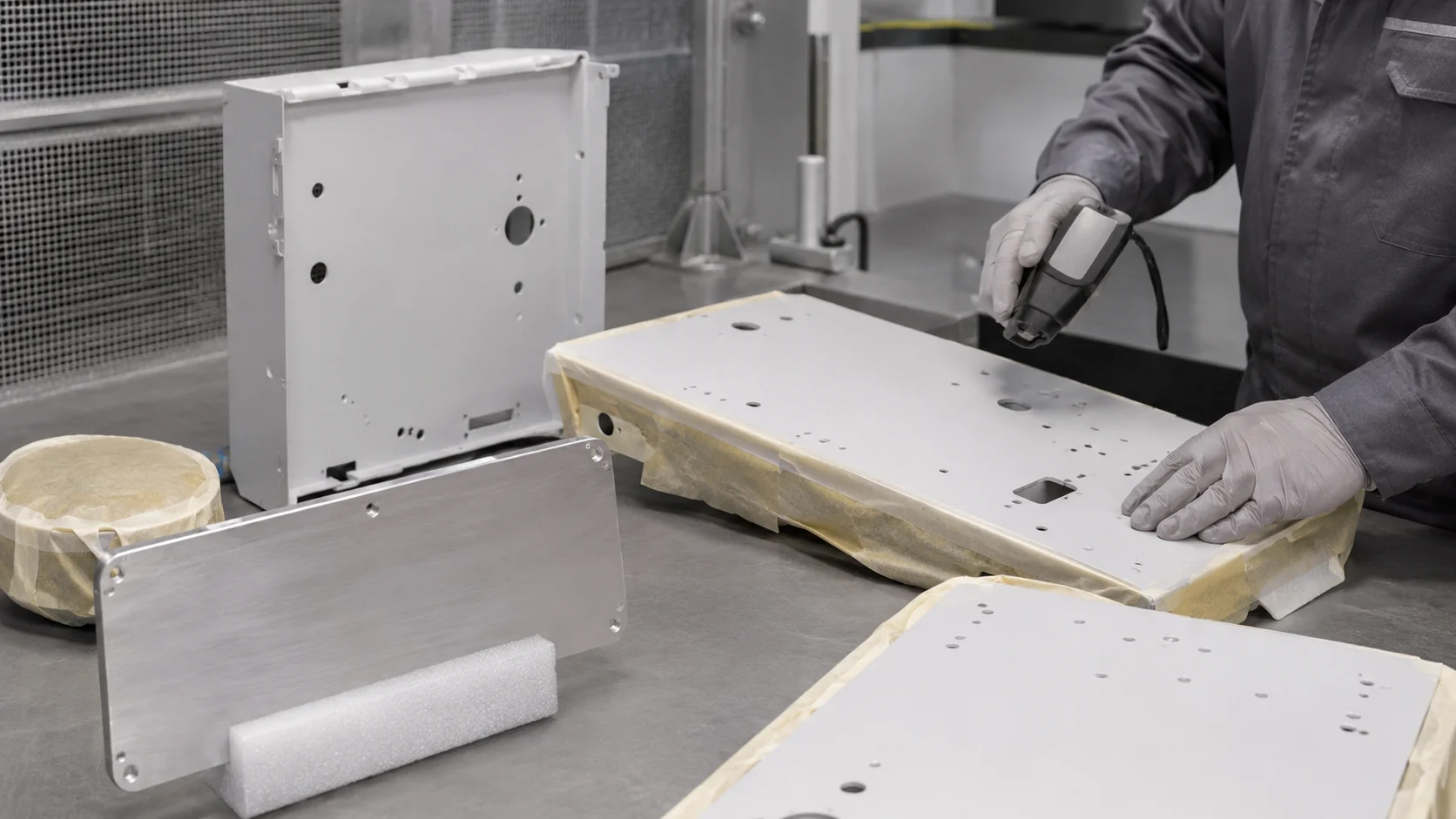
Paint, powder coating, anodizing, and other coatings can provide color, wear resistance, electrical isolation, or corrosion protection. Their value depends on adhesion, thickness control, edge coverage, cure conditions, and the compatibility of the coating with cleaning agents. A coated enclosure may look correct on a flat panel but fail around a threaded hole, hinge, seam, or contact area if masking is not defined.
For a medical equipment housing, list the faces that must remain conductive, the surfaces that must remain uncoated, and the areas where fasteners or seals seat. For a machined component, include coating thickness in the dimensional stack-up. If a coating is used for appearance only, say so; if it is part of the functional barrier, define the acceptance criteria more carefully.
Finish specifications need measurable acceptance points
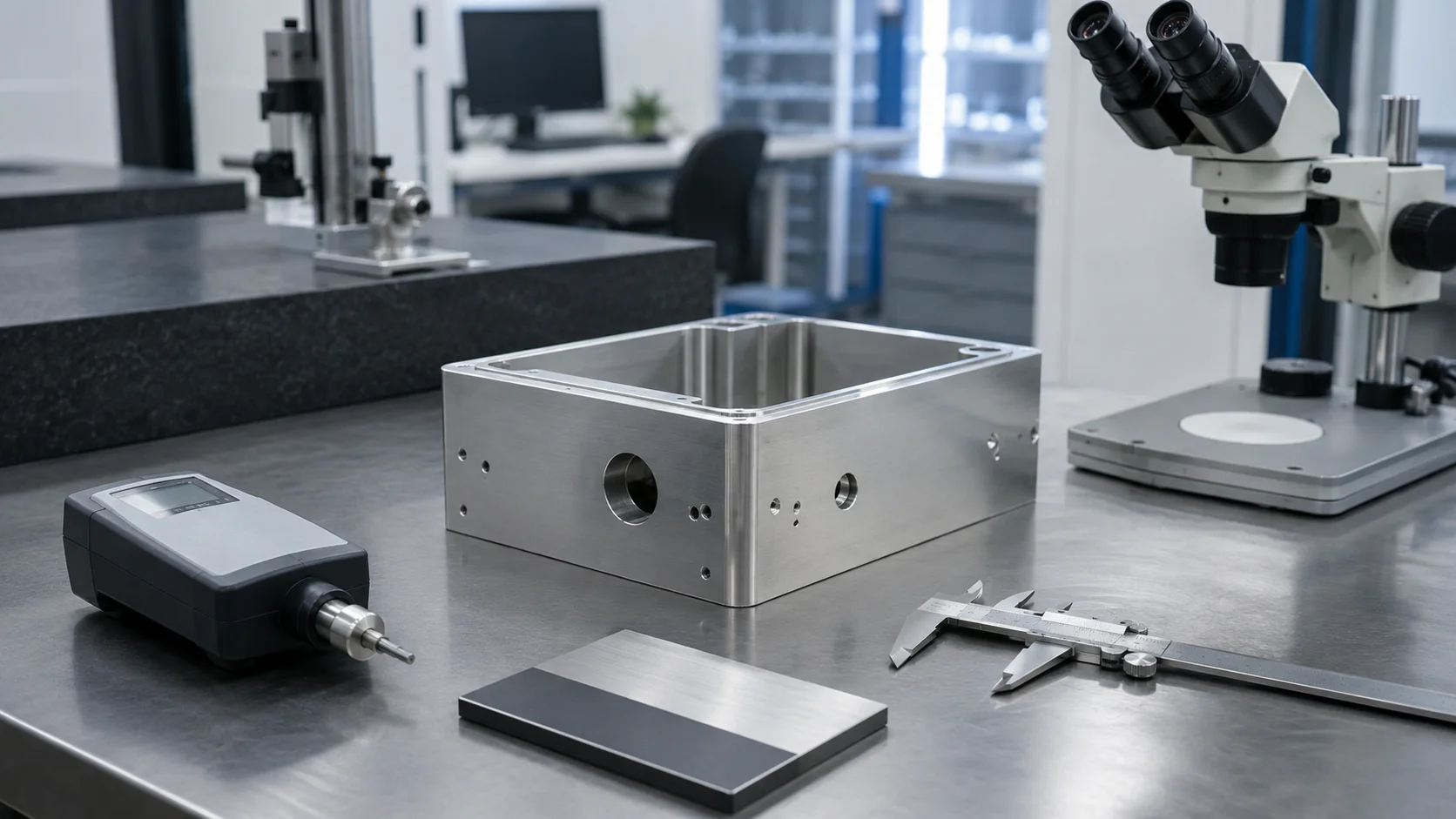
A useful finish specification combines a visual description with measurable checks. “Smooth and clean” is too open to interpretation. Instead, identify the visible face, roughness range where relevant, color or gloss reference, edge condition, masking boundaries, allowable blemishes, and the inspection lighting or viewing distance for cosmetic surfaces.
- Inspect the substrate before finishing.
- Confirm burr removal and edge break before coating or polishing.
- Measure critical dimensions after the final process.
- Check threads, bores, sealing lands, and mating faces for overspray or buildup.
- Record representative photographs for cosmetic approval.
For stainless parts, a passivation or cleaning record may be useful. For coated parts, the documentation may need to cover batch identification, color, thickness, adhesion, and any agreed appearance sample. The right record depends on the part risk and the customer’s quality plan, not on a generic checklist.
Coordinate finishing with the assembly sequence
Finishing decisions become easier when the assembly is reviewed at the same time. A surface that looks acceptable alone may interfere with a seal, change a press fit, reduce electrical contact, or prevent a fastener from seating. Identify whether hardware is installed before or after finishing, and decide which surfaces are protected during transport and handling.
When a design includes machined metal, formed sheet metal, and molded plastic, compare their visible textures and color expectations early. A finish that is appropriate for one process may make another part look mismatched. Prototyping the visible interface can reveal these issues before the production specification is frozen.
Questions to answer before requesting a quote
Give the supplier the material and grade, drawing, 3D model, finish name or reference sample, visible-face map, critical dimensions, masking requirements, expected quantity, and cleaning or environmental information. State whether the finish is for a prototype, a functional test, a pilot build, or ongoing production. If the final process is not yet fixed, ask for two feasible options with their dimensional and cosmetic trade-offs.
Frequently Asked Questions
What is the best finish for medical metal parts?
There is no single best finish. Stainless parts may need passivation or electropolishing, aluminum parts may use anodizing or another protective finish, and enclosures may need brushing, blasting, or coating for appearance and handling. The correct choice follows the environment, function, substrate, and inspection method.
Does a smoother surface always perform better?
No. A smoother surface can support cleanability or lower friction in some applications, but it may not be necessary for every face and can affect cost, edge geometry, or dimensional control. Specify smoothness where it supports a defined function.
When should finishing be included in the design review?
Include it before the first prototype is quoted if the part has visible surfaces, seals, threads, sliding interfaces, chemical exposure, or tight mating dimensions. Early review prevents the finish from becoming an expensive correction at the end of production.
Conclusion
Medical surface finishing is a controlled part of manufacturing, inspection, and assembly. Choose the finish from the device’s cleaning, corrosion, wear, appearance, and dimensional requirements; then define the substrate condition, masking, process sequence, and acceptance points clearly. That approach produces a finish that supports the part instead of merely decorating it.

