
Axson PX215 - Vacuum Casting ABS Material
PX215 is a workhorse, ABS-simulating polyurethane resin specifically engineered for vacuum casting. Its strengths lie in its excellent mechanical property match for ABS, fast processing, high detail reproduction, and suitability for functional prototypes across automotive, consumer goods, and industrial design. Its limitations center around thermal stability, UV resistance, and inherent mold life constraints of the process. It remains a popular choice where accurate ABS simulation in low-to-medium volumes is required.
Axson PX215
Basic Characteristics & Composition
Material Type: Two-component (2K), thermosetting polyurethane (PU) resin system.
Target Simulation: Engineered to closely mimic the mechanical properties and appearance of engineering-grade ABS plastic.
Key Properties:
Target Simulation: Engineered to closely mimic the mechanical properties and appearance of engineering-grade ABS plastic.
Key Properties:
- Tensile Strength: High, typically around 45-50 MPa (approx. 6500-7250 psi).
- Flexural Strength: High, typically around 70-80 MPa (approx. 10,000-11,600 psi).
- Elongation at Break: Moderate, typically around 10-15%.
- Hardness: Shore D ~80 (similar to rigid ABS).
- Impact Strength: Moderate (Izod Notched approx. 20-30 J/m).
- Heat Deflection Temperature (HDT): Typically around 50-60°C (122-140°F) at 0.45 MPa / 66 psi; usable for prototypes up to ~80°C (176°F) short-term.
- Viscosity: Low viscosity mix (A+B components), excellent for degassing and flow into complex molds.
- Cure Time: Fast demold times (often 45-90 minutes depending on part size/thickness), enabling multiple casts per day.
- Mix Ratio: Typically 100A : 85B by weight (always check the specific Technical Data Sheet - TDS).
- Shrinkage: Low, designed for dimensional accuracy in casting (~0.15%).
Key Technical Parameters
| PHYSICAL PROPERTIES | ||||
| ISOCYANATE PX 100-215 | POLYOL PX 215 | MIXING | ||
| Composition | ISOCYANATE | POLYOL | ||
| Mixing ratio by weight Mixing ratio by volume at 25°C | 100 88 | 100 100 | ||
| Aspect | liquid | liquid | liquid | |
| Colour | straw yellow | light to dark amber | off-white | |
| Viscosity at 25°C (mPa.s) | BROOKFIELD LVT | 60 | 175 | 100 |
| Specific gravity at 25°C Specific gravity at 23°C | ISO 1675 :1975 ISO 2781 :1988 | 1.15 - | 1.02 - | - 1.06 |
| Pot life at 25°C on 200g (min.) | Gel Timer TECAM | 3 - 4 | ||
VACUUM CASTING PROCESSING CONDITIONS
Warm the products at 23°C by storing at a lower temperature. • Weigh both parts. • Mix for 1 minute minimum after degassing for 10 minutes under vacuum. • Cast under vacuum in a silicone mold pre-heated at 70°C. • Demold after 2 hours at 70°C (let cool before demolding).
PRECAUTIONS
Normal health and safety precautions should be observed when handling these products :
. ensure good ventilation
. wear gloves and safety glasses
For further information, please consult the material safety data sheet.
| MECHANICAL PROPERTIES AT 23° C AFTER POSTCURE | |||
| Flexural modulus of elasticity | ISO 178 :2001 | MPa | 1,500 |
| Maximal flexural strength | ISO 178 :2001 | MPa | 55 |
| Maximal tensile strength | ISO 527 :1993 | MPa | 40 |
| Elongation at break | ISO 527 :1993 | % | 20 |
| CHARPY impact strength | ISO 179/2D :1994 | kJ/m2 | 25 |
| Hardness - at 73° F/(23° C) - at 176° F/(80° C) | ISO 868 :1985 | Shore D1 | 74 65 |
| THERMAL & SPECIFIC PROPERTIES | |||
| Glass temperature transition | TMA METTLER | °C | 75 |
| Linear shrinkage | - | % | 2 |
| Maximal casting thickness | - | mm | 5 |
| Demolding time @ 23°C | - | min. | 120 |
| Complete hardening time @ 23°C | - | d | 4 |
- Average values obtained on standardized specimens/Hardening 12 hr at 70° C
STORAGE
Application Scenarios & Fields
Primary Use: Rapid Prototyping of functional parts requiring ABS-like properties.
Key Industries & Applications:
Key Industries & Applications:
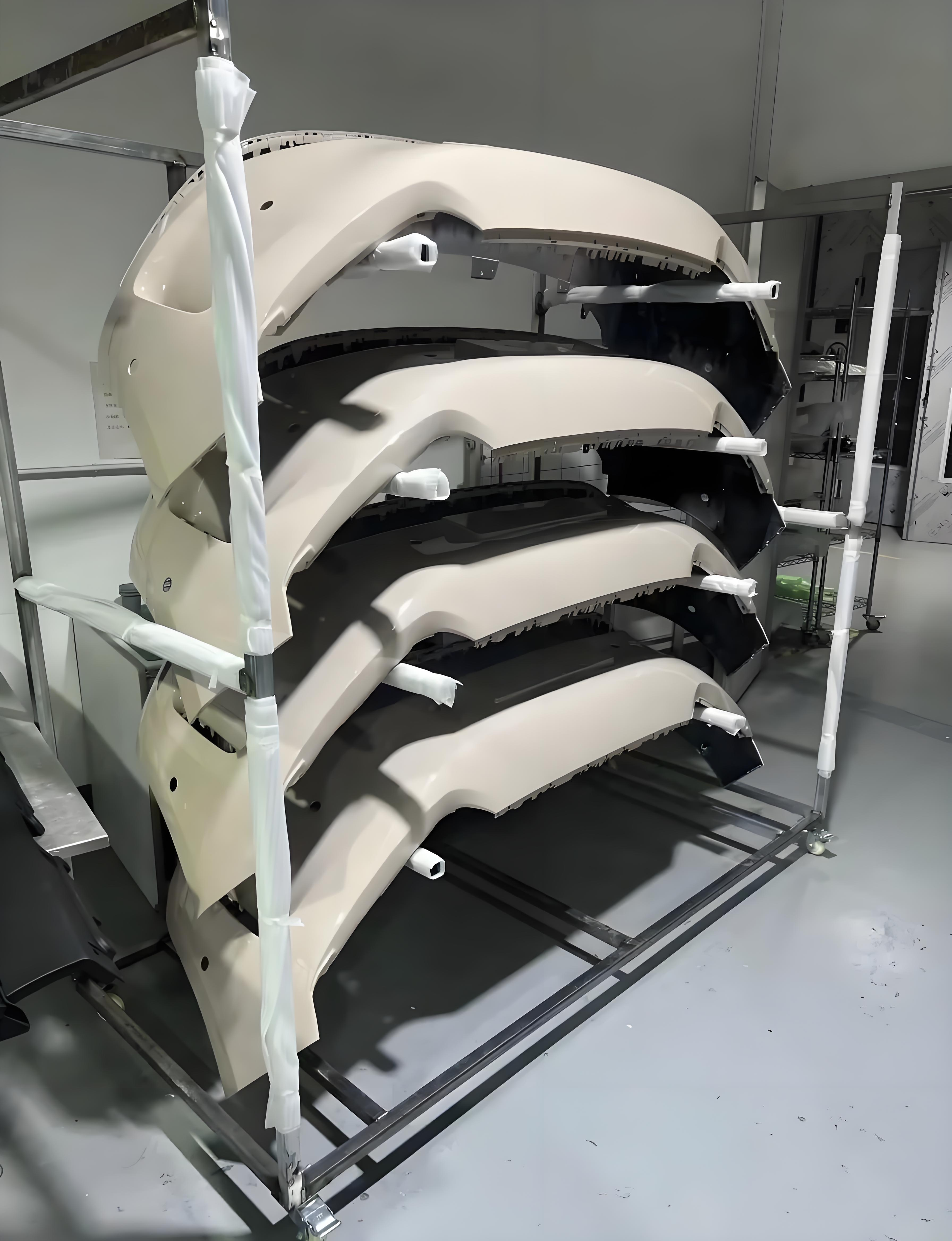
- Automotive: Interior trim components (panels, knobs, vents), housings, ducting prototypes, fluid reservoirs, connector prototypes.
- Consumer Electronics: Housings for phones, tablets, appliances, remote controls, power tool casings, buttons.
- Industrial Equipment: Covers, housings, enclosures, handles, levers, jigs, fixtures.
- Medical Devices (Non-Implantable): Prototypes for device housings, handles, ergonomic grips, casings for diagnostic equipment (ensure biocompatibility is not claimed for PX215 unless explicitly certified for a specific use).
- Telecommunications: Prototype enclosures for routers, modems, handsets.
- General Product Design: Functional concept models, ergonomic studies, design verification prototypes, presentation models, small-batch end-use parts (where properties suffice).
Vacuum Casting Process Adaptability:
Excellent Fit: PX215 is specifically formulated for the vacuum casting process.
Key Adaptations:
Key Adaptations:
- Low Viscosity: Ensures easy mixing, thorough degassing under vacuum, and complete filling of intricate mold details and thin walls in silicone molds.
- Vacuum Degassing: Essential for achieving bubble-free casts; PX215 degasses efficiently before pouring.
- Fast Cure: Allows for relatively quick demolding (typically 45-90 mins), maximizing productivity from a single silicone mold.
- Silicone Mold Compatibility: Performs well with standard RTV (Room Temperature Vulcanizing) silicone molds used in the process.
- Mold Life: Produces 15-25 high-quality parts from a single silicone mold, depending on part complexity and demolding care.
Advantages:
- ABS-Like Properties: Offers the closest simulation of ABS plastic mechanical behavior (strength, rigidity, hardness) among common vacuum casting resins.
- Fast Turnaround: Quick demold time speeds up prototyping iterations and small-batch production.
- High Detail Reproduction: Excellent flow captures fine details, textures, and complex geometries from the silicone mold.
- Good Surface Finish: Produces smooth surfaces ready for painting or finishing; minimal post-processing often needed.
- Dimensional Stability: Low shrinkage ensures good accuracy compared to the master pattern.
- Paintable & Glueable: Easily accepts paints, adhesives, and secondary operations like machining or tapping.
- Cost-Effective for Low Volumes: Ideal for producing 10s to low 100s of functional prototypes or end-use parts without expensive injection molding tooling.
Limitations:
- Not Production Plastic: While simulating ABS, it lacks the long-term durability, precise thermal stability, and impact resistance of true, injection-molded ABS, especially at higher temperatures or under sustained stress/UV.
- Limited Heat Resistance: Unsuitable for applications requiring sustained high temperatures (>80°C / 176°F).
- UV Sensitivity: Like most PU resins, prolonged UV exposure will cause yellowing and degradation unless protected.
- Mold Life Constraint: Silicone molds degrade over time (15-25 pulls), limiting the total number of parts per mold compared to metal tooling.
- Lower Impact Strength than some ABS Grades: While rigid, its impact resistance can be lower than certain toughened ABS formulations.
- Moisture Sensitivity: Components can absorb moisture; storage and handling according to TDS are crucial.
Manufacturers
- Axson Technologies: PX215 was originally developed and branded by Axson Technologies, a leading manufacturer of industrial resins (polyurethanes, epoxies) for prototyping, tooling, and composites.
- Current Status: Axson Technologies was acquired by ALTANA (specifically the ELANTAS PDG division) in 2018. The Axson product line, including PX215, is now manufactured and distributed under the ELANTAS PDG (Prototyping, Design, and Modeling) brand within the ALTANA Group. You will find it listed as ELANTAS PX215 or sometimes still referred to as Axson PX215. Distributors like Freeman Supply carry the line.
Common Alternative Materials:
Within Axson/ELANTAS PDG:
- PX223 / PX221: Higher impact strength variants (simulating ABS+PC or tough PP), slightly lower rigidity than PX215.
- PX256: Simulates rigid Polypropylene (PP), lower strength/higher flexibility.
- FC52 / FC53: Simulates Polycarbonate (PC), higher heat resistance and impact strength than PX215.
- Smooth-On Task Series (e.g., Task 9): Widely used US brand, offers resins with similar ABS-like properties.
- Polytek Poly 74xx Series (e.g., 74-29): Another major US supplier, known for robust casting resins.
- Huntsman RenShape® SL Series: High-performance tooling and prototyping resins, some grades simulate engineering plastics.
- VarioCast / VarioKast (Germany): Common European alternatives.
- Axson/ELANTAS PDG PX271: A newer alternative sometimes positioned similarly to PX215.
- Simulate PP: PX256 (Axson), Task 12 (Smooth-On), Poly 74-45 (Polytek).
- Simulate PC/High Impact: FC52/FC53 (Axson), Task 8/15 (Smooth-On), Poly 74-20 (Polytek).
- Simulate PE/Flexible: PX242 (Axson), Task 4 (Smooth-On), Poly 74-30 (Polytek).
- High Temp/Specialty: Epoxy-based resins (e.g., Axson/ELANTAS PDG PX521), or specialized high-temp PU (e.g., Smooth-On Somos® Taurus).
Learn more about ABS type materials
- ABS Hei-Cast PU8150 for Vacuum Casting Material
- ABS Hei-Cast PU8160 for Vacuum Casting Material
- ABS Axson UP4280 for Vacuum Casting Material
- ABS Axson PX100 for Vacuum Casting Material
- Axson PX527 - Vacuum Casting ABS Material
- Axson PX 223/HT - Vacuum Casting ABS Material
- Axson PX 225 / PX 225L - Vacuum Casting ABS Material

Request Your DFM & Quote – Upload Your Drawings
ㆍFill in your requirements and upload your 2D&3D file, we will feedback your project quotation and DFM within 24 hours.ㆍFile types: STEP, STP, IGES, IGS, SLDPRT, 3DM, SAT, X_T, DWG, DXF, STL, PDF, ZIP and more. File size: < 128 MB Part size: < 1500*1500*1500 mm
ㆍPrivacy: We respect your privacy. Here you can find an example of a non-disclosure agreement. By submitting this form, you agree to our terms & conditions and privacy policy.
ㆍPrivacy: We respect your privacy. Here you can find an example of a non-disclosure agreement. By submitting this form, you agree to our terms & conditions and privacy policy.
