
Structural Foam RIM Systems
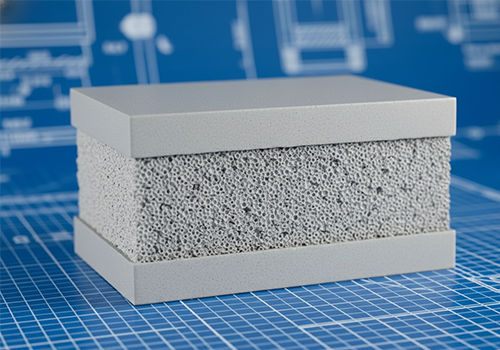
When reducing weight is as critical as maintaining structural rigidity, Structural Foam RIM is the unrivaled manufacturing solution. This process utilizes a chemical blowing agent to create a component with a unique "sandwich" structure: a high-density, non-porous outer skin and a low-density microporous core. This "I-beam" effect results in parts that have a significantly higher stiffness-to-weight ratio than solid plastics. At JUCHENG, we leverage Structural Foam RIM to manufacture massive, lightweight components—such as heavy truck engine hoods and medical chassis bases—that provide the strength of metal at a fraction of the weight.
Structural Foam RIM Systems
JUCHENG's Structural Foam Capabilities
Molding successful structural foam parts requires precise control over the foaming reaction and density profile. JUCHENG offers:
- Density Management: We can tailor the density reduction (typically 10% to 30% lighter than solid RIM) to balance your specific weight vs. strength requirements.
- Large-Shot Capacity: Our equipment is calibrated to handle large-volume shots required for parts spanning over 2 meters, such as server rack doors or fan housings.
- Acoustic Engineering: The cellular core of our structural foam parts naturally dampens vibration and sound, providing superior acoustic properties for industrial machinery covers.
- Sink-Free Molding: The internal pressure from foaming eliminates sink marks, allowing us to mold varying wall thicknesses and heavy ribs without cosmetic defects.
Advantages of Structural Foam RIM
| Advantage | Detailed Description | Key Benefit |
| High Stiffness-to-Weight | The cellular core increases wall thickness (and thus stiffness) without adding proportional weight. | Creates parts that are lighter than solid plastic but resist bending like metal. |
| Weight Reduction | Achieves a specific gravity range of 0.6 to 0.9 g/cm³ (vs 1.2 for solid). | Critical for fuel efficiency in automotive and portability in medical devices. |
| Design Freedom | Eliminates sink marks on the A-surface, even opposite thick internal ribs. | Allows for complex internal strengthening structures without compromising exterior aesthetics. |
| Acoustic & Thermal Insulation | The foam core acts as a barrier to sound and heat transfer. | Ideal for enclosing noisy engines, compressors, or sensitive electronics. |
| Durability | The solid integral skin provides excellent impact and scratch resistance. | Suitable for rugged outdoor and industrial environments. |
Technical Parameters & Material Properties
We offer specialized foam systems for structural applications:
| Grade Category | Characteristics & Performance | Ideal Applications |
| Integral Skin Structural Foam | Characteristics: Forms a distinct, thick solid skin (1-2mm) with a foamed core. Surface is smooth and paintable. High surface hardness. Performance: Best balance of aesthetics and structural load bearing. | Medical device chassis, business machine housings, automotive exterior panels, roof modules. |
| Low-Density Rigid Foam | Characteristics: Focuses on maximum weight reduction (density < 0.6 g/cm³). Skin is thinner. High thermal insulation. Performance: Ultra-lightweight, non-load bearing stiffener. | Internal structural fillers, thermal insulation barriers, core materials for composite layups. |
| High-Density Structural Foam | Characteristics: Minimal foaming (density ~0.9 g/cm³). Focuses on eliminating sink marks in varying wall sections rather than extreme weight loss. Performance: Premium surface quality for visible parts. | High-end electronic bezels, thick-walled casings with complex bosses. |
Design & Processing Guidelines
- Wall Thickness: Structural foam benefits from thicker walls (6mm to 15mm) to allow the foam core to develop. Thicker walls equal higher stiffness.
- Ribbing: Generous ribbing is encouraged to maximize rigidity. Unlike standard injection molding, ribs can be the same thickness as the wall without causing sink marks.
- Inserts: Metal inserts are encapsulated exceptionally well, as the expanding foam locks them securely in place.
- Finishing: The surface may show a slight "swirl" pattern from the foaming action. We typically apply a textured paint or high-build primer to achieve a Class-A finish.
Application Scenarios
Structural Foam is the standard for "Large, Light, & Stiff" parts:
- Transportation: Heavy truck hoods, wind deflectors, bus interior panels, tractor roofs.
- Material Handling: Heavy-duty pallets, shipping containers, tote bins.
- Medical & Science: Chassis bases for CT scanners, laboratory carts, structural frames replacing metal.
- Infrastructure: Utility enclosure covers, drainage grates, telecommunication cabinets.
Physical Properties Table
Comparison of Solid vs. Structural Foam (Same Polymer Base):
| Property | Solid Rigid RIM | Structural Foam RIM | Unit |
| Density | 1.20 | 0.70 - 0.90 | g/cm³ |
| Tensile Strength | 45 | 25 - 35 | MPa |
| Flexural Modulus | 2,000 | 1,500 - 1,800 | MPa |
| Stiffness-to-Weight | Standard | High | Ratio |
| Acoustic Dampening | Low | High | - |
| Surface Quality | Class A | Good (Requires Paint) | - |

Request Your DFM & Quote – Upload Your Drawings
ㆍFill in your requirements and upload your 2D&3D file, we will feedback your project quotation and DFM within 24 hours.ㆍFile types: STEP, STP, IGES, IGS, SLDPRT, 3DM, SAT, X_T, DWG, DXF, STL, PDF, ZIP and more. File size: < 128 MB Part size: < 1500*1500*1500 mm
ㆍPrivacy: We respect your privacy. Here you can find an example of a non-disclosure agreement. By submitting this form, you agree to our terms & conditions and privacy policy.
ㆍPrivacy: We respect your privacy. Here you can find an example of a non-disclosure agreement. By submitting this form, you agree to our terms & conditions and privacy policy.
