


For an overview of the industries supported by our manufacturing services, visit the Consumer Products industry page. This guide takes a practical view of how teams can move from an idea to a manufacturable consumer product while keeping process choices, quality expectations, and future scale aligned.
What does consumer product manufacturing include?
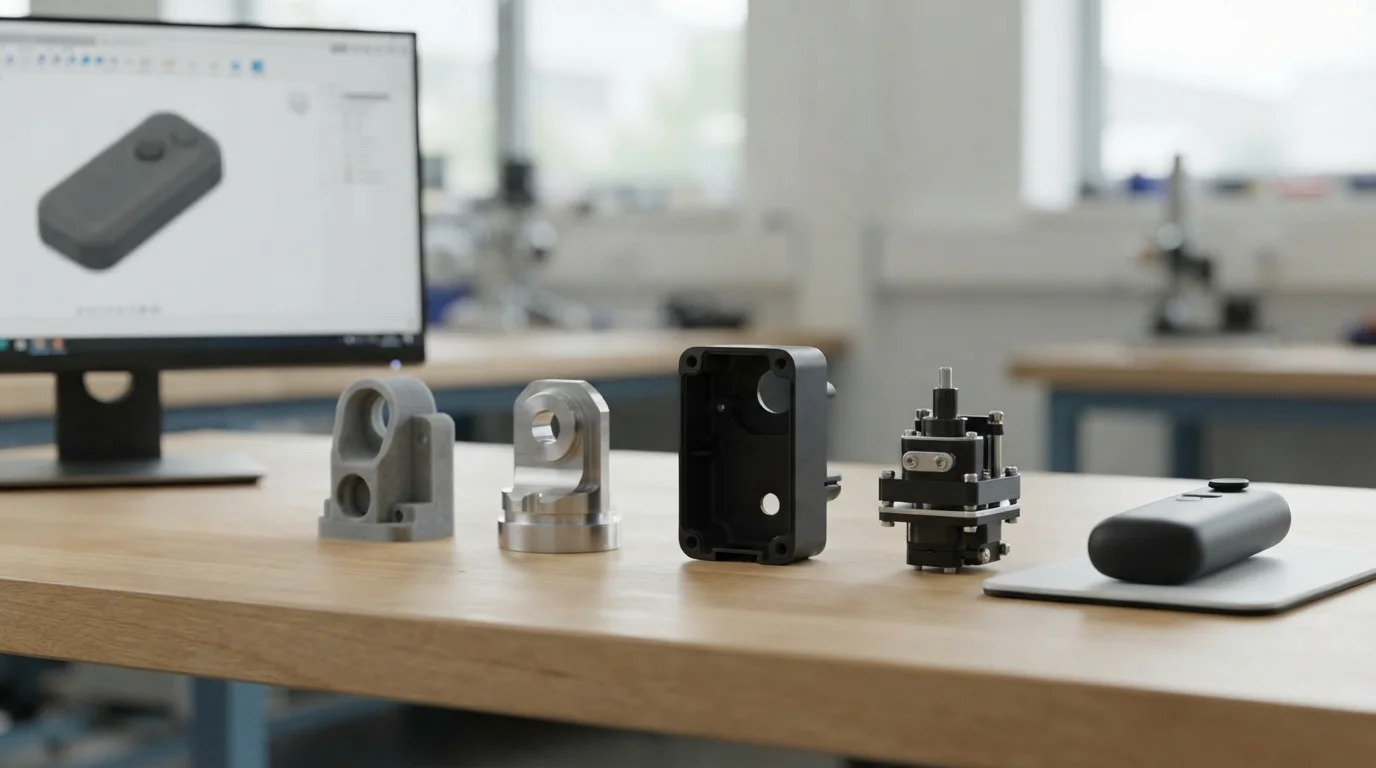
Consumer product manufacturing covers the activities needed to make a physical product consistently. The scope may include a single part, a complete mechanical assembly, or a coordinated set of processes for a product with electronics, plastics, metals, finishes, and packaging.
A typical program may include:
- Product requirements, user needs, dimensions, performance targets, and appearance direction
- Industrial and mechanical design, CAD, drawings, bill of materials, and revision control
- Prototype development for form, fit, function, ergonomics, and user feedback
- Manufacturing process selection and design for manufacture and assembly
- Material, finish, hardware, joining, and assembly definition
- Tooling or process development, first articles, pilot production, and inspection
- Packaging, replenishment, change control, and production scaling
A prototype proves a design question; production must prove a repeatable process. The difference is important for consumer goods because attractive samples may still have unstable dimensions, inconsistent cosmetics, difficult assembly, or a cost structure that does not work at the intended volume.
Product development research and manufacturing process-selection guidance both emphasize considering manufacturing problems during design rather than waiting until the end of development. That principle is central to a reliable consumer product program: process, material, quality, and supply decisions should be connected early enough to influence the design.
How should a manufacturing process be selected?
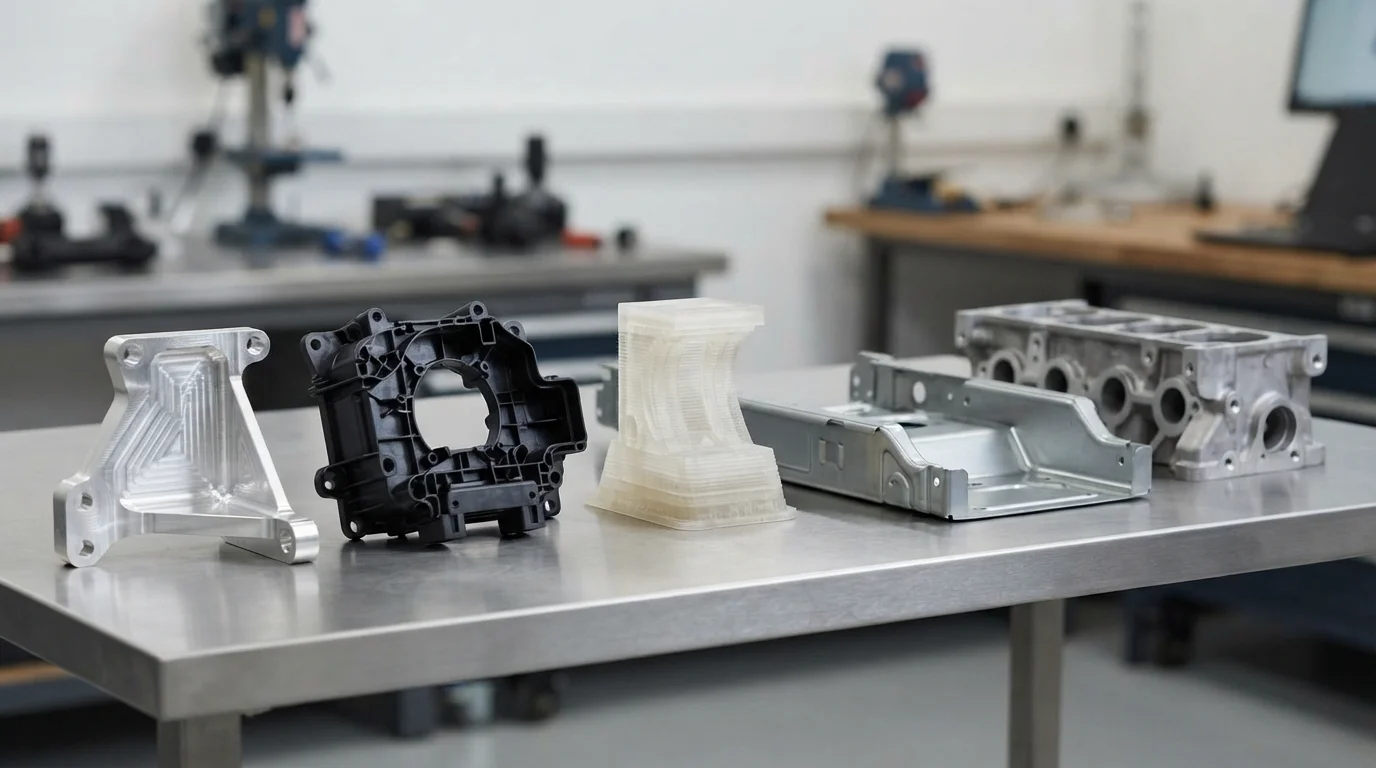
Process selection should begin with the part’s function and the evidence the team needs. There is no single process that is best for every consumer product. CNC machining, injection molding, 3D printing, sheet metal fabrication, casting, vacuum replication, and combinations of these methods serve different geometries, materials, quantities, surface requirements, and development stages.
| Product requirement | Processes to compare | Questions to answer |
|---|---|---|
| Fast geometry and fit changes | 3D printing, CNC machining, soft tooling, or other prototype routes | What must the model prove, and how close must it be to the final material? |
| Accurate rigid components | CNC machining, metal printing, casting, or formed metal | Which dimensions, loads, surfaces, and material properties are critical? |
| Repeatable plastic housings | Injection molding, low-volume molding, vacuum replication, or additive production | Is the design stable, and does the quantity justify tooling? |
| Enclosures and brackets | Sheet metal, CNC machining, additive manufacturing, or hybrid assemblies | Do stiffness, access, shielding, weight, and finish favor a formed or solid part? |
| Uncertain demand | Low-volume or bridge options across several processes | What quantity is needed now, and what decision will the batch support? |
The selection should consider total cost and risk, not only piece price. Tooling, engineering changes, setup, finishing, inspection, assembly, packaging, shipping, inventory, and the cost of a late redesign can change the result. A low piece price may be less attractive if it requires a high upfront tool investment before the design or demand is proven.
Our rapid prototyping service can support earlier design learning. As the product stabilizes, the team may compare additional processes based on the required material and production outcome rather than treating the first prototype process as a permanent choice.
How do materials, quality, and cost connect?
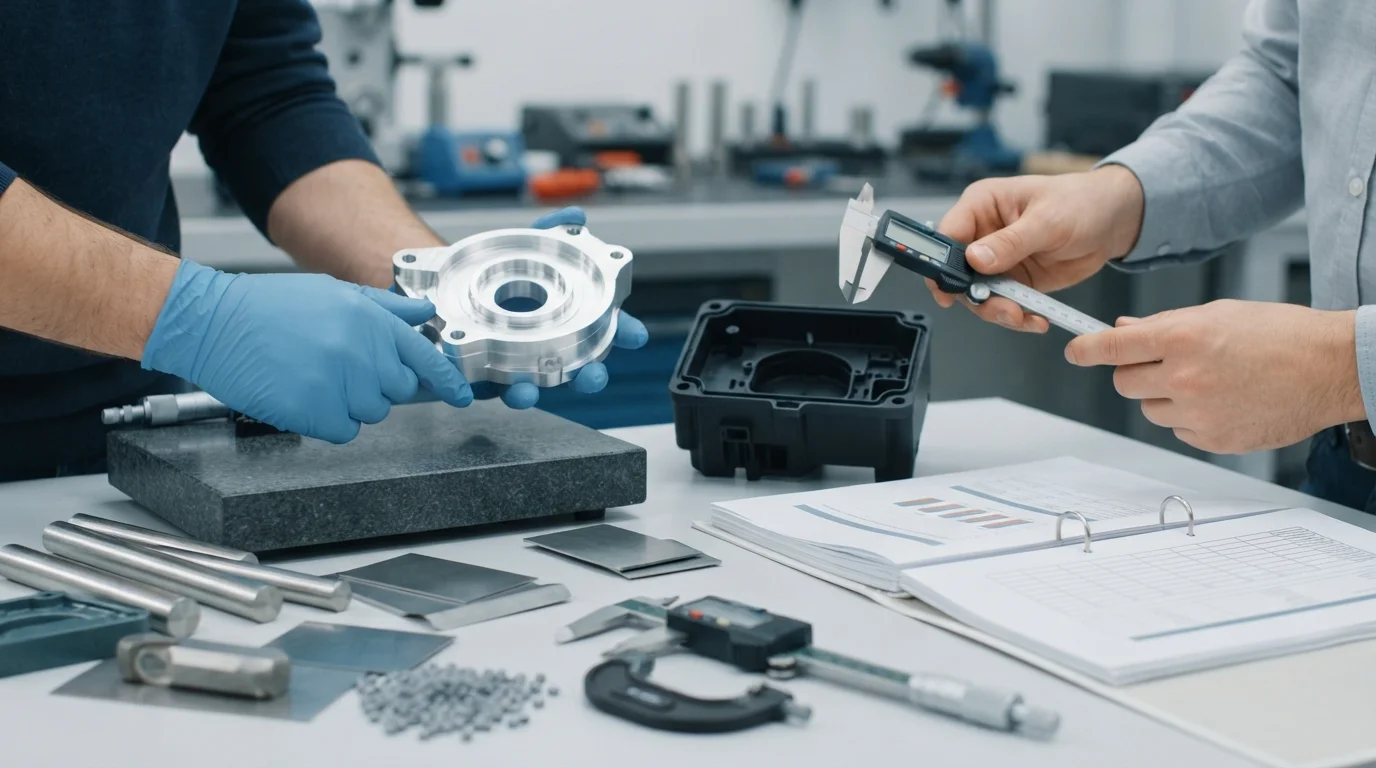
Material decisions influence function, appearance, production behavior, supply, and cost. A consumer product may combine several material families: a machined or formed metal structure, a molded polymer shell, flexible or soft-touch elements, hardware, coatings, and electronic components. Each material must be considered in the context of the product’s use and the process that will make it.
Ask the following before finalizing a material:
- What loads, impacts, temperatures, chemicals, moisture, UV exposure, or wear will the product experience?
- Does the material need to be rigid, flexible, lightweight, conductive, insulating, transparent, soft, or tactile?
- Is the requested grade available in the intended quantity, color, finish, and region?
- Will the prototype process represent the production material closely enough for the planned validation?
- Are compliance, traceability, recycled content, or supplier documentation requirements applicable?
Quality should be designed into the product definition. Identify critical dimensions, functional interfaces, visible surfaces, assembly conditions, and acceptance criteria before ordering a large batch. A quality plan does not need to measure every feature equally. It should focus effort on the characteristics that affect safety, fit, function, durability, appearance, and customer experience.
| Quality layer | Example focus | Useful control |
|---|---|---|
| Design quality | Requirements, interfaces, materials, tolerances, and revision control | Design review, DFM, drawing approval, and change records |
| Process quality | Cutting, machining, molding, forming, finishing, and assembly stability | Process review, samples, work instructions, and in-process checks |
| Part quality | Dimensions, surfaces, material, hardware, and functional features | Inspection plan, gauges, reports, and reference samples |
| Product quality | Assembly, operation, appearance, packaging, and user experience | Functional build, acceptance review, and controlled release |
Cost and quality should be reviewed together. Removing a requirement may reduce cost, but changing a material, tolerance, finish, or inspection step can also change performance and customer perception. The right question is which requirements are essential, which are flexible, and what evidence supports the trade-off.
How does a product move from prototype to production?
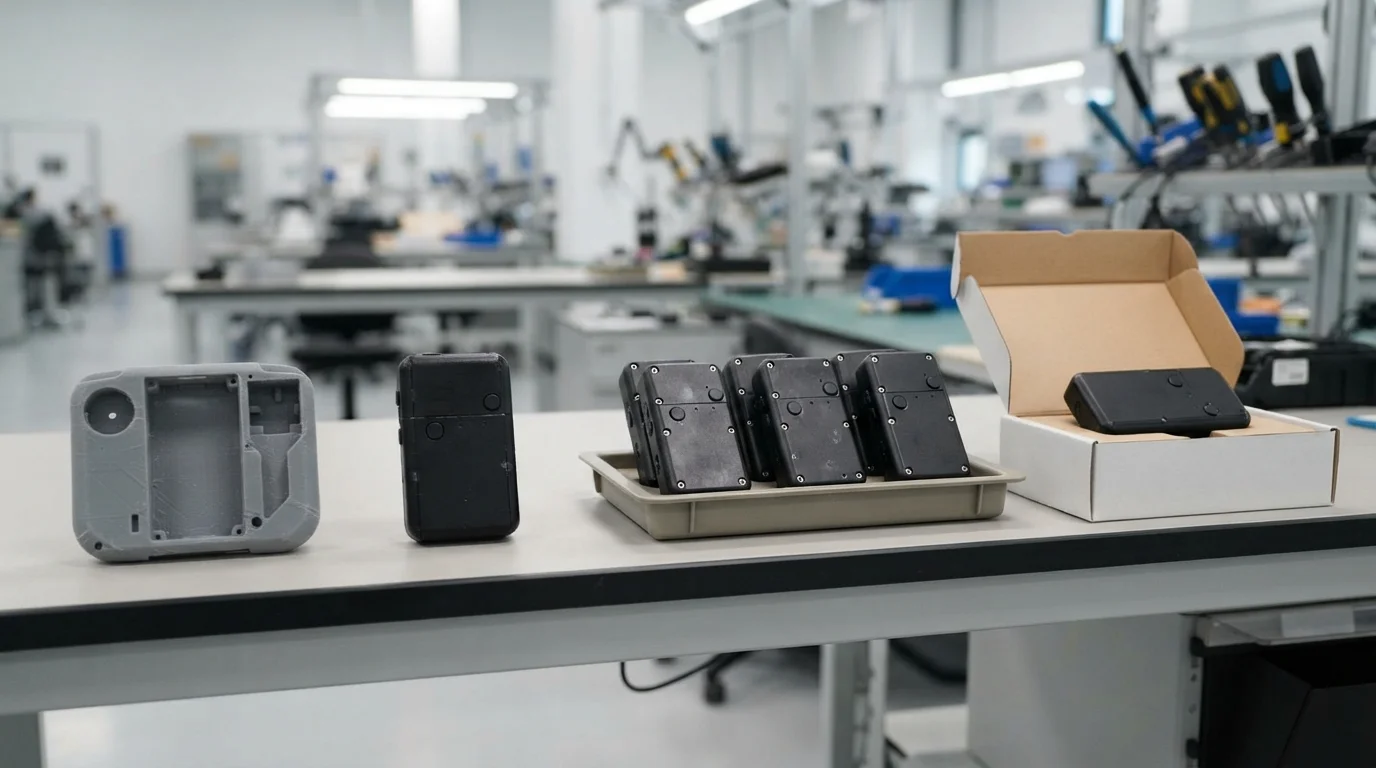
The transition is a sequence of decisions, not one handoff. The team should know what each build is intended to prove and what must be stable before the next investment.
- Define the product: document users, use environment, functions, dimensions, appearance, performance, and commercial objectives.
- Build learning prototypes: use the process and material needed to answer questions about form, fit, ergonomics, function, and assembly.
- Review manufacturability: evaluate process-specific design features, tolerance strategy, material behavior, joining, finishing, and inspection.
- Release engineering samples: create parts or assemblies that represent the intended design closely enough for structured validation.
- Run a pilot: produce a controlled quantity to evaluate repeatability, assembly, packaging, quality evidence, and demand assumptions.
- Scale deliberately: approve the production baseline, define changes, monitor early output, and improve the process using real data.
At every stage, retain the approved revision, material assumption, process, finish, inspection result, and open issue list. This information prevents the same uncertainty from returning when the project moves between design, sourcing, tooling, production, and quality teams.
The pilot stage is especially important for consumer products. A product may work in a single hand-built sample but expose variation when multiple operators assemble it or when several parts are produced in sequence. A pilot can reveal assembly time, fit variation, cosmetic inconsistency, packaging damage, missing work instructions, and customer-facing issues before a larger commitment.
Our CNC machining service, injection molding service, and sheet metal fabrication service may be considered as parts of a multi-process development plan. The link between these processes is project-specific; no prototype route should be assumed to prove every production requirement.
What should a manufacturing partner review?

A manufacturing partner should review more than the quoted part price. The most useful review connects the product requirements to process capability, material availability, quality evidence, assembly, and future changes.
Ask the partner to comment on:
- Geometry: whether the current design is practical for the proposed process and where access, tooling, draft, bend, wall, or feature issues may occur.
- Materials: whether the requested material and finish are available and appropriate for the use environment.
- Interfaces: whether parts, hardware, electronics, seals, and assemblies have enough clearance and access.
- Quality: which characteristics should be inspected, how they will be measured, and what evidence will be supplied.
- Quantity: how prototype, pilot, low-volume, and future production requirements change the process and cost structure.
- Change control: how revisions, tool modifications, material substitutions, and nonconforming parts will be handled.
- Supply planning: how repeat orders, packaging, component supply, and production records will be managed.
Good collaboration also requires clear responsibility. The manufacturer can identify process risks and propose alternatives, while the product owner remains responsible for product requirements, market claims, regulatory decisions, and final approval. Do not rely on generic certifications, customer logos, capacity numbers, or delivery promises unless they are verified for the actual program.
What should a consumer product manufacturing RFQ include?
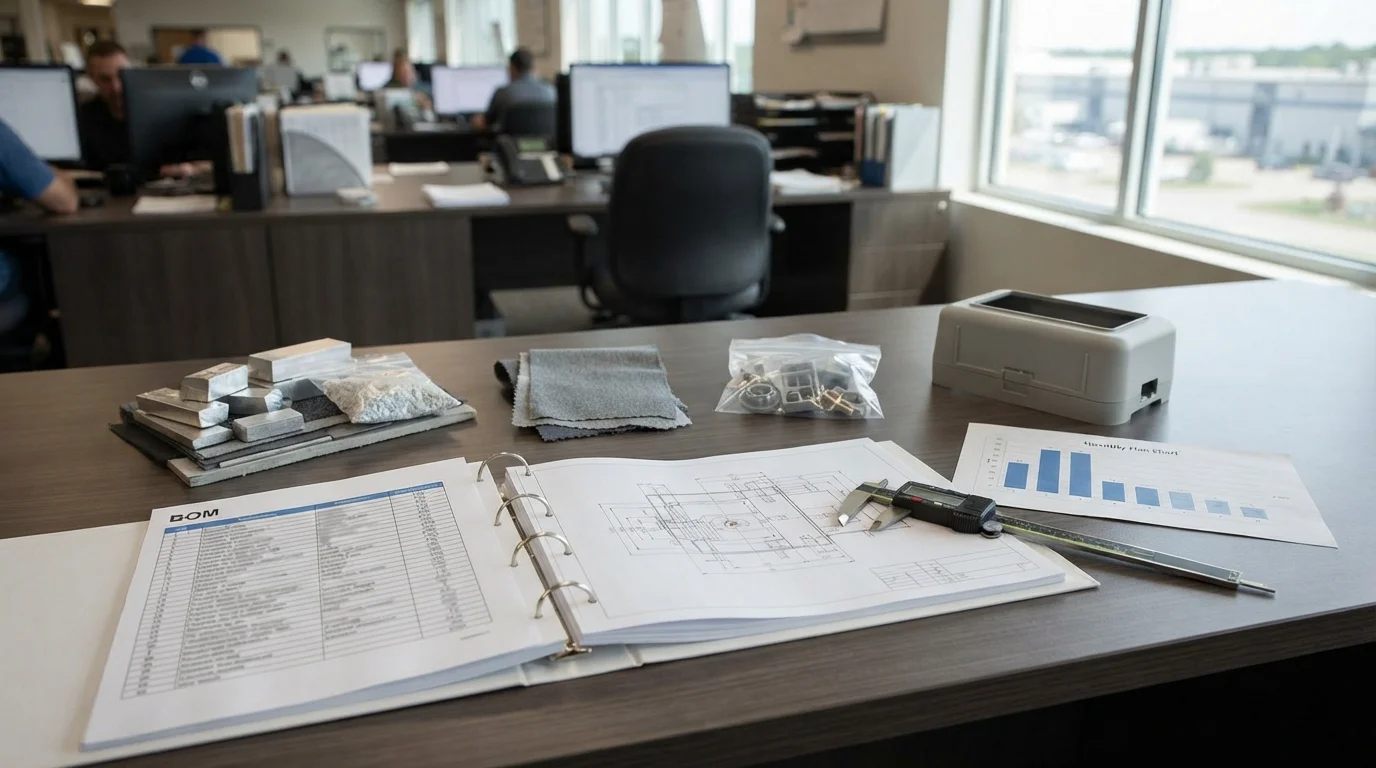
A complete RFQ gives the supplier enough information to recommend a process and produce a meaningful quote. It also helps the product team compare suppliers on technical assumptions rather than only on headline price.
| RFQ item | Information to provide |
|---|---|
| Product brief | Product role, users, environment, key functions, and development stage |
| Design files | CAD, drawings, assembly files, BOM, reference samples, and revision status |
| Process question | What the prototype, pilot, or production batch must prove or supply |
| Materials and finish | Target material, approved alternatives, color, texture, coating, and compliance needs |
| Quantity plan | Prototype units, iterations, pilot quantity, forecast, variants, and reorder expectation |
| Quality plan | Critical dimensions, functional checks, cosmetic standard, inspection report, and acceptance |
| Assembly and packaging | Hardware, electronics, supplied components, assembly scope, packing, and shipping needs |
| Schedule | Design review, sample approval, pilot build, launch requirement, and next decision gate |
Frequently asked questions
What is the first step in consumer product manufacturing?
Define the product requirements and the decision the first physical build must support. This creates a basis for selecting a prototype process, material, quantity, and validation method instead of ordering parts before the product question is clear.
Can one supplier manage multiple consumer product processes?
A supplier may support multiple processes, but the actual scope must be verified for the project. More important than a broad service list is whether the supplier can explain the process assumptions, quality controls, handoffs, and responsibilities for the specific parts.
When is a consumer product ready for production?
The design, materials, process, assembly, inspection, packaging, and change controls are stable enough to produce repeatable units at the intended stage. A product may still have future improvements, but the remaining risks should be understood and appropriate for the planned quantity.
Consumer product manufacturing is strongest when product design and production planning develop together. Choose processes based on the evidence and volume required, validate materials and interfaces early, define quality in measurable terms, and use pilot production to learn before scaling. That approach gives product teams a clearer path from concept to dependable, manufacturable consumer goods.

