


A semiconductor equipment enclosure has two jobs: protect the system and make the system serviceable. Its panels, bends, access doors, cable openings, brackets, and fasteners must work together. A visually clean cabinet can still create assembly delays if the bend sequence, hole pattern, or internal access was not designed as one system.
Function sets the enclosure brief
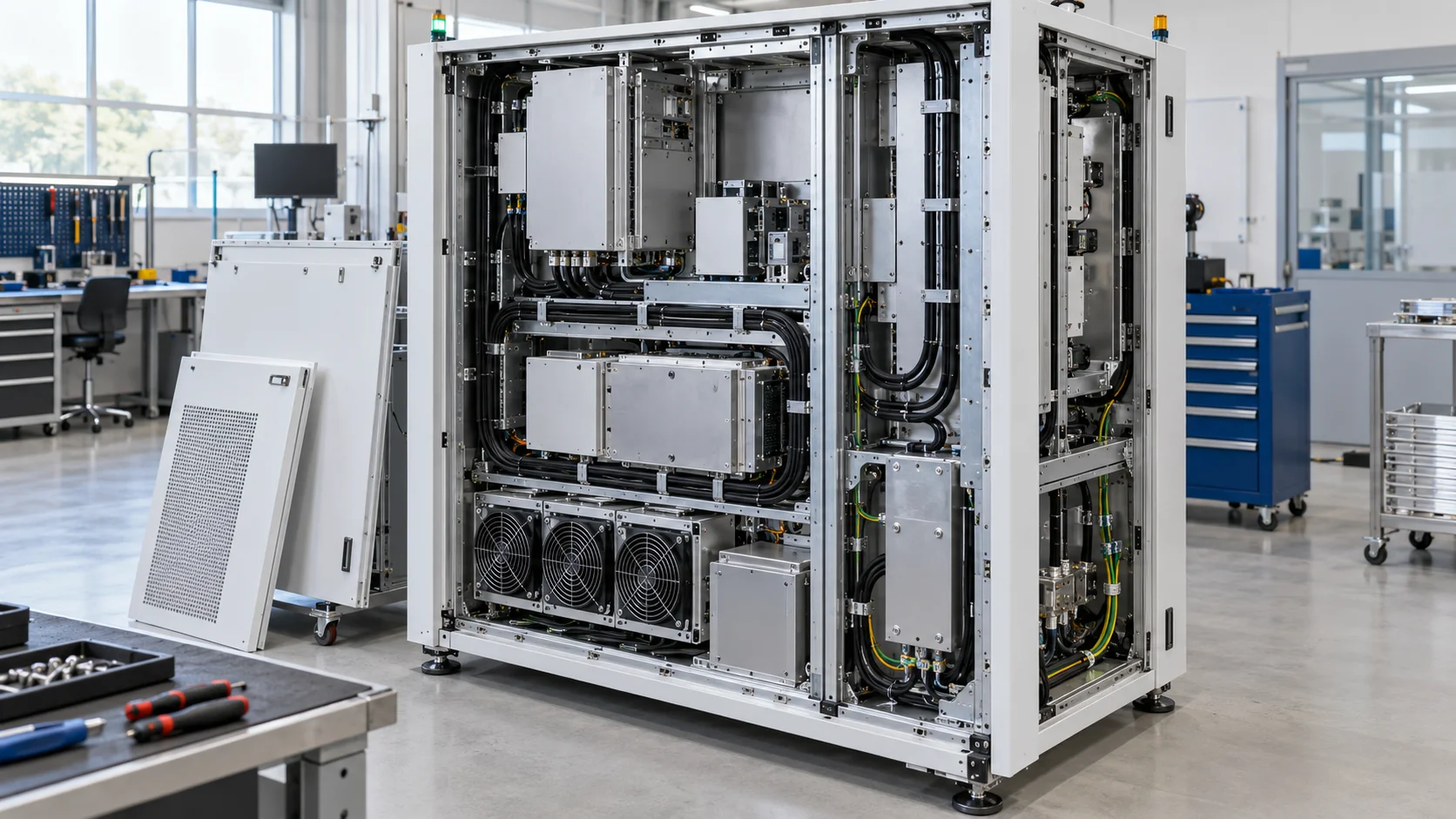
Define what the enclosure must protect against: accidental contact, dust, electromagnetic concerns, heat, vibration, impact, or access by operators and service technicians. The answer affects material, thickness, ventilation, door design, fasteners, and finish.
The enclosure should also be considered as part of the wider semiconductor equipment parts manufacturing program. This keeps panels, brackets, machined interfaces, and assembly requirements connected.
Flat patterns are only the starting point
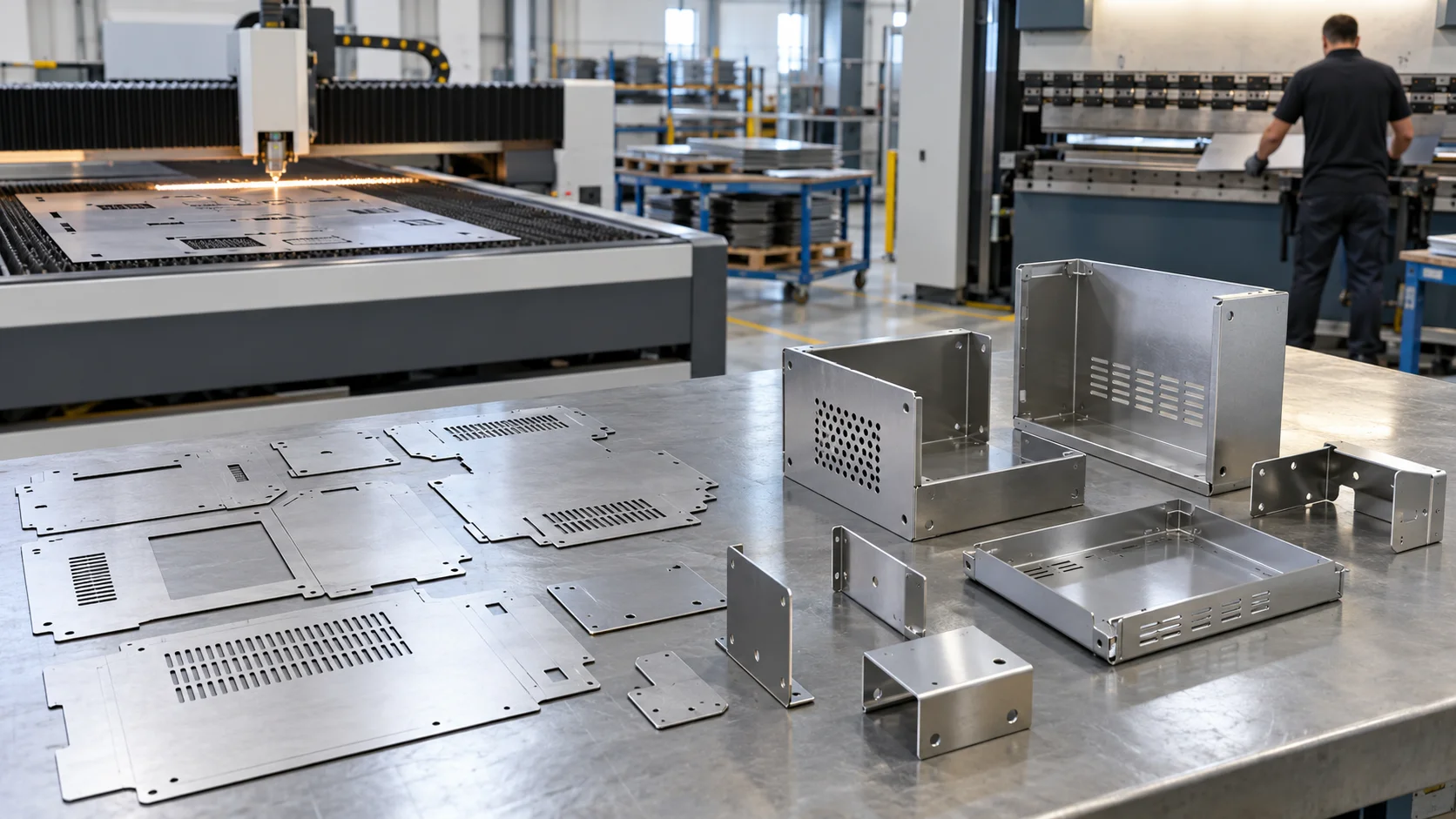
Sheet metal accuracy begins in the flat pattern and continues through cutting, forming, joining, and finishing. Review bend deductions, minimum flange length, corner relief, hole-to-bend distance, and the effect of material thickness. A small error in a mounting hole can become a large problem when several panels meet.
Use laser cutting where the design benefits from accurate profiles and repeatable openings. Confirm the cut edge, heat-affected area, and downstream finishing requirements before release.
Design around the service moment
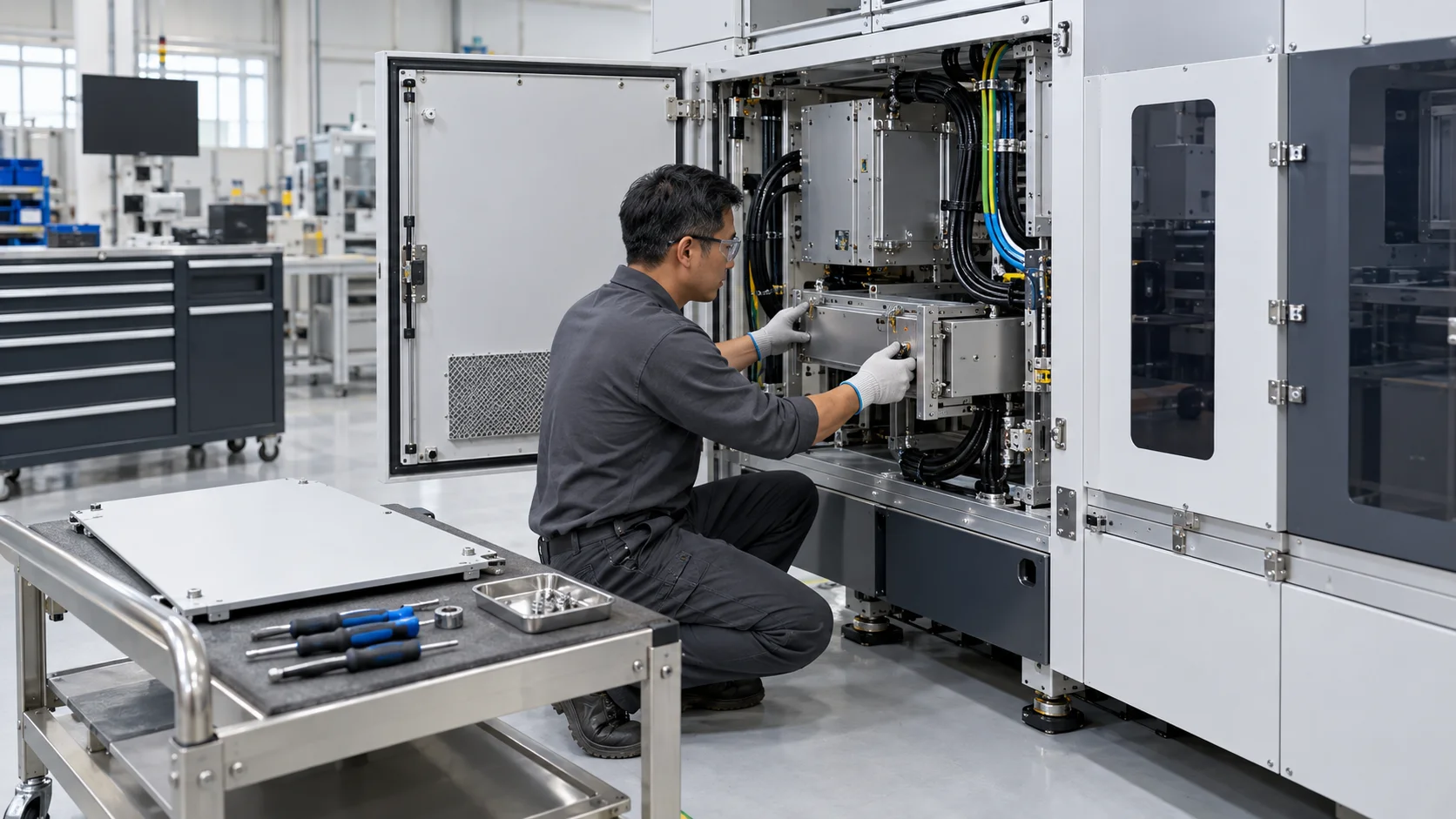
- Provide tool access to fasteners that will be tightened during installation.
- Leave clearance for connectors, cable bends, filters, and removable modules.
- Use locating features when panels must return to the same position.
- Separate frequently serviced covers from structural joints.
- Check whether the assembly can be handled safely by one or two people.
A good enclosure reduces installation time because the technician does not need to improvise around hidden interference. It also reduces rework when the internal equipment changes.
Finish, handling, and protection are connected
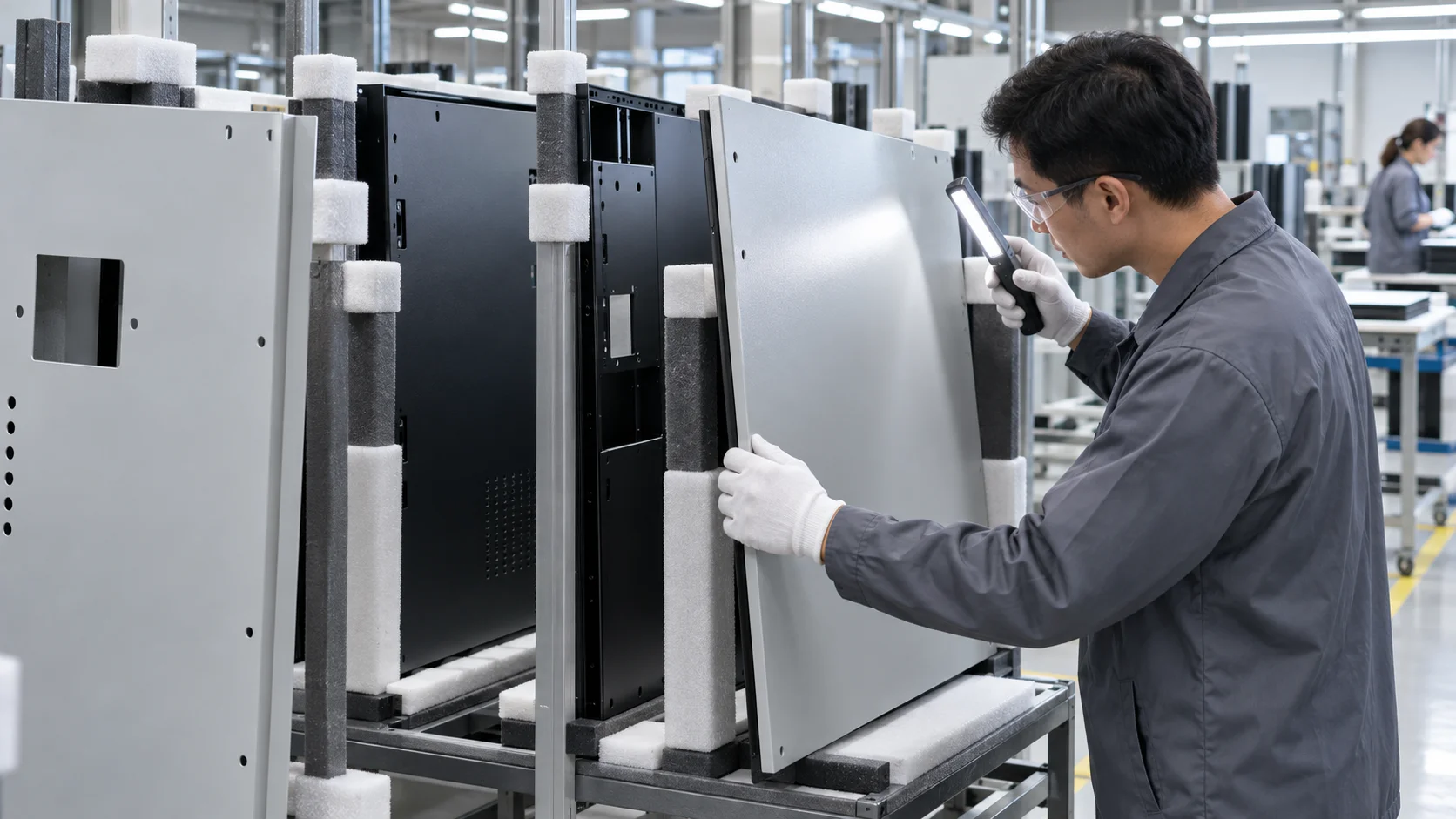
Finish selection affects corrosion resistance, appearance, electrical behavior, cleanability, and scratch visibility. Define masked areas, grounding points, edge treatment, cleaning, and packaging. A finished panel can be damaged by unprotected stacking even when the coating itself is suitable.
If the enclosure includes welded or joined components, inspect distortion and flatness before the finish is applied. Finishing can hide or accentuate a problem, but it cannot replace sound geometry.
Release a fabrication package that works
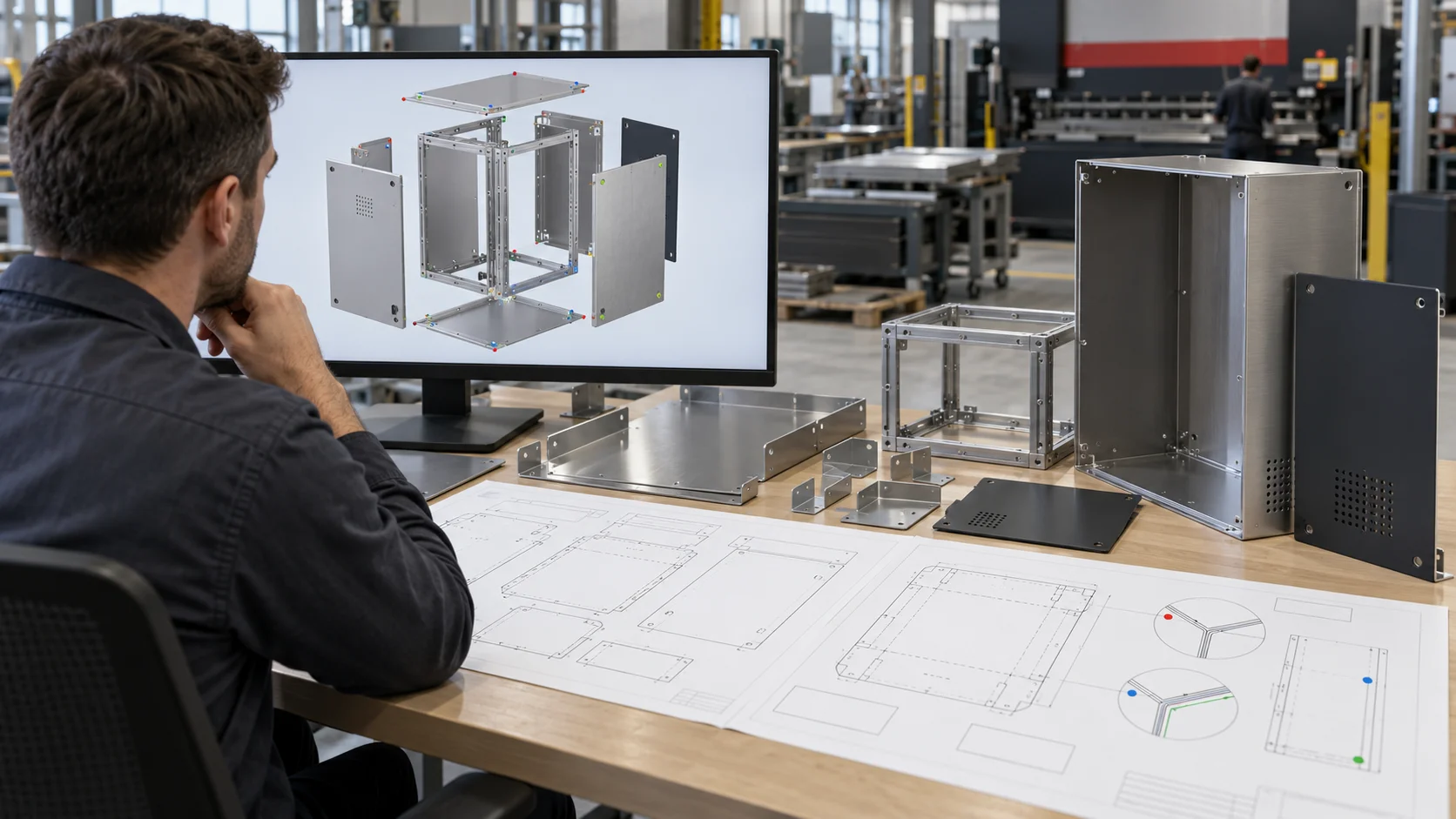
The package should include the 3D assembly, flat patterns where needed, material and thickness, bend notes, weld or fastener details, finish, critical dimensions, and inspection points. Identify the master datum and the surfaces that must align with internal modules.
For larger systems, coordinate enclosure fabrication with assembly service so the supplier can identify fit or access risks before the first build.
Enclosure handoff checklist
- Confirm access panels, fasteners, and service clearances.
- Release flat patterns, bend details, hardware, and finish requirements together.
- Identify protected surfaces and the packing method before fabrication.
Enclosure Design Questions
What material is commonly used for equipment enclosures?
Aluminum and stainless steel are common, but the choice depends on stiffness, weight, corrosion, finish, cleanability, grounding, and the operating environment.
Should the enclosure be designed separately from the equipment?
No. The enclosure should be developed with internal modules, cables, service access, mounting interfaces, and thermal needs in view.
An Enclosure Is a Service Interface
Reliable semiconductor equipment enclosures come from coordinated design. When function, flat patterns, bends, access, finish, and assembly are reviewed together, fabrication becomes more predictable and service becomes easier.

