


Allocating financial capital efficiently during new product introduction requires a clear understanding of long-term unit economics rather than just initial setup figures. While additive manufacturing laboratories boast zero upfront tooling investment, scaling production quantities quickly reveals an aggressive upward pricing slope driven by machine build hours and material consumption. Performing a rigorous cost comparison 3D printing vs rapid tooling helps product managers identify the exact break-even inflection point where cutting a modular metal insert becomes dramatically more economical.
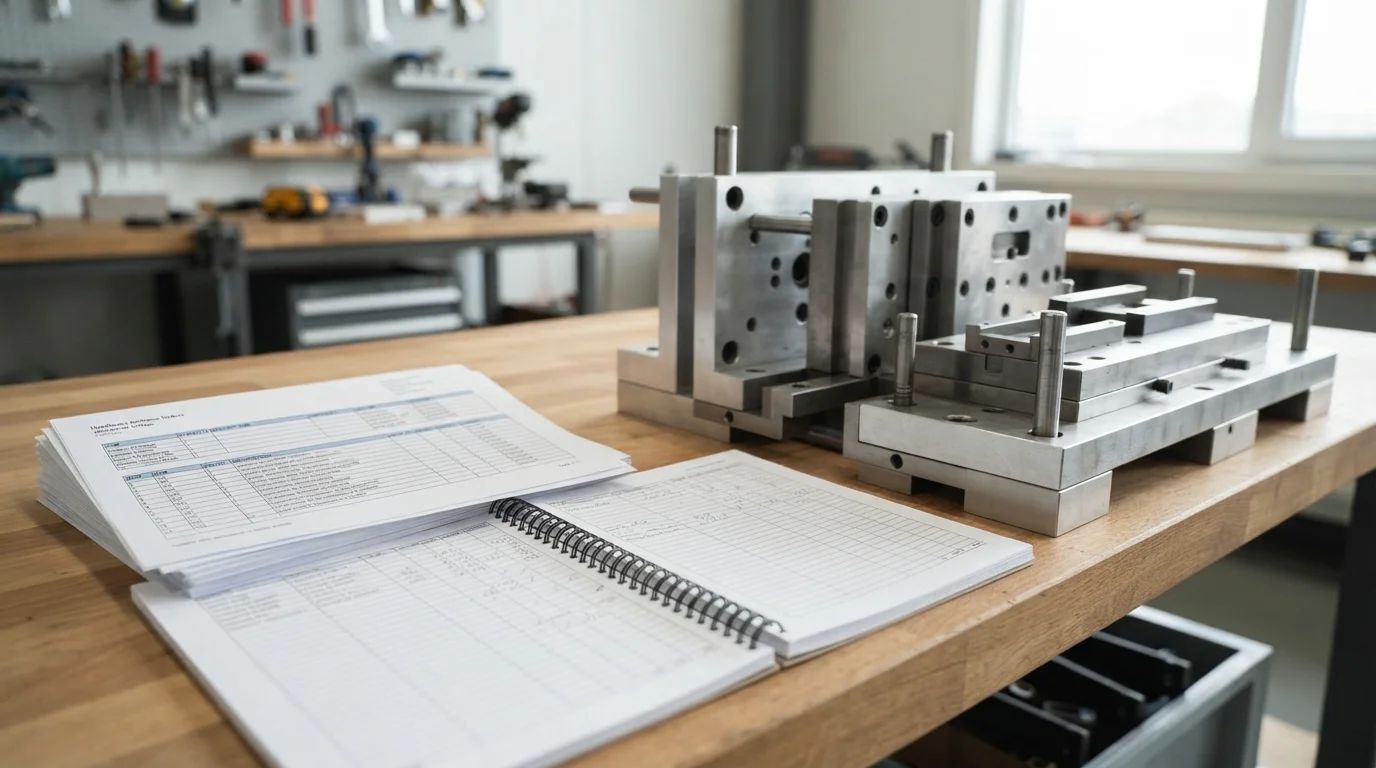
Balancing initial capital expenditure within Rapid tooling vs 3D printing evaluations requires examining how raw material pricing models diverge. Utilizing standardized modular tooling frames lets manufacturers slash non-recurring engineering costs while enjoying bulk thermoplastic pellet pricing. Let us dissect the financial mechanics of upfront investment versus high-volume piece-part savings.
Table of Contents
1. Upfront Investment: Zero Tooling versus Soft Mold Costs
2. Piece-Part Economics: Resin Curing Time versus Bulk Pellet Pricing
3. The Break-Even Curve: Visualizing When Molding Becomes Cheaper
Upfront Investment: Zero Tooling versus Soft Mold Costs

Question: Why do early-stage hardware startups naturally gravitate toward additive manufacturing despite higher unit expenses? Initial non-recurring engineering outlays sit at zero because builds initiate directly from digital CAD models without requiring custom metal cavities.
This lack of upfront capital commitment makes 3D printing unbeatable for single-digit concept prototyping. However, as market validation progresses and project volumes expand toward hundreds of beta units, relying entirely on printer queues locks a venture into stagnant per-piece expenses. Sourcing a flexible Rapid Tooling Service introduces an initial tooling outlay but drastically compresses marginal production costs.
Evaluating initial financial exposure across fabrication methods involves tracking specific budget priorities:
| Financial Attribute | Advanced 3D Printing | Modular Rapid Tooling (MUD) |
|---|---|---|
| Initial NRE Tooling Outlay | Zero ($0 CAD setup) | Moderate (Soft aluminum/steel inserts) |
| Marginal Cost Scaling | Linear (Every unit costs the same) | Declining rapidly with volume |
| Post-Processing Labor Burden | Extremely High (Manual sanding/supports) | Minimal (Automated press ejection) |
Piece-Part Economics: Resin Curing Time versus Bulk Pellet Pricing
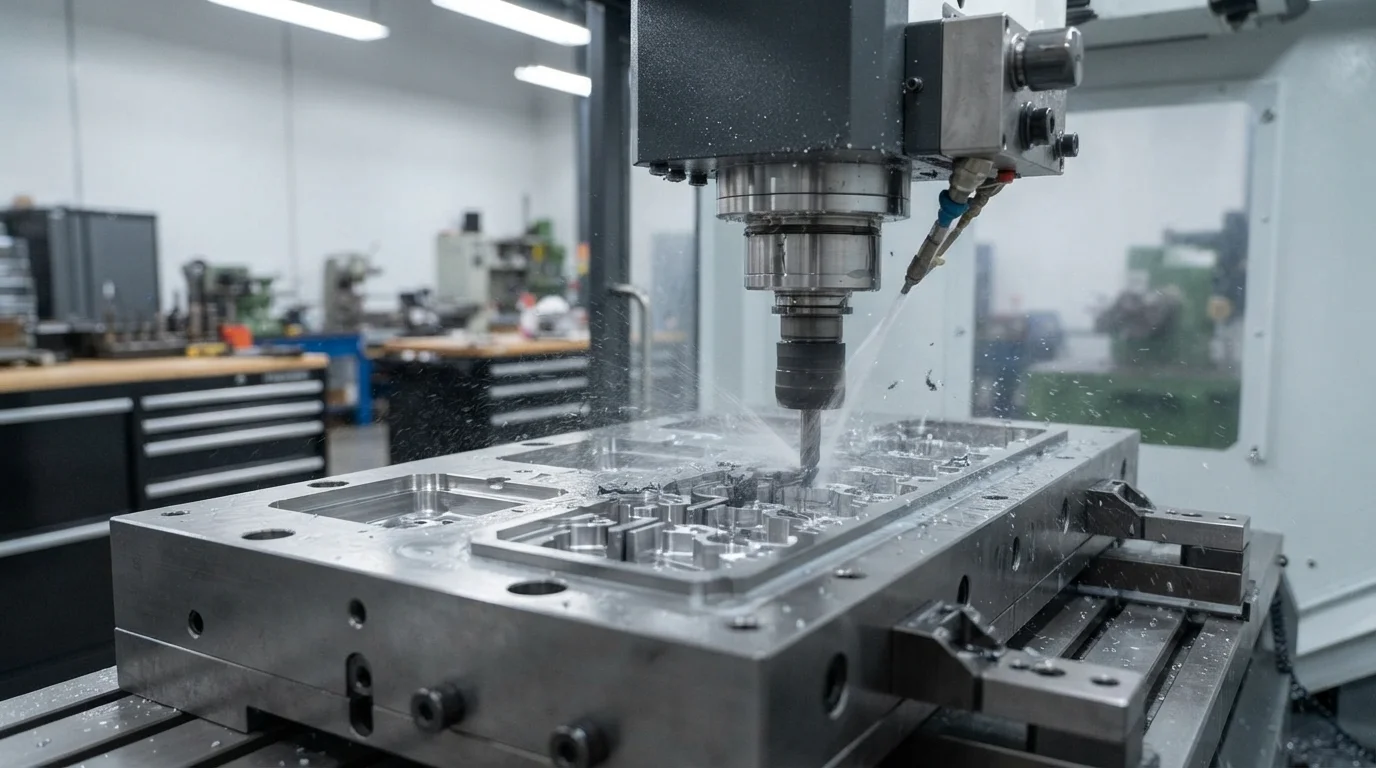
Question: How do raw material pricing structures drive the stark unit cost differences between printing and molding? Printable photopolymers are sold in premium specialty bottles, whereas injection molders purchase commodity engineering thermoplastics in bulk resin pellets at a fraction of the cost.
Beyond material expenses, machine utilization economics heavily favor molding. A high-tonnage industrial press ejects complex structural parts every thirty to sixty seconds, whereas an additive laser must trace every cross-sectional layer sequentially over hours. Utilizing a specialized Injection Molding Service capitalizes on this speed, while an agile Prototype Service helps verify initial budgets before scaling up.
Controlling piece-part expenses and optimizing marginal manufacturing outlays involves monitoring specific financial guidelines:
- Bulk resin savings—Purchasing engineering grade ABS or Polycarbonate (PC) pellets wholesale lowers unit material overhead significantly
- Labor efficiency gains—Automated press extraction replaces expensive manual support removal and surface sanding operations
- Modular frame savings—Utilizing standardized MUD master frames cuts aluminum insert machining costs in half
The Break-Even Curve: Visualizing When Molding Becomes Cheaper

Jucheng Precision supports hardware developers by delivering comprehensive 24-hour free DFM reviews that include detailed volume-versus-cost projections, helping teams pinpoint their exact financial break-even intersection prior to tool cutting. Operating with 150+ advanced CNC machines alongside 35+ specialized injection molding workstations, our ISO 9001 certified facilities ensure maximum capital efficiency.
Key operational advantages of our cost-optimized manufacturing framework include:
- Transparent budget forecasting—Detailed quotations that outline exact break-even thresholds for your specific part geometry
- Modular MUD tooling options—Lowering initial bridge tooling investments through standardized master frame compatibility
- Zero minimum order constraints—No MOQ policies allow exact inventory alignment with customized pilot production runs
Ready to optimize your production budget? Let Jucheng’s manufacturing experts calculate your exact break-even curve today.
Frequently Asked Questions (FAQ)

Why is 3D printing more cost-effective for single-digit prototype builds?
3D printing requires zero upfront non-recurring engineering tooling outlays because builds initiate directly from digital CAD models without cutting custom metal mold cavities.
At what production quantity does rapid modular tooling become cheaper than printing?
When quantities exceed 50 to 100 units, the cumulative savings from bulk thermoplastic pellet pricing and rapid automated press cycling quickly offset the initial cost of cutting modular soft metal inserts.
How does Jucheng Precision help optimize project capital expenditures?
Jucheng Precision provides 24-hour free DFM reviews, flexible modular MUD rapid tooling options, and high-efficiency injection molding to minimize your overall manufacturing budget.

