


Developing short-run plastic hardware requires product designers and tooling engineers to find innovative ways to minimize initial mold base construction expenses. Sourcing pre-machined aluminum injection mold frames combined with modular unit die (MUD) systems allows manufacturing groups to slash upfront CapEx by up to fifty percent. Standardizing mold frame dimensions enables toolrooms to bypass custom frame fabrication entirely, focusing machining labor exclusively on custom core and cavity inserts. Eliminating redundant steel plates preserves crucial development cash flow, accelerating new product introduction (NPI) schedules significantly.
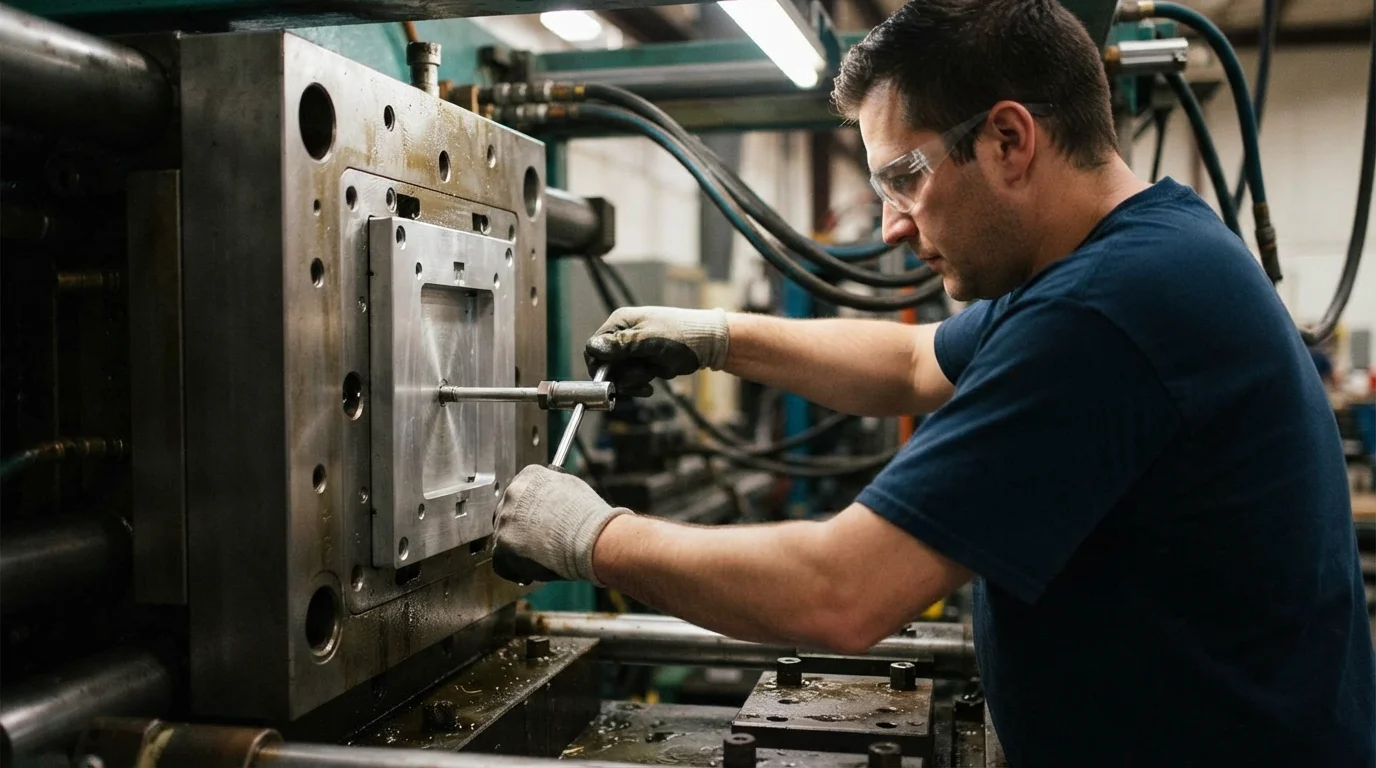
Slicing complex three-dimensional CAD geometries precisely allows experienced toolmakers to analyze parting lines, draft angles, and wall thicknesses using advanced mold flow simulation software. Selecting reusable Master Unit Die (MUD) bases eliminates the need to build a complete standalone mold assembly for every short-run part iteration. Sourcing your components from an experienced partner ensures design changes are propagated across all stages safely. Let’s explore how standardized modular frames revolutionize low-volume production economics.
Table of Contents
1. Master Unit Die Systems and Reusable Mold Base Mechanics
2. Standardized Aluminum Insert Dies versus Custom Tool Frames
Master Unit Die Systems and Reusable Mold Base Mechanics
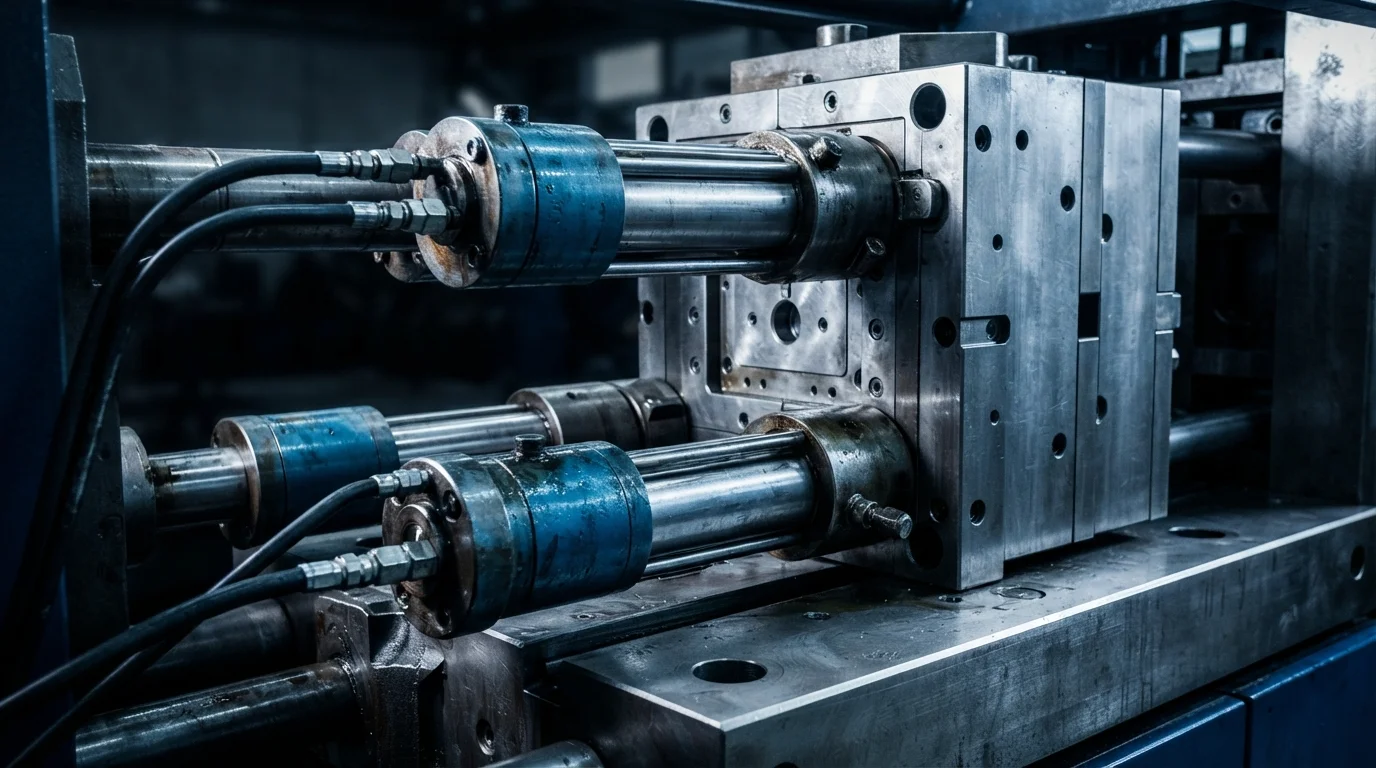
Question: What is a Master Unit Die (MUD) frame system? MUD frames are reusable universal mold bases that stay mounted inside the molding press, allowing operators to swap custom core and cavity insert plates quickly.
Modular unit die systems operate by keeping a standardized master frame permanently clamped inside the injection molding machine platens. Toolmakers machine custom core and cavity companion inserts from high-strength AL7075-T6 Aluminum, inserting them directly into the universal frame pockets. Sourcing custom companion inserts from a professional Prototype Service is ideal for early form studies, but those CAD files often violate mass-production injection molding physics. Slicing CAD files precisely allows experienced toolmakers to analyze parting line shut-offs manually.
Reusing master frames eliminates the cost of machining custom clamping plates, ejector housings, and leader pin bushings for every new design. Utilizing standardized aluminum injection mold frames reduces raw material purchasing requirements, lowering overall tooling lead times down to 10 to 15 business days. Symmetrical companion insert plates slide into place within minutes, securing tight physical alignments under high press clamping forces. Sourcing these standardized inserts protects development budgets from unnecessary machining hours.
Sourcing functional CNC Machining Service parts from extruded billets of ABS, Nylon (PA), or Polypropylene (PP) provides authentic material behavior before cutting Tool Steel core blocks. This detailed materials validation eliminates mechanical failure risks when transitioning prototype to production design configurations. Early validation prevents expensive engineering changes when scaling up to high-volume Injection Molding Service. Standardizing non-critical clearances allows high-speed milling spindles to clear raw stock quickly, maximizing cutting efficiency.
Standardized Aluminum Insert Dies versus Custom Tool Frames
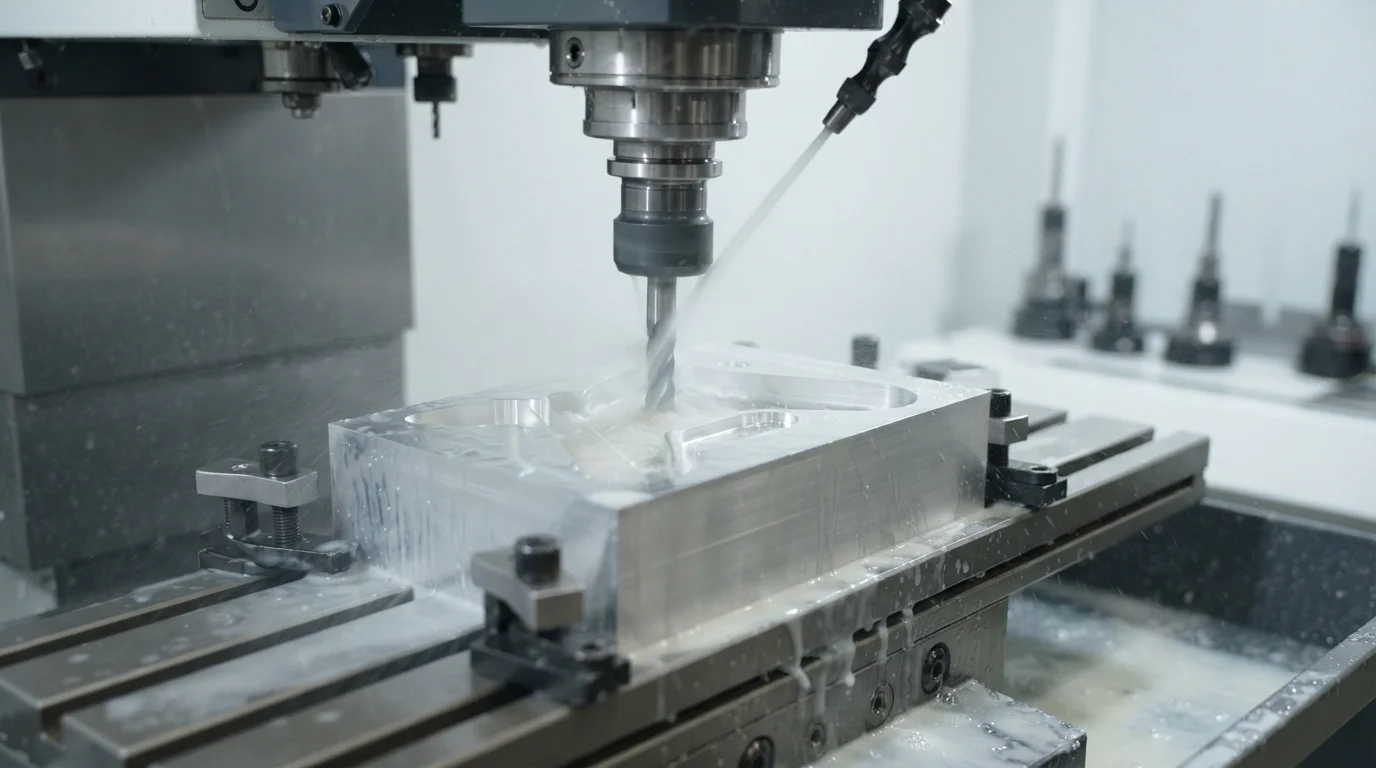
Question: How much money do MUD frames save compared to custom mold bases? Reusing a standard MUD master frame saves 50% to 90% on initial tooling costs because you only pay for the custom inner companion inserts.
Custom standalone mold bases require purchasing heavy steel plates, drilling long waterline passages, and fitting complex ejector plate assemblies from scratch. Sourcing companion insert dies made from pre-hardened P20 steel or AL7075 aluminum allows toolrooms to cut companion plates in half the time. Sourcing a dedicated Rapid Tooling Service using standardized frames delivers genuine injection-molded components from production-grade resins within weeks. Sourcing rapid tooling allows product developers to validate gating, parting lines, and draft angles under real machine pressures.
Selecting the correct mold frame structure involves balancing part production volumes with overall CapEx limits. This technical comparison table highlights baseline cost and changeover differences between custom standalone mold bases and modular unit die frames:
| Tooling System | Initial Frame Investment | Mold Changeover Time | Primary Cost Advantage |
|---|---|---|---|
| Custom Standalone Base | High ($5,000 – $15,000) | 1 to 2 hours (Full unmounting) | Engineered for multi-cavity high-volume series runs |
| MUD Base (Aluminum Inserts) | Low ($1,000 – $3,000 per insert) | 10 to 15 minutes (Quick swap) | Cuts initial CapEx by 50% to 90%, ideal for NPI scaling |
Fast Mold Changeovers for Short Run Production Scaling
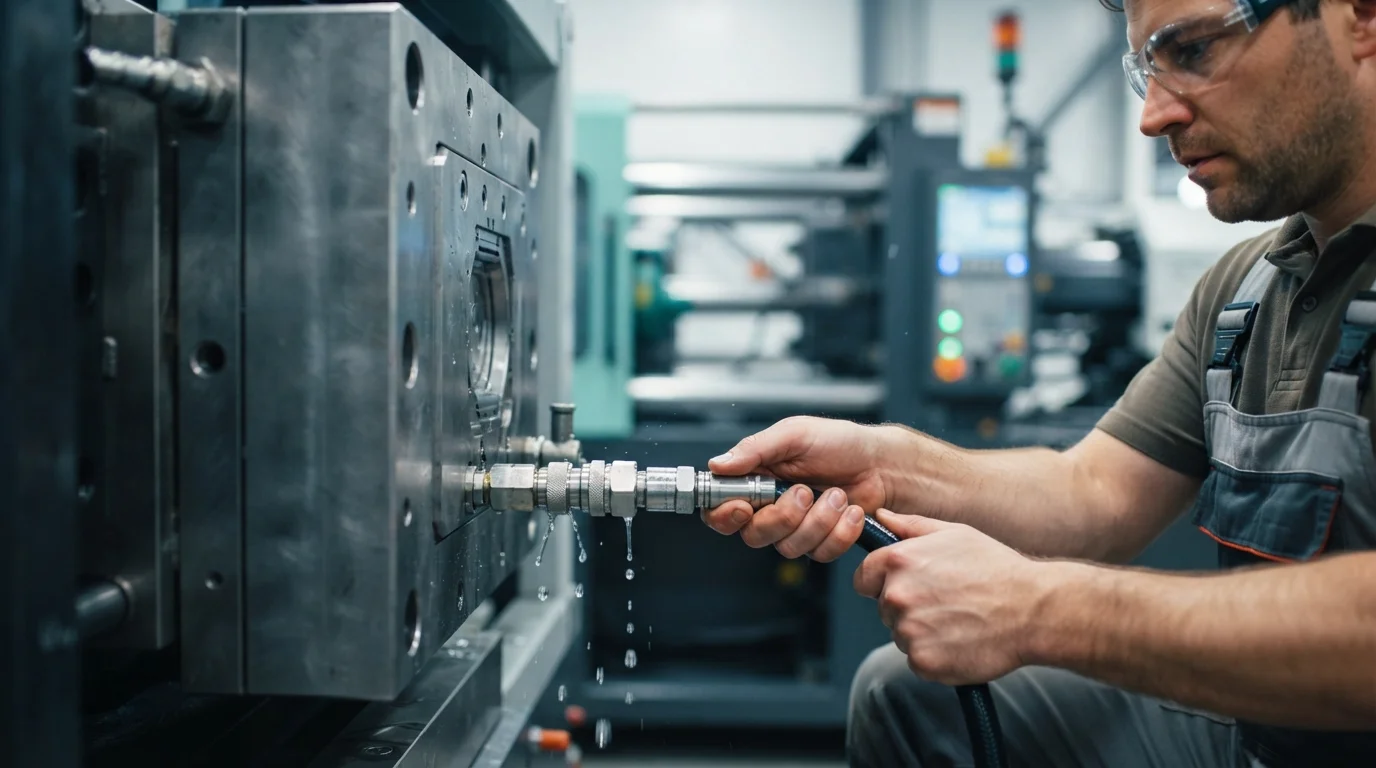
Question: How fast can insert plates be swapped inside a MUD frame? Technicians loosen quick-change locking clamps to swap companion insert dies in 10 to 15 minutes without unmounting the main frame.
Quick-change locking mechanisms built into modular unit die frames allow machine operators to swap companion inserts directly inside the press bed. Bypassing full mold unmounting procedures eliminates press downtime, allowing small-batch production runs of 100 to 10,000 parts to run efficiently. Sourcing versatile aluminum injection mold frames helps manufacturers run family molds or multiple part variations back-to-back safely. Symmetrical component designs simplify holding fixtures, reducing initial setup labor hours dramatically.
Jucheng Precision operates a fully-integrated factory setup containing both multi-axis machining centers and precision injection molding presses. Factory engineers deliver comprehensive 24-hour free DFM reviews to optimize gate locations, parting lines, and draft profiles before cutting metal. Sourcing customized aluminum tooling setups provides superior thermal equilibrium across thin and thick features. Sourcing high-quality prototypes ensures your designs are built to withstand severe dynamic forces safely.
Partnering with a certified manufacturer helps you navigate the transition from early visual mockups to low-volume bridge tooling seamlessly. Sourcing your quotes manually ensures experienced engineers analyze your 3D STEP files to find additional ways of lowering your short-run molding bills. Custom components undergo rigorous coordinate metrology checks to confirm exact dimensional compliance. Sourcing high-quality prototypes ensures your designs are built to withstand severe dynamic forces safely.
Frequently Asked Questions (FAQ)
What are the standard configurations for Master Unit Die (MUD) frames?
Master Unit Die (MUD) frames accommodate single-cavity U-style, double H-style, and quad companion insert configurations. Standardizing frame sizes allows molders to scale production from single prototype inserts to multi-part family molds easily.
How many injection cycles can aluminum companion insert dies survive?
Companion insert plates machined from high-strength AL7075-T6 aluminum easily survive 10,000 to 50,000 injection cycles when molding non-abrasive thermoplastics. Installing pre-hardened P20 steel gate inserts extends total mold lifespan when running glass-filled resins.
How do waterlines connect inside quick-change MUD insert plates?
Standard MUD frames incorporate built-in waterline manifolds that connect directly to companion insert cooling channels via quick-disconnect fittings. Uniform thermal dissipation ensures molded plastic parts cool rapidly without differential shrinkage or warpage.

