
Aluminum CNC Machining
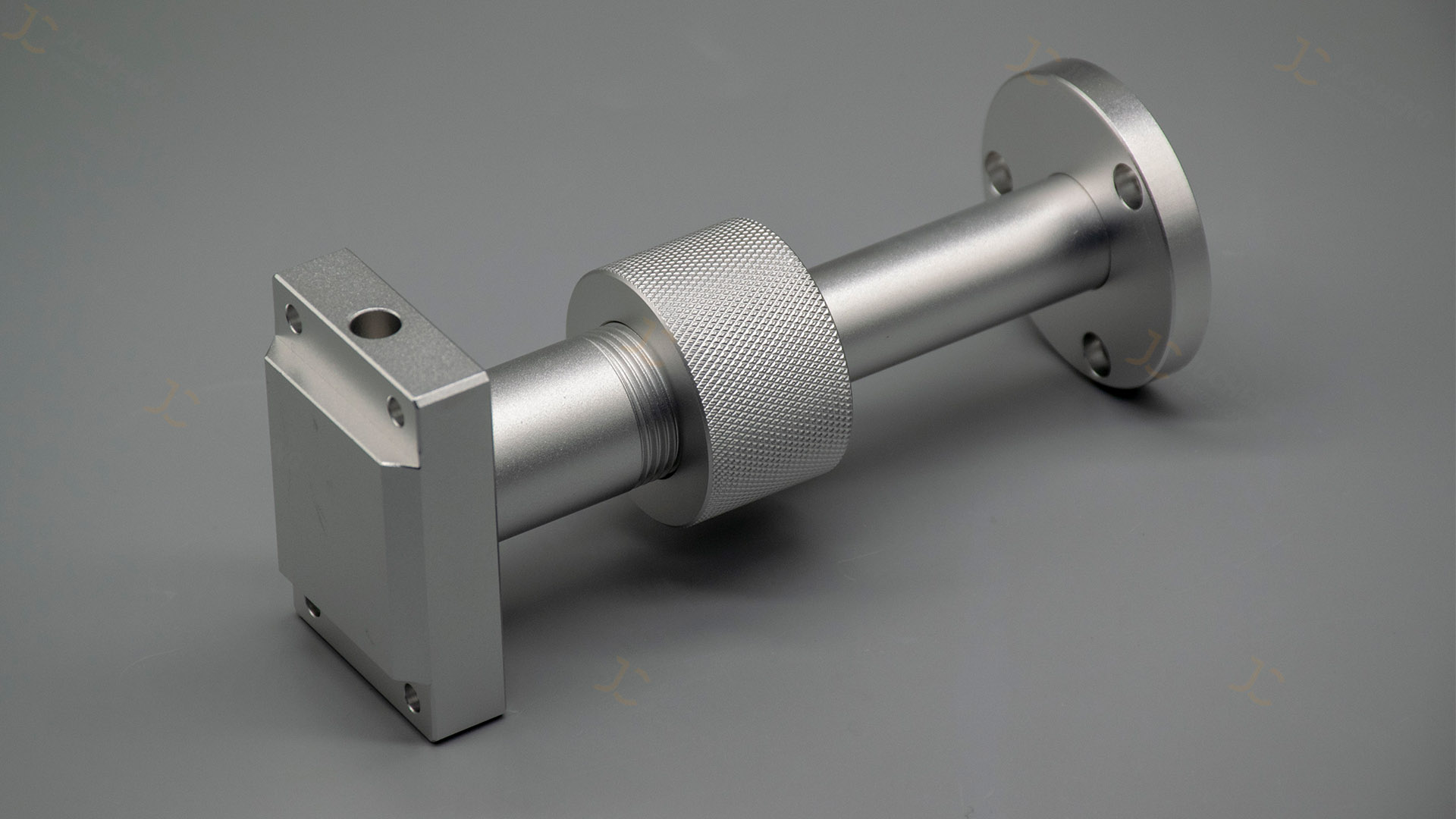
Aluminum alloy parts made through CNC machining are lightweight yet strong, making them ideal for applications where reducing weight without sacrificing durability is important. They also conduct heat well, which is great for cooling and heat management.
Aluminum stands out as a premier material for CNC machining, offering an exceptional blend of lightweight properties and remarkable strength. Its excellent machinability allows for high-speed production, reducing lead times and cost, while its natural corrosion resistance ensures durability for your components. Furthermore, aluminum's superior thermal conductivity and aesthetic versatility make it the ideal choice for a wide array of projects, from intricate enclosures to high-stress mechanical parts.
Our machining service is designed to fully leverage these advantages. We utilize advanced milling and turning processes to transform aluminum into high-precision, custom parts that meet your exact specifications. We are committed to providing you with the best possible outcome, ensuring every detail is perfected for performance and reliability. Partner with us to bring your designs to life with efficiency and excellence.
Our machining service is designed to fully leverage these advantages. We utilize advanced milling and turning processes to transform aluminum into high-precision, custom parts that meet your exact specifications. We are committed to providing you with the best possible outcome, ensuring every detail is perfected for performance and reliability. Partner with us to bring your designs to life with efficiency and excellence.
Our available materials
Aluminum alloy 6061-T6 | 3.3211| 65028| AlMg1SiCu
6061 aluminum alloy cnc machining is the most popular aluminum alloy. It has good strength-to-weight ratio, excellent machinability and natural corrosion resistance.
Aluminum alloy 6063 | EN AW-6063 | 62400| AlMg0,7Si
6063 aluminum alloy has good mechanical properties and is often used in situations where good formability, weldability and corrosion resistance are required. It is commonly used for CNC machining parts.
Aluminum alloy 6082 | 3.2315 | 64430| AlSi1MgMn
Aluminum alloy 6082 Good for CNC machining, bending, and welding etc. Additionally, it has excellent anodizing properties, which make it an ideal material for decorative and architectural applications.
alloy Aluminum 6060 | 3.3206 | AlMgSi
Aluminum alloy 6060 has good corrosion resistance and is suitable for use in outdoor and corrosive environments. Aluminum alloy 6060 can be used for cnc machining production of auto parts, industrial machinery and radiators.
Aluminum alloy 2014 | 3.1255 | 24345 | AlCu4SiMg
Aluminum alloy 2014 is easy to CNC machining, which makes it the material of choice for parts requiring complex shapes and designs. It also has high corrosion resistance and good weldability
Aluminum alloy 2024 T3
Aluminum alloy 2024-T3: This is a high-strength alloy, due to its excellent strength-to-weight ratio and good fatigue resistance, commonly used in cnc machining other parts.
Aluminum alloy 5083-H111 | 3.3547 | 54300| AlMg4.5Mn0.7
Aluminum alloy 5083 has excellent resistance to saltwater corrosion, which makes it an ideal material for Marine applications such as hull, deck and other components. The AL5083 is also used in the production of parts for CNC machining of aircraft parts, pressure vessels and cryogenic storage tanks.
Aluminum alloy 5052 (H32) | EN AW-5052 | 3.3523 | AlMg2,5
5052-H32 aluminum alloy is a corrosion resistant alloy, because of its excellent resistance to salt water corrosion properties, often used in CNC machining of Marine and industrial parts.
Aluminum alloy 7075-T6 | 3.4365 | 76528 | AlZn5,5MgCu
Aluminum alloy 7075-T6 is a high-strength alloy known for its excellent strength-to-weight ratio and fatigue resistance. It is commonly used for CNC machining of aircraft and other high-performance parts.
Aluminum alloy 7050 | EN AW-7050 | AlZn6CuMgZr
The AL7075 also has good machinability, weldability and corrosion resistance, making it suitable for a variety of applications, often used for CNC machining of aircraft parts, missile parts and automotive parts.
Finishing touches: popular surface treatment options
Anodizing is an electrochemical process that enhances the natural properties of aluminum. It creates a hard, integrated oxide layer on the aluminum part, making it highly resistant to corrosion and wear, and it can be dyed in various colors for aesthetics.
Sandblasting is a mechanical process used to texture the surface of aluminum components. It produces a uniform, matte finish by propelling fine abrasives, which effectively hides machining marks and gives the aluminum a consistent, non-reflective appearance.
Chemical Film (Chromate Conversion Coating) applies a thin protective layer directly onto the aluminum substrate. This treatment provides good corrosion resistance for the aluminum part while maintaining electrical conductivity, which is crucial for many electronic applications.
Powder Coating involves applying a dry polymer powder to the aluminum part, which is then cured with heat. This creates a thick, durable, and resilient coating that fully encapsulates the aluminum, offering superior protection against impact and chemicals in a wide range of colors.
Brushing is a finishing technique that creates a decorative pattern on the aluminum surface. By creating fine, parallel lines, it gives the aluminum component a distinctive metallic luster and a modern, tactile feel.
Sandblasting is a mechanical process used to texture the surface of aluminum components. It produces a uniform, matte finish by propelling fine abrasives, which effectively hides machining marks and gives the aluminum a consistent, non-reflective appearance.
Chemical Film (Chromate Conversion Coating) applies a thin protective layer directly onto the aluminum substrate. This treatment provides good corrosion resistance for the aluminum part while maintaining electrical conductivity, which is crucial for many electronic applications.
Powder Coating involves applying a dry polymer powder to the aluminum part, which is then cured with heat. This creates a thick, durable, and resilient coating that fully encapsulates the aluminum, offering superior protection against impact and chemicals in a wide range of colors.
Brushing is a finishing technique that creates a decorative pattern on the aluminum surface. By creating fine, parallel lines, it gives the aluminum component a distinctive metallic luster and a modern, tactile feel.
Materials CNC machining

Request Your DFM & Quote – Upload Your Drawings
ㆍFill in your requirements and upload your 2D&3D file, we will feedback your project quotation and DFM within 24 hours.ㆍFile types: STEP, STP, IGES, IGS, SLDPRT, 3DM, SAT, X_T, DWG, DXF, STL, PDF, ZIP and more. File size: < 128 MB Part size: < 1500*1500*1500 mm
ㆍPrivacy: We respect your privacy. Here you can find an example of a non-disclosure agreement. By submitting this form, you agree to our terms & conditions and privacy policy.
ㆍPrivacy: We respect your privacy. Here you can find an example of a non-disclosure agreement. By submitting this form, you agree to our terms & conditions and privacy policy.
