


Machining core and cavity inserts directly from high-strength aluminum blocks represents the single most impactful strategy for compressing lead times in rapid injection molding. Traditional toolmakers spend weeks performing slow spark-erosion electrical discharge machining (EDM) and heat-treating hard steels to achieve complex cavity details. Sourcing soft-metal molds allows toolrooms to cut complex three-dimensional features directly on high-speed CNC milling centers, delivering sample components within 10 to 15 business days. Understanding the mechanical parameters governing subtractive mold-making ensures your development group bypasses high CapEx barriers while maintaining strict part dimensional repeatabilities.
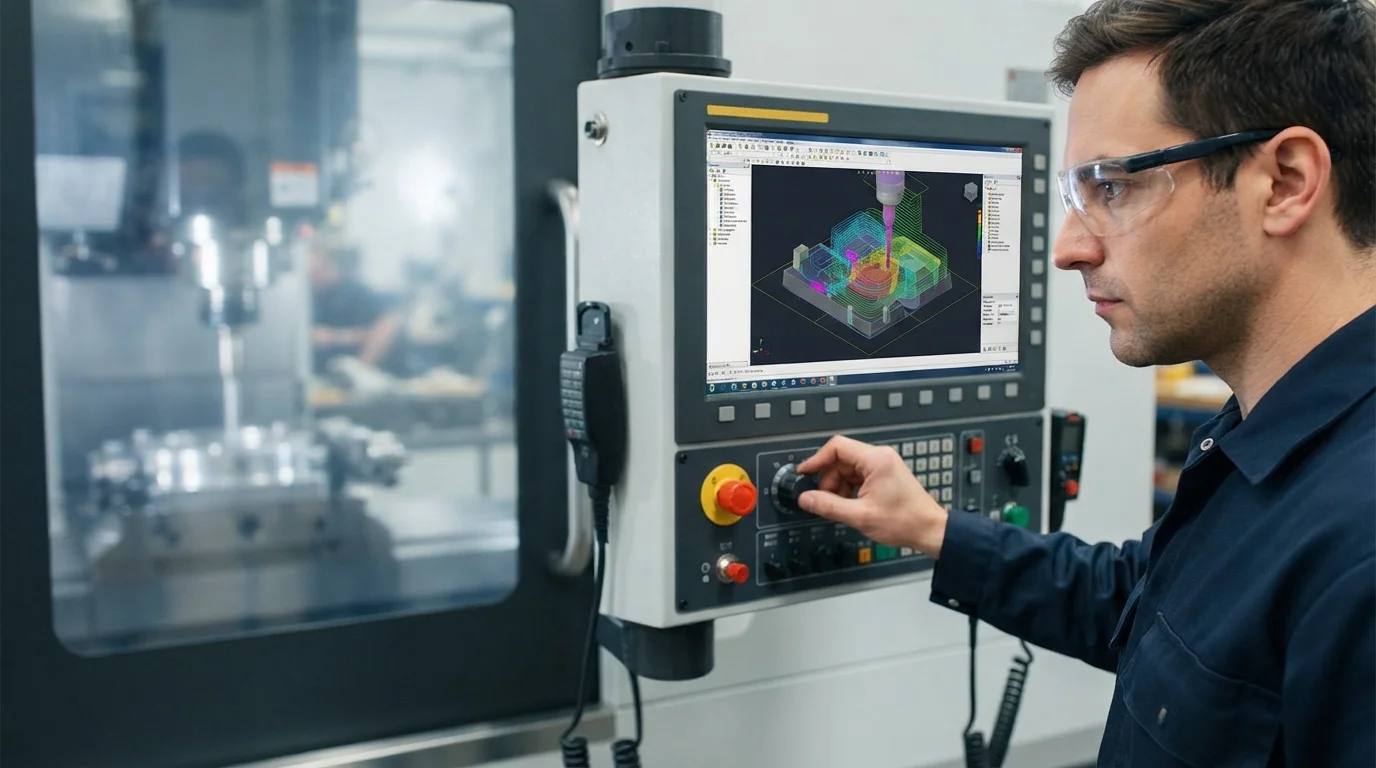
Executing high-speed milling operations on soft alloys demands a comprehensive understanding of spindle speeds, chip evacuation behaviors, and surface roughness limits. Slicing complex CAD files precisely allows experienced toolmakers to analyze parting lines, draft angles, and wall thicknesses using advanced mold flow simulation software. Sourcing your copies from an experienced partner ensures design changes are propagated across all stages safely. Let’s explore the physical advantages of cnc machining aluminum molds and examine how high-speed spindles streamline low-volume tooling programs.
Table of Contents
1. Machinability Advantage: Cutting Aluminum Three to Five Times Faster
2. Multi-Axis CNC Milling for Intricate Core and Cavity Geometries
Machinability Advantage: Cutting Aluminum Three to Five Times Faster
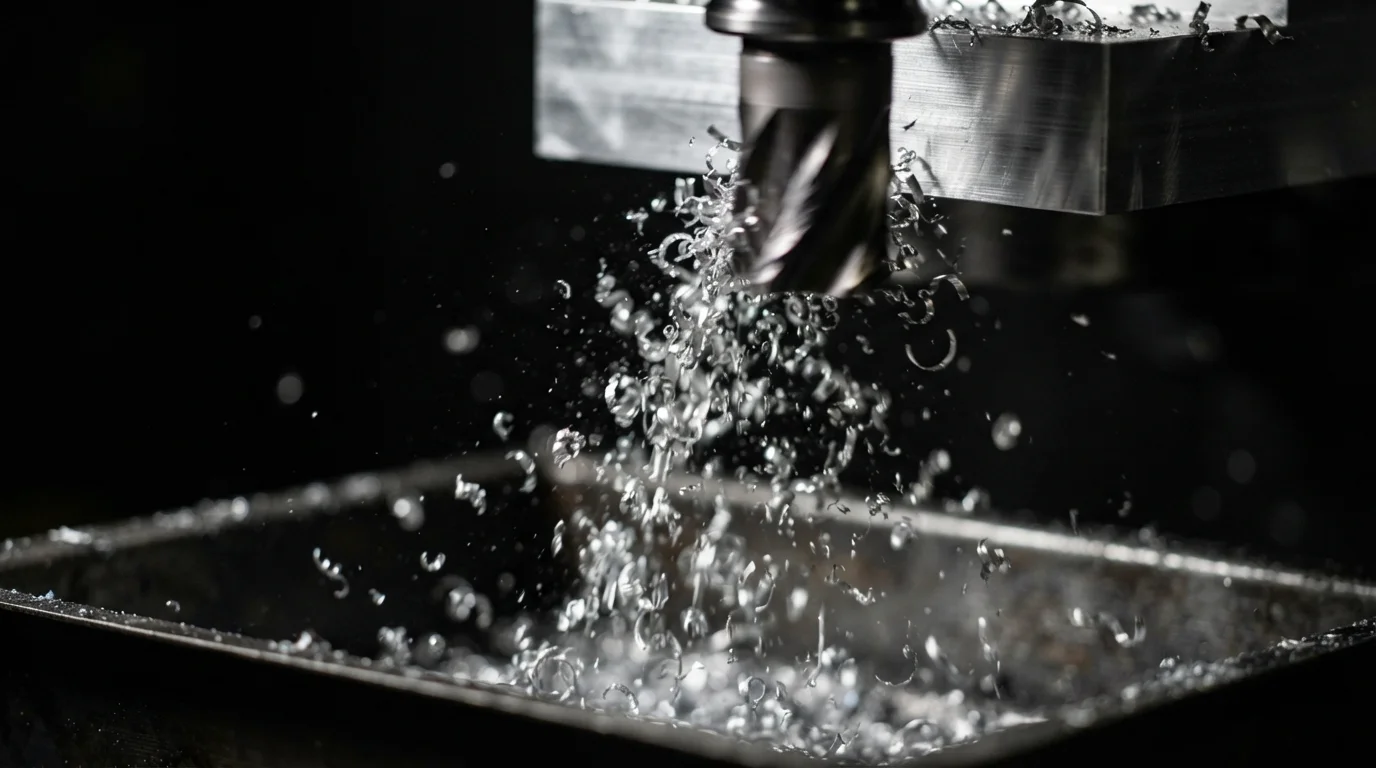
Question: Why is aluminum so much faster to CNC machine than tool steel? Aluminum alloys exhibit low shear strength and high thermal conductivity, allowing CNC spindles to run at much higher feeds and speeds with minimal tool wear.
Selecting raw mold metals directly dictates the total programming hours and active machine time required to carve complex cavity blocks. High-yield Aluminum alloys like AL7075-T6 cut three to five times faster on multi-axis mills compared to pre-hardened Tool Steel grades like P20. Sourcing soft-metal billets allows machinists to take aggressive cut depths without risking cutter chatter or tool breakage. Rapid chip removal accelerates core fabrication, enabling short-run molds to reach the injection press floor within days.
Bypassing secondary heat-treatment cycles represents another major time-saving advantage when executing cnc machining aluminum molds programs. Hardened steel tools require pre-machining, thermal stress relief, vacuum hardening, and final finish grinding to achieve target Rockwell hardness levels. Aluminum tooling plates arrive pre-tempered to T6 conditions, allowing toolmakers to execute roughing and finishing passes in a single continuous machining cycle. Eliminating thermal processing steps slashes overall mold production lead times by up to seventy percent.
Multi-Axis CNC Milling for Intricate Core and Cavity Geometries
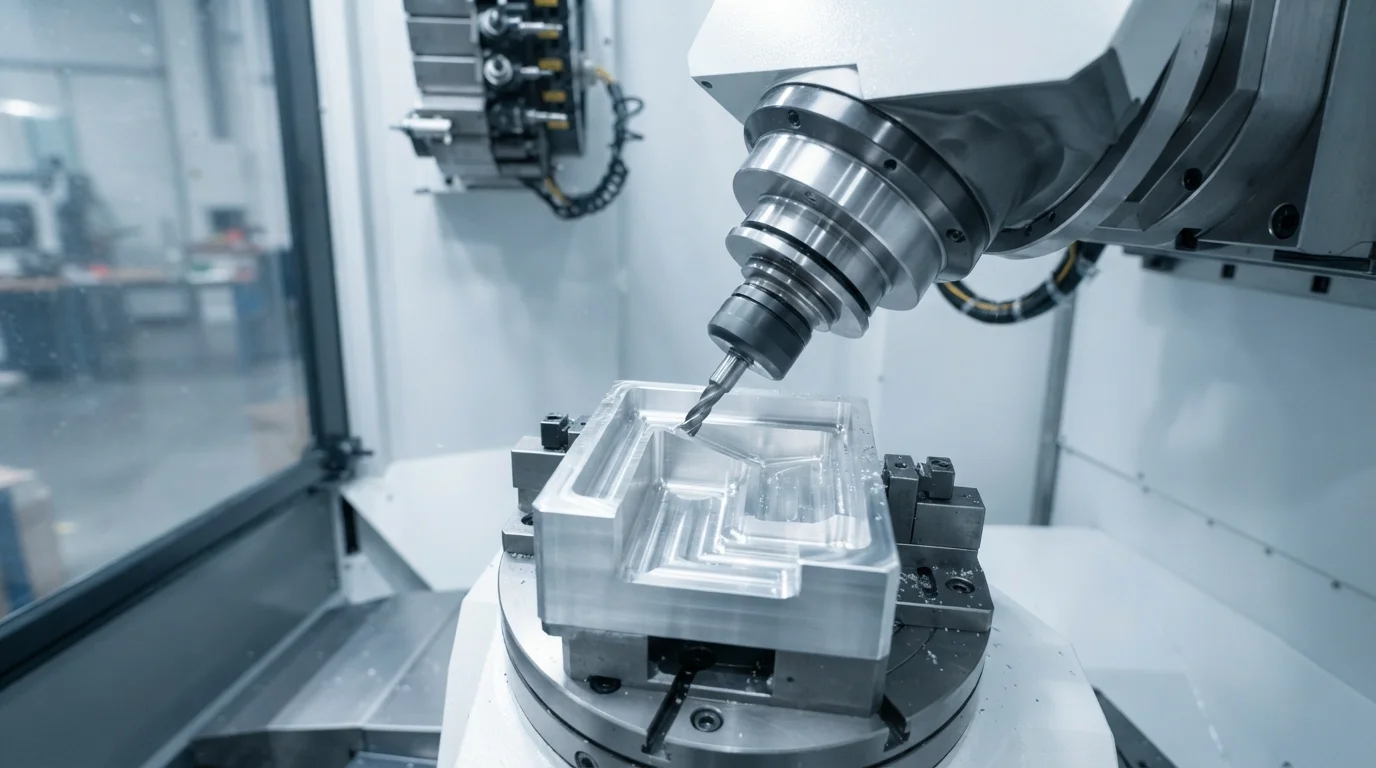
Question: How does 5-axis CNC machining benefit aluminum mold making? Simultaneous multi-axis motion enables cutters to reach deep pockets, complex undercuts, and steep draft angles in a single clamping setup.
Complex automotive bezels, electronic housings, and medical enclosures require multi-directional tool access to carve intricate internal ribs and boss locations. Sourcing a dedicated CNC Machining Service utilizing 5-axis simultaneous milling centers allows toolmakers to position cutters at optimal angles without re-clamping the stock. Single-setup machining eliminates human re-positioning errors, preserving sub-micron coordinate alignments across complex split lines and ejector pin bores. Symmetrical component designs simplify holding fixtures, reducing initial setup labor hours dramatically.
Selecting appropriate mold core inserts involves balancing raw physical properties with overall tooling expenditures. This technical comparison table highlights machining efficiency and cycle differences between soft aluminum and hard steel mold cores:
| Machining Parameter | AL7075-T6 Aluminum Mold | P20 Pre-hardened Steel Mold | Primary Tooling Advantage |
|---|---|---|---|
| Spindle Cutting Speed | 15,000 to 24,000 RPM | 3,000 to 8,000 RPM | Slashes active roughing and finishing machine hours |
| Material Removal Rate | High (up to 500 cm³/min) | Moderate (80 to 120 cm³/min) | Clears deep internal pockets rapidly without chatter |
| Thermal Processing | None (Pre-tempered T6) | Required (Heat treat & stress relief) | Eliminates weeks of heat-treating turnarounds |
High-Speed Spindles and Flood Coolant Management
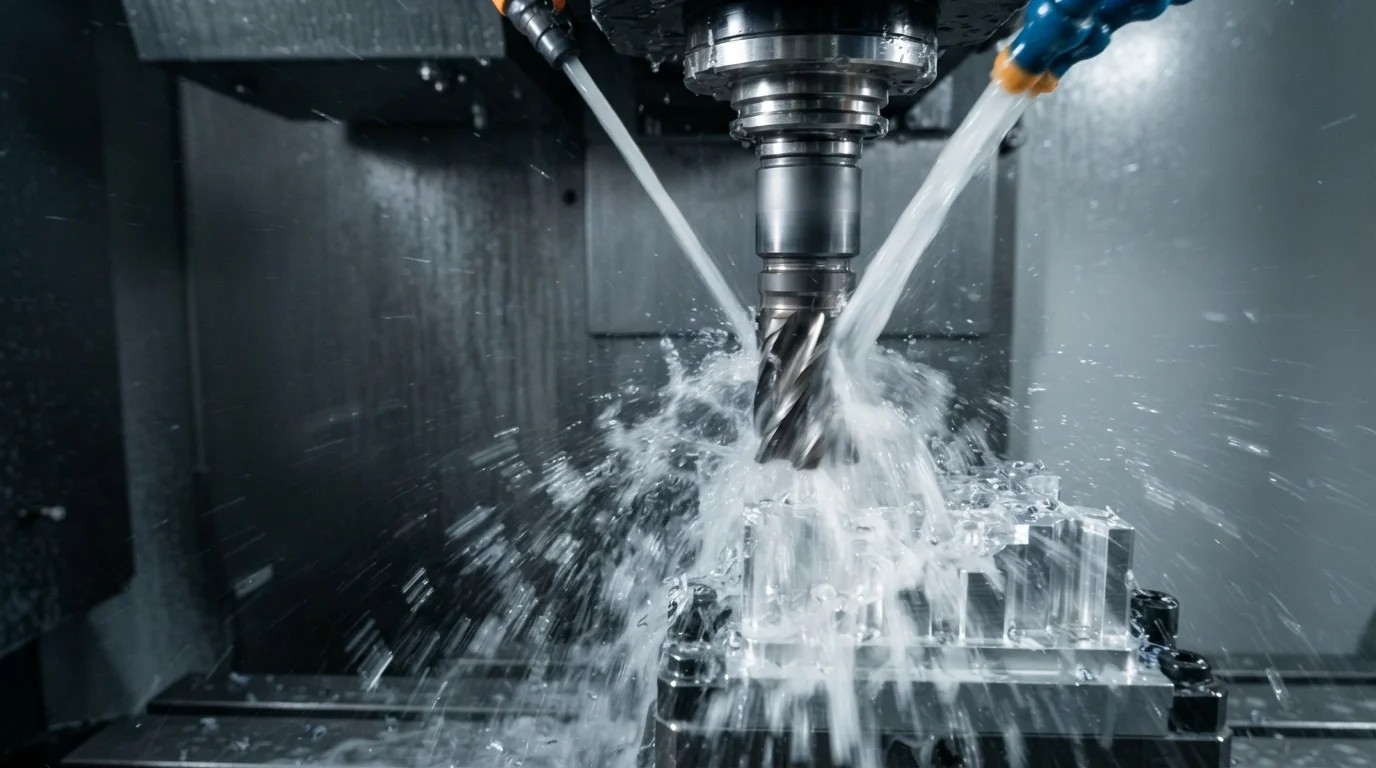
Question: Why is continuous flood coolant essential when milling aluminum mold cavities? High-pressure coolant flushes chips out of deep channels immediately, preventing molten aluminum from welding to tool flutes.
High-RPM spindles running at 18,000 to 24,000 RPM produce exceptionally smooth cavity surface finishes that directly reduce post-machining hand polishing hours. High-pressure flood coolant mist must spray continuously onto the cutting zone to flush metal chips out of deep cavity pockets instantly. Aluminum’s ductility can cause raw chips to pack inside cutter flutes if coolant pressure drops, leading to tool binding or surface scuffing. Maintaining high fluid velocity ensures cutter teeth remain clean, yielding pristine surface roughness values straight off the machine.
Jucheng Precision operates a fully-integrated factory setup containing both multi-axis machining centers and precision injection molding presses. Factory engineers deliver comprehensive 24-hour free DFM reviews to optimize gate locations, parting lines, and draft profiles before cutting metal. Sourcing a dedicated Rapid Tooling Service using aluminum or soft steel cores delivers genuine injection-molded components from production-grade resins within weeks. Sourcing high-quality prototypes ensures your designs are built to withstand severe dynamic forces safely.
Partnering with a certified Injection Molding Service specialist ensures your finished hardware matches the premium software experience. Sourcing your quotes manually ensures experienced engineers analyze your 3D STEP files to find additional ways of optimizing your cnc machining aluminum molds toolpaths. Sourcing functional ABS parts molded from soft metal inserts preserves crucial development cash flow. Custom components undergo rigorous coordinate metrology checks to confirm exact dimensional compliance.
Frequently Asked Questions (FAQ)
What is the typical turnaround time for a CNC machined aluminum mold?
Sourcing high-fidelity physical mockups of structural linkages from a professional Prototype Service is ideal for early form studies, but those CAD files often violate mass-production injection molding physics. High-speed CNC spindles can cut core cavities directly from solid aluminum stock within 10 to 15 business days.
How do CNC toolpaths affect the surface finish of the molded plastic part?
Milling cutter paths leave microscopic tool marks that directly transfer to the injected plastic part’s surface. Hand polishing with oil stones, bead-blasting, or chemical texturing removes these cutter lines, producing glossy or satin surface finishes on final molded components.
Can small-diameter endmills machine thin reinforcing rib channels in aluminum?
High-spindle speeds of 15,000 to 24,000 RPM allow small-diameter endmills to clear thin rib channels quickly with minimal cutting force. High rotational speeds prevent tool deflection and deliver mirror-like cavity surface finishes directly off the machine.

