


Evaluating mold durability represents a paramount concern when transitioning custom plastic designs from low-volume prototypes to medium-volume pilot production runs. Product development teams must determine exactly how many repeatable parts a soft-alloy or pre-hardened steel cavity can eject before dimensional tolerances begin to drift. Sourcing short-run injection molded parts requires a balanced engineering strategy that matches target part yields with cost-effective mold metal selections. Meticulous planning prevents expensive engineering reworks, ensuring custom assemblies transition seamlessly from early prototypes to mass production.
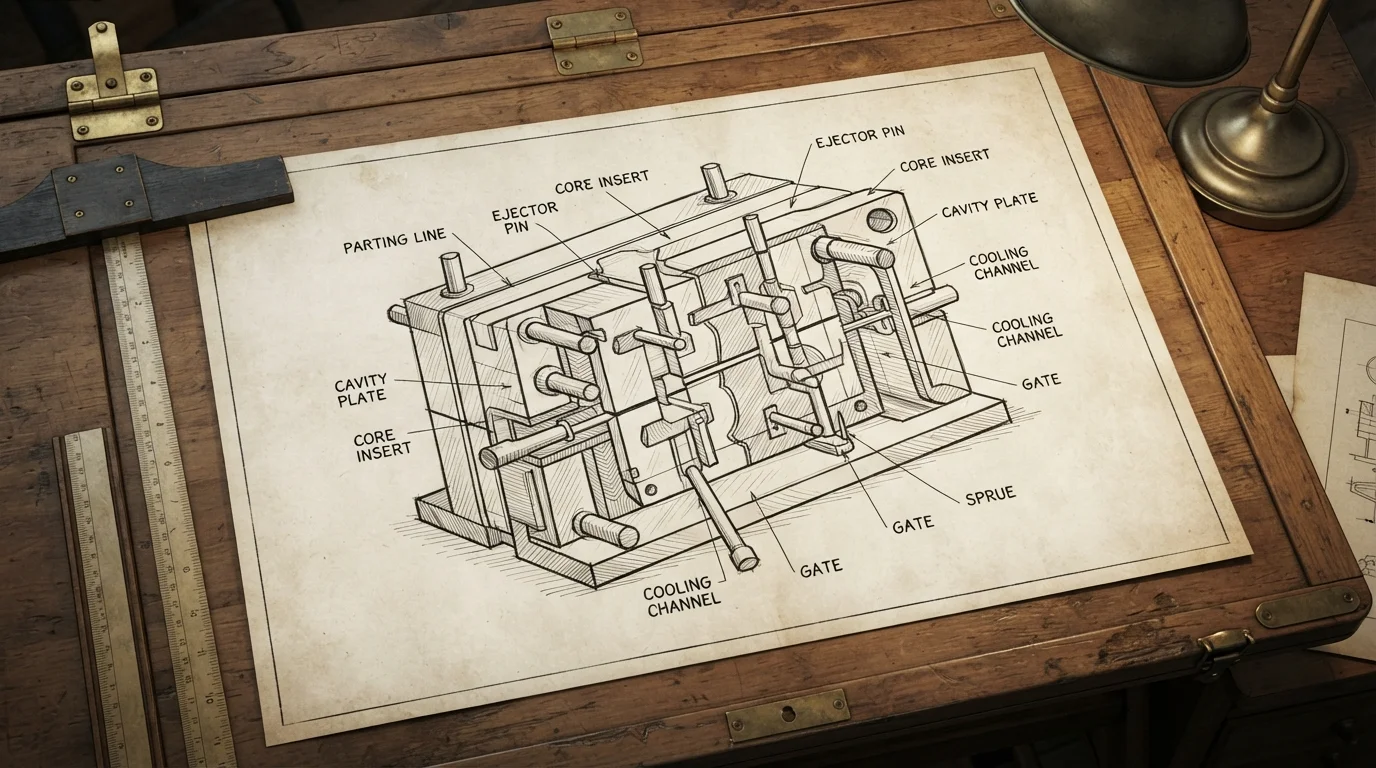
Jucheng Precision supports mechatronics startups by delivering highly optimized, cost-saving fabrication options that protect development budgets from unnecessary expenses. Sourcing our expert 24-hour free DFM reviews helps product groups optimize gate placements, parting lines, and draft profiles before committing to bridge tooling programs. Having both in-house tool design and thirty-five high-precision molding presses ensures you receive completely honest, practical advice. Sourcing rapid tooling allows product developers to validate gating, parting lines, and draft angles under real machine pressures.
Table of Contents
1. Shot Volumetric Expectancy and Baseline Longevity Limits
2. Physical Variables Accelerating Cavity Wear
Shot Volumetric Expectancy and Baseline Longevity Limits
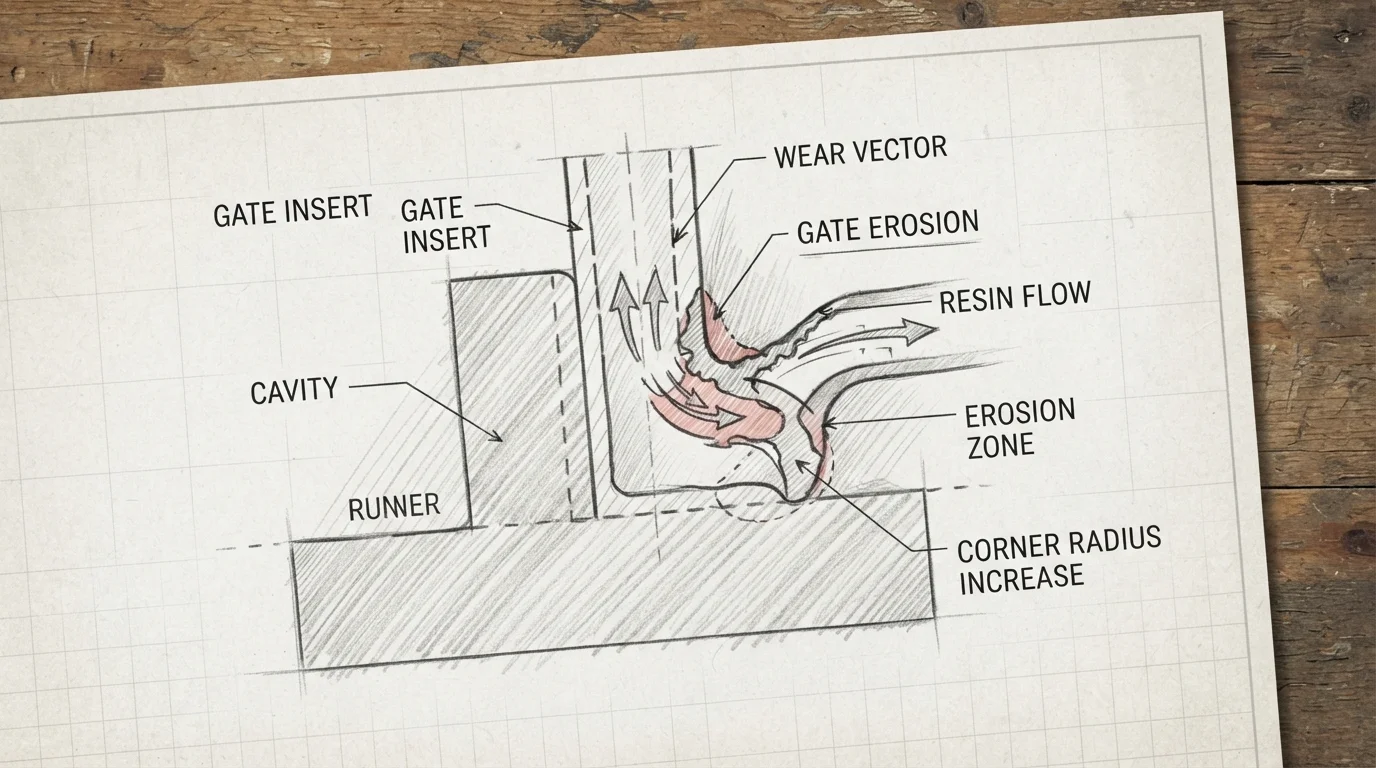
Question: What is the average shot life of a bridge mold? Soft metal molds typically yield between 5,000 and 50,000 clean injection cycles depending on mold metal selections and polymer abrasiveness.
Predicting your bridge tooling life expectancy requires analyzing physical material limits, clamp forces, and polymer chemical characteristics carefully. Aluminum AL7075-T6 cavities represent an excellent starting choice, delivering 5,000 to 20,000 clean pulls before dimensions shift. Pre-hardened P20 steel core inserts are more durable, easily surviving 50,000 injection cycles when run under standard operating pressures. Sourcing high-quality billet metals protects your developmental budget from material premium markups.
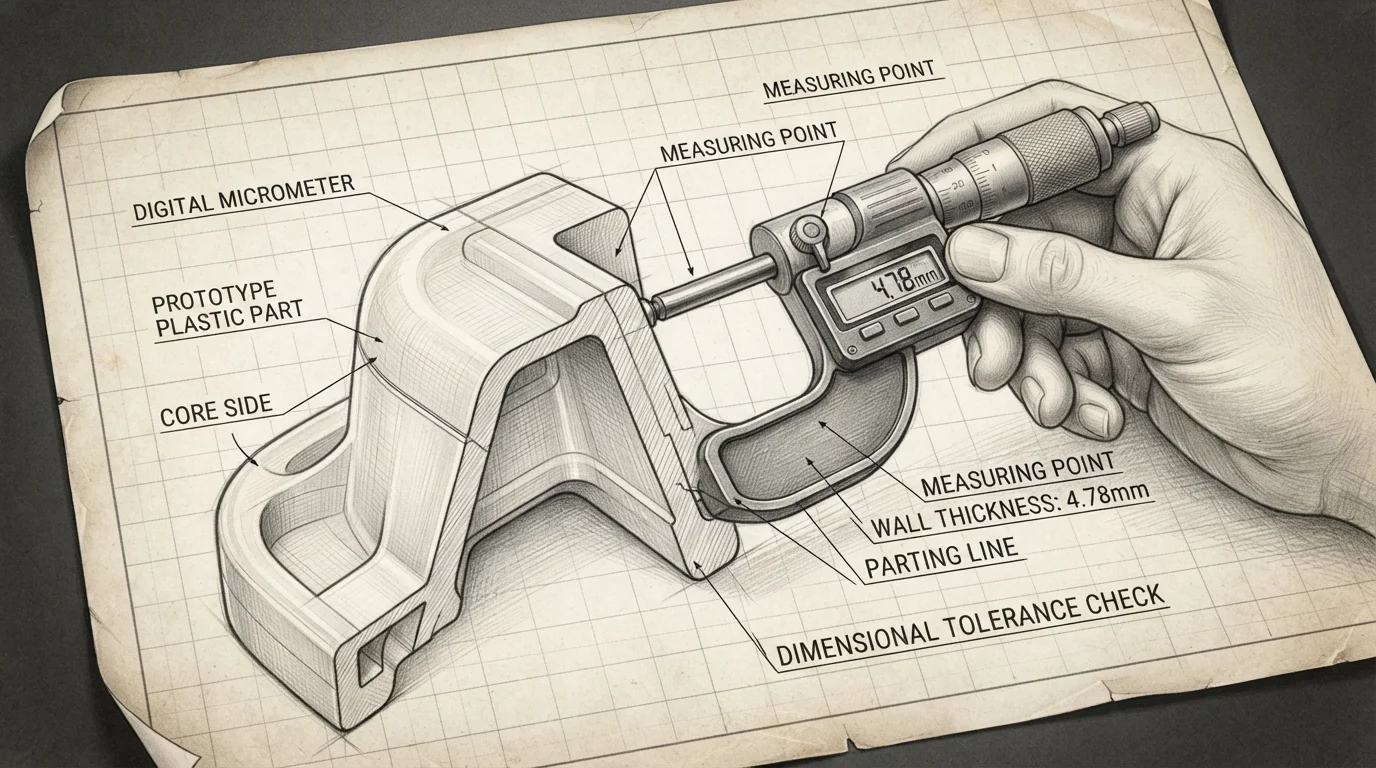
Sourcing high-fidelity mockups of structural linkages from a professional Prototype Service is ideal for early form studies, but those CAD files often violate mass-production injection molding physics. Slicing CAD files precisely allows experienced toolmakers to analyze parting lines, draft angles, and wall thicknesses using advanced mold flow simulation software. Mold designers analyze parting line splits early to ensure the soft aluminum shut-offs resist wear under high clamping pressures. Symmetrical component designs simplify holding fixtures, reducing initial setup labor hours dramatically.
Sourcing functional CNC Machining Service parts from extruded billets of ABS, Nylon (PA), or aluminum Aluminum provides authentic material behavior before cutting tool steel. This detailed materials validation eliminates mechanical failure risks when transitioning prototype to production design configurations. Early validation prevents expensive engineering changes when scaling up to high-volume injection molding. Standardizing non-critical clearances allows high-speed milling spindles to clear raw stock quickly, maximizing cutting efficiency.
Physical Variables Accelerating Cavity Wear
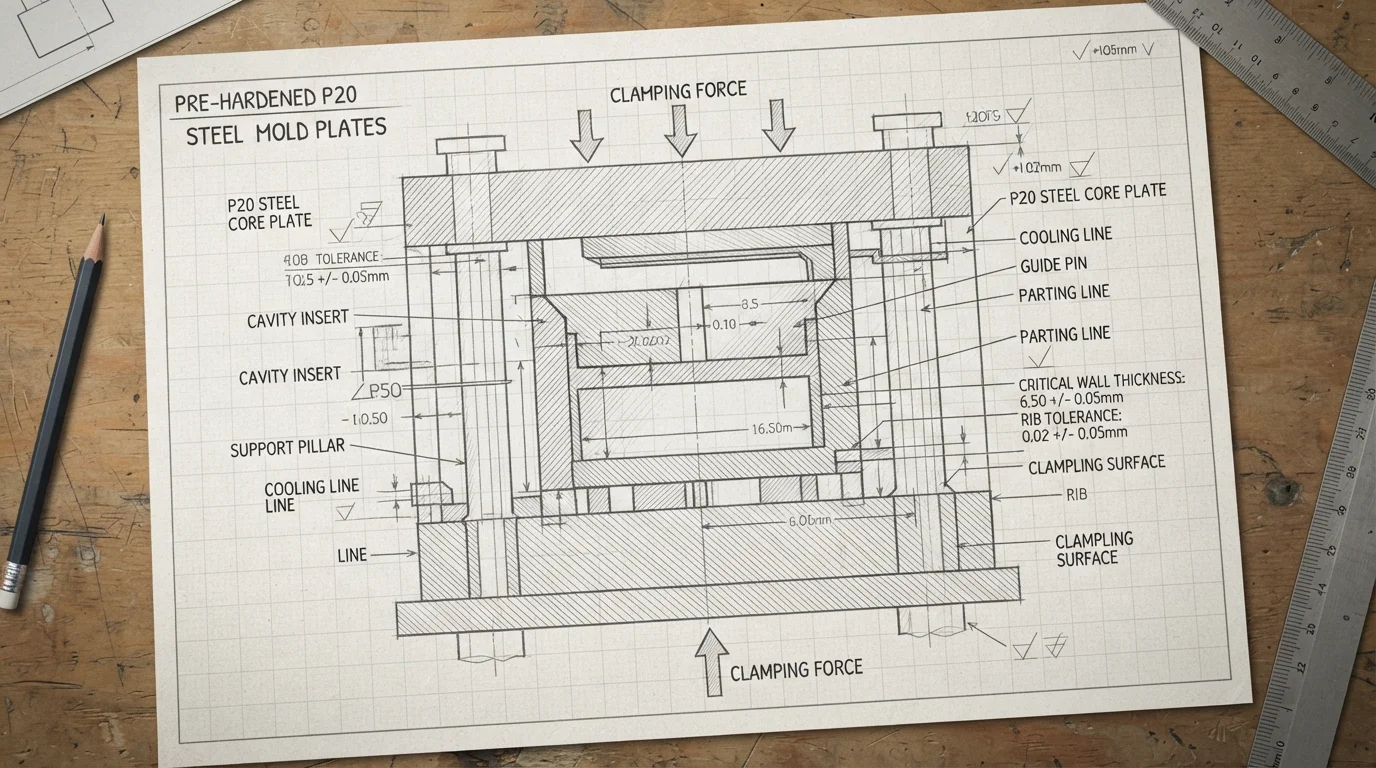
Question: What are the primary factors that cause rapid mold wear? Abrasive glass fibers, corrosive polymer gases, extreme injection pressures, and lack of lubrication accelerate gate and pocket wear.
Selecting appropriate mold metals depends heavily on whether your chosen polymer grade contains highly abrasive reinforcing fibers. Glass-filled polyamides or flame-retardant ABS polymers wear down soft aluminum gates rapidly, shortening your target bridge tooling life expectancy. Tooling designers specify pre-hardened Tool Steel (like P20) for these abrasive materials to protect critical gate geometries. Standardizing draft angles and nominal wall thicknesses is the primary method to prevent mold flash.
Corrosive outgassing from specialized polymers like PVC or high-temperature PEEK also creates microscopic pitting on raw cavity walls. This technical comparison table highlights baseline lifespans and performance limits across different mold metal selections:
| Mold Core Material | Base Hardness | Estimated Lifetime | Primary B2B Purpose |
|---|---|---|---|
| AL7075-T6 Aluminum | 150 Brinell | 5,000 to 20,000 cycles | Fast-turnaround NPI scaling, non-abrasive resins (PP, PE) |
| P20 Pre-hardened Steel | 30 HRC | 20,000 to 50,000 cycles | Mid-volume consumer enclosures, modified glass-filled resins (PA+GF) |
| NAK80 Pre-hardened Steel | 40 HRC | 50,000 to 100,000 cycles | High-polish optical lenses, highly abrasive polymers |
Maximizing Intermediate Mold Usages
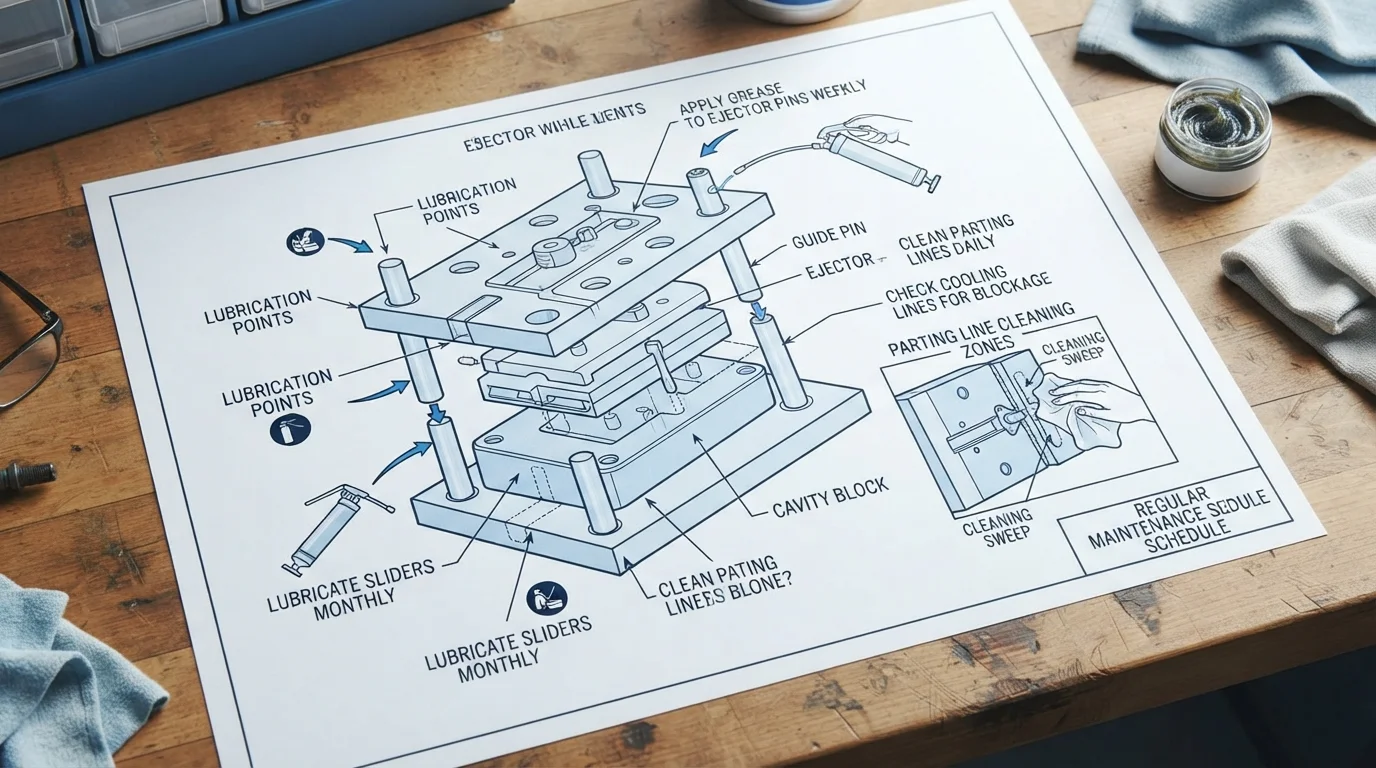
Question: How is the physical lifespan of a soft mold maximized? Implementing low injection pressures, regular parting line wipe-downs, and manual lubricating of slide lifters extends tool life.
Transitioning to an automated Injection Molding Service requires a complete overhaul of raw prototype CAD geometries to accommodate mold release physics. Sourcing a dedicated Rapid Tooling Service using aluminum or soft steel cores delivers genuine injection-molded components from production-grade resins within weeks. Slicing CAD files precisely allows experienced toolmakers to analyze parting line shut-offs manually. Sourcing rapid tooling allows product developers to validate gating, parting lines, and draft angles under real machine pressures.
Operating molds under stable cavity temperatures requires integrating precise thermal control water channels directly within the mold cores. Sourcing our expert reviews helps you choose the most cost-effective metal process for your specific hardware program. Standardizing vertical draft angles, filleted corners, and nominal wall thicknesses is the primary method to prevent mold flash. Mold parting line shut-offs are hand-fitted precisely, ensuring polymer does not escape under high clamping pressures.
Partnering with an experienced manufacturer helps you navigate the transition from early visual mockups to low-volume bridge tooling seamlessly. Sourcing your quotes manually ensures experienced engineers analyze your 3D STEP files to find additional ways of protecting your mold and maximizing your return on investment. Custom components undergo rigorous coordinate metrology checks to confirm exact dimensional compliance. Sourcing high-quality prototypes ensures your designs are built to withstand severe dynamic forces safely.
Frequently Asked Questions (FAQ)
What happens when a bridge tool reaches the end of its life?
Exceeding the maximum recommended mold clamping pressures can crush soft aluminum shut-off faces, causing severe parting line flash. Designers specify draft angles of at least 1.5 degrees and keep injection pressures low to maximize their bridge tooling life expectancy. Sourcing early DFM reviews ensures all gating offsets are calculated precisely, preventing dimensional discrepancies during final runs.
Can custom plastic molds handle high-stiffness carbon fiber resins?
Vacuum casting in silicone molds represents an excellent, low-cost method to manufacture twenty to fifty plastic enclosures cheaply. Sourcing custom polyurethane parts from silicone molds becomes highly cost-effective before investing in aluminum or soft steel cores. Product designers utilize Vacuum Casting to replicate production-grade polymer qualities, including flexible elastomer overmolding.
Does complex surface polishing increase overall manufacturing bills dramatically?
Manual hand-polishing, vapor-polishing, and multi-layer painting require intensive labor hours, which can double your overall project bill. Specifying standard bead-blasted or raw machine finishes for internal structures or early visual models lowers your total finishing expenditures. Product designers coordinate with manufacturing specialists to apply decorative coatings only on visible external show faces.

