


Bypassing thousands of dollars in automated side-action sliders represents a premier cost-reduction strategy when developing short-run plastic enclosures for low-volume production. Incorporating loose core pieces that are placed manually into mold cavities before each shot allows tooling engineers to form complex undercuts cheaply. Slicing complex three-dimensional CAD geometries precisely ensures early-stage parts release cleanly from core cavities without scuffing or warping. Sourcing these low-volume parts preserves crucial development cash flow, avoiding the massive capital expenditure associated with traditional hard steel molds.
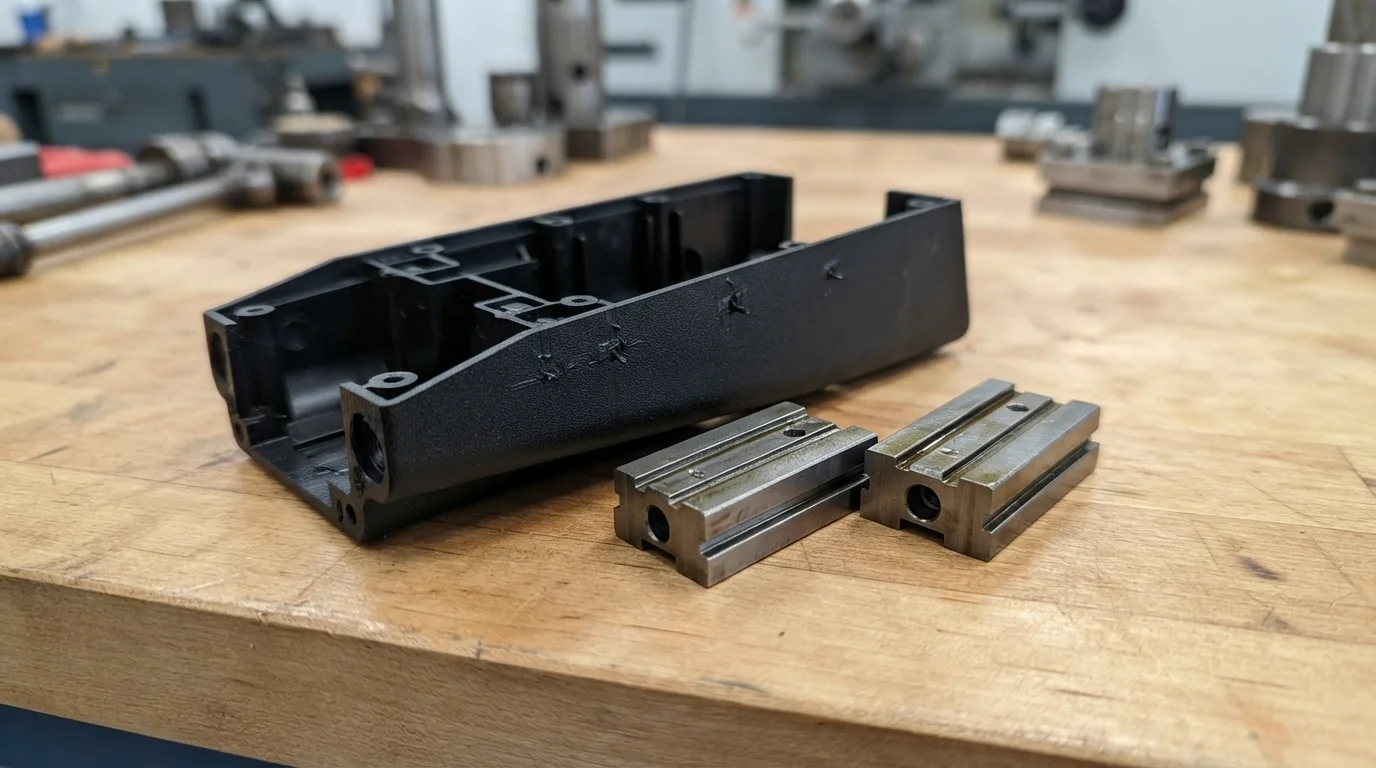
Understanding how hand loaded inserts injection molding processes function enables product managers to balance initial tooling CapEx with active machine labor times realistically. Loose cores eject alongside the molded plastic part, allowing press operators to knock inserts free on an adjacent workbench while a second set of inserts cycles inside the machine. Sourcing your components from an experienced partner ensures design changes are propagated across all stages safely. Let’s explore how loose core inserts eliminate complex mechanical sliders and keep short-run tooling budgets under tight control.
Table of Contents
1. Mechanical Physics of Hand Loaded Loose Core Inserts
2. Cost versus Cycle Time Trade-offs for Short-Run Production
3. Smart Low-Volume Manufacturing and Poka-Yoke Design Rules
Mechanical Physics of Hand Loaded Loose Core Inserts
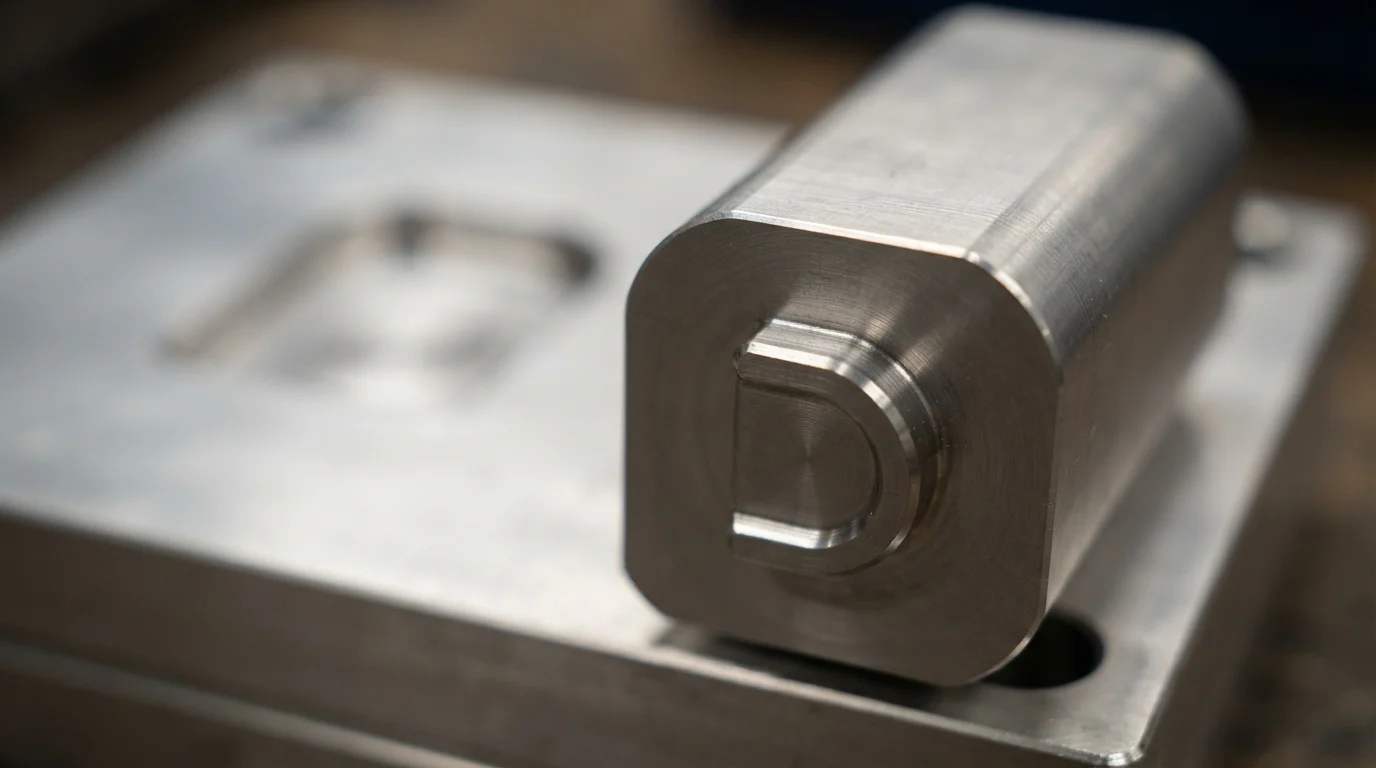
Question: What is a hand-loaded insert in rapid injection molding? Hand-loaded inserts are loose metal cores placed manually into the mold cavity before each cycle to form internal undercuts or threads without automatic sliders.
Automated hydraulic slides and mechanical lifters require complex mold plates, internal angle pins, and precision gibs that increase initial mold fabrication costs dramatically. Loose core pieces offer a simple, highly effective alternative by transferring the mechanical motion of unlatching an undercut from automated mold mechanisms to the operator’s hands. Machining loose core inserts from high-strength AL7075 Aluminum, Brass, or pre-hardened P20 Tool Steel ensures features resist high clamping pressures without deforming.
Executing hand loaded inserts injection molding operations safely requires integrating specific physical features directly into the core design. Key mechanical parameters for loose insert design include:
- Poka-yoke locating keys—Asymmetric locating pins or D-shaped flats prevent operators from loading inserts backwards and crushing core steel
- Ergonomic handling tabs—Knurled extension handles project beyond the parting line to allow safe placement in heated 80°C mold cavities
- Knockout pin locations—Dedicated ejector pins push directly against the insert body rather than the thin plastic part, preventing part cracking
Cost versus Cycle Time Trade-offs for Short-Run Production
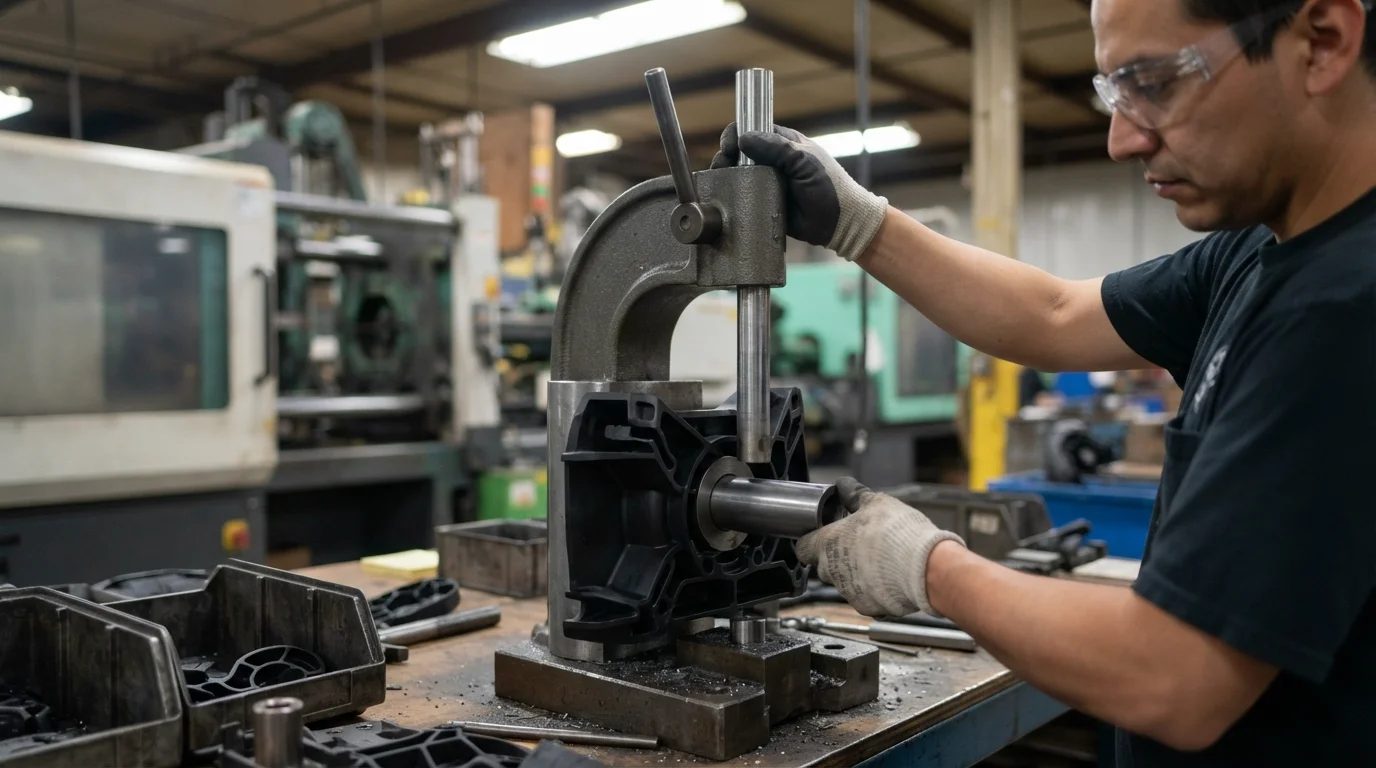
Question: At what production volume do hand-loaded inserts become uneconomical? Hand-loaded inserts are ideal for 100 to 2,000 parts, but runs exceeding 5,000 units justify automated hydraulic slides due to labor costs.
Selecting hand-loaded inserts involves balancing lower upfront mold construction costs against longer active machine cycle times. Operators require twenty to forty additional seconds per cycle to place inserts, inspect the cavity, and knock cores out of ejected parts. Sourcing a dedicated Rapid Tooling Service using loose inserts saves $3,000 to $8,000 per undercut feature on initial mold fabrication invoices. Sourcing these low-volume parts preserves crucial development cash flow, avoiding the massive capital expenditure associated with traditional hard steel molds.
Adhering to strict design guidelines for rapid tooling helps engineers determine the exact financial breakeven point between manual loose inserts and automatic side slides. This technical comparison table highlights trade-offs across undercut mechanisms:
| Undercut Mechanism | Initial Mold Fabrication Cost | Added Cycle Time per Shot | Ideal Part Volume Range |
|---|---|---|---|
| Hand-Loaded Loose Inserts | Low ($300 – $800 per insert) | 20 to 45 seconds | 100 to 2,000 units (NPI & bridge runs) |
| Automatic Hydraulic Sliders | High ($3,000 – $8,000 per slider) | Zero added cycle time | Over 5,000 units (high volume) |
| Pass-Through Shut-Offs | Zero added tooling cost | Zero added cycle time | 1 to 1,000,000+ units (design dependent) |
Smart Low-Volume Manufacturing and Poka-Yoke Design Rules
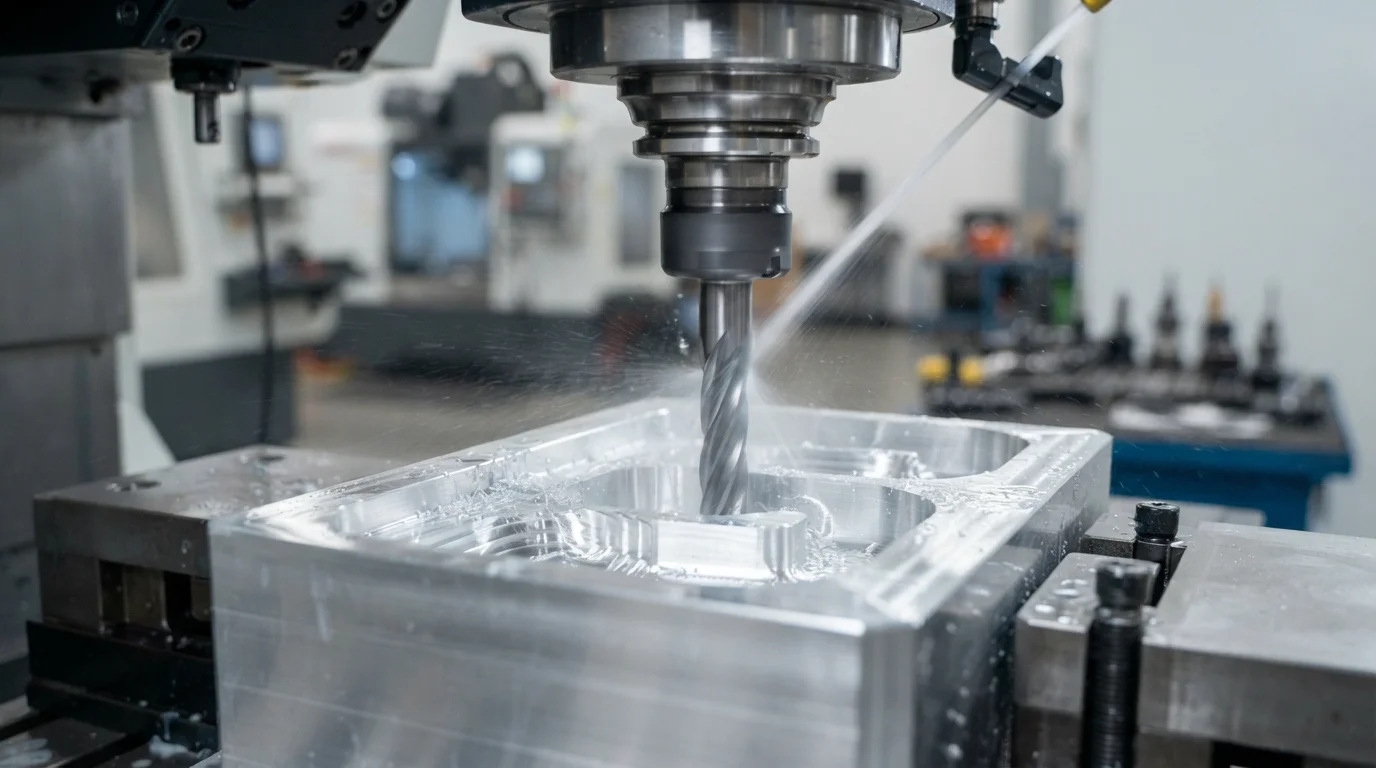
Question: How is cycle time minimized when using hand-loaded inserts? Toolmakers fabricate duplicate sets of loose inserts, allowing the operator to load set B into the mold while knocking set A out on the bench.
Running duplicate sets of loose inserts represents a proven shop-floor strategy to prevent injection press downtime during short-run production. Machine operators insert Set B into the open mold immediately after Set A ejects with the finished component, keeping the press cycling continuously. Sourcing functional CNC Machining Service parts or Vacuum Casting models allows engineering groups to validate designs before committing to aluminum or soft steel molds. Sourcing these specialized polymers ensures your prototype behaves exactly like a production part during drop-durability and thermal validation tests.
Jucheng Precision operates a fully-integrated factory setup containing both multi-axis machining centers and precision injection molding presses. Factory engineers deliver comprehensive 24-hour free DFM reviews to optimize gate locations, parting lines, and undercut configurations before cutting metal. Sourcing functional parts from a professional Prototype Service or bridge mold facility ensures your team receives honest, cost-saving advice for your specific production volume. Mastering hand loaded inserts injection molding rules guarantees your product scales smoothly from early prototypes to mass production.
Partnering with a certified Injection Molding Service specialist ensures your finished hardware matches the premium software experience. Sourcing your quotes manually ensures experienced engineers analyze your 3D STEP files to find additional ways of eliminating undercuts and lowering tooling costs. Sourcing high-fidelity parts from extruded billets of ABS, Nylon (PA), or aluminum Polycarbonate (PC) provides authentic material behavior before cutting tool steel. Sourcing high-quality prototypes ensures your designs are built to withstand severe dynamic forces safely.
Frequently Asked Questions (FAQ)
Why use hand-loaded inserts instead of side sliders in low-volume molding?
Loose metal inserts are placed manually inside the mold cavity before each cycle, making them ideal for short runs of 100 to 2,000 parts. Hand-loaded inserts injection molding bypasses thousands of dollars in automatic side-slide mechanisms, keeping initial rapid mold budgets low.
How are mold core crushing errors avoided during insert loading?
Integrating asymmetric locating keys or D-shaped flats on the insert shank represents the primary method to prevent improper loading. Poka-yoke features ensure inserts seat inside mold cavity pockets in only one correct orientation, preventing mold crushing.
How do duplicate insert sets eliminate machine press idling time?
Fabricating two or three sets of identical loose inserts allows operators to load a fresh set into the mold immediately while clearing ejected parts on the bench. Duplicate insert sets eliminate machine idling time, maximizing daily output on short-run molding programs.

