


Robotics Manufacturing Cost: Hardware BOM Breakdown and Budget Optimization
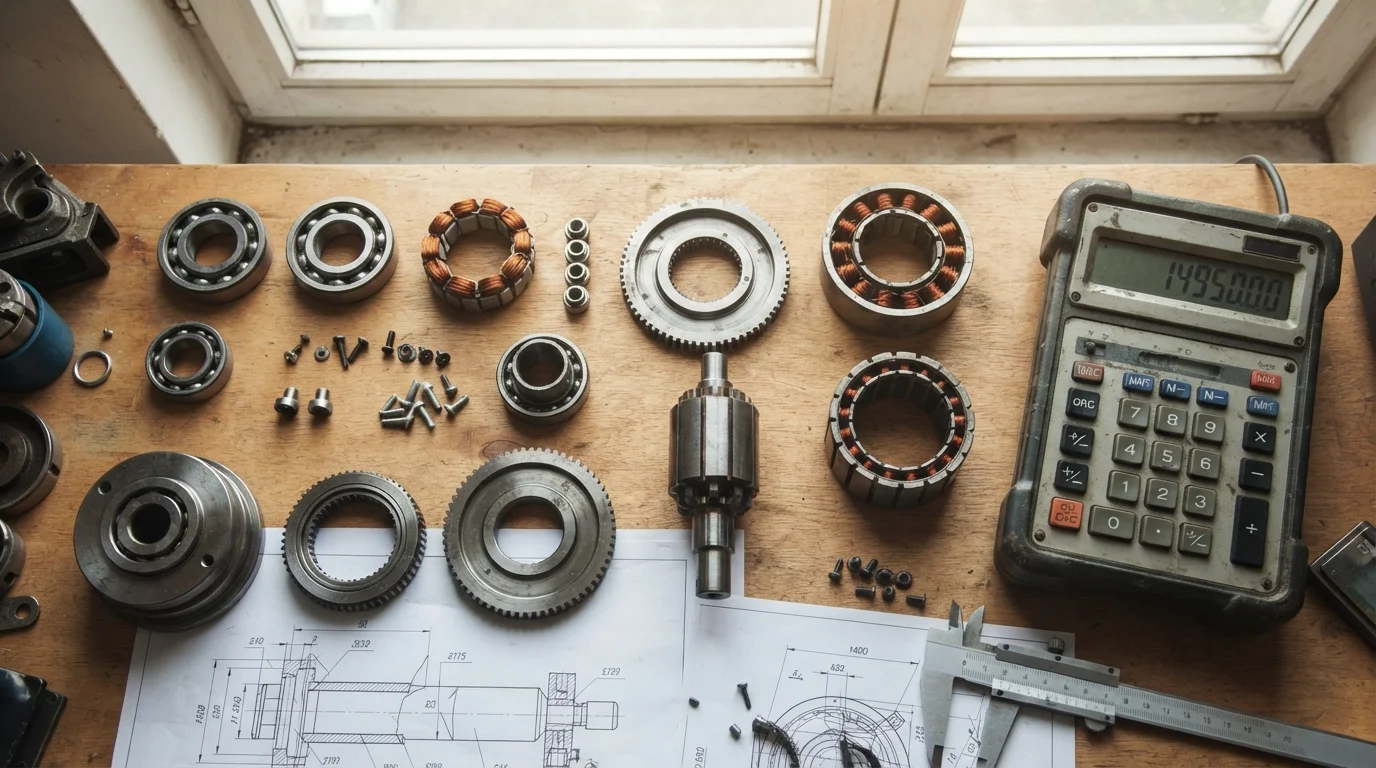
How much does it cost to manufacture a custom robot? The total hardware manufacturing expenditure for a custom robotic system ranges from $2,000 to $10,000 for early functional prototypes to $20,000 to $80,000+ for fully articulated industrial or humanoid units; joint actuators and precision 5-axis CNC machining typically consume over 50% of the mechanical bill of materials (BOM), while deploying rapid tooling for exterior protective shells can slash pilot tooling outlays by 40% to 60%. Analyzing overall robotics manufacturing cost enables development teams to allocate development runway intelligently without compromising kinetic precision.
Balancing actuator performance against mechanical fabrication budgets dictates whether an automation startup achieves commercial viability or exhausts its capital before market rollout. Understanding how component complexity, raw alloy selection, and batch volume scale impacts unit economics ensures predictable financial planning across all NPI milestones.
The Hardware Cost Anatomy: Actuators, Machined Structures, and Enclosures
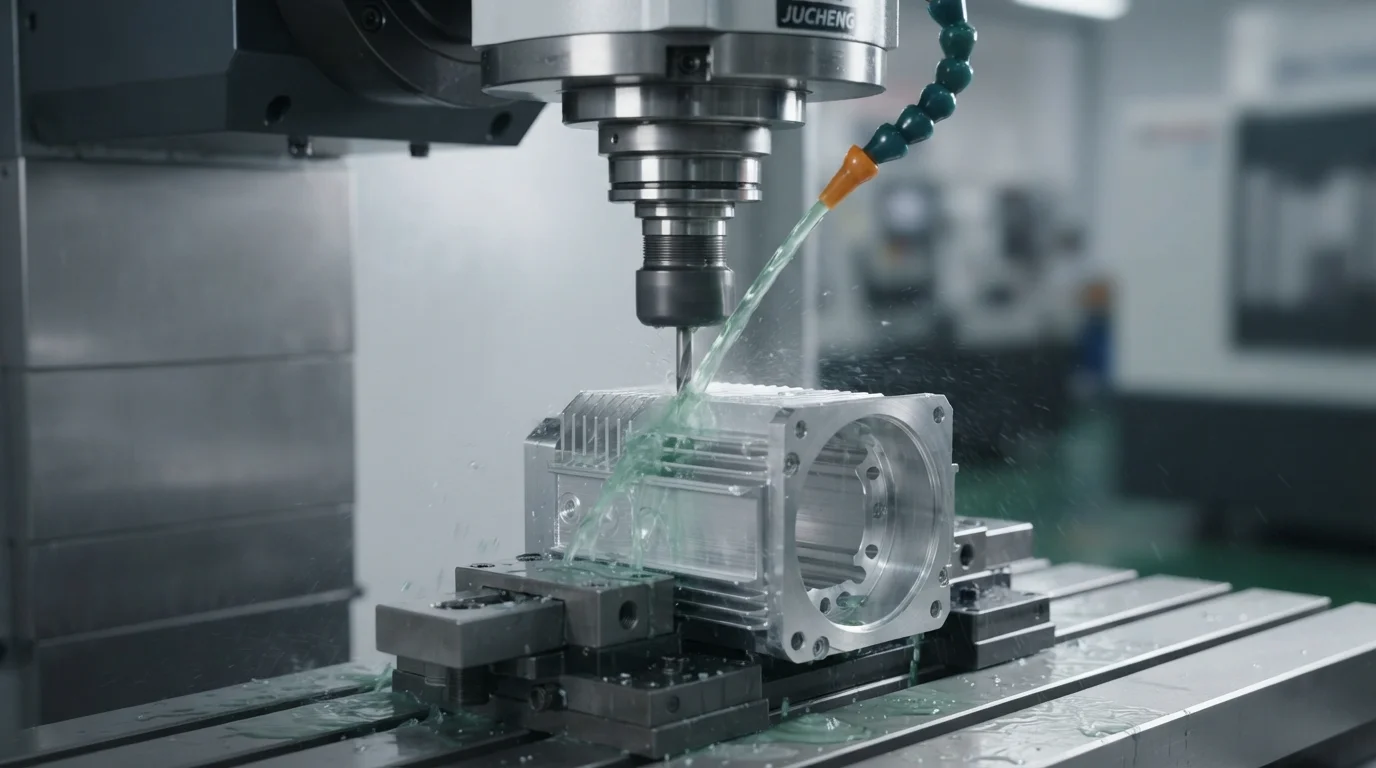
A robotic arm’s mechanical cost is heavily concentrated in its rotational joint assemblies. Sourcing frameless torque motors, high-precision strain wave reducers, absolute optical encoders, and cross-roller bearings represents the largest portion of direct material spending. The structural housings that hold these components require tight bearing bore tolerances and micron-level concentricity, demanding extended cycle times on multi-axis turning centers.
Key cost drivers across the primary mechanical subsystems include:
- Actuator Modules (50%–60% of BOM): Precision machining of harmonic drive cases and spline shafts using 42CrMo4 alloy steel and aircraft aluminum.
- Structural Linkages (20%–25% of BOM): Multi-axis pocket milling of long link tubes and chassis yokes to maximize stiffness while reducing mass.
- Protective Covers & Sensors (15%–20% of BOM): Enclosing sensitive electronics with reaction injection molded polyurethane or bridge-molded polymer shells.
Prototype Cost vs. Small Batch Production (100–1,000 Units)
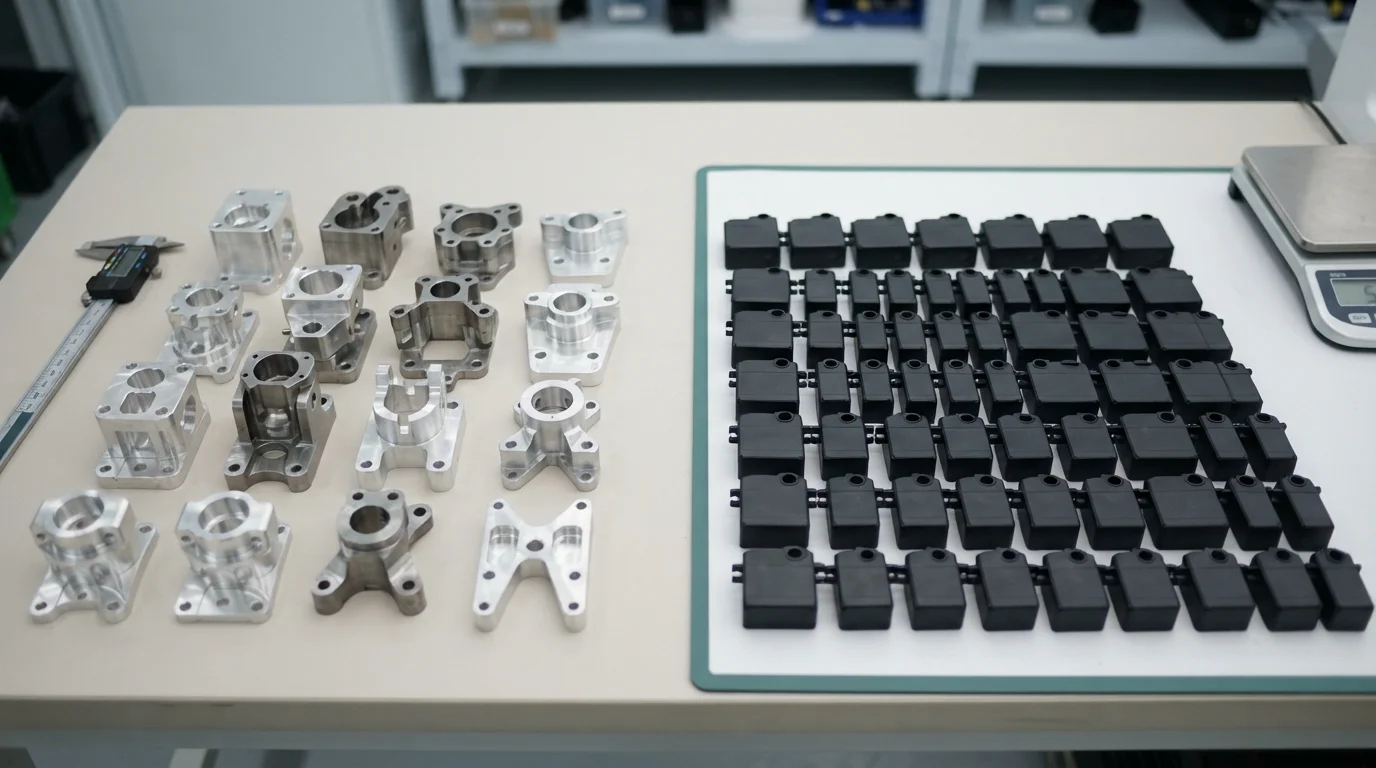
During the initial proof-of-concept milestone, producing 1 to 5 units relies entirely on direct 5-axis CNC machining and 3D printing to avoid upfront tooling commitments. However, as production requirements ramp into pre-series pilot batches of 100 to 1,000 units, continuing with pure subtractive machining creates severe financial drag. When procurement directors optimize their robotics manufacturing cost, transitioning from single-part billet milling to modular tooling distributes non-recurring engineering outlays across hundreds of units, driving per-piece expenses down significantly. Discussions across robotics hardware communities on Reddit and Facebook highlight that moving to bridge tooling at 100 units lowers enclosure unit costs by over 70%.
Comparing volume scaling economics across different batch tiers illustrates clear financial inflection points:
| Production Stage | Primary Manufacturing Process | Financial & Tooling Impact |
|---|---|---|
| Prototype Alpha (1–10 Units) | Direct 5-Axis CNC Milling & 3D Printing | Zero tooling NRE; higher piece-part cost ($500–$1,500 per complex link) |
| Bridge Pilot (100–1,000 Units) | Modular Aluminum Tooling & Reaction Injection Molding | Low-cost soft tooling ($3,000–$8,000 NRE); piece-part costs drop to $30–$80 |
| Full Mass Production (5,000+ Units) | Hardened Steel Multi-Cavity Tooling & Die Casting | High upfront tooling ($30,000+ NRE); lowest marginal unit production cost |
How Rapid Tooling Lowers the Cost of Robotic Covers by 50%
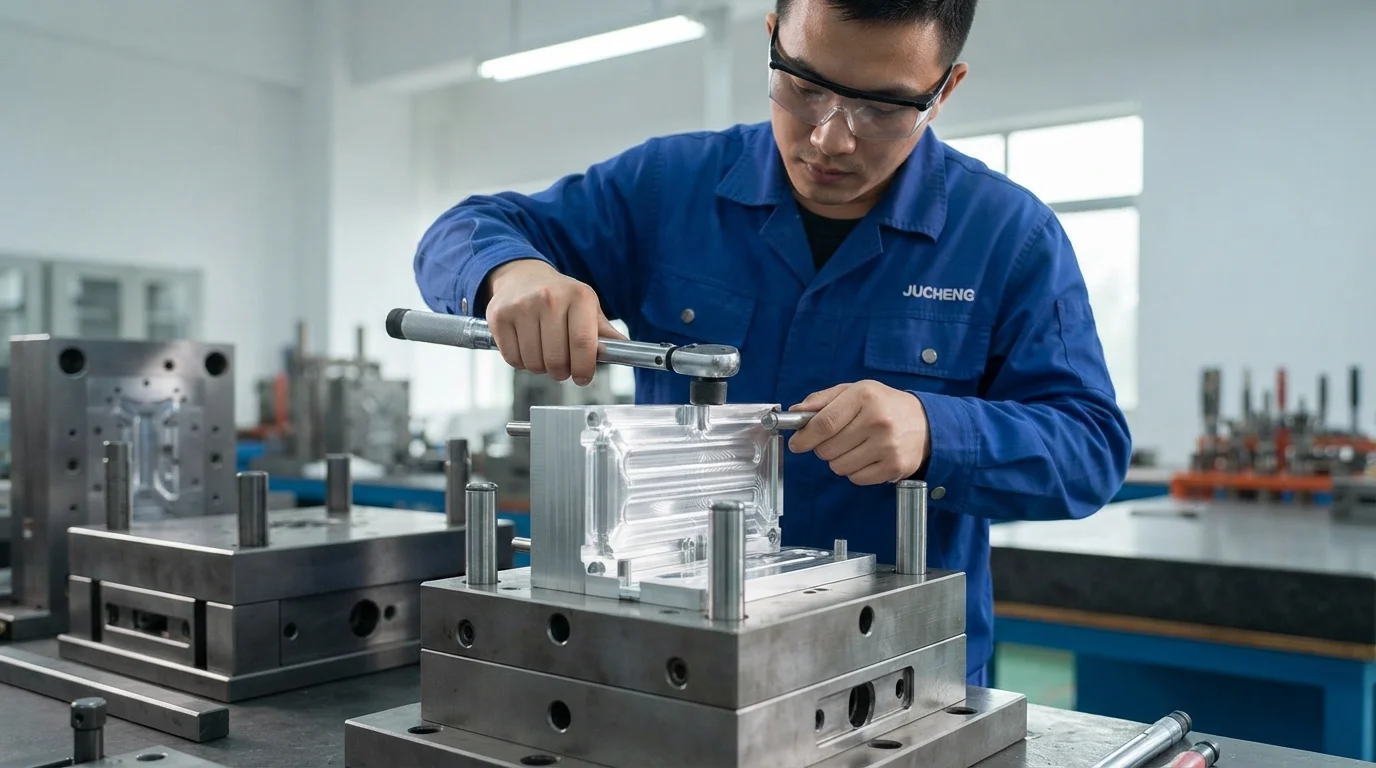
Robotic arm covers, mobile base bumpers, and teach pendant housings require lightweight, high-impact plastics that protect internal wiring from harsh industrial environments. Sinking tens of thousands of dollars into hardened steel tooling for a design that may evolve after field trials is a major capital risk. Utilizing rapid tooling with pre-hardened aluminum or soft steel inserts cuts upfront mold expenses in half while delivering authentic molded parts in engineering polymers like ABS or polyurethane (PU) in 2 to 3 weeks.
DFM Engineering Strategies to Slash CNC Machining Expenses
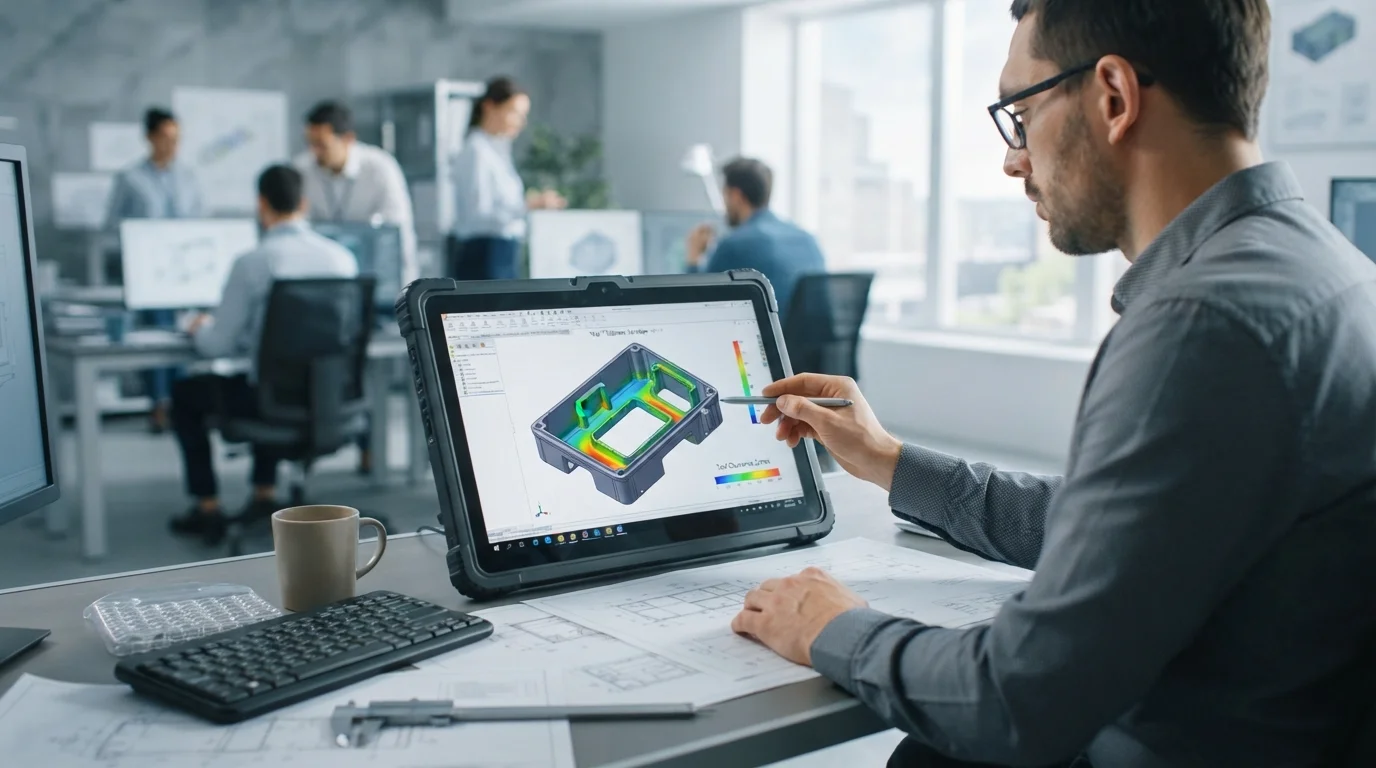
Small adjustments made during 3D CAD modeling have a massive impact on machine tool cycle time and cutter wear. Applying practical Design for Manufacturability principles before generating CAM toolpaths directly reduces spindle billing hours:
- Standardize internal pocket fillets: Designing corner radii to at least 1/3 of pocket depth allows larger, rigid endmills to run at high feed rates without breaking.
- Limit tight tolerances to critical interfaces: Apply fine ±0.005 mm limits strictly to bearing bores and motor pilot diameters while assigning commercial ±0.05 mm tolerances to weight-reduction pockets.
- Optimize raw billet utilization: Design component outer envelopes to match standard commercial plate thicknesses, reducing raw material waste during initial face milling passes.
Assembly Cost Control and Single-Roof Sourcing Efficiencies
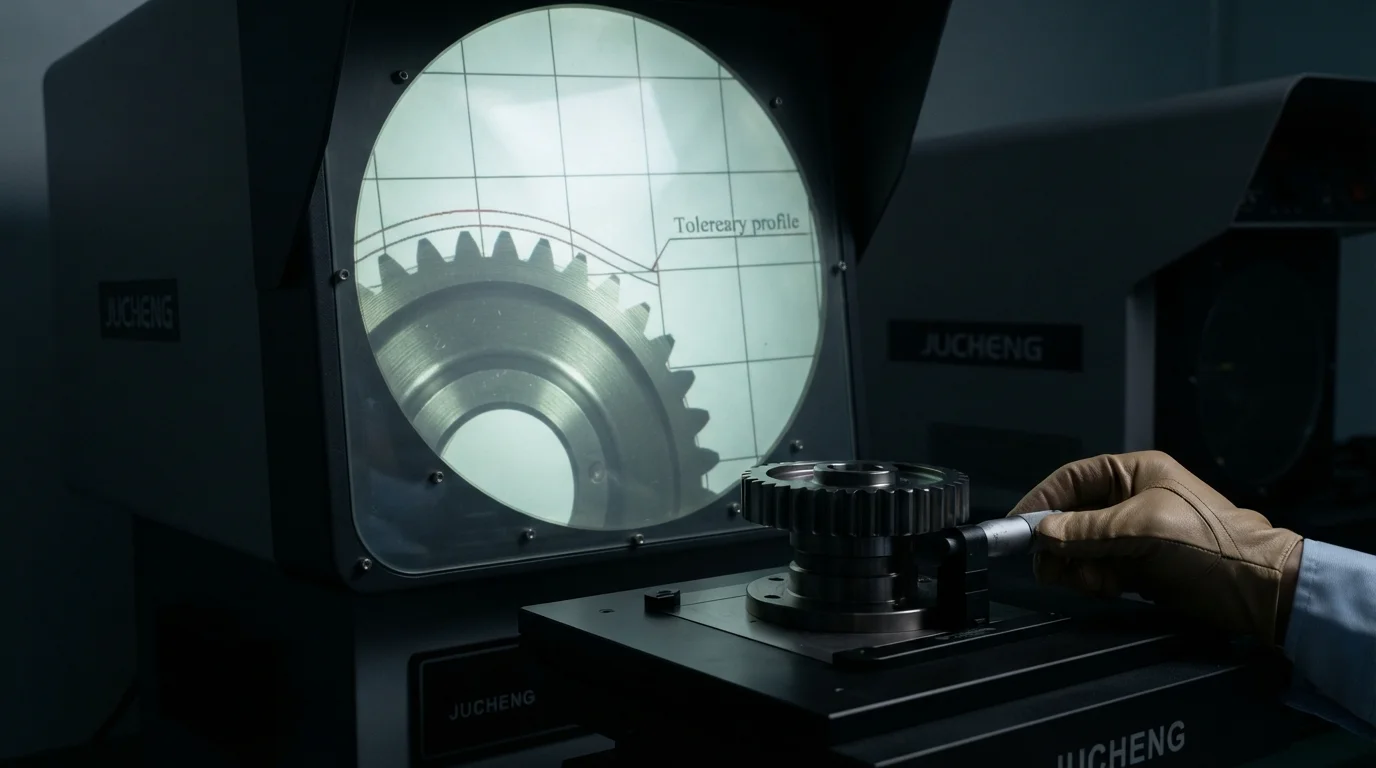
Fragmenting robot manufacturing across separate CNC machine shops, sheet metal vendors, and injection molders introduces hidden administrative expenses, multi-tier shipping costs, and assembly fitment disputes. Sourcing all structural components from a unified contract manufacturing facility eliminates inter-vendor finger-pointing and guarantees that mating parts align smoothly on the assembly line.
Key single-roof sourcing advantages include:
- Integrated CMM verification: Cross-inspecting mating link arms and bearing housings in a single metrology lab prevents field assembly binding.
- Turnkey hardware insertion: Sourcing pre-installed PEM hardware, threaded inserts, and dowel pins directly from the machining supplier reduces downstream manual labor.
- Consolidated logistics: Shipping completed sub-assembly kits reduces custom brokerage fees and compresses overall supply chain lead times.
Frequently Asked Questions (FAQ)
1. What is the most expensive mechanical component in an articulated robot?
The precision-machined housings and spline interfaces for harmonic reducers and high-torque servo motor mounts represent the highest mechanical cost due to tight ±0.005 mm concentricity requirements on 5-axis CNC machines.
2. How much money does rapid tooling save compared to production steel molds?
Rapid modular tooling utilizing aluminum or soft steel inserts typically costs 40% to 60% less than hardened production molds, saving $15,000 to $30,000 in upfront tooling CapEx during pilot builds.
3. Why does CNC machining cost more for titanium and Inconel than aluminum?
Titanium and Inconel require significantly slower cutting speeds, consume expensive coated carbide endmills rapidly, and generate high toolroom labor hours due to work-hardening tendencies.
4. How does early DFM review help reduce overall robotics manufacturing budgets?
DFM identifies deep pocketing aspect ratios, standardizes corner fillets to match tool diameters, and relaxes non-critical tolerances, slashing CNC spindle run-times by up to 40%.
5. What is the typical cost breakdown for a custom mobile robot (AMR) chassis?
Heavy sheet metal laser cutting and robotic welding account for approximately 40% of chassis cost, CNC wheel drive mounts account for 35%, and protective outer covers represent the remaining 25%.
6. How does Jucheng Precision help optimize robotics production budgets?
Jucheng Precision provides 24-hour free DFM reviews, flexible rapid tooling, 5-axis CNC machining, and turnkey assembly under ISO 9001 systems to help robotics OEMs reduce manufacturing costs by 30% to 50%.
Why Choose JUCHENG for Your Robotics Sourcing
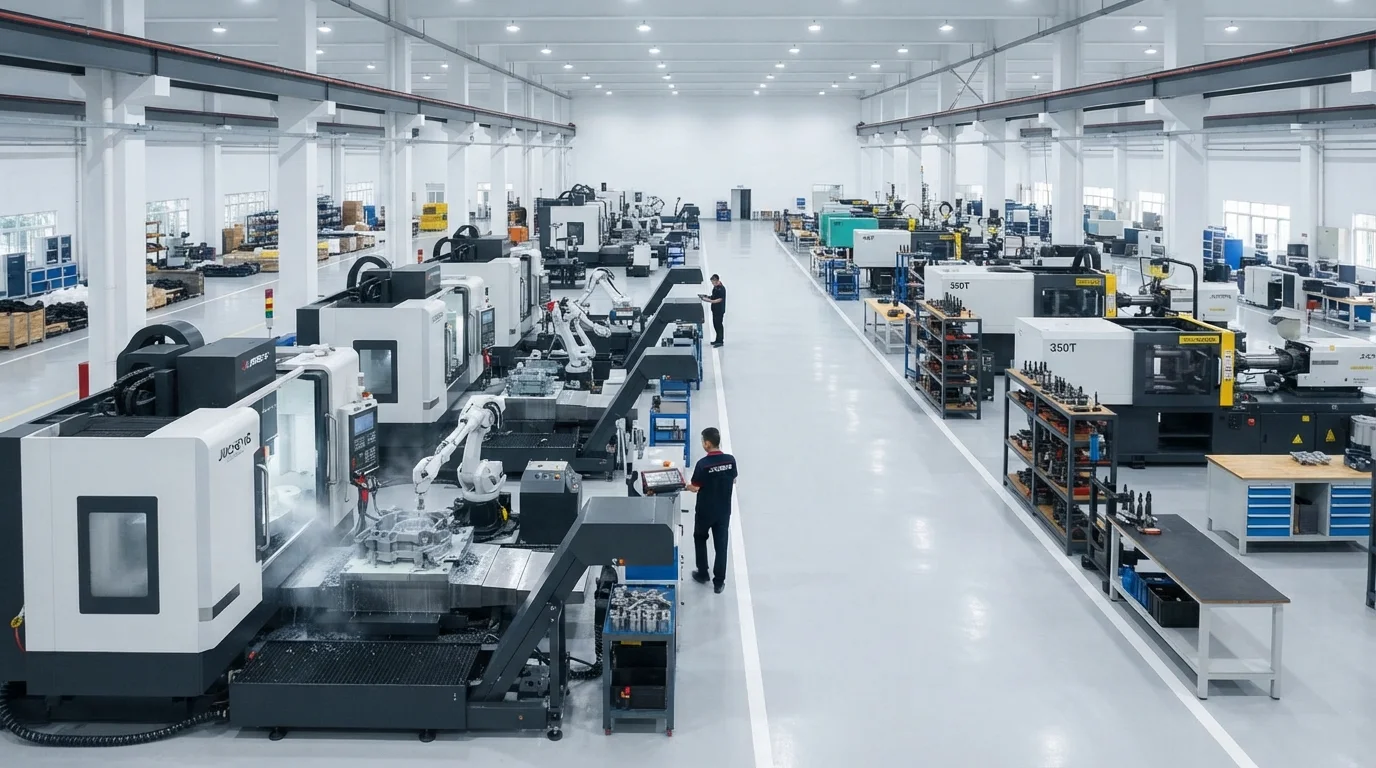
Achieving budget predictability and micro-precision kinetic performance requires an experienced manufacturing partner with multi-process infrastructure under one roof. JUCHENG supports robotics innovators by delivering comprehensive 24-hour free DFM reviews that analyze tool clearances, pocketing depths, and bearing fit tolerances prior to cutting metal. Founded in Shenzhen in 2012 with an 8,000-square-meter facility in Dongguan, our factory houses 150+ advanced machines, including 25+ high-performance 5-axis Haas and Mazak milling centers alongside dedicated sheet metal and rapid tooling injection bays [9.10].
Backed by ISO 9001, ISO 14001, ISO 13485, and IATF 16949 certifications, our engineering teams ensure that managing your robotics manufacturing cost achieves budget predictability, sub-micron precision, full Material Test Report (MTR) traceability, and absolute batch consistency.
Ready to Optimize Your Robotics Manufacturing Budget?
Upload your 3D models today to receive instant feedback, competitive pricing, and professional DFM analysis from our seasoned engineering experts. Let JUCHENG bring your complex designs to life with unmatched speed and reliability!

