
Electronic Enclosure Assembly: Waterproofing & EMI Shielding
Views: 3 Author: Allen Xiao Publish Time: 2026-07-08 Origin: Site


Isolating high-density printed circuit boards, power transformers, and signal receivers from harsh industrial or outdoor environments is a highly precise discipline. Executing robust electronic enclosure assembly ensures that your completed hardware remains completely protected from liquid splashes, dust ingress, and impact stresses while matching strict NEMA and IP ratings. This structural integration is the final phase of custom sheet metal fabrication, directly determining whether your finished product can handle high vibration forces or fails prematurely at its structural seams. Suffer from delicate electronic components that fail in the field due to water condensation, overheating, or physical short-circuits? When a cabinet is modeled without proper seals, cooling vents, or adequate grounding hardware, it exposes your high-value PCBs to immediate environmental and electrical failures. Proactively integrating ingress protection, convective airflow, and secure mounting standoffs is the best way to secure your product's operating longevity. Let's examine how to achieve IP65 to IP67 waterproof ratings in folded enclosures, explore conductive shielding gasket configurations to block electromagnetic interference, and review how to mount PCBs and heavy heat sinks safely. How do you design a sheet metal cabinet to satisfy strict dustproof and waterproof ratings? Under standard industrial norms, achieving high-performance waterproofing is a complex engineering challenge. Standard folded joints possess micro-gaps that easily let moisture in. We resolve this by designing overlapping flanges that act as physical water channels, keeping high-pressure liquid away from the seal. For an IP65 or NEMA 4 rating, we install high-performance silicone gaskets into these channels. Utilizing automated Form-in-Place (FIP) dispensing systems allows us to apply a continuous, seamless bead of silicone directly into the door groove. When the cabinet door is locked under uniform compression, the gasket forms an airtight barrier, preventing water jet penetration under harsh ambient conditions. Why is conductive electroplating mandatory for high-frequency shielding cabinets? When implementing electronic enclosure assembly blueprints, managing high-frequency electromagnetic noise is a primary engineering priority. Standard plastic boxes require expensive conductive coatings, whereas a fully enclosed metal chassis forms a natural Faraday cage. To prevent high-frequency signals from leaking through joint seams, we install specialized EMI shielding gaskets. These gaskets typically consist of conductive fabric-over-foam or wire-mesh structures. To ensure low-resistance, metal-on-metal contact, we apply high-temperature polyester masking tapes to all joint interfaces and grounding studs before powder coating. This prevents paint buildup, ensuring that the assembled panels remain conductive and provide excellent electromagnetic interference protection. What is the most reliable method to mount printed circuit boards and heavy cooling systems inside a metal chassis? Mounting delicate electronic PCBs directly onto the flat cabinet base is an extreme risk, often causing short-circuits and structural damage. We resolve this by using pneumatic presses to install self-clinching threaded standoffs. This delivers precise, perpendicular mounting points that raise the board off the base, ensuring safe clearances. For high-power assemblies, we integrate custom-milled aluminum plates to serve as a high-efficiency heat sink. By fly-cutting the mating faces flat within 0.05mm on our CNC milling centers, we minimize thermal resistance between the CPU and the metal chassis, allowing the entire enclosure to dissipate heat rapidly without requiring noisy active fans. Sourcing high-precision custom enclosures requires a seamless transition from virtual CAD files to physical parts. Jucheng Precision operates multiple multi-axis lasers, automated benders, and clean assembly bays, allowing us to manage your entire project under a unified quality system certified to ISO 9001 and IATF 16949 standards. This integrated capability ensures that your complex box-builds are fabricated, coated, and assembled with extreme consistency and zero dimensional drift. Integrating these water channels, conductive gaskets, and heat sink interfaces into your early sheet metal design cycle is the single most effective way to eliminate production defects. Supported by our 24-hour free DFM reviews, no MOQ policy, and rapid delivery guarantee, we manage your project from initial flat pattern cutting to final, high-durability packaging throughout our precision sheet metal fabrication and assembly lines. Our engineering team has compiled professional, concise solutions to the most common quality challenges faced during electronic box-builds: How do you maintain a low-resistance grounding path in a powder-coated enclosure? What is the difference between silicone and polyurethane gaskets for IP65 water sealing? Can a sheet metal enclosure block high-frequency RFI/EMI noise? How does Jucheng Precision prevent thermal bottlenecks during electronic enclosure assembly runs?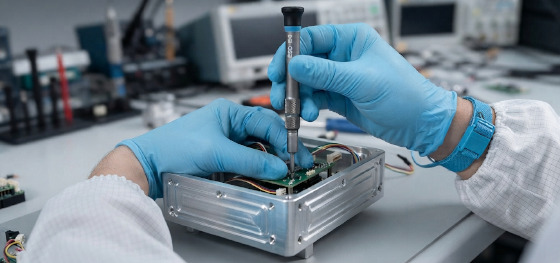
Achieving IP65 to IP67 Waterproof Ratings in Sheet Metal
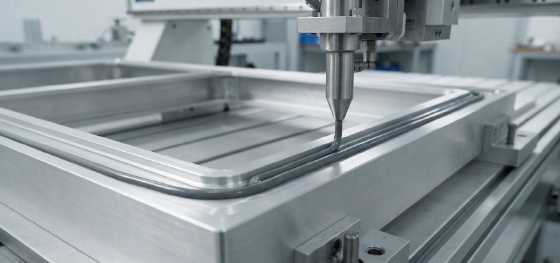
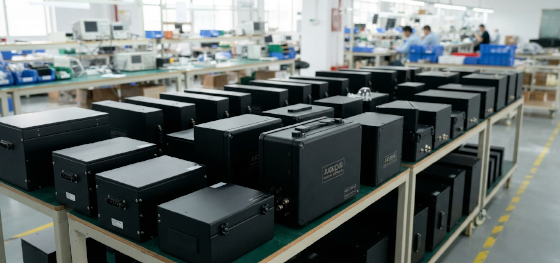
We achieve high protection ratings by incorporating continuous closed-cell rubber gaskets into folded flange joints, utilizing compression latches to maintain sealing pressure.EMI/RFI Shielding Strategies for Multi-Part Enclosures
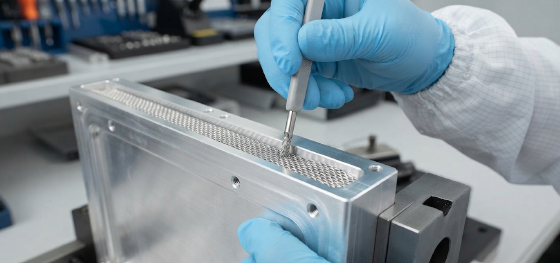
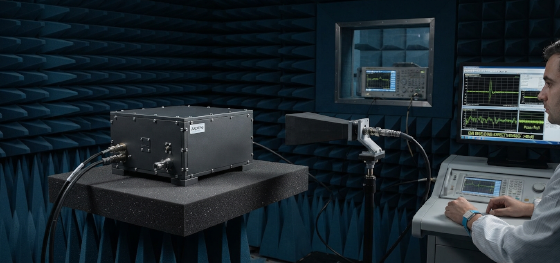
Conductive platings like nickel or tin over copper provide high surface conductivity to establish a continuous, low-resistance Faraday cage that blocks electromagnetic signals.PCB Mounting and Heat Sink Integration
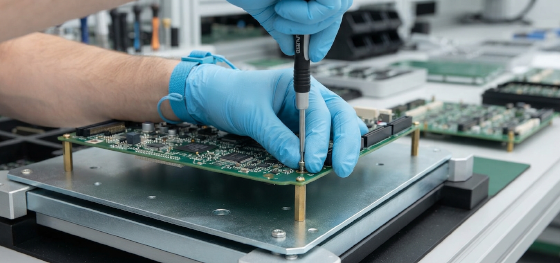
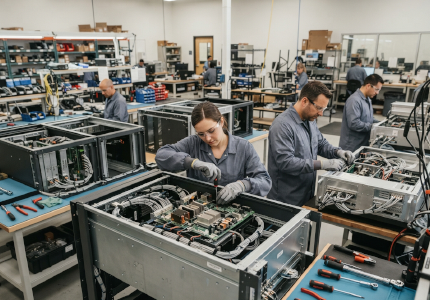
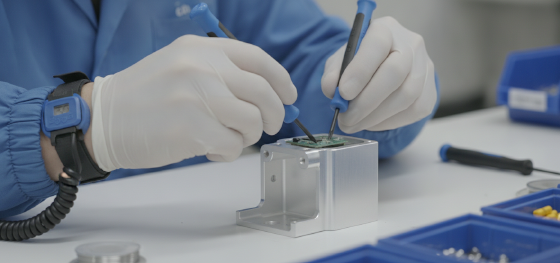
We utilize high-precision pneumatic presses to install self-clinching standoffs, and integrate five-axis milled aluminum plates to serve as high-efficiency thermal paths.Custom Electronics Enclosures at Jucheng Precision
FAQ: Critical Questions About Electronic Enclosure Assembly
We apply high-temperature polyester masking tapes to all joint lines and grounding studs before powder coating, ensuring direct, low-resistance metal contact after curing.
Silicone gaskets offer superior UV resistance, high-temperature limits, and long-term elasticity, making them ideal for outdoor cabinets, while polyurethane is highly cost-effective for indoor enclosures.
Yes, provided all overlapping joints are sealed with conductive fabric-over-foam or wire-mesh gaskets. This builds a continuous, conductive Faraday cage that blocks electromagnetic signals completely.
We execute advanced 5-axis CNC post-milling on our aluminum heat sink plates to flatten mating faces within 0.05mm, minimizing thermal contact resistance between hot microprocessors and the chassis frame.




ㆍPrivacy: We respect your privacy. Here you can find an example of a non-disclosure agreement. By submitting this form, you agree to our terms & conditions and privacy policy.
