


Designing secure, durable protective skins for delicate circuit boards, power converters, and industrial electronics is a highly precise discipline. Executing robust sheet metal enclosure design ensures that your internal hardware remains completely protected from liquid splashes, dust ingress, and impact stresses while matching strict NEMA and IP ratings to survive harsh environmental stresses. For product developers, this mechanical protective barrier is the key to delivering safe, reliable, and aesthetically premium electronic hardware to market.
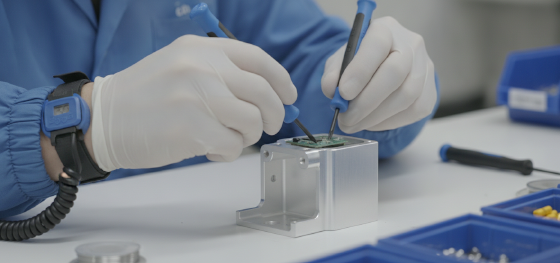
Suffer from delicate electronic components that fail in the field due to water condensation, overheating, or physical short-circuits? When a cabinet is modeled without proper seals, cooling vents, or adequate grounding hardware, it exposes your high-value PCBs to immediate environmental and electrical failures. Proactively integrating ingress protection, convective airflow, and secure mounting standoffs is the best way to secure your product's operating longevity.
Let's examine how NEMA and IP ratings dictate geometric layouts, analyze convective airflow and heat-sinking venting configurations, and review how self-clinching PEM fasteners simplify circuit board mounting inside custom chassis.
content:
NEMA and IP Ratings for Enclosure Protection
Ventilation and Heat Dissipation Design
Hardware Insertion: Stand-offs and PEM Nuts for PCB Mounting
Custom Electronic Enclosures Manufactured Quickly by JUCHENG
FAQ: Critical Questions About Sheet Metal Enclosure Design
NEMA and IP Ratings for Enclosure Protection
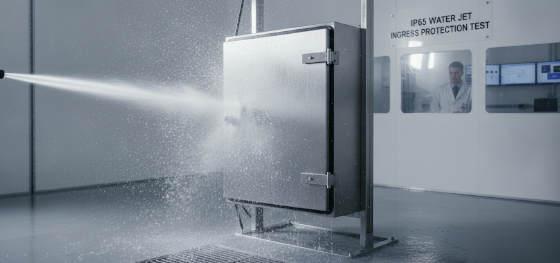
How do you design a sheet metal cabinet to satisfy strict dustproof and waterproof ratings?
We achieve high protection ratings by incorporating continuous closed-cell rubber gaskets into folded flange joints, utilizing compression latches to maintain sealing pressure.
Understanding how NEMA and IP ratings dictate cabinet geometry is vital to successful industrial deployments. If your device is located outdoors or in chemical washdown zones, a standard folded joint is insufficient. We design custom overlapping flanges that act as physical water channels, keeping high-pressure liquid away from the seal.
For an IP65 or NEMA 4 rating, we install high-performance neoprene or polyurethane gaskets into these channels. When the cabinet door is locked using heavy-duty compression latches, the gasket compresses to form a hermetic barrier. This prevents dust and low-pressure water jets from penetrating the housing, preserving your electronics under harsh ambient conditions.
Ventilation and Heat Dissipation Design
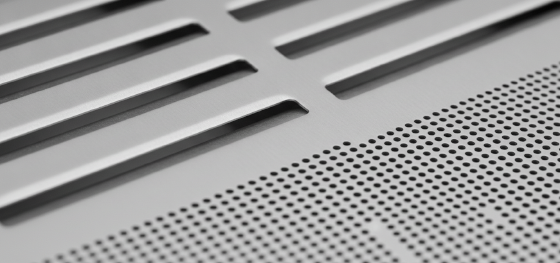
How can designers maintain active airflow inside an enclosure while preserving ingress protection?
We manage heat buildup by designing offset, gravity-defying louver vents or incorporating high-density perforated arrays placed away from water ingress paths.
When implementing sheet metal enclosure design configurations, balancing thermal airflow against dust ingress is a primary engineering challenge. High-power components inside the cabinet produce thermal energy that must be dissipated to prevent processor throttling. We achieve this by designing strategic convective perforated metal sheet design patterns.
For passive cooling, placing intake vents near the bottom of the cabinet and exhaust vents at the top utilizes natural convection to draw cool air in and release hot air. To protect these vents from rain, we design downwards-oriented louvers that act as water deflectors. For high-volume airflow requirements, we build mounting cutouts for automated cooling fans, incorporating mesh filters to keep dust out.
Hardware Insertion: Stand-offs and PEM Nuts for PCB Mounting
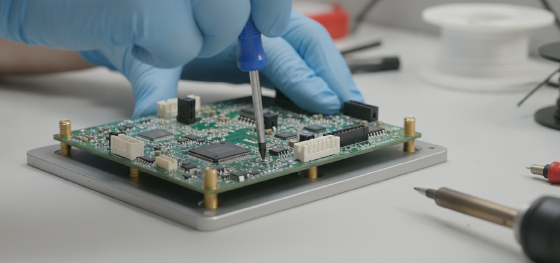
What is the most reliable method to mount printed circuit boards inside a sheet metal chassis?
We utilize high-precision pneumatic presses to install self-clinching PEM standoffs and nuts, providing strong, perpendicular machine threads.
Mounting delicate electronic PCBs directly onto the flat cabinet skin is a severe design risk. It can lead to physical contact short-circuits and makes component replacement extremely difficult. To prevent electrical failures, our designers utilize self-clinching threaded stand-offs and PEM nuts to raise the board off the metal base.
These specialized fasteners are pressed into laser-cut holes. Under high force, the sheet metal cold-flows into the fastener's undercut groove, locking it permanently. This delivers precise, perpendicular mounting points that can handle repeated screw engagements during maintenance cycles. We also design customized ground studs near the power inlet to ensure safe, low-resistance electrical grounding.
| Material Choice | Thermal & Ingress Suitability | Surface Protection Match | Best B2B Application |
|---|---|---|---|
| Lightweight aluminum (e.g., 5052-H32) | Outstanding thermal transfer, moderate sealing | Anodizing or chemical conversion film | Portable medical devices, luxury audio, aerospace brackets |
| Austenitic stainless steel (e.g., SUS304) | Low thermal transfer, extreme watertight sealing | Bead-blasted satin, chemical passivation | Surgical instruments, marine housings, food equipment |
| High-strength carbon steel (e.g., SPCC) | Good thermal transfer, excellent structural stiffness | Electrostatic powder coating or liquid painting | Industrial control cabinets, IT server racks, junction boxes |
Custom Electronic Enclosures Manufactured Quickly by JUCHENG

How does JUCHENG guarantee tight tolerances and clean cosmetic finishes on custom enclosures?
We operate high-power fiber laser cutters, CNC press brakes, and automated insertion lines managed by skilled operators, checking alignments before cutting.
Integrating these protective barriers, thermal slots, and mounting hardware into your early sheet metal design cycle is the single most effective way to eliminate production defects. JUCHENG integrates these advanced geometric and material validations into our digital manufacturing network, ensuring that your CAD files translate into fully finished, durable assemblies with extreme dimensional precision.
We process a wide range of raw sheets, matching each to its mathematically calculated springback allowances. Our technical department provides a 24-hour free DFM analysis to check your CAD models, checking tolerances and tool clearances before production. Supported by our no MOQ policy and rapid delivery guarantee, we manage your project from initial flat pattern cutting to final packaging and assembly.
FAQ: Critical Questions About Sheet Metal Enclosure Design
What is the difference between IP and NEMA ratings for protective cabinets?
IP (Ingress Protection) ratings are defined by international standards and focus strictly on protection against dust and water ingress. NEMA (National Electrical Manufacturers Association) ratings are defined in North America and include additional performance metrics, such as resistance to environmental corrosion (like saltwater rust) and structural protection against ice forming on outer surfaces.
How do you design an enclosure to block electromagnetic interference (EMI)?
We achieve high EMI shielding by utilizing conductive sheet metals (like bare aluminum or nickel-plated steel) and installing conductive fabric-over-foam or wire-mesh shielding gaskets in the door joints. This builds a continuous, conductive Faraday cage that blocks electromagnetic signals from disrupting internal circuits.
Why must we install zinc-plated ground studs inside a steel enclosure?
Uncoated steel can rust, which dramatically increases electrical resistance and can break the grounding path, causing electrical shock hazards. Installing zinc-plated or nickel-plated copper ground studs ensures a stable, highly conductive, and low-resistance electrical contact point, protecting both operators and delicate electronics.
How does JUCHENG support custom sheet metal enclosure design projects?
Our technical department reviews your CAD designs during our complimentary DFM stage. If your enclosure design features ventilation slots that compromise water sealing, or mounting holes that are too close to a flange, we suggest clear modifications like adding protective louvers or shifting hardware locations, delivering safe, highly manufacturable, and cost-effective housings.

