


Gravity remains the most expensive tax on aerospace innovation. In the uncompromising realm of commercial aviation, satellite deployment, and defense propulsion, every gram of excess mass represents a lifelong penalty to fuel efficiency and payload capacity. For decades, engineers were anchored to the heavy-cast alloys and titanium structures of the previous era. In the hyper-agile environment of 2026, the transition from metal to high-performance polymers is the mandatory pathway to market sovereignty. Navigating this structural shift requires the strategic deployment of aerospace plastic injection molding. This technology serves as the primary engine for time-critical weight reduction, delivering components that possess the mechanical spine of non-ferrous metals with the geometric freedom of advanced thermoplastics. Jucheng Precision operates as a high-fidelity manufacturing sanctuary, providing the technical depth and regulatory rigor needed to bridge the gap between "experimental design" and "airworthy asset" within the Injection molding application industries. We understand that an aerospace component is not just a part; it is a mission-critical safety contract that must survive extreme G-forces, ionizing radiation, and violent thermal swings without a single molecular failure.
Establishing a resilient aerospace supply chain demands the absolute rejection of "General Purpose" manufacturing. Amateurs often treat a cabin interior bezel like a consumer gadget, unaware that the strict FST (Flame, Smoke, and Toxicity) mandates of FAR 25.853 can disqualify an entire aircraft interior for a single material violation. Jucheng Precision eliminates these "Regulatory Crashes" by enforcing a strict "Material Sovereignty" protocol. We partner with Tier-1 resin suppliers to ensure every gram of resin—from high-mass carbon-filled PEEK to flame-retardant Ultem 9085—is certified for the rigors of flight. Our facility, housing over 150 CNC machines and specialized high-temperature injection bays, ensures that your aerospace brackets, fasteners, and interior components arrive retail-ready and documented for the stratosphere. This guide deconstructs the mechanical necessity of metal replacement, the physics of FST compliance, and why JUCHENG’s "Zero-Fail" tooling is the mandatory foundation for your next high-altitude breakthrough.
Structural Optimization: The Economics of Weight Reduction
Molecular Defense: Navigating FAR 25.853 FST Compliance
Thermal Frontiers: Processing PEEK and Ultem at 400°C
Tooling Rigor: Engineering Zero-Fail Precision for Flight
JUCHENG Protocol: AS9100 Mindset and Full Traceability
Structural Optimization: The Economics of Weight Reduction
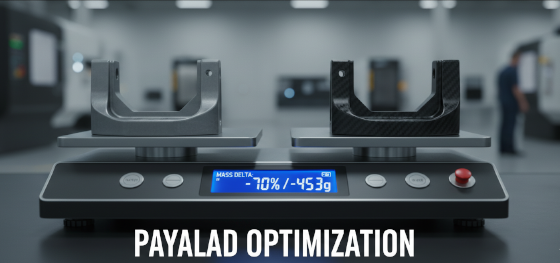
Mass reduction in the aerospace sector is a direct driver of top-line profitability. Estimates suggest that removing one kilogram of weight from a commercial airliner can save nearly $3,000 in annual fuel costs. aerospace plastic injection molding is the primary lever used by modern OEMs to achieve these savings. By converting traditional aluminum brackets, cable clamps, and interior housings into high-modulus polymers, Jucheng Precision delivers parts that offer a 60% to 80% weight reduction while maintaining equivalent tensile strength. This "Structural Evolution" is enabled by long-chain molecular reinforcement. We process advanced composites infused with carbon fiber or continuous glass strands to mirror the stiffness of 6061-T6 aluminum. Below is the technical performance matrix our engineers use to guide metal-to-plastic conversion for aerospace clients:
| Strategic Property | Aircraft Grade Aluminum | PEEK (30% CF Reinforced) |
|---|---|---|
| Density (g/cm³) | 2.70 | 1.44 (Mass Winner) |
| Tensile Strength (MPa) | 310 | 220 - 250 |
| Corrosion Resistance | Moderate (Galvanic Risk) | Extreme (Chemical Inert) |
| Thermal Expansion | High | Low (Stable) |
Molecular Defense: Navigating FAR 25.853 FST Compliance
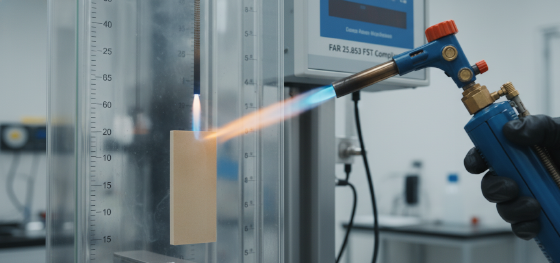
Cabin safety represents the primary legal guardrail of aviation manufacturing. Any polymer used within the pressurized hull of an aircraft must satisfy the "FST Trinity": Flame retardancy, Smoke density, and Toxicity levels. Standard Injection molding materials are often combustible or release lethal cyanide-based gases when exposed to heat. aerospace plastic injection molding at Jucheng Precision focuses heavily on Ultem (PEI) resins, which possess an inherent UL 94 V-0 flame rating and extremely low smoke evolution. We utilize these super-polymers for interior components—such as tray tables, oxygen mask bezels, and seat-back electronics—ensuring that if a thermal event occurs, the plastic acts as a firewall, not a fuel source. Our facility provides the material lot traceability and burn-test documentation required to satisfy FAA and EASA auditors, front-loading your safety validation during the Low Volume Injection Molding phase to prevent late-stage certification failures.
Thermal Frontiers: Processing PEEK and Ultem at 400°C
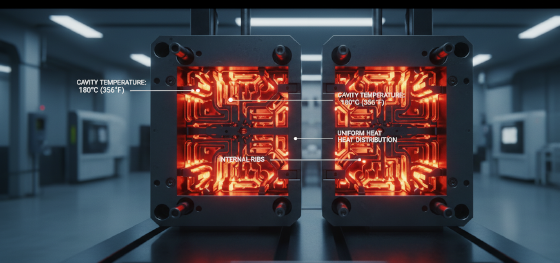
Manufacturing prototypes for extreme environments requires managing the upper limits of thermodynamics. Aerospace super-polymers like PEEK and Ultem do not flow until the barrel reaches temperatures exceeding 360°C (680°F). Standard injection molding machines suffer from seal failure and heater-band burnout at these levels. Jucheng Precision eliminates these "Thermal Dead-ends" by operating a dedicated "High-Heat Wing" equipped with ceramic-insulated barrels and bimetallic screws. Beyond the melt, we utilize high-precision oil heaters to stabilize mold temperatures at 180°C or higher. This "Hot Tooling" approach is mandatory for PEEK; if the mold is too cold, the material remains in an amorphous state, losing its chemical resistance and flexural modulus. We manage the crystalline transition with surgical precision, ensuring your aerospace hardware possesses the molecular permanence required to survive the sweltering heat of an engine nacelle or the cryogenic cold of deep space.
Tooling Rigor: Engineering Zero-Fail Precision for Flight

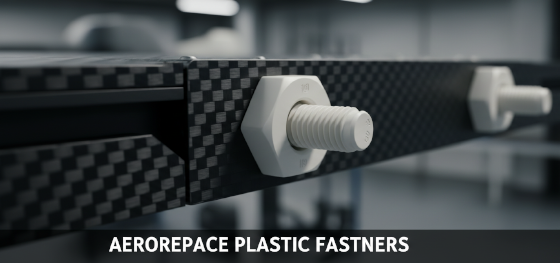
Mechanical precision in the stratosphere leaves zero margin for geometric drift. aerospace plastic injection molding often involves complex internal geometries—such as fluidic channels in fuel systems or precision threads for electronic connectors—that must maintain tight tolerances through thousands of vibration cycles. Jucheng Precision toolmakers utilize S136 stainless steel and H13 hardened tool steel to resist the aggressive abrasion of glass and carbon fiber fillers. We understand that a 0.05mm deviation in a fastener interface is an unacceptable "Flight Risk." Our facility utilizes 5-axis CNC machining to ensure our mold cavities are cut with sub-micron fidelity. By implementing "Scientific Molding" protocols, we stabilize the pressure and temperature during each shot, ensuring that part number 1 and part number 10,000 are dimensionally identical digital clones. We don't just "inject resin"; we engineer the physical certainty required for AS9100-level hardware validation.
JUCHENG Protocol: AS9100 Mindset and Full Traceability

Manufacturing excellence at Jucheng Precision is built on the foundation of the AS9100 mindset. We recognize that an aerospace part without a pedigree is a liability. Our facility implement a rigorous "Chain of Custody" for every production run, utilizing Coordinate Measuring Machines (CMM) and Spectrometers to verify that every batch meets the strict material purity and dimensional requirements of your project. We provide full material lot traceability, ensuring that your hardware journey is lean, predictable, and audit-ready. Stop gambling your mission's success with inaccurate mockups or uncertified shops. Leverage our decade of high-performance replication mastery to validate rapidly and launch profitably. Contact our technical team today for a free DFM review and see how we can turn your digital aerospace intent into a lightweight, indestructible physical reality that is ready for takeoff.

