


Choose the joint before choosing the process
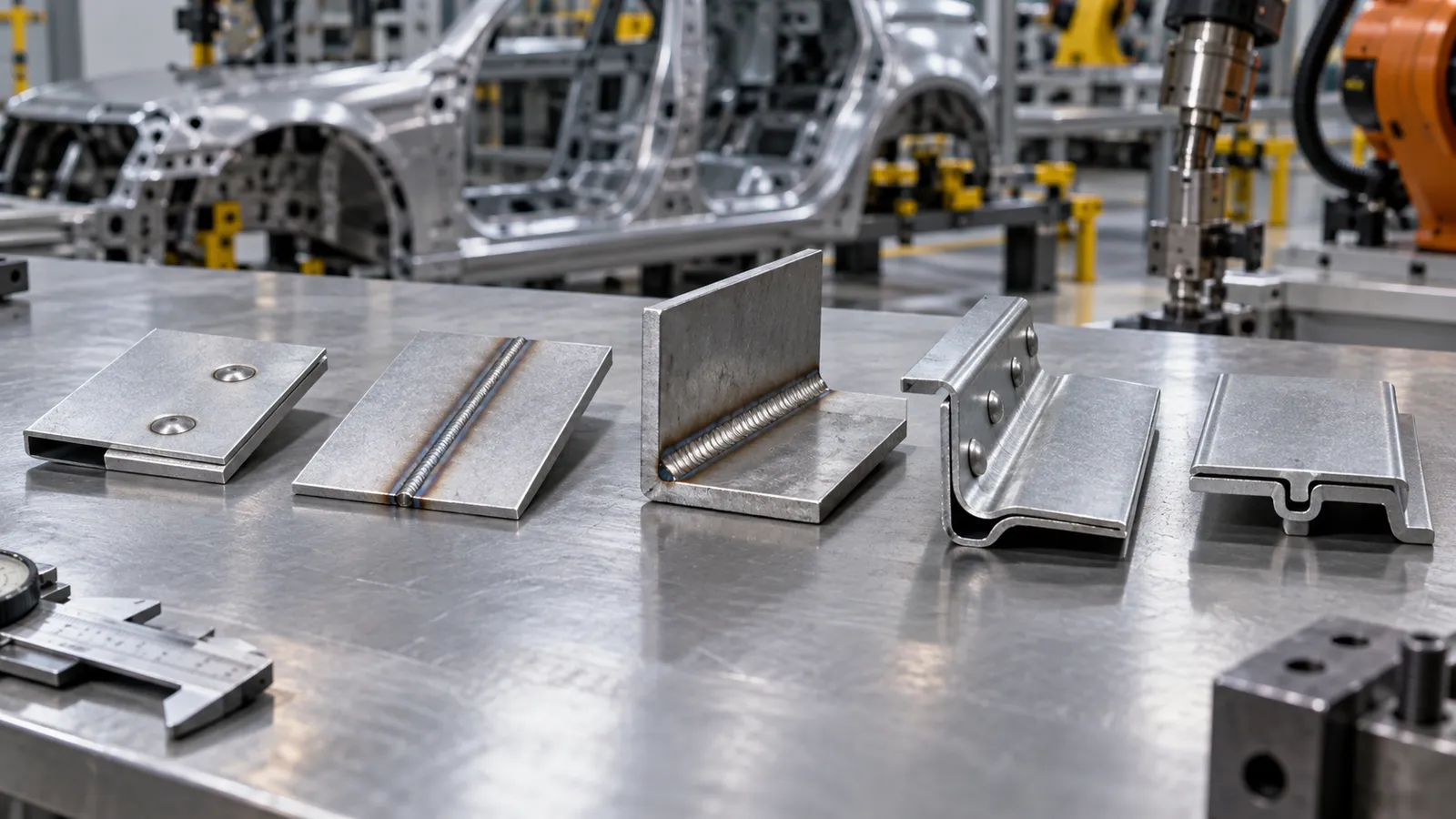
A sheet metal joint may use spot welding, laser welding, MIG, TIG, riveting, clinching, or a hybrid method. The best choice depends on load, access, appearance, thickness, production quantity, and whether the joint must be sealed. A small electronics cover may need clean, low-distortion joining. A structural bracket may prioritize strength and repeatable positioning. A heat shield may use a joint that tolerates thermal movement.
Joint design should identify the load path and the surfaces that establish the assembly datum. A long unsupported seam may distort even when each individual weld is sound. A short intermittent joint may be sufficient for a shield but not for a load-bearing support. The supplier needs the surrounding function to recommend a joint rather than simply select a machine from the material name.
| Joint situation | Primary concern | Design review focus |
|---|---|---|
| Thin cover or shield | Burn-through and distortion | Heat input, intermittent welds, and fixture support |
| Load-bearing bracket | Strength and fatigue | Load path, weld length, and access |
| Sealed enclosure | Leakage and cleanliness | Continuous joint, surface preparation, and test method |
| Mixed-metal assembly | Compatibility and corrosion | Filler, isolation, finish, and galvanic control |
Access controls more than bead appearance
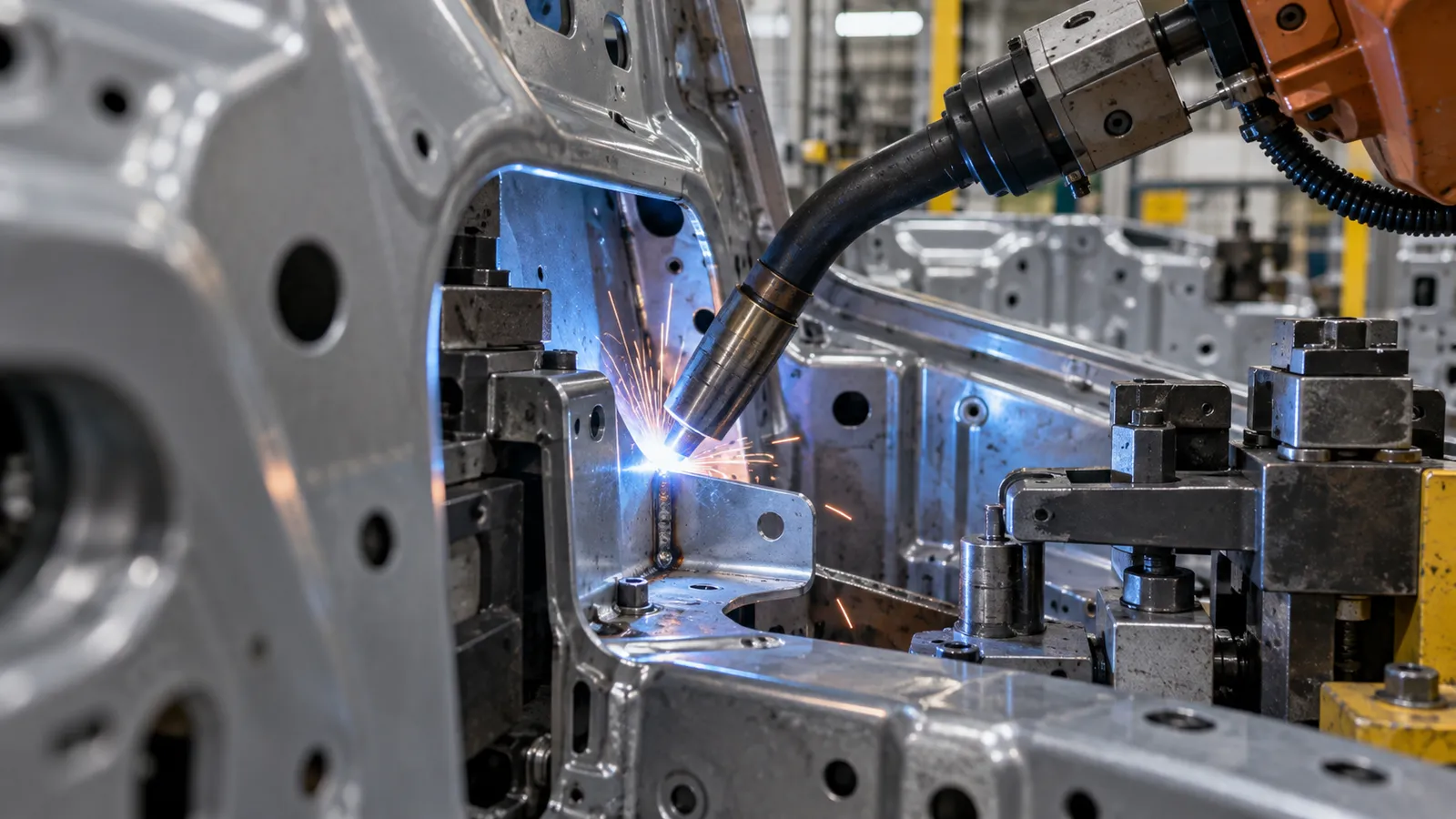
Welding tools need a clear path. A joint that is easy to model may be difficult to reach after a flange is bent or an enclosure wall is installed. Check torch angle, electrode clearance, cable routing, clamping space, and the ability to inspect the finished joint. If access requires forcing the part, the fixture or geometry may be wrong.
Assembly order matters as well. A welded subassembly should be designed so the early joints do not block later joints. When a fastener, insert, or machined interface is added after welding, its location should be protected from spatter and distortion. These details are especially important for automotive sheet metal parts that combine laser-cut blanks, formed walls, hardware, and surface finishing.
Manage heat and distortion
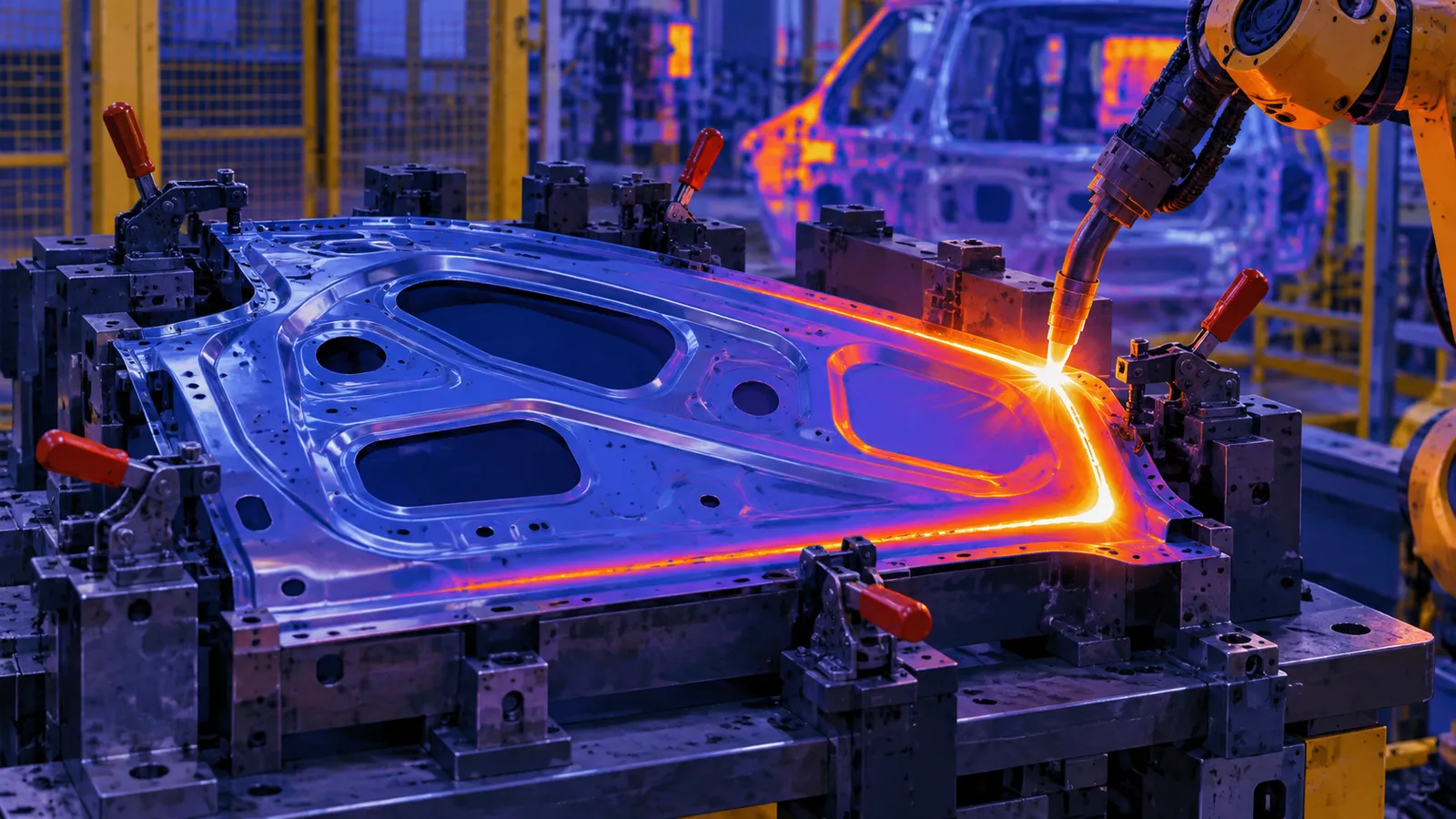
Heat creates expansion and contraction. Thin sheet can pull out of position, twist around a weld line, or lose flatness after a long continuous seam. Distortion control may include balanced weld sequencing, tack strategy, intermittent joints, heat sinks, controlled parameters, and rigid but accessible fixtures.
Do not treat distortion as only a welding problem. Part thickness, flange width, joint gap, bend sequence, and material condition influence the result before the weld is made. A short prototype run can compare two joint layouts and reveal which one preserves the functional datum with less correction work.
After welding, recheck the features that matter to installation. A bracket may need a machined hole or datum surface restored. An enclosure may need a flat sealing face. A structural panel may need a profile check against its mating frame. The inspection plan should account for these post-weld conditions.
Material compatibility and surface preparation
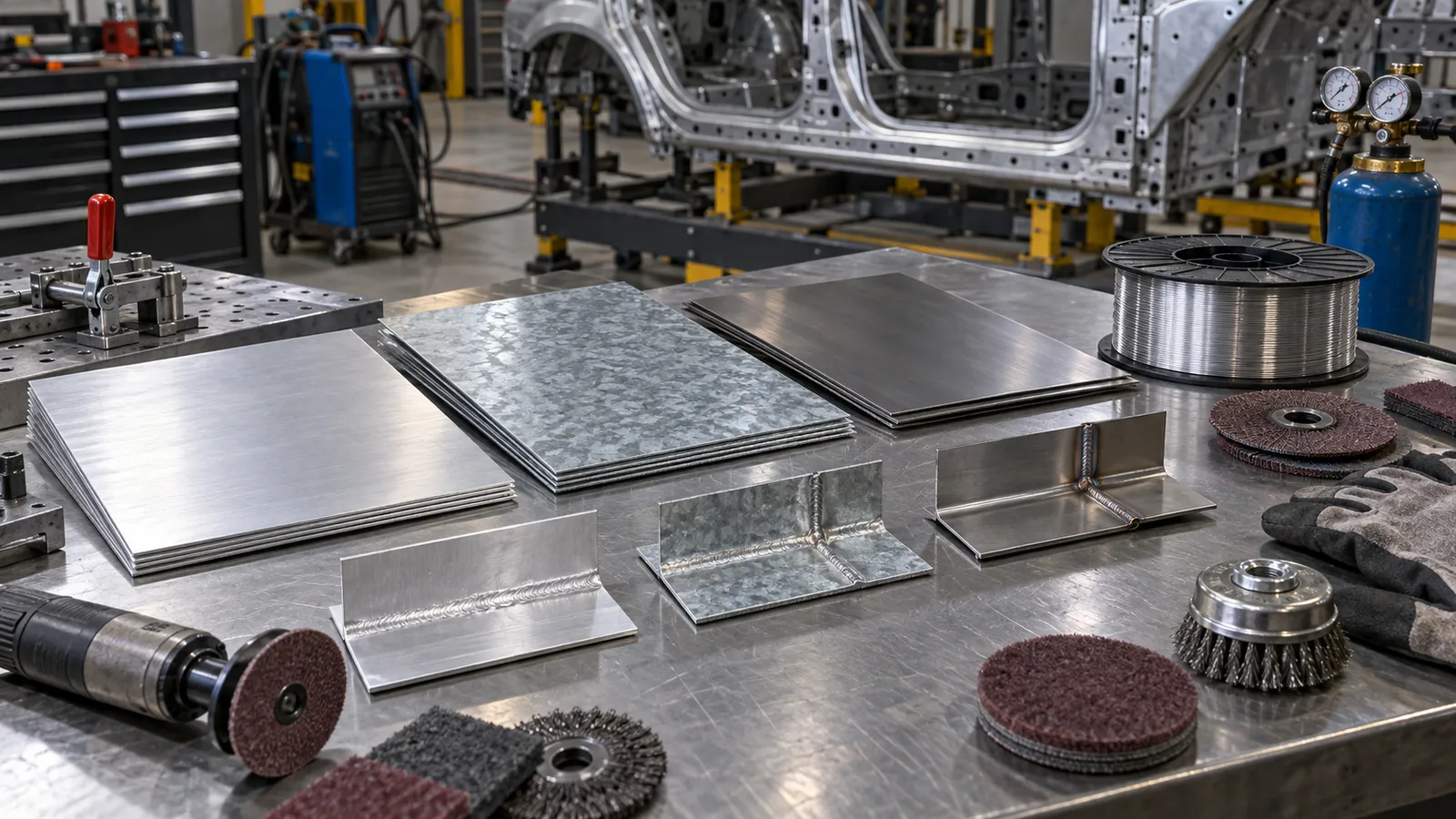
Automotive sheet metal welding may involve mild steel, galvanized steel, stainless steel, aluminum alloys, or combinations of materials. Each requires suitable preparation and process control. Coatings, oils, oxides, and contamination can affect arc stability, porosity, weld appearance, and corrosion behavior.
Galvanized material requires attention to coating and ventilation. Aluminum requires oxide control and a process suited to its thermal behavior. Stainless steel may need heat management to protect appearance and corrosion resistance. Mixed-metal joints require an engineering review of galvanic contact, filler selection, isolation, and the final finish.
Finishing should be planned with the weld route. Grinding, blasting, painting, powder coating, plating, passivation, or anodizing can change the appearance and protection of the joint. Masking may be necessary where the part must ground or seal. A “finished” sample should represent the condition that the vehicle will actually receive.
Fixtures protect repeatability
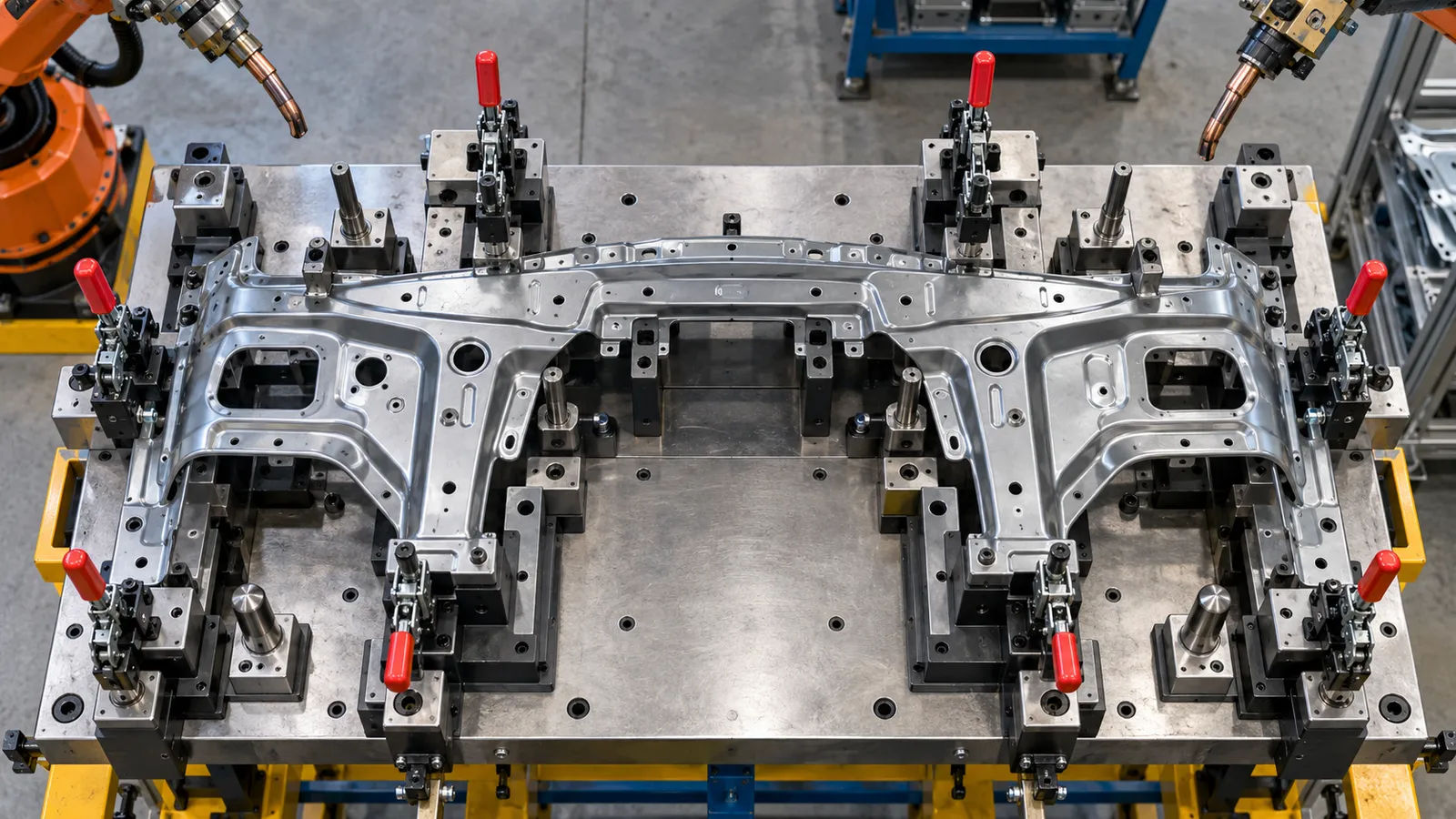
A fixture controls where the parts meet while the joint is created. It should locate functional datums, allow tool access, resist movement, and release the assembly without damage. A fixture that only holds the cosmetic outline may allow a critical hole or flange to drift.
For prototypes, modular fixtures and adjustable locators can preserve flexibility while the geometry changes. For repeat production, dedicated fixtures may improve cycle consistency and make inspection faster. In both cases, the fixture should be checked against the assembly sequence rather than designed only around the welding torch.
Inspect the joint as part of the assembly
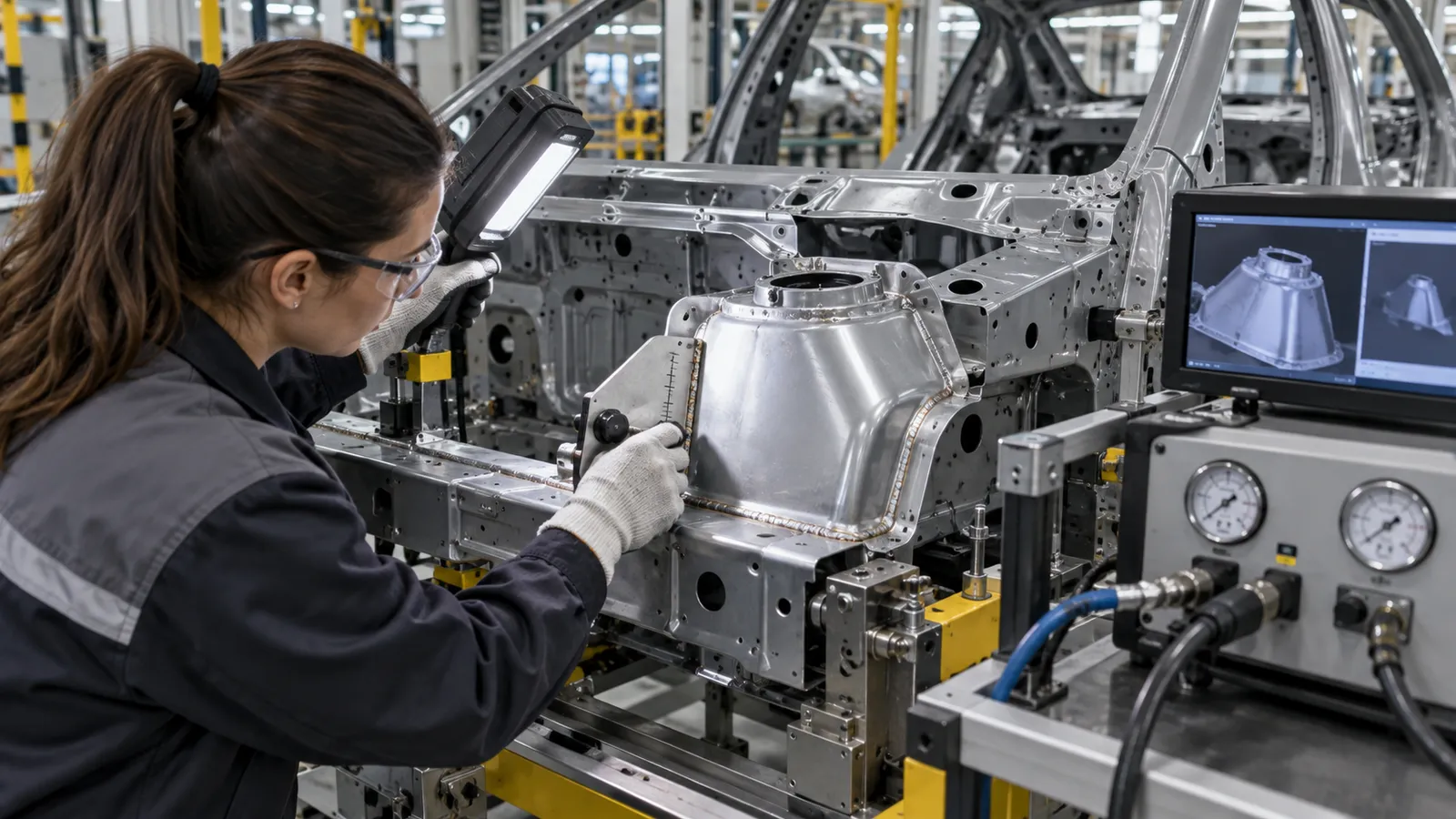
Visual inspection can identify undercut, spatter, incomplete coverage, inconsistent appearance, and obvious cracks. Dimensional inspection verifies hole positions, flange locations, flatness, and overall profile. Depending on the application, leak testing, sectioning, pull testing, or other validation may be appropriate.
The most useful check often happens when the welded part is installed in its neighboring assembly. Confirm fastener access, clearance, sealing contact, harness protection, and movement. This catches a class of failures that a perfect-looking weld bead cannot reveal.
What to specify in a welding RFQ
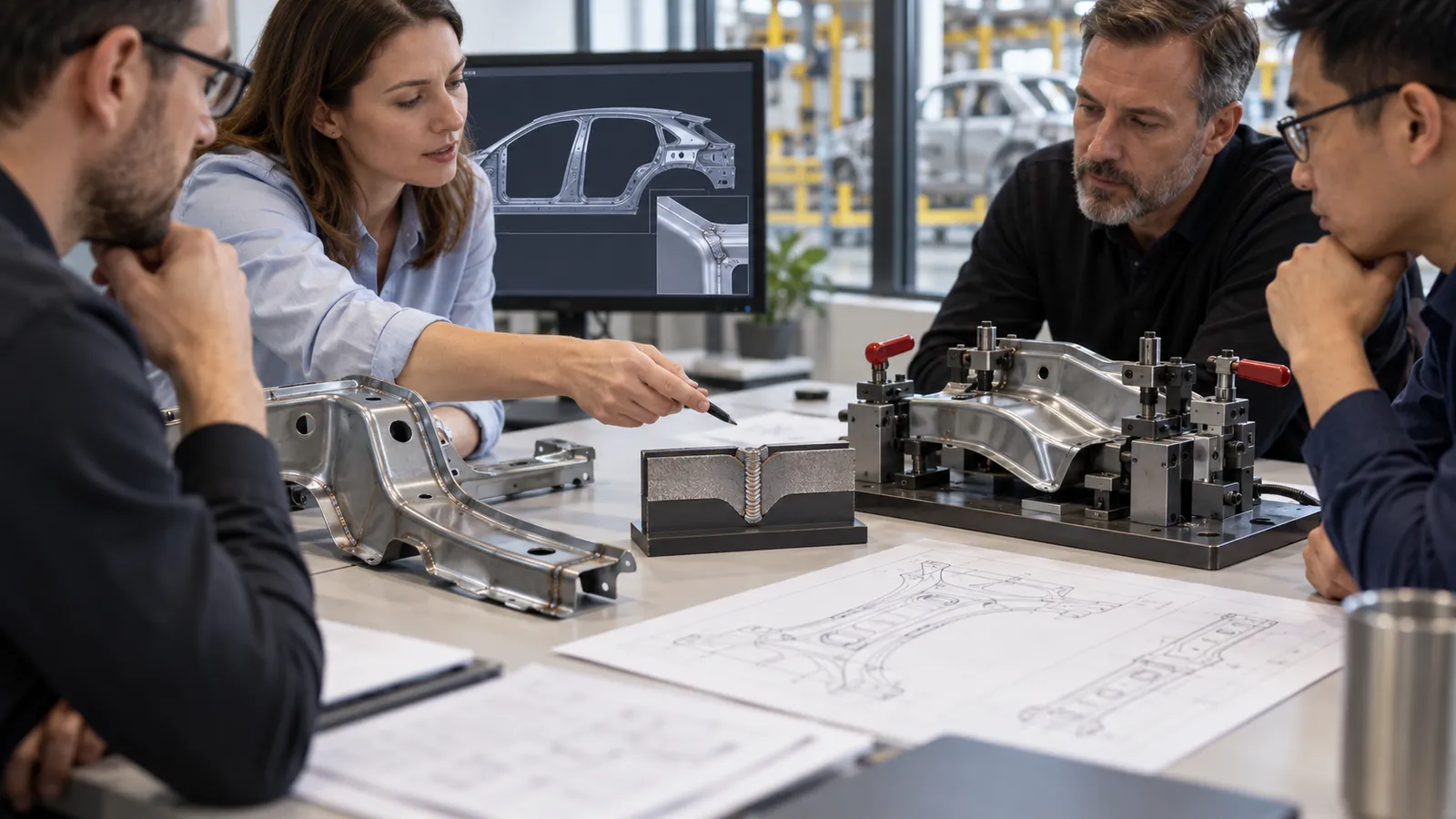
Include the material and thickness, joint drawings, weld locations, required finish, cosmetic zones, load or sealing function, quantity, fixture expectations, inspection method, and packaging. Identify surfaces that must remain free of spatter and datums that must be protected through the operation.
If the part is still evolving, state the intended test and the open design decisions. A supplier that can coordinate sheet metal fabrication with CNC machining, finishing, inspection, and assembly can help choose whether welding, riveting, clinching, or a different route best fits the program.
Frequently Asked Questions
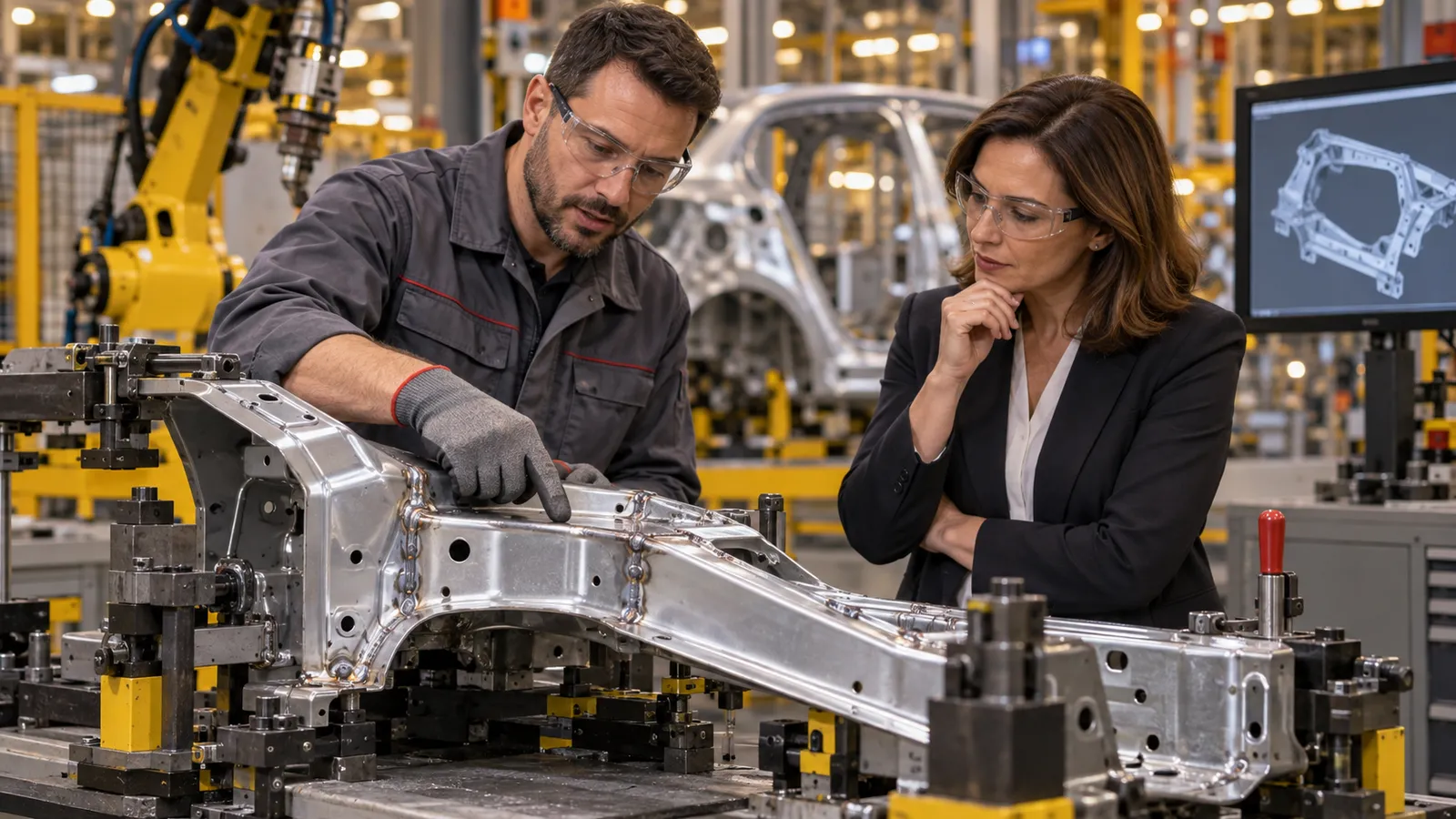
Which welding methods are used for automotive sheet metal?
Spot welding, MIG, TIG, laser welding, and hybrid joining methods are common. The appropriate process depends on thickness, material, joint access, load, appearance, sealing, and production quantity.
How can welding distortion be reduced?
Use a suitable joint, balanced sequence, controlled heat input, accurate fixturing, appropriate tack strategy, and inspection after welding. Geometry and material preparation also influence distortion.
Should automotive welded parts be machined afterward?
Sometimes. Critical holes, bores, sealing faces, or datums may need post-weld machining when the welded assembly cannot hold the required interface condition by fabrication alone.
Make the joint support the vehicle decision
Reliable automotive sheet metal welding is a coordinated design problem. Joint type, tool access, heat control, material compatibility, fixture strategy, finishing, and assembly inspection must work together. When those factors are reviewed before production, the weld becomes part of a dependable component rather than an isolated line on the drawing.

