


In the realm of modern manufacturing, CNC turning stands as a cornerstone technology, enabling the production of high-precision components with efficiency and repeatability. This process is integral to industries ranging from aerospace to medical devices, where exacting standards are non-negotiable. By leveraging computer numerical control, turning has evolved from a manual craft to a highly automated and sophisticated operation. This article delves into the intricacies of CNC turning, its associated machinery, complementary processes, and the services that drive innovation in manufacturing today.
content:
What is CNC Turning?
The Role of CNC Turning Parts
Understanding the CNC Turning Machine
Combining Forces: CNC Milling and Turning
Leveraging Professional CNC Turning Services
The Pursuit of Precision CNC Turning
Evolution of the CNC Turning Center
Specialized Innovation: CNC Vertical Turning Lathe
Advantages of CNC Vertical Turning
What is CNC Turning?
CNC turning is a subtractive manufacturing process where a cutting tool, typically non-rotating, is moved linearly while the workpiece rotates at high speeds. The tool removes material from the workpiece to create cylindrical parts with precise dimensions, geometries, and surface finishes. Controlled by computer-aided design (CAD) and computer-aided manufacturing (CAM) software, CNC turning ensures exceptional accuracy and consistency. This method is ideal for producing parts with rotational symmetry, such as shafts, bolts, and bushings, but can also handle complex contours and features through advanced programming and toolpath strategies.
The Role of CNC Turning Parts
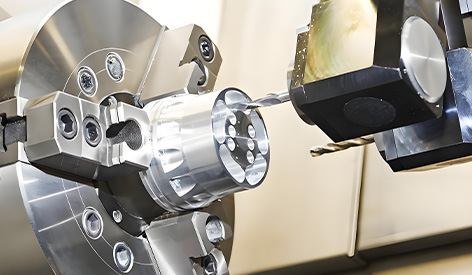
CNC turning parts are the components produced through the turning process. These parts are characterized by their cylindrical shapes and high dimensional accuracy. Common examples include flanges, fittings, nozzles, and pivots. The quality of CNC turning parts depends on factors like material selection, tool geometry, and machine capability. With the ability to work with metals, plastics, and composites, CNC turning parts are vital in applications requiring tight tolerances and smooth surface finishes, such as in hydraulic systems, automotive transmissions, and surgical instruments.
Understanding the CNC Turning Machine
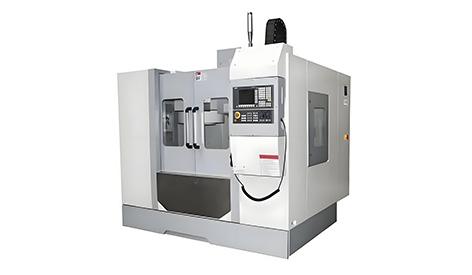
A CNC turning machine, commonly referred to as a CNC lathe, is the equipment used to perform turning operations. It consists of a spindle that rotates the workpiece, a turret holding multiple cutting tools, and a computer system that controls the movements. Modern CNC turning machines are equipped with live tooling, which allows for milling and drilling operations without repositioning the workpiece. This enhances versatility and reduces production time. Additionally, features like automatic tool changers and tailstocks support the machining of long and complex parts with minimal human intervention.
Combining Forces: CNC Milling and Turning
While CNC turning focuses on rotational parts, CNC milling involves rotating cutting tools to remove material from a stationary workpiece. However, many modern machining centers integrate both processes, known as CNC milling and turning. These hybrid machines, often called mill-turn centers, enable the complete fabrication of complex components in a single setup. For instance, a part can be turned to create its primary cylindrical form and then milled to add slots, keyways, or off-axis holes. This integration streamlines production, reduces handling errors, and accelerates time-to-market.
Leveraging Professional CNC Turning Services
For businesses without in-house capabilities, CNC turning services offer a practical solution. These services provide access to state-of-the-art machinery and expert machinists who can produce custom parts to specification. From prototyping to large-scale production, CNC turning services ensure quality control, cost-effectiveness, and rapid turnaround. They often assist with material selection, design for manufacturability (DFM), and post-processing treatments like anodizing or plating. By outsourcing to specialized providers, companies can focus on core competencies while benefiting from advanced manufacturing techniques.
The Pursuit of Precision CNC Turning
Precision CNC turning takes accuracy to the next level, often achieving tolerances within microns. This requires high-end machines, rigid tooling, and meticulous calibration. Environmental controls, such as temperature and humidity regulation, further enhance precision. Applications demanding such exactness include aerospace components, medical implants, and optical devices. Precision CNC turning often involves multi-axis movements, micro-tooling, and real-time monitoring systems to detect and correct deviations instantly, ensuring every part meets stringent quality standards.
Evolution of the CNC Turning Center
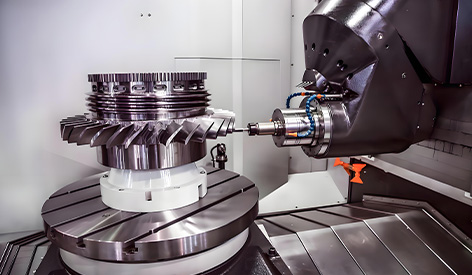
The CNC turning center is an advanced version of the traditional lathe, designed for high productivity and flexibility. Equipped with multiple axes, such as X, Z, and often C and Y, these centers can perform complex operations like contouring and threading with ease. Sub-spindles allow for simultaneous machining on both ends of a part, reducing cycle times. Modern turning centers also incorporate robotics for automated loading and unloading, making them ideal for lights-out manufacturing. Their capability to handle a variety of materials and part sizes makes them indispensable in today’s factories.
Specialized Innovation: CNC Vertical Turning Lathe
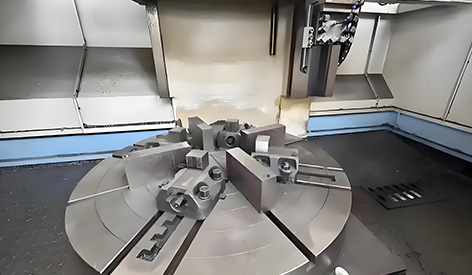
A CNC vertical turning lathe (VTL) is a type of turning machine where the spindle axis is oriented vertically. This design is particularly advantageous for heavy, large-diameter workpieces that are challenging to mount on horizontal lathes. Gravity aids in securing the part, reducing deflection and improving stability during machining. VTLs are commonly used in the energy sector for manufacturing turbine components, as well as in automotive for large gears and rings. Their ability to maintain accuracy under heavy loads makes them a preferred choice for massive parts.
Advantages of CNC Vertical Turning
CNC vertical turning offers unique benefits, especially for oversized components. The vertical orientation simplifies part loading with cranes or robotic arms, enhancing safety and efficiency. Chip evacuation is more effective, as debris falls away from the workpiece and tooling, minimizing interference and prolonging tool life. Additionally, VTLs often feature modular tooling systems and programmable tailstocks, allowing for customized setups. With advancements in software, these machines can simulate and optimize processes before execution, reducing material waste and ensuring first-part correctness.
CNC turning continues to shape the future of manufacturing through its precision, versatility, and automation. From basic lathes to sophisticated turning centers and vertical lathes, the technology adapts to diverse needs across industries. As integration with milling grows and services become more accessible, businesses can achieve higher efficiency and innovation. Embracing these advancements ensures that manufacturers stay competitive in a rapidly evolving global market, delivering quality parts that meet the demands of tomorrow’s challenges.

