


The study of material behavior under stress is crucial for engineering applications, particularly in understanding the deformation of plastics and metals. When external forces are applied, materials undergo structural changes that can lead to hardening, altering their mechanical properties. This article explores key concepts such as recrystallization, edge dislocations, and double theory, providing insights into how materials strengthen under strain.
Deformation of Plastics and Metals
The Role of Recrystallization in Hardening
Edge Dislocations and Their Impact
Double Theory: Combining Hardening Mechanisms
Practical Applications and Future Directions
Deformation of Plastics and Metals
Deformation of plastics differs significantly from that of metals due to their polymer-based structure. While metals deform through dislocation movements, plastics experience chain alignment and stretching. However, both materials can undergo hardening when subjected to mechanical stress. For example, cold working—a process where metals are deformed at low temperatures—increases their strength by introducing dislocations that impede further deformation.

The Role of Recrystallization in Hardening
Recrystallization is a thermal process that occurs after deformation, where new, strain-free grains replace the distorted microstructure. This phenomenon is critical in annealing, where a material is heated to relieve internal stresses. Unlike hardening, which increases strength by dislocation accumulation, recrystallization softens the material but improves ductility. The balance between these mechanisms determines the final properties of the material.
Edge Dislocations and Their Impact
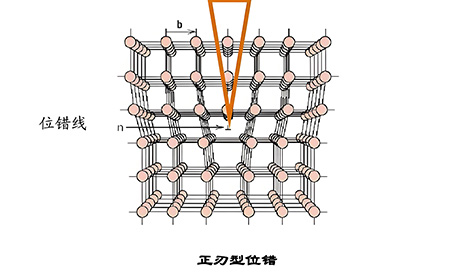
Dislocations are defects in the crystal lattice that facilitate plastic deformation. Among them, edge dislocations are particularly important. They occur when an extra half-plane of atoms is introduced, creating a stress field that interacts with other dislocations. This interaction contributes to hardening, as the increased dislocation density makes further slip more difficult. Understanding these defects is essential for predicting material behavior under load.
Double Theory: Combining Hardening Mechanisms
The double theory refers to the combined effects of work hardening and precipitation hardening. Some alloys, such as aluminum-copper systems, strengthen not only through dislocation interactions but also via secondary phase particles that obstruct dislocation motion. This dual mechanism enhances mechanical properties, making such materials ideal for aerospace and automotive applications.
Practical Applications and Future Directions
By studying deformation of plastics, recrystallization, and hardening, engineers can design stronger, more durable materials. Advances in computational modeling allow for precise predictions of how materials behave under stress, optimizing manufacturing processes. Future research may explore nanostructured materials, where edge dislocations and grain boundaries are controlled at atomic levels for superior performance.
In conclusion, the interplay between deformation mechanisms and hardening processes defines material strength. Whether through dislocation interactions, thermal treatments like recrystallization, or composite approaches as in double theory, understanding these principles is key to material innovation.

