


The cheapest unit quote is often not the lowest-cost route. It may exclude tooling changes, validation, inspection fixtures, documentation, yield loss, supplier management, packaging, or the engineering needed to make the design repeatable. When buyers ask how much it costs to manufacture a medical device, the useful answer is a cost model with assumptions one universal price.
This article breaks the model into decisions that engineering and procurement can influence before quotation and before production volume makes mistakes expensive.
Contents
Use the Full Cost Equation
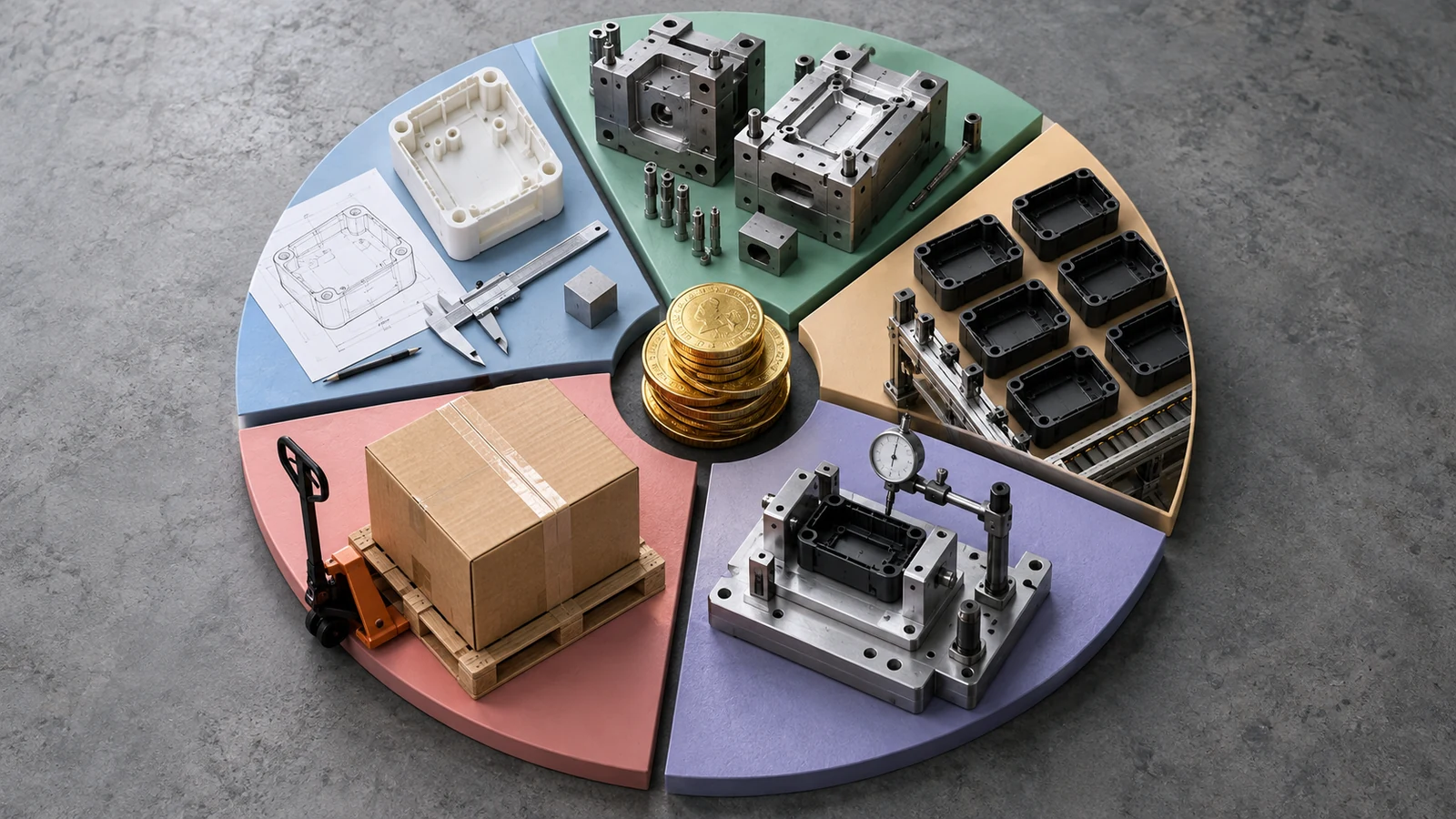
A practical model separates nonrecurring engineering, tooling and fixtures, recurring unit conversion, quality and documentation, logistics, scrap and yield, inventory, and lifecycle change. Amortizing every one-time expense into a small forecast can make the unit cost look high; ignoring those expenses makes the program look unrealistically cheap.
Total program cost = development + tooling + qualification + (unit conversion good units) + quality + logistics + expected change and failure cost.
The parent guide to medical device manufacturing cost frames these categories at the program level. The estimate should state forecast quantity, production duration, device configuration, evidence package, delivery region, and what the supplier excludes.
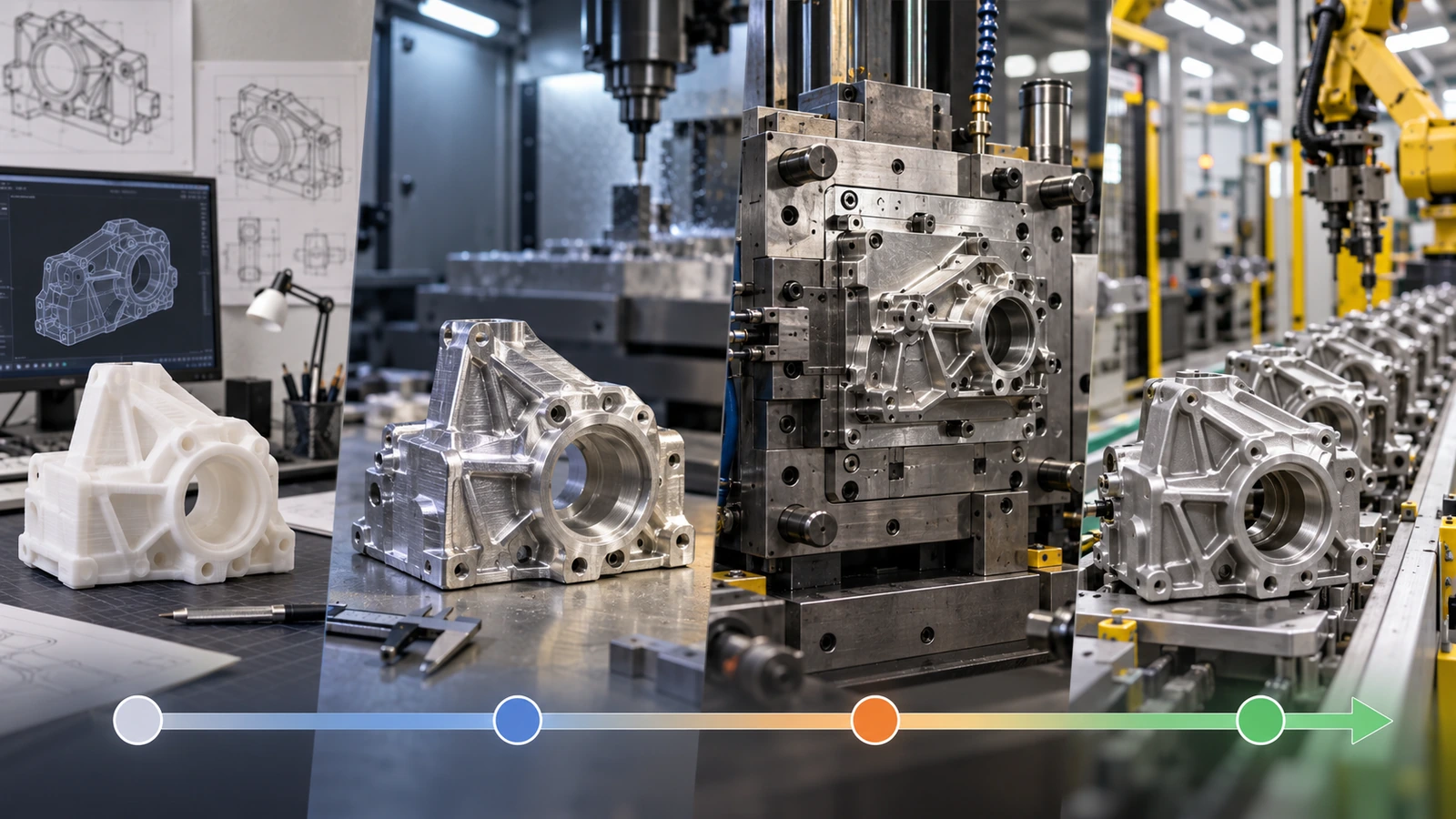
Development Stage Changes the Answer
| Stage | Cost objective | Common trap |
|---|---|---|
| Concept | Learn quickly with flexible processes | Treating prototype price as production price |
| Engineering verification | Use representative geometry and materials | Paying for tests on obsolete revisions |
| Design verification | Control configuration and evidence | Changing process after evidence is generated |
| Pilot and validation | Prove the released route | Using non-production tooling or suppliers |
| Commercial production | Optimize good-unit cost and continuity | Optimizing purchase price while yield declines |
Early processes such as CNC machining, additive manufacturing, vacuum casting, or soft tooling can reduce commitment and accelerate learning. Higher-volume tooling can lower conversion cost later. The economical route is often a planned transition rather than one process forced across the entire lifecycle.
Part Design Creates Conversion Cost
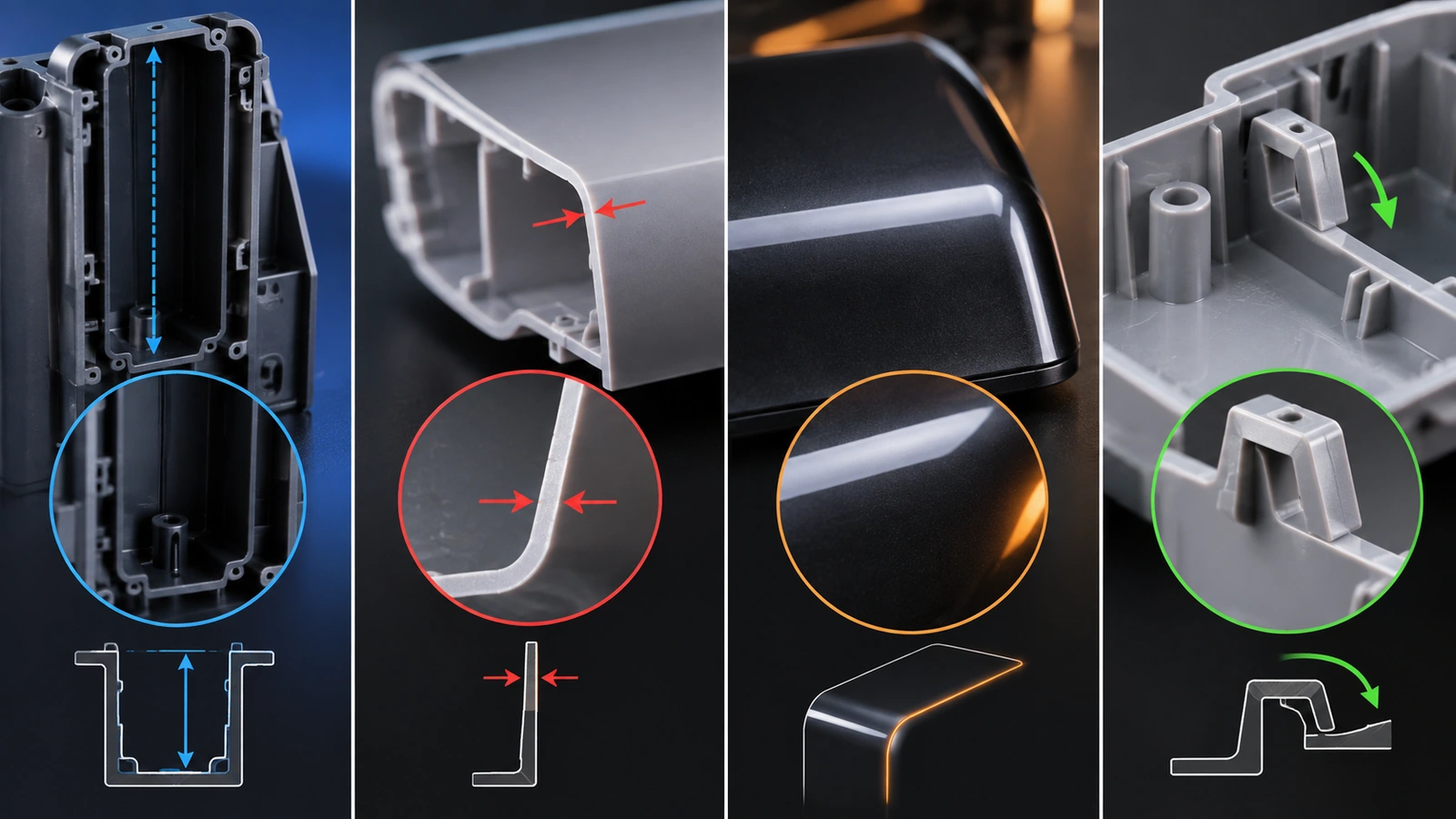
Material volume matters, but geometry often matters more. Deep pockets increase machining time. Thin walls and long reaches reduce stability. Cosmetic surfaces add handling and inspection. Undercuts add slides or secondary operations in molding. Tight bends and inaccessible welds complicate sheet metal. Internal additive channels increase cleaning and inspection effort.
Cost multipliers hidden on drawings
- Tolerances tighter than functional need
- Large numbers of separately controlled dimensions
- Rare material grades or nonstandard stock sizes
- Surface finishes applied to the entire part instead of zones
- Manual alignment, fastening, masking, polishing, or deburring
- Features that cannot be measured with standard methods
- Assemblies that require repeated adjustment or rework
A DFM review should distinguish must-have requirements from inherited drafting habits. The largest savings often come from changing a datum, opening a tolerance, combining inspections, improving tool access, or moving a cosmetic boundary from negotiating a few percent from the supplier.
Quality Evidence Has a Real Cost
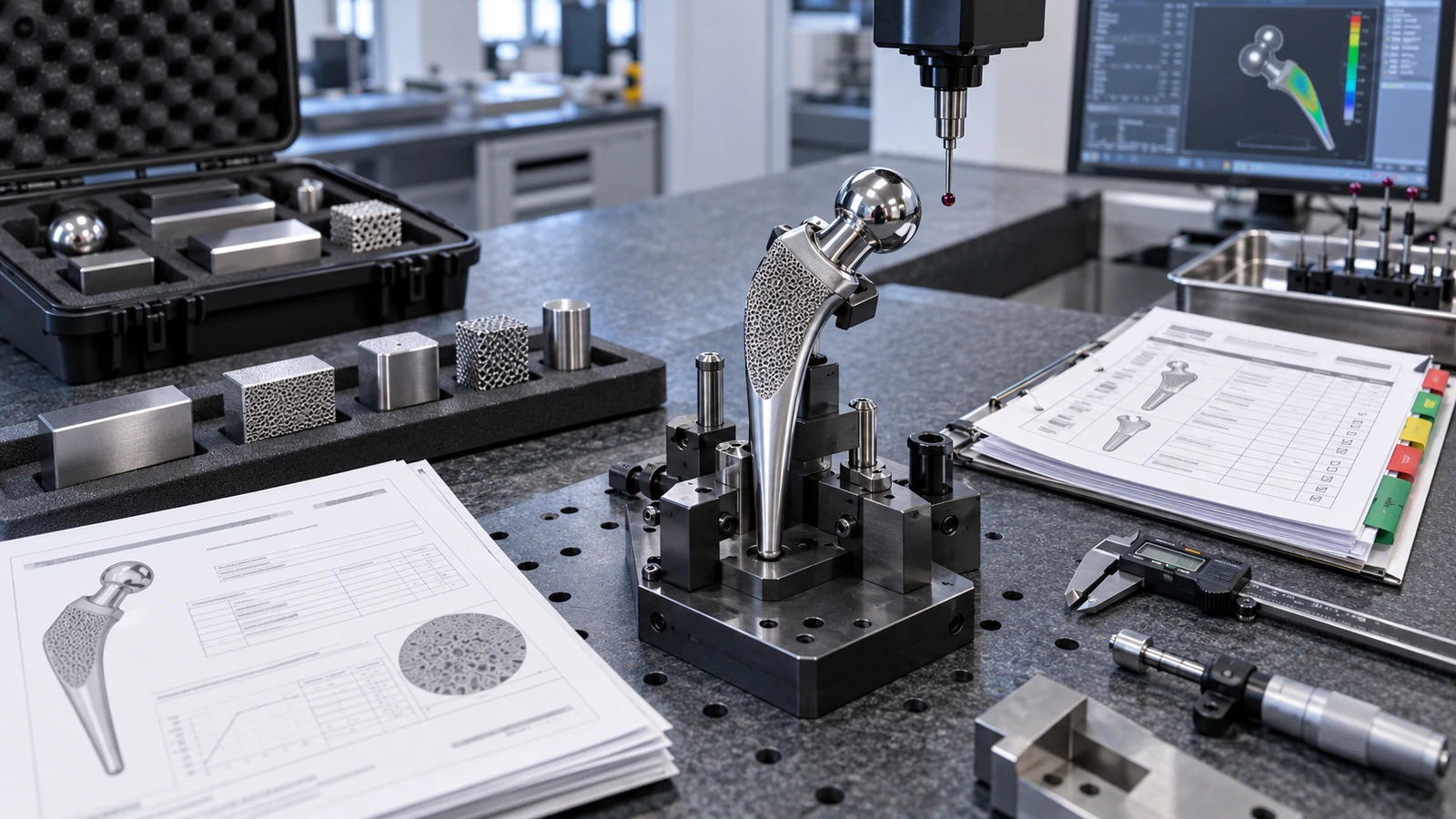
Medical-device work may require material certificates, first-article reports, validated special processes, gage studies, capability evidence, lot traceability, controlled travelers, environmental records, clean packaging, and retained documentation. Each requirement consumes engineering, equipment, operator, review, and retention resources.
Specify evidence according to risk. Requiring a full dimensional report on every lot may be justified for some critical parts and wasteful for stable noncritical features. Conversely, accepting a low quote without the needed records can force expensive testing or supplier changes later. The correct comparison is compliant good-unit cost.
Quality cost is visible when planned. When omitted, it returns as delay, reinspection, deviation, scrap, or lost evidence.
Volume Changes Process Economics
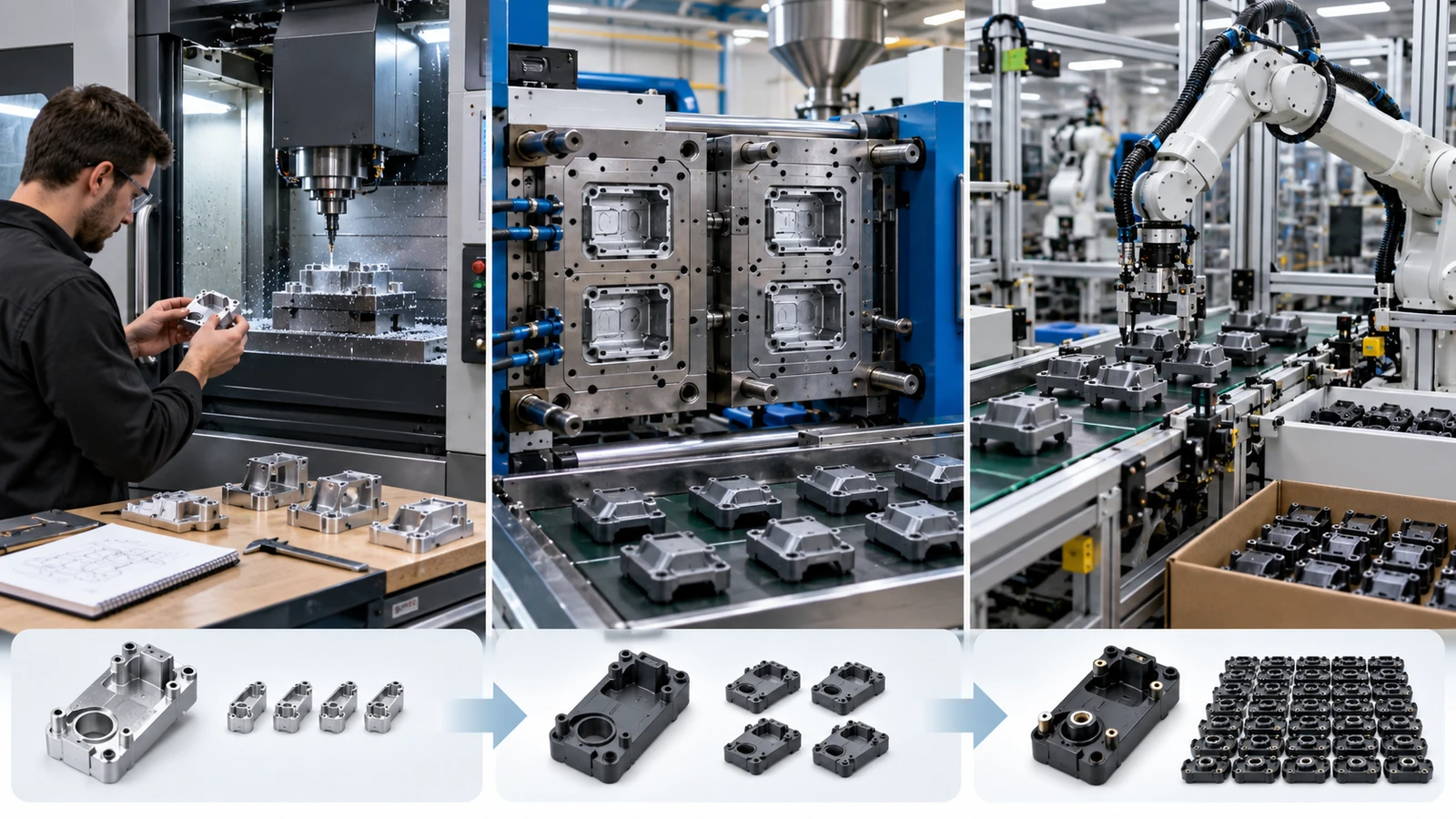
A simple break-even comparison uses fixed cost and variable cost. If Route A has little tooling but a high unit cost, and Route B has expensive tooling but a lower unit cost, the theoretical break-even quantity is the fixed-cost difference divided by the unit-cost difference. Real decisions also include forecast uncertainty, tool life, qualification, ramp time, design maturity, capacity, and change cost.
Do not treat annual volume as one number. Model low, expected, and high demand; batch size; service parts; geographic variants; scrap; and launch curve. A modular tool, family fixture, or bridge process may protect the program when demand is uncertain.
For early quantities, low-volume manufacturing can preserve design flexibility while producing representative parts. The transition trigger should be defined before urgency forces a poorly prepared tooling decision.
Make Quotations Comparable

Send the same controlled package to each supplier: models, drawings, revision, material, finish, quantity scenarios, forecast, quality requirements, packaging, destination, and requested lead time. Ask suppliers to separate tooling, fixtures, programming, qualification, unit conversion, inspection, finishing, assembly, and freight.
Record assumptions about cavities, tool life, cycle time, yield, minimum order, raw-material purchase, currency, duties, and customer-supplied components. Clarify ownership of tooling, data, programs, inspection fixtures, and replacement inserts. A quote is comparable only when scope and risk allocation are comparable.
Reduce Cost Without Transferring Risk
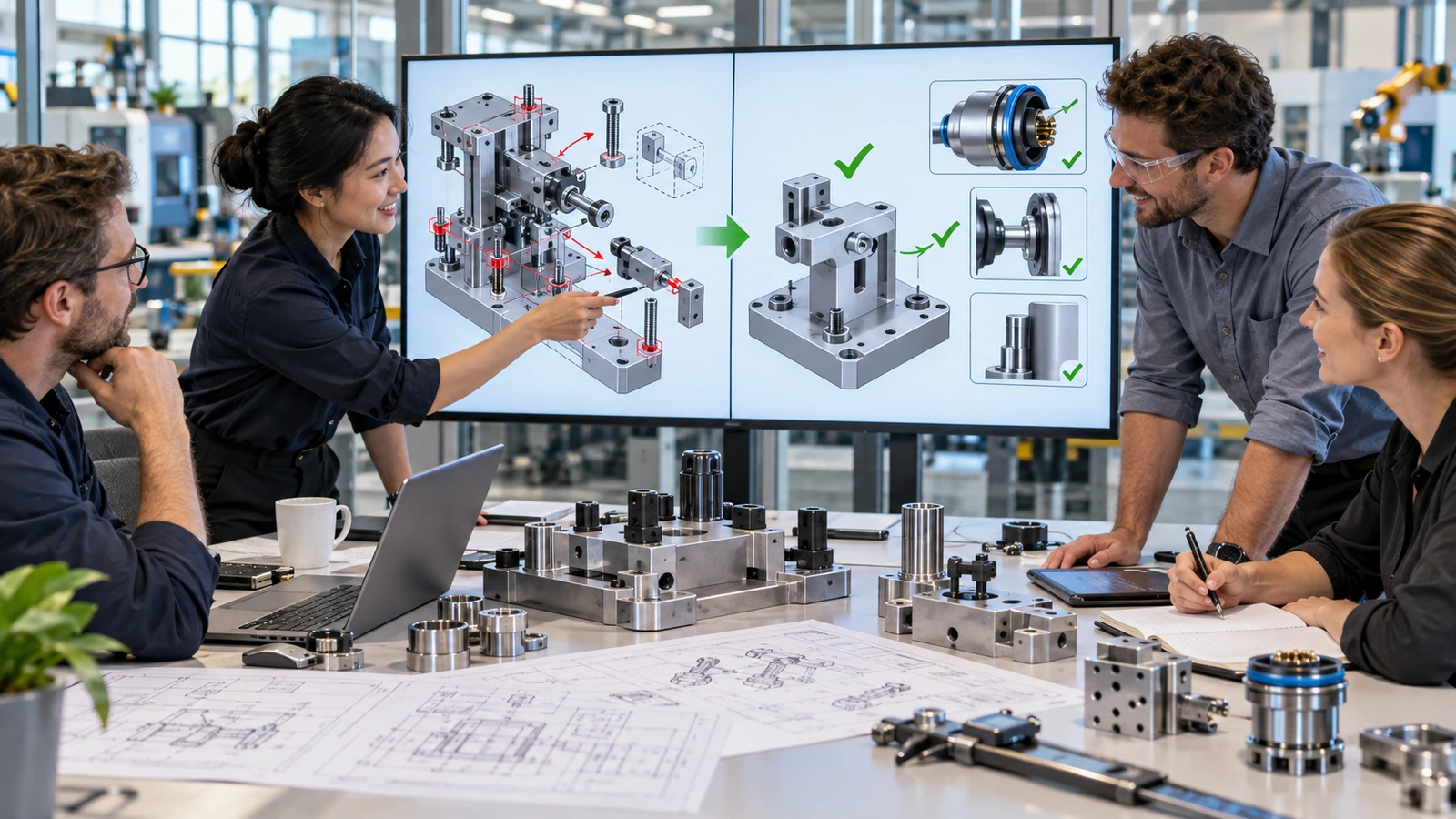
- Rank requirements by clinical and functional consequence.
- Run DFM before design freeze and before validation.
- Match process to maturity and realistic volume.
- Standardize materials, hardware, and finishes where justified.
- Design fixtures and inspection into the production concept.
- Remove manual adjustments through datum and interface design.
- Track yield, rework, queue time, and supplier escapes price alone.
Cost reduction should preserve the approved device state. Changes to material, supplier, tool, process, software, inspection, or packaging need formal assessment. Savings that invalidate evidence or create uncontrolled variation are deferred costs.
Cost Review With Jucheng
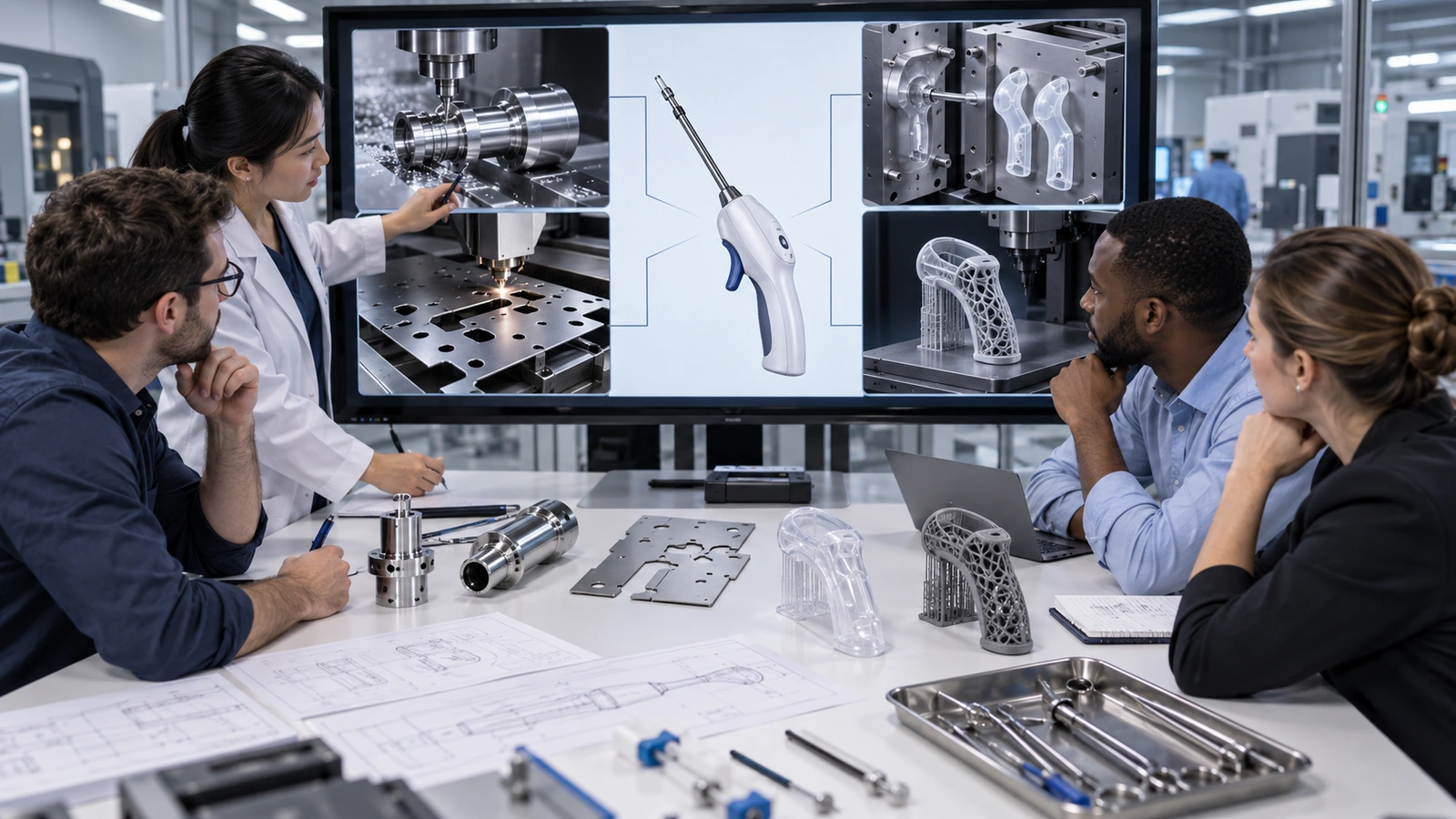
Jucheng Precision supports prototypes and production through CNC machining, injection molding, sheet metal, additive manufacturing, die casting, vacuum casting, tooling, finishing, inspection, and assembly. A multi-process review can compare routes without assuming the first process remains optimal forever.
Share revision-controlled files, quantity scenarios, material and finish, critical features, documentation, packaging, delivery region, and program stage. We can identify major cost drivers, manufacturing risks, and possible process transitions for quotation.
Medical Device Manufacturing Cost FAQ

Can a medical device be priced from a CAD model alone?
Only as a rough manufacturing estimate. Reliable pricing also needs material, finish, tolerance, quantity, inspection, documentation, assembly, packaging, delivery, and program-stage information.
Why are prototypes expensive per unit?
Programming, setup, engineering, material minimums, and inspection are spread across few units. Prototype value comes from learning and risk reduction, not production-like unit price.
When does injection molding become cheaper than machining?
The break-even point depends on tooling, part geometry, material, cycle, yield, secondary work, forecast, and qualification. Compare total program scenarios rather than using a universal quantity.
Do tighter tolerances always increase cost?
Usually, because they can require different processes, slower cycles, controlled environments, special fixtures, more inspection, and lower yield. The effect depends on feature and process capability.
What information improves quote accuracy most?
A controlled drawing and model, realistic quantity scenarios, exact material and finish, critical features, evidence requirements, assembly scope, packaging, and target schedule.
Price the Program You Actually Need
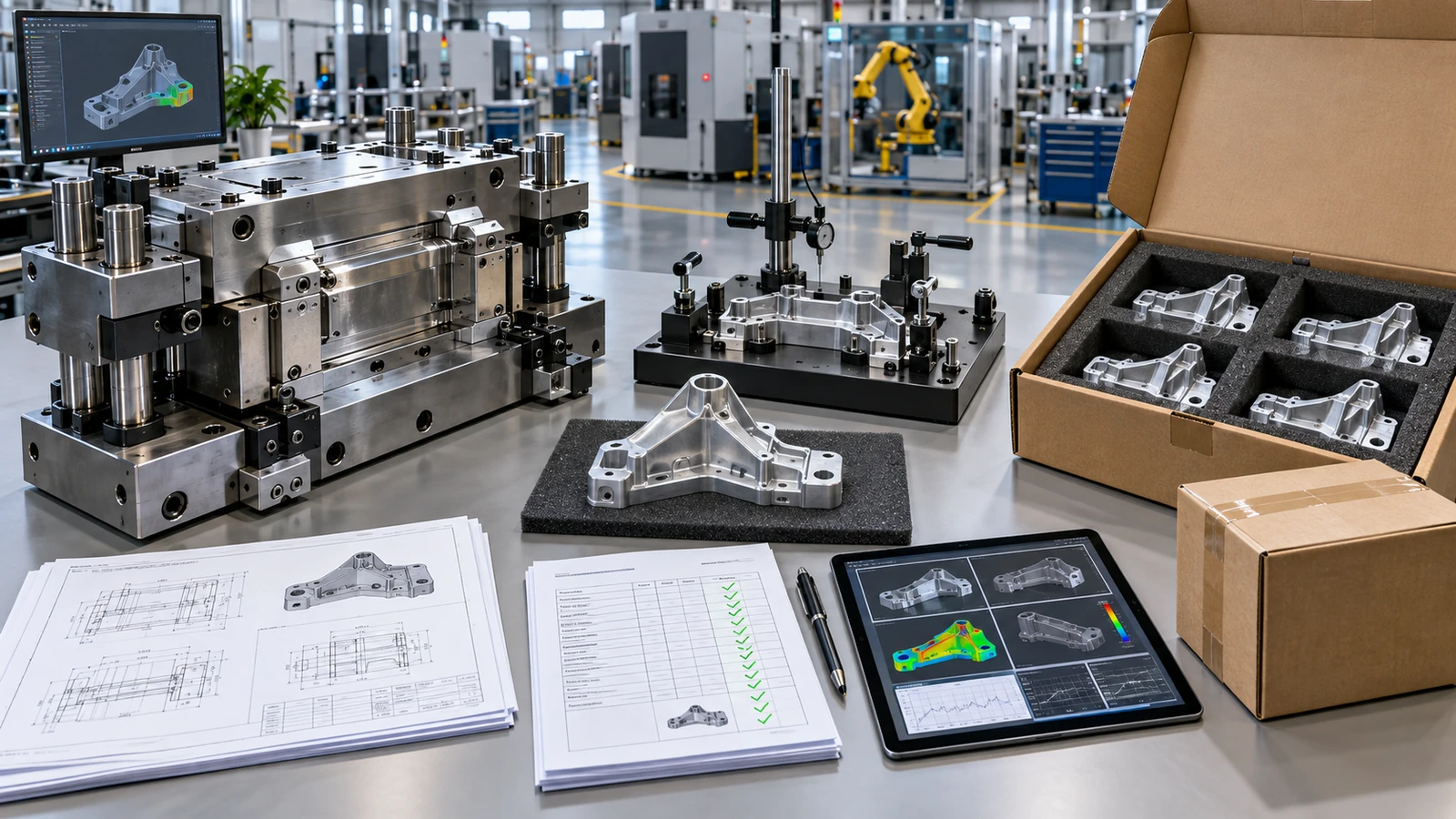
The cost to manufacture a medical device is the cost of delivering conforming, documented units through development and change merely the machine time in one quote. Make assumptions visible, compare complete scope, and invest engineering effort where it removes recurring cost or risk.
Upload your files and production assumptions to Jucheng for a process and cost-driver review.

