


The wrong make-or-buy decision can trap capital in underused equipment or place a critical process behind a supplier boundary the team cannot manage. Medical device contract manufacturing vs in-house production is not a philosophical choice between control and convenience. It is a structured decision about where capability, evidence, investment, capacity, and accountability should live.
Many successful programs use a hybrid model. The important work is deciding which operations create strategic advantage or unacceptable dependency and which benefit from an established external manufacturing system.
Contents
Draw the Manufacturing Boundary
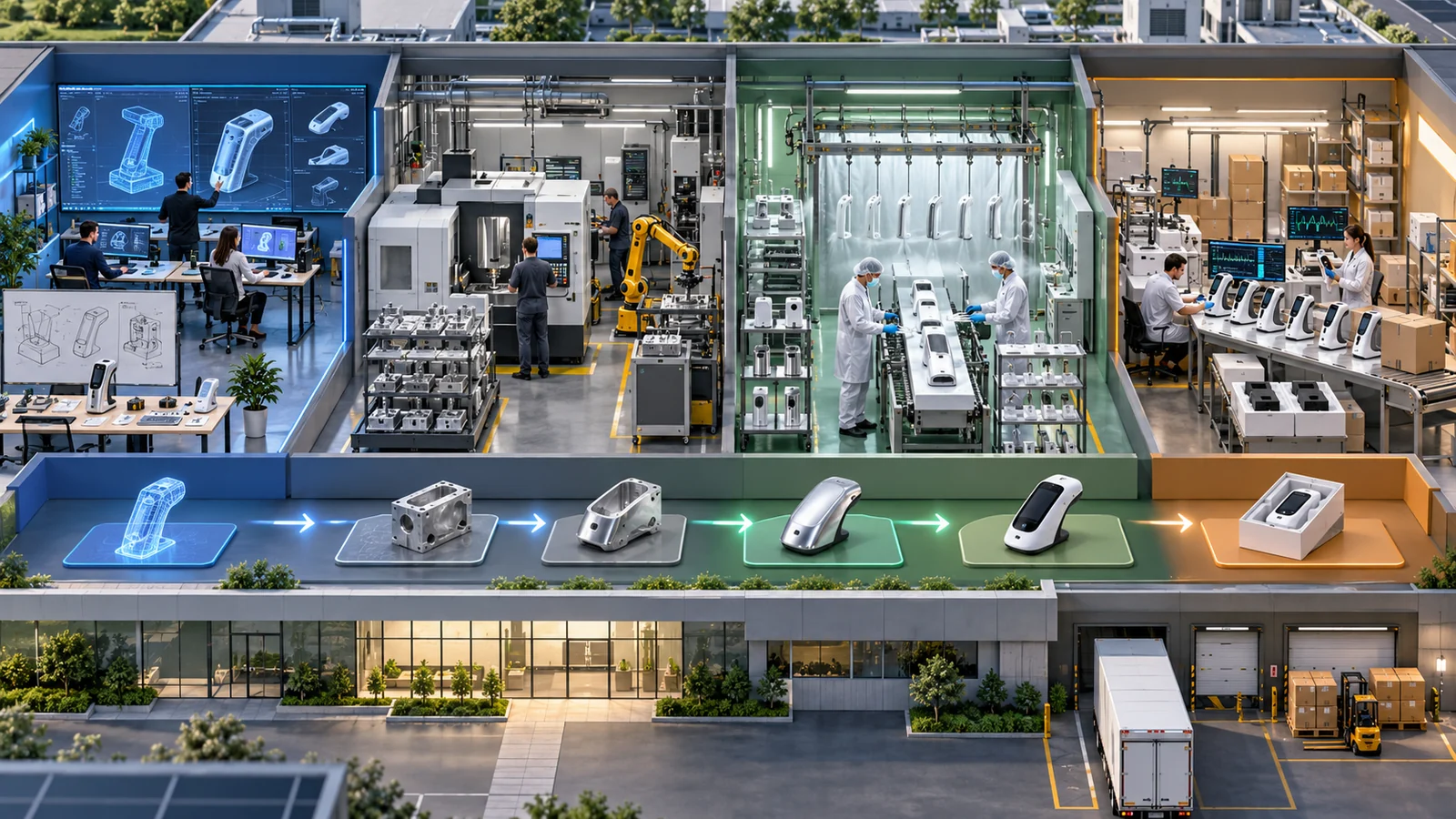
List the complete route from incoming material through fabrication, finishing, cleaning, assembly, test, packaging, release, and distribution. For each operation, mark the current and proposed owner, required assets, know-how, quality records, capacity, suppliers, and change authority. The exercise often reveals that the decision is not one whole-device choice but several process-level choices.
The parent comparison of medical manufacturing pros and cons provides the L1 context. At L2, the practical question is where each risk is best controlled for this device, this stage, and this demand profile.
Operations commonly split across the boundary
- Prototype machining and additive manufacturing
- Injection molding, stamping, die casting, or sheet metal
- Special finishing, cleaning, and sterilization
- Subassembly, final assembly, calibration, and test
- Labeling, packaging, release, and distribution
Separate Ownership From Execution
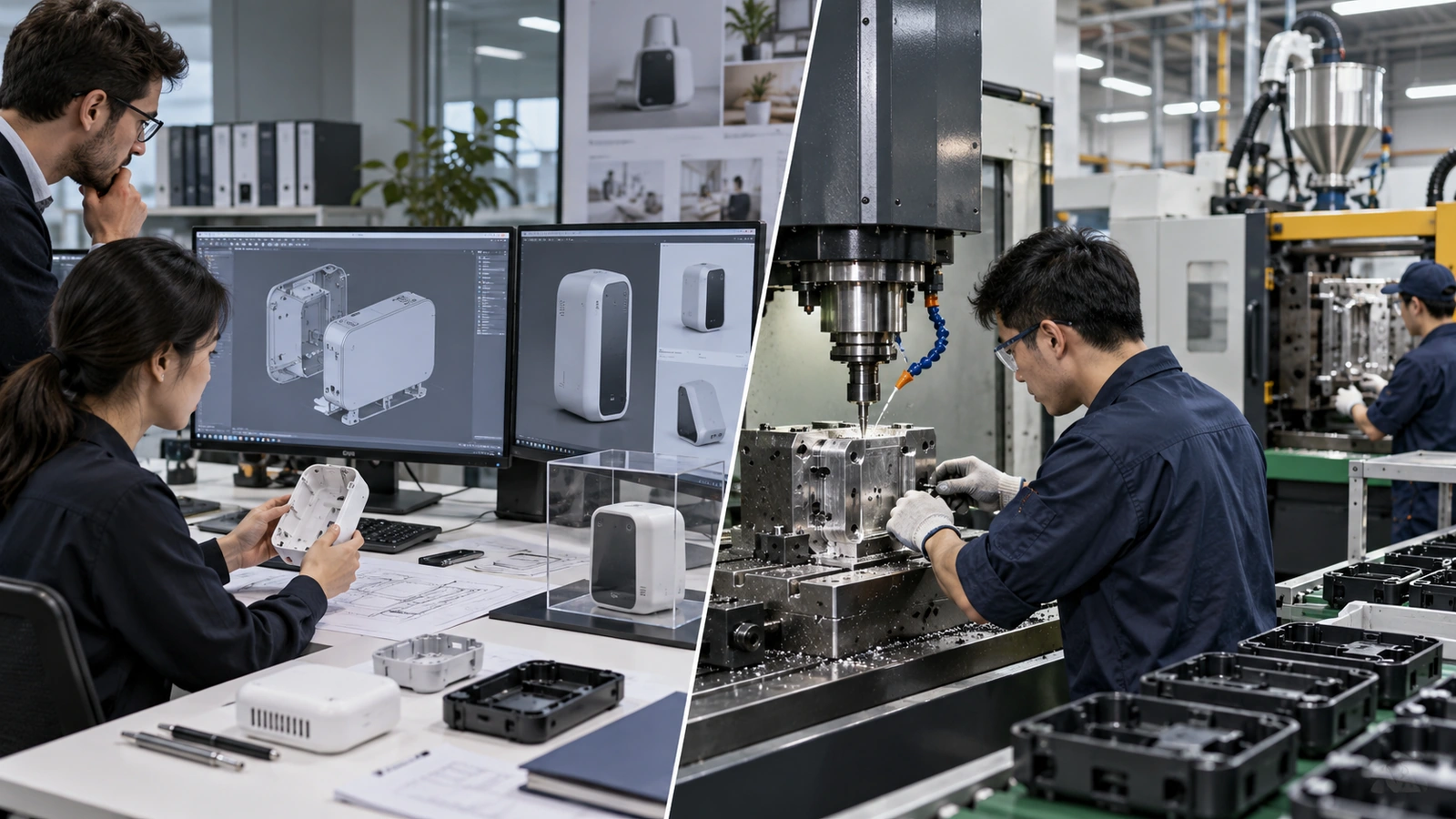
Outsourcing execution does not outsource manufacturer responsibility. The device company still needs approved specifications, risk management, supplier controls, change assessment, complaint feedback, and release authority as applicable. Conversely, owning equipment does not automatically create process knowledge or compliance.
| Decision area | In-house advantage | Contract advantage |
|---|---|---|
| Process iteration | Direct access and fast learning loops | Experienced specialists and existing methods |
| Capital | Assets available for repeated strategic use | Avoids buying capacity before demand is known |
| Quality system | One internal system and direct oversight | Established controls for the outsourced process |
| Capacity | Dedicated priority when properly staffed | Shared equipment base and scaling options |
| Intellectual property | Sensitive know-how stays close | Controlled disclosure can isolate process packages |
Compare Economics Honestly
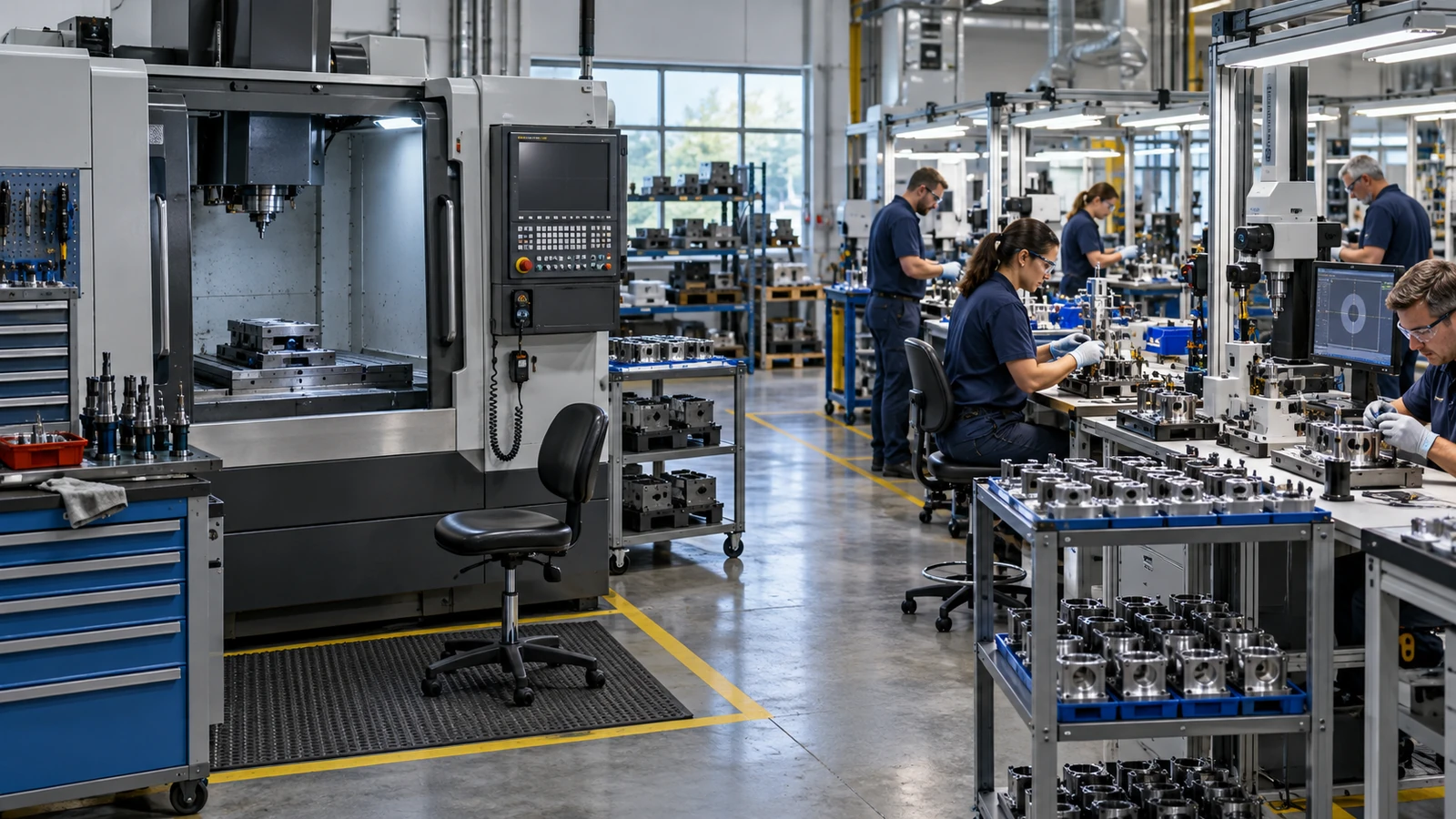
An internal cost model must include equipment purchase, floor space, utilities, maintenance, calibration, software, tooling, validation, operators, engineers, quality personnel, training, scrap, downtime, material minimums, and management overhead. A contract price must include supplier qualification, transfer effort, travel, incoming control, freight, inventory, communication, and change management.
Utilization is decisive. A machine that is economical at high loading may be expensive when one program uses it intermittently. Specialized processes can also require expertise that is difficult to maintain at low frequency. Compare cash flow and time to readiness as well as nominal unit price.
Do not compare a supplier’s fully burdened price with internal machine time. Compare two complete systems capable of releasing the same conforming device.
Identify the Capability Bottleneck
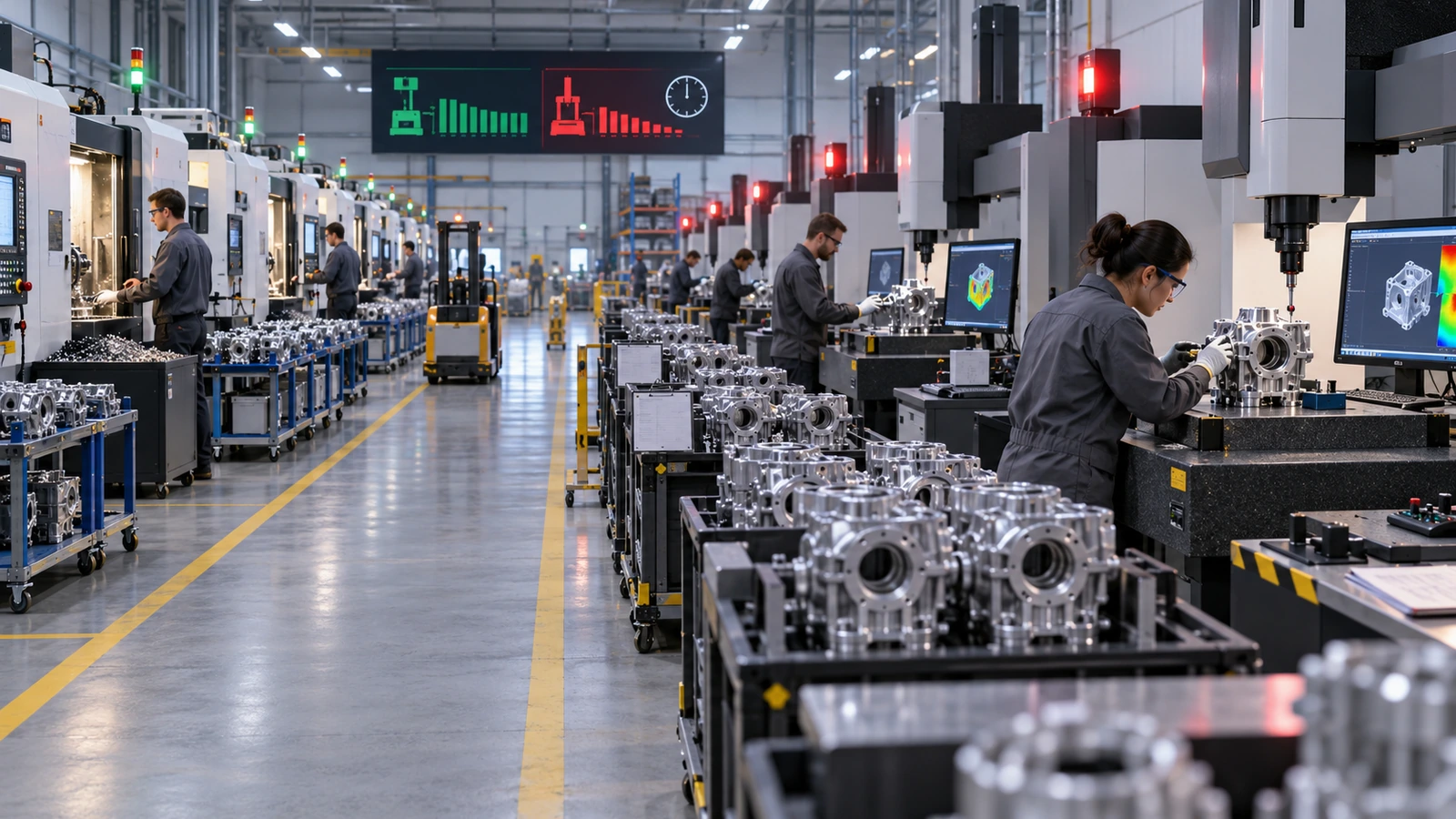
The bottleneck may be equipment, but it may also be process engineering, tool design, metrology, clean assembly, software, validation, documentation, or supplier management. Buying a molding press does not create mold-making expertise. Installing a CNC machine does not create stable fixturing, programming, deburring, finishing, and inspection.
Score each route on demonstrated capability, not brochure capacity. Review similar geometry, material, tolerance, cleanliness, joining, test method, volume, and evidence. If the process is strategically important, consider building internal knowledge even when execution stays external. The medical device manufacturer selection guide helps structure an external capability review.
Test the Decision Against Four Scenarios
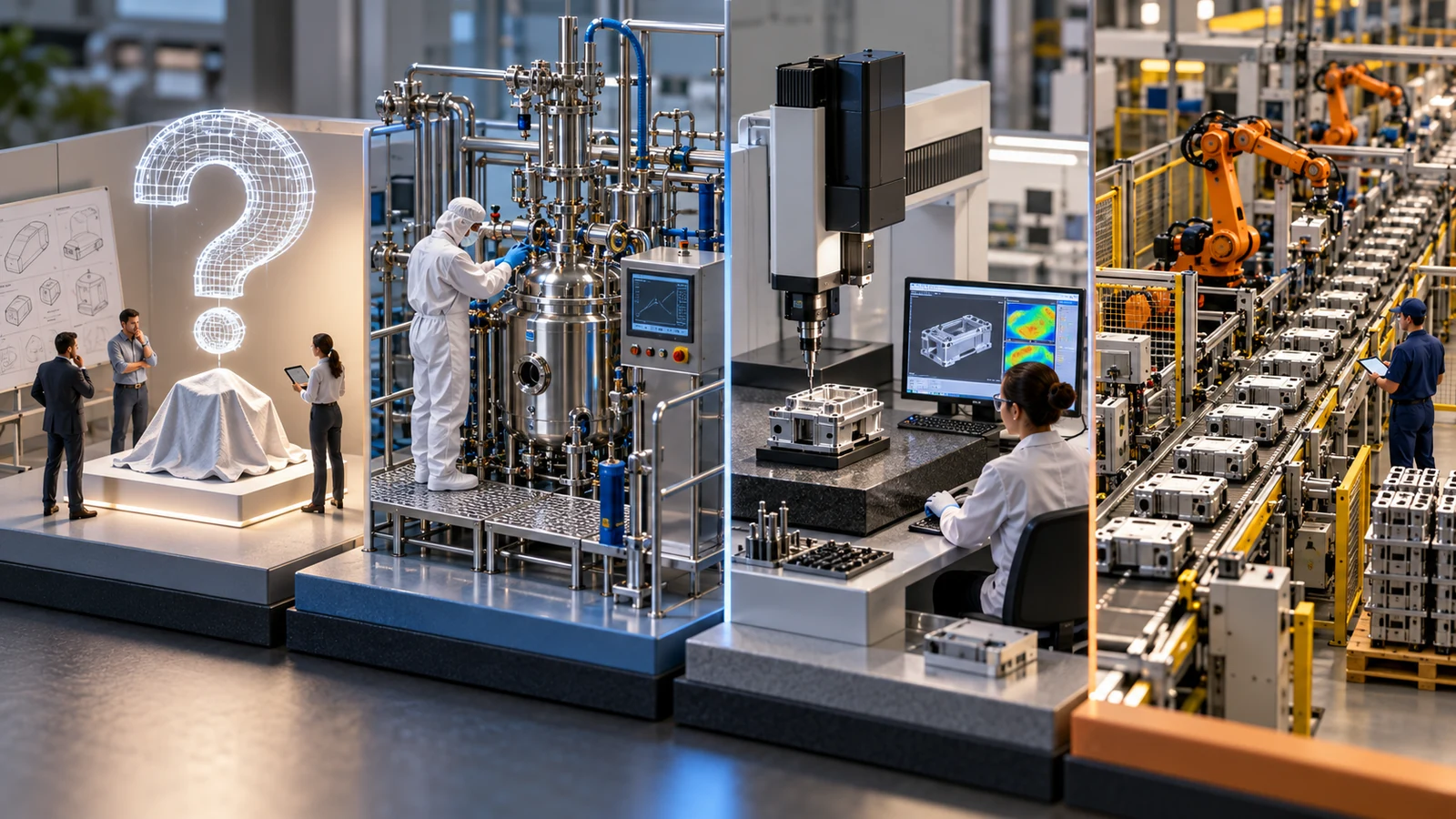
Scenario 1: uncertain launch volume
A contract route or flexible low-volume process can avoid premature capital while demand and design stabilize. Protect supply by defining capacity triggers and tooling ownership.
Scenario 2: highly proprietary process
Internal control may be valuable when the process itself is core intellectual property. A carefully segmented supplier package can still provide components without disclosing the complete method.
Scenario 3: specialized validated process
An experienced contractor may reach readiness faster when it already controls suitable equipment and expertise. Qualification and change control remain essential.
Scenario 4: mature high-volume platform
Dedicated internal or external cells may both work. Compare long-term utilization, automation, continuity, labor, footprint, regional supply, and second-source strategy.
Use Hybrid Models Deliberately

A company might retain design, risk management, final test, and release while outsourcing machined parts, molded housings, sheet-metal frames, finishing, or subassemblies. Another may keep a pilot line for learning and use a contractor for volume. Dual sourcing can reduce disruption but doubles transfer and maintenance effort if both sources must remain qualified.
Define the interface package: drawings, models, bills of material, approved suppliers, process specifications, golden samples, test methods, fixtures, software, data format, deviation route, and change notice. The boundary should be technically inspectable and contractually clear.
For a staged ramp, low-volume manufacturing can bridge prototype learning and dedicated production without pretending that bridge tooling is the final system.
Plan Technology Transfer Before It Is Urgent
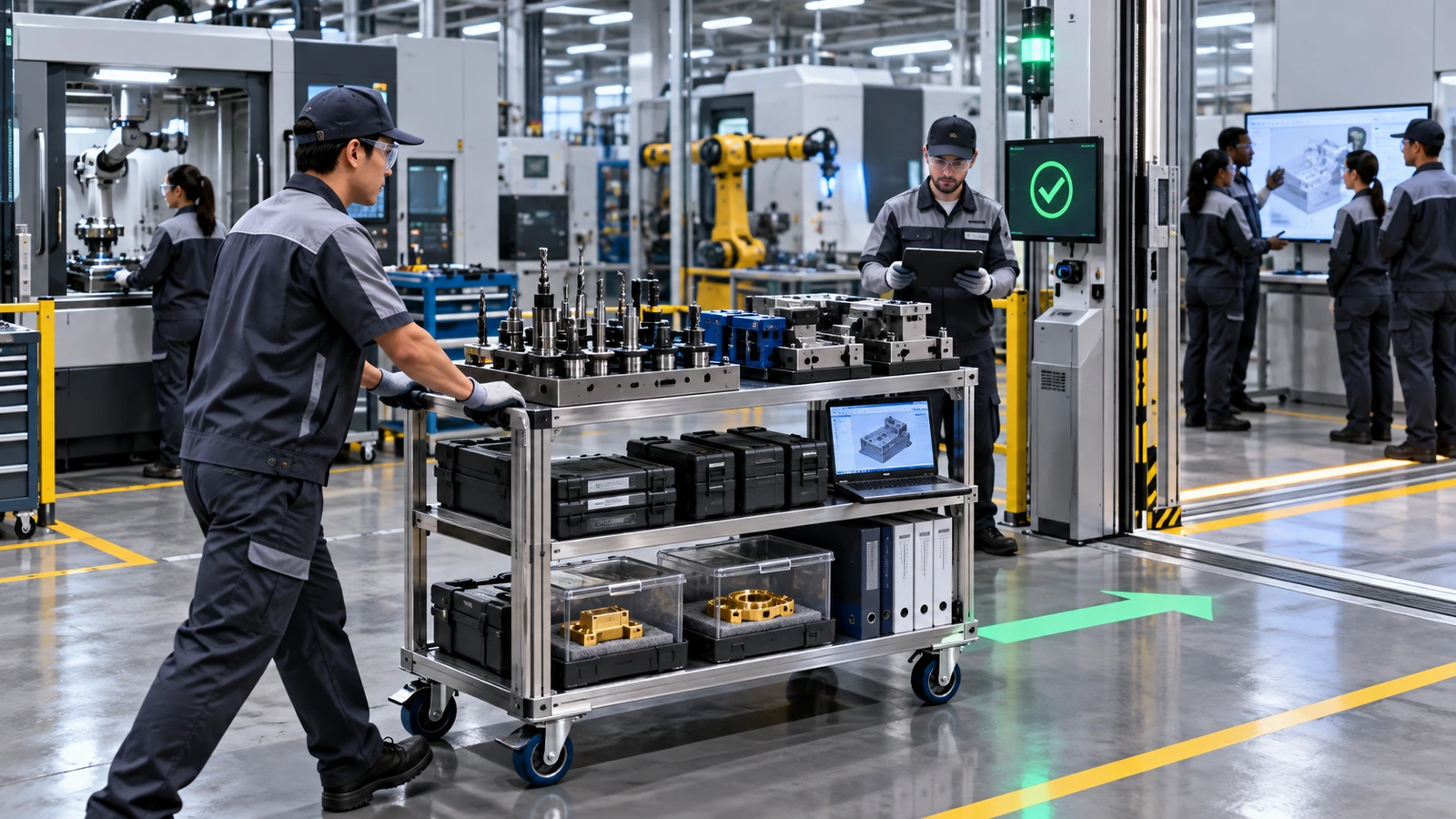
- Define the released device and process baseline.
- Inventory tools, fixtures, programs, methods, samples, and records.
- Resolve ownership and access rights.
- Compare source and destination equipment and environment.
- Run gap assessment, transfer builds, and predefined acceptance.
- Update risk, validation, supplier, labeling, and regulatory assessments.
- Control the overlap, inventory, and cutover.
Include an exit and continuity plan in the original contract. Transfer is slower when drawings are incomplete, fixture logic is undocumented, parameters exist only in operator memory, or inspection programs cannot be moved.
Working With Jucheng
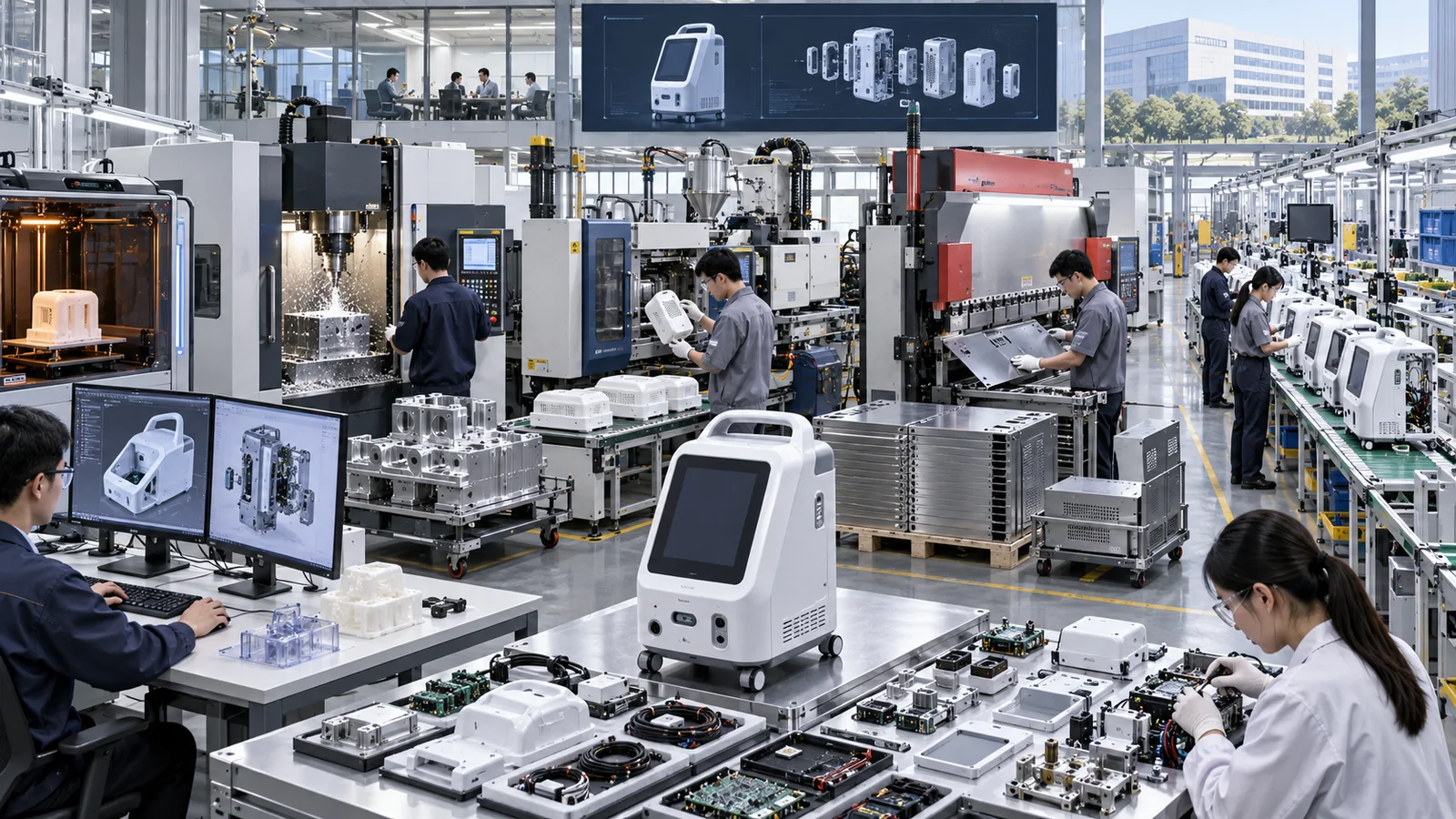
Jucheng Precision supports outsourced and hybrid programs through CNC machining, injection molding, sheet-metal fabrication, additive manufacturing, die casting, vacuum casting, tooling, finishing, inspection, and assembly. We can support prototypes, bridge quantities, process development, and production components within an agreed scope.
Share program stage, files, materials, quantities, critical features, documentation, assembly boundary, forecast, and transfer expectations. An early route review can show which operations fit an external package and which interfaces need stronger definition.
Make-or-Buy FAQ
Is in-house manufacturing always better for quality?
No. Quality depends on capability, controls, expertise, maintenance, evidence, and management. An external specialist may outperform a lightly used internal process, while a mature internal line may offer tighter integration.
Does contract manufacturing reduce responsibility?
It changes execution, not the need to control specifications, suppliers, risks, changes, records, and product release according to applicable responsibilities.
When should a process stay in-house?
Common reasons include core intellectual property, rapid iteration, high utilization, critical know-how, unusual security, or an interface that is difficult to define and verify externally.
Can a company bring an outsourced process in-house later?
Yes, but it is a controlled technology transfer. Plan access to tooling, data, programs, methods, validation evidence, training, and representative product from the beginning.
Is dual sourcing always safer?
Not automatically. It can improve continuity, but both sources require qualification, configuration control, ongoing volume, and change management. Poorly maintained second sources create false security.
Put Each Risk Where It Can Be Controlled

The best medical device contract manufacturing vs in-house decision may differ by operation and lifecycle stage. Draw the boundary, compare complete economics, verify capability, and preserve the ability to transfer. Control comes from a well-designed system, not simply from owning the machine.
Send Jucheng your files and proposed manufacturing scope for a practical outsourced or hybrid route review.

