


Medical device manufacturing outsourcing succeeds when an OEM transfers defined work without transferring away the knowledge needed to control the device. The commercial question is not simply whether an outside factory can make the part. It is whether the combined OEM-supplier system can preserve design intent, traceability, evidence, and response speed when drawings change or production deviates.
This article approaches outsourcing as an operating-model decision. It shows what should remain under OEM control, how to choose the right supplier model, where hidden costs enter, and which checkpoints turn an attractive quotation into a dependable production relationship.
Contents
Outsourcing Is a Boundary-Design Problem

A make-or-buy decision draws a boundary around activities, information, equipment, and accountability. A poor boundary separates work that must remain connected. For example, one supplier may machine a frame, another may form an enclosure, and a third may assemble the instrument. If no party owns interface dimensions, grounding paths, or cumulative tolerance, every component can pass inspection while the finished device fails to align.
The most useful starting point is a process map rather than a supplier list. Trace material receipt, fabrication, special processing, cleaning, assembly, inspection, packaging, and release. Mark where design outputs become manufacturing instructions, where evidence is created, and where a change could affect safety or performance. The existing overview of medical device manufacturing processes can help teams see the full chain before deciding which links belong outside.
Outsourcing reduces fixed manufacturing burden only when the cost of controlling the external process is designed into the relationship.
Keep the Knowledge That Controls the Device

OEMs do not need to own every machine, but they should retain the product knowledge required to judge manufacturing decisions. Intended use, risk controls, critical interfaces, acceptance criteria, regulatory strategy, and final change authority should never exist only in a supplier’s memory or proprietary file structure.
| Keep under OEM authority | Can be executed externally | Shared control point |
|---|---|---|
| Intended use and product requirements | Process planning and work instructions | DFM decisions affecting requirements |
| Risk controls and critical characteristics | Tooling, fixtures, and routine production | Control plan and measurement method |
| Approval of design and specification changes | Purchasing within approved sources | Supplier-change notification |
| Market and regulatory responsibility | Lot records and process data capture | Record format and retention |
This division is especially important for specifications that appear simple. A drawing may name a resin grade, but the controlling knowledge includes colorants, regrind limits, sterilization exposure, moisture conditioning, and approved alternatives. A surface finish callout may hide requirements for cleanability, electrical contact, or optical behavior. Outsourcing the operation does not eliminate the need to understand why the specification exists.
A Readiness Test Before the RFQ Leaves the Building
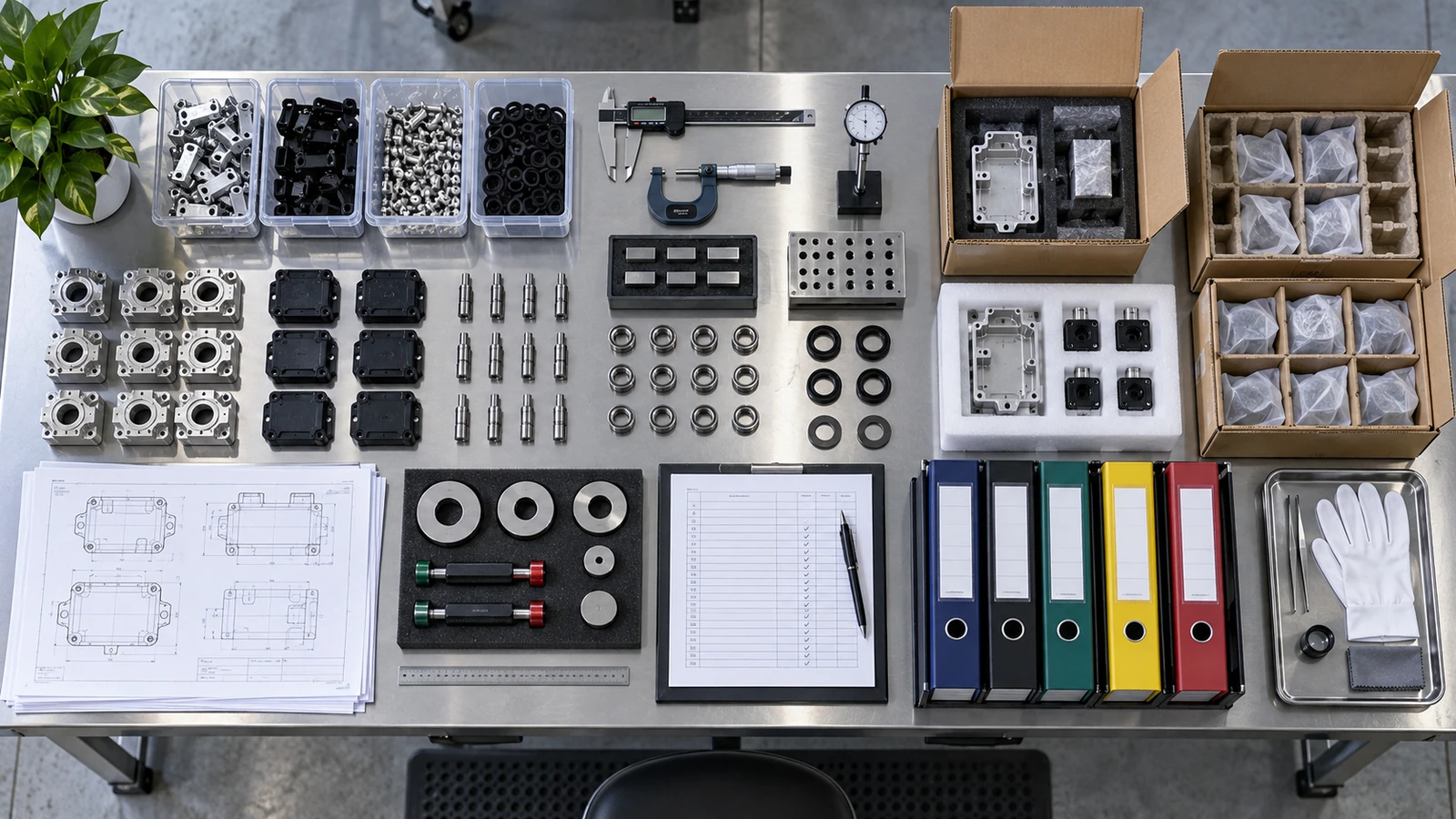
Some projects are outsourced too early, when the design is still an experiment. Others wait too long and ask the supplier to inherit undocumented prototype habits. Readiness is reached when the team can describe the current build stage, distinguish fixed requirements from open questions, and define what evidence the next build must produce.
Four signals that the project is ready
- Configuration is controlled: models, drawings, bills of material, and specifications share a clear revision state.
- Critical characteristics are visible: the supplier can tell which features affect safety, performance, assembly, or downstream validation.
- Acceptance is measurable: requirements have methods, fixtures, samples, or tests that can decide pass or fail.
- Change authority is named: the supplier knows which adjustments are routine and which require written approval.
A prototype project can proceed with controlled uncertainty, but the uncertainty should be explicit. Label assumptions, identify temporary materials, and separate exploratory units from verification or production-intent units. This prevents early parts from acquiring a regulatory or performance meaning they were never built to support.
One Supplier, Several Specialists, or a Managed Network?

The right outsourcing model follows the device architecture. A single-process component may need a specialist. A complex instrument with machined frames, sheet-metal panels, molded covers, coatings, and assembly may benefit from one accountable integrator. Neither model is automatically safer; control depends on visibility, competence, and ownership.
A single integrator reduces purchase orders and interface management, but the OEM must understand which operations are subcontracted. A specialist network can provide deep process expertise, but the OEM then owns scheduling, revision alignment, transport risk, and cross-supplier root-cause work. Teams comparing candidates should use the criteria in how to choose a medical device manufacturer while adding architecture-specific questions about sub-tier control.
- Use a specialist when one process drives most of the technical risk and interfaces are limited.
- Use an integrator when cross-process fit, finish, testing, and configuration control dominate.
- Use a managed network when no supplier covers the full chain and the OEM has strong supplier-quality resources.
Control Lives in Routine Transactions
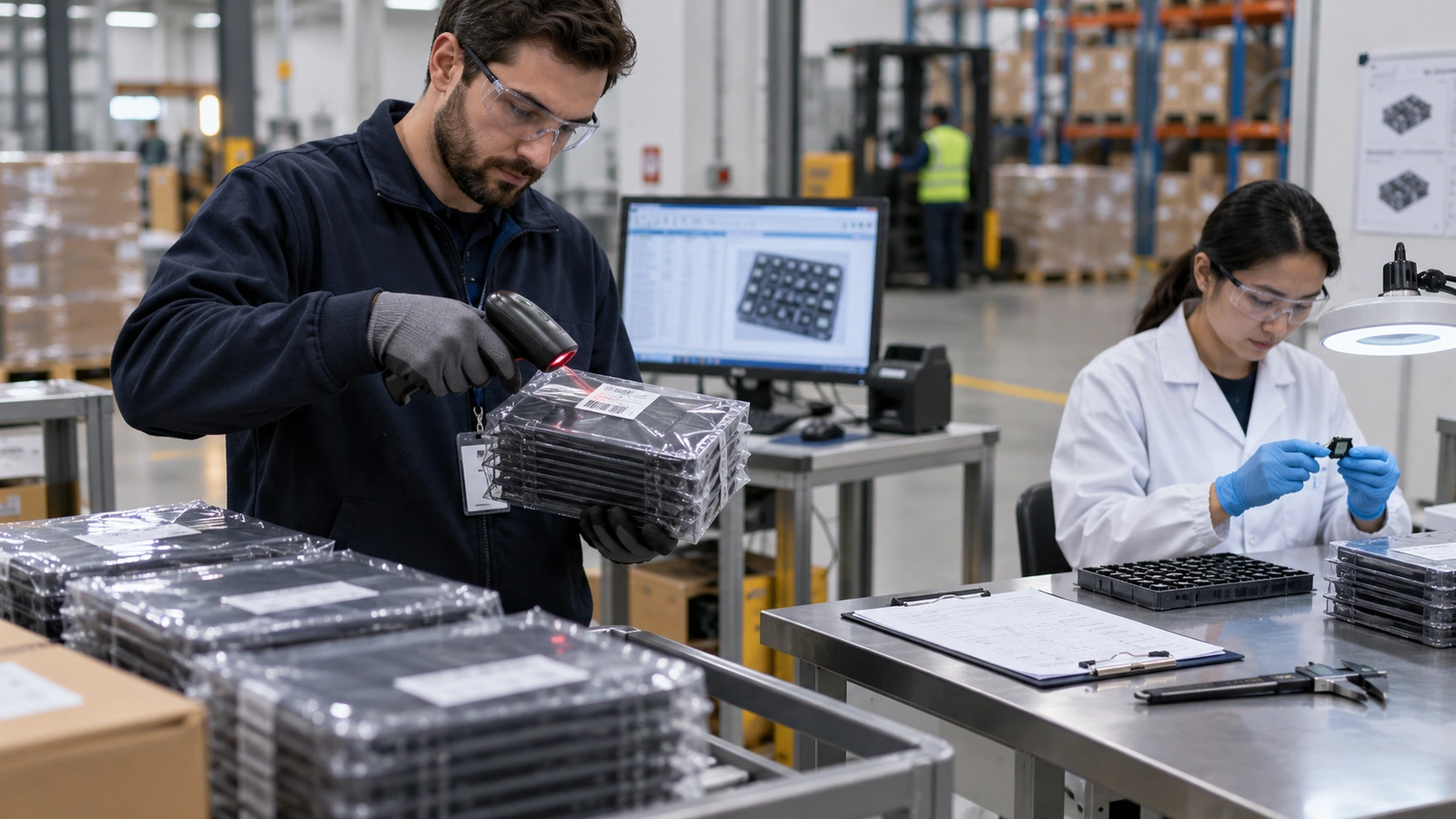
A quality agreement matters, but daily transactions determine whether it works. Purchase orders should identify revisions and evidence requirements. Deviations should expire and remain traceable to affected lots. Nonconformances should distinguish containment from root cause. Engineering changes should state whether existing material, work in progress, tooling, inspection programs, and validation remain usable.
The U.S. Food and Drug Administration’s Quality Management System Regulation became effective on February 2, 2026 and incorporates ISO 13485:2016 by reference. For outsourcing teams, the practical lesson is that supplier control, risk management, records, and change discipline need to operate as a connected system, not as separate audit-day documents.
A workable monthly supplier review
- Open deviations and their expiration dates
- Nonconformance recurrence and containment status
- Yield movement on critical operations
- Late or incomplete evidence packages
- Capacity constraints and material risks
- Pending changes at the supplier or sub-tier level
The Cost of Coordination Belongs in the Business Case

Piece price is visible; coordination cost is distributed across engineering, quality, procurement, logistics, and schedule. A low quotation can become expensive when drawings require repeated clarification, reports arrive in incompatible formats, or every deviation needs a cross-time-zone meeting.
Build the outsourcing case using total cost. Include tooling, validation, fixtures, inspection, supplier audits, engineering support, shipping between processors, inventory buffers, rework, change implementation, and recovery from quality escapes. The broader medical device manufacturing cost framework helps keep these costs separate from the quoted unit price.
A useful comparison: calculate cost per accepted, documented, on-time unit at the required revision. That denominator exposes problems hidden by a low nominal piece price.
Where Jucheng Fits in an Outsourced Program
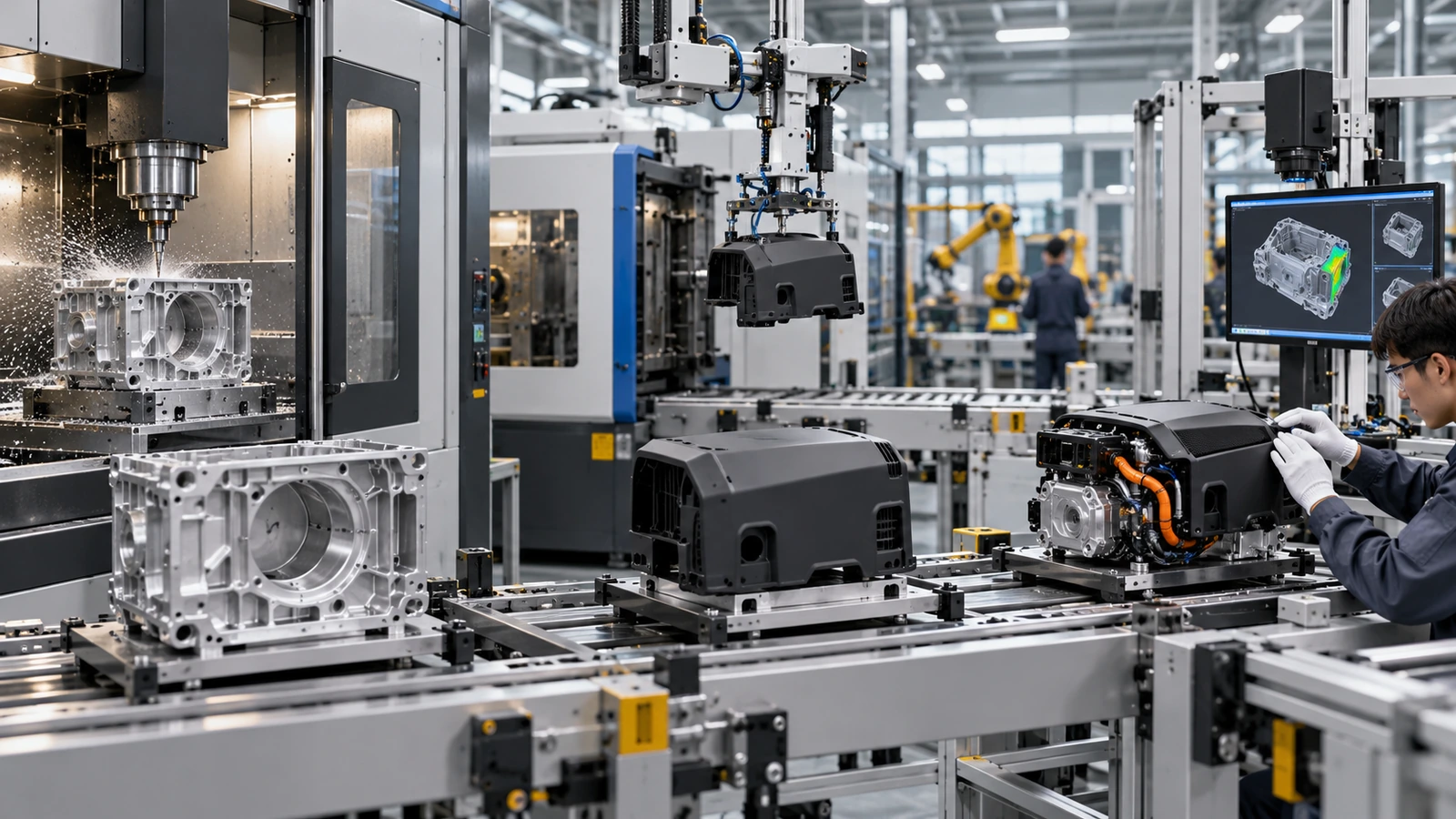
Jucheng Precision supports prototype, pilot, low-volume, and production programs across CNC machining, sheet-metal fabrication, 3D printing, injection molding, vacuum casting, reaction injection molding, die casting, rapid tooling, surface finishing, inspection, and coordinated assembly. Multi-process capability is useful when an OEM wants one technical conversation around interfaces rather than isolated quotes for separate components.
A productive start is a bounded package: current files, quantity range, build purpose, critical requirements, open decisions, and required records. Jucheng can review manufacturability, compare process routes, identify tolerance or interface risks, and define a quotation scope. The OEM retains control of intended use, regulatory strategy, final specifications, and approval decisions.
Questions Teams Ask Before Outsourcing
What medical device manufacturing work can be outsourced?
Component fabrication, tooling, finishing, cleaning, assembly, testing, packaging, and other defined operations can be outsourced when responsibilities and applicable controls are clear. The appropriate scope depends on device risk, process maturity, supplier competence, and the OEM’s ability to oversee the work.
Does outsourcing eliminate the need for internal manufacturing expertise?
No. The OEM needs enough process knowledge to define requirements, evaluate risks, approve changes, and interpret evidence. It may not need to operate the equipment, but it must be able to judge whether the external process remains suitable.
How early should suppliers be involved?
Involve suppliers while material, geometry, tolerance, and process choices can still change. Early involvement should inform design decisions without allowing undocumented supplier preferences to replace controlled design requirements.
What is the most important outsourcing document?
No single document controls the relationship. The drawing and specification define the product, the quality agreement defines responsibilities, the purchase order defines the transaction, and change-control records preserve the approved baseline. They must agree.
How should an OEM compare outsourcing quotations?
Normalize material, process route, tooling, inspection, evidence, secondary operations, packaging, quantity, lead-time basis, and exclusions. Compare total cost and risk allocation rather than unit prices built on different assumptions.
Turn the Outsourcing Decision Into a Controlled Plan
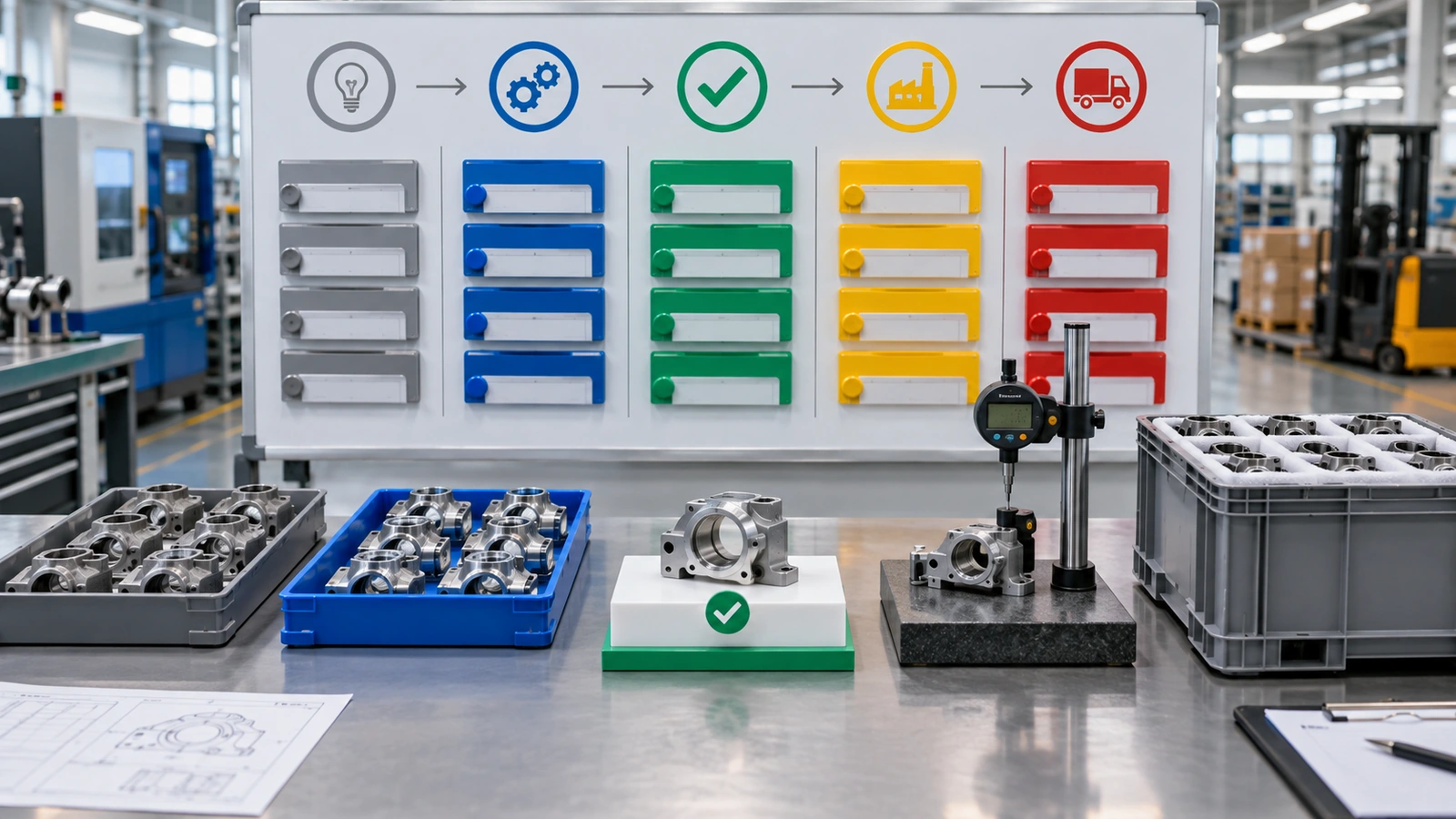
Medical device manufacturing outsourcing works best when the project gives the supplier a clear problem to solve and gives the OEM evidence it can trust. Define the boundary, retain controlling knowledge, select the right operating model, and measure the relationship through everyday records.
Send Jucheng your project files for a manufacturing review and include the build stage, quantities, materials, critical features, and required documentation.

