


You have seen it on an engineering drawing. A simple note: "Material: mild steel en". What do those two letters, "EN", actually mean? And why are they one of the most important details on that entire drawing?
Many people think "mild steel" is a specific material. It is not. It is a vague, general category. Using just "mild steel" on a drawing is a recipe for inconsistency and failure.
The letters "EN" are the solution. They are your guarantee of quality, consistency, and performance. This guide will decode what this critical standard means for your project.
content:
The Problem: 'Mild Steel' is Not a Specification
The Solution: The 'EN' Standard
Decoding the Numbers: A Look at S235JR
Why This Matters for a Global Manufacturer
Your Guarantee of Consistency
The Problem: 'Mild Steel' is Not a Specification
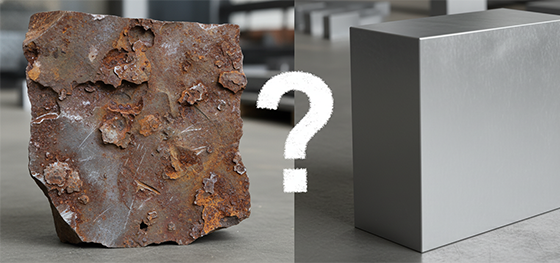
"Mild steel" is a general term for steel with a low carbon content. It is the most common type of steel in the world. But its properties can vary wildly.
A piece of "mild steel" from one factory might be slightly stronger than from another. It might have different trace elements. It might bend more easily. It might weld differently.
For a simple, non-critical part, this might not matter. But for a professional product, this inconsistency is a huge problem. You cannot build a reliable product if your raw material is an unknown variable. Your design calculations could be wrong. Your production process might need to be constantly adjusted.
You need a way to guarantee that the steel you use today is identical to the steel you use next year.
The Solution: The 'EN' Standard
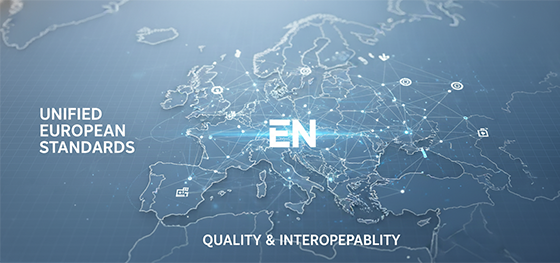
This is the problem that standards were created to solve. The "EN" stands for "European Norm." It is a set of technical standards used across Europe. It ensures that a material from a factory in Germany is identical to a material from a factory in Spain.
When you specify an EN grade, you are not just asking for "mild steel." You are asking for a material with a very specific and guaranteed set of properties.
The EN standard defines the material's chemical composition. It defines its mechanical properties, like its strength and ductility. And it defines how the material must be tested to prove it meets these requirements.
It replaces ambiguity with certainty.
Decoding the Numbers: A Look at S235JR
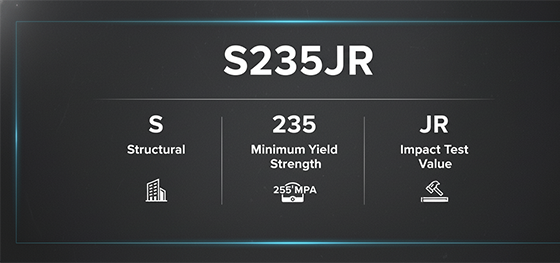
Let's look at one of the most common mild steel en grades: S235JR. This is not a random name. It is a code that is full of information.
The "S" stands for "Structural Steel." It tells you this steel is intended for construction and mechanical structures.
The "235" is the most important number. It specifies the minimum yield strength of the material, in megapascals (MPa). Yield strength is the amount of stress the material can take before it starts to permanently deform. This number is a guarantee. It allows engineers to perform accurate calculations and design safe, reliable parts.
The "JR" relates to the material's toughness, specifically its performance in an impact test. "JR" means the steel has been tested to a certain standard at room temperature. Other codes, like "J0" or "J2," would mean it has been tested at colder temperatures for more demanding applications.
So, "S235JR" is not just a name. It is a promise.
Why This Matters for a Global Manufacturer
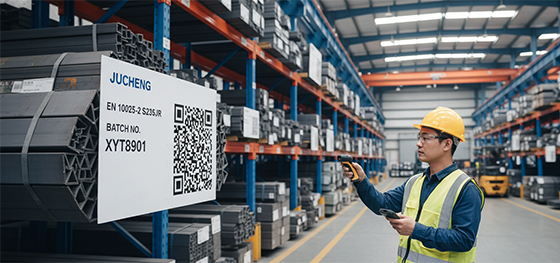
For a global manufacturing partner like JUCHENG, standards are essential. They are the language of quality.
When a customer in Europe sends us a drawing that specifies S235JR, we know exactly what they need. We can source that exact material from our certified suppliers.
We have a rigorous quality system for material traceability. When a batch of steel arrives at our factory, it comes with a material certificate. This certificate proves that the material was tested and conforms to the EN standard. We track this material all the way through the production process.
This means we can guarantee that the part we ship to you is made from the exact grade of steel you specified. This is a level of control and certainty that is impossible to achieve without a globally recognized standard.
Your Guarantee of Consistency

Why should you care about this? Because it is your guarantee of consistency.
When you specify a mild steel en grade, you are ensuring that the prototype you test today will have the exact same properties as the production parts you order next year.
It removes a major variable from your design and manufacturing process. It makes your product more reliable. It makes your supply chain more robust.
So, the next time you see "EN" on a drawing, you will know it is not just two letters. It is a symbol of a global system of quality, consistency, and trust. It is the language of professional engineering. And it is a language we speak fluently.

