


For the marking of components with complex curves, irregular surfaces, or deep recesses, conventional printing methods fail. Pad Printing is the specialized solution—a highly versatile process that uses a flexible silicone pad to transfer a precise, high-resolution image onto virtually any three-dimensional shape. It is the core technology used to place logos, symbols, and functional graphics onto parts ranging from medical buttons and automotive knobs to consumer electronics casings.
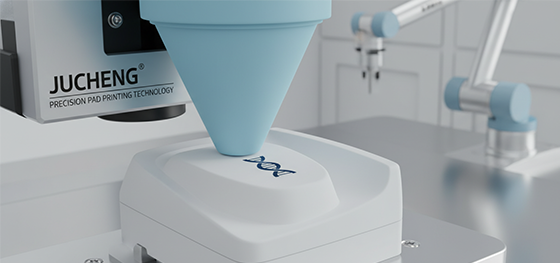
Achieving a durable, defect-free print requires expert control over surface chemistry (for adhesion) and mechanical alignment (for multi-color prints). This guide explores the unique advantages of Pad Printing and the critical quality steps required to ensure the final graphic is permanent and compliant.
content:
The Curvature Advantage: Why the Silicone Pad is Key
Adhesion Mastery: Surface Activation for Plastic Substrates
Accuracy Control: Achieving Perfect Registration for Multi-Color Graphics
Injection Molding Integration: Preparing the Substrate Surface
The Curvature Advantage: Why the Silicone Pad is Key
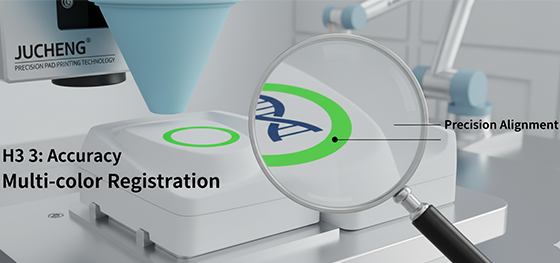
Pad printing's fundamental strength lies in its ability to conform to complex, non-flat surfaces where traditional methods like screen printing or digital printing would fail:
The Pad's Flexibility: The process uses a pad made of silicone, which is uniquely capable of flexing and rolling over curves, compound angles, and textured surfaces. This allows for clean, crisp images on components like spherical buttons or deeply recessed areas.
Distortion Control: The silicone pad is engineered to pick up the image from a flat etching plate (cliché) and release it onto the curved surface with minimal geometric distortion, a critical achievement for maintaining logo and symbol accuracy.
Recessed Marking: Pad printing can reach into grooves and concave areas that laser marking or direct digital printing cannot access, making it essential for marking internal faces or deep, protected cavities.
Adhesion Mastery: Surface Activation for Plastic Substrates
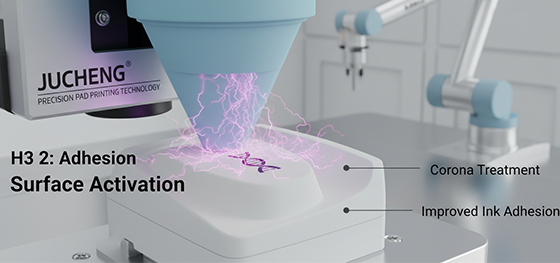
The biggest challenge in printing on plastic is ensuring the ink bonds permanently to the substrate. Poor adhesion results in the print flaking or rubbing off prematurely:
Low Surface Energy: Plastics like Polypropylene (PP) and certain TPE/TPU grades have low surface energy, chemically repelling the ink. The surface must be "activated" to chemically prepare it for bonding.
Activation Techniques: Plasma treatment or flame treatment is used to break down the non-polar surface bonds and oxidize the polymer, making it chemically receptive to the ink. This step is mandatory for durable prints.
Ink Selection: Specialized two-part epoxy or vinyl-based inks are used. These inks contain solvents that slightly soften the plastic surface, allowing the ink to chemically fuse (bite) into the polymer for a permanent bond.
Accuracy Control: Achieving Perfect Registration for Multi-Color Graphics
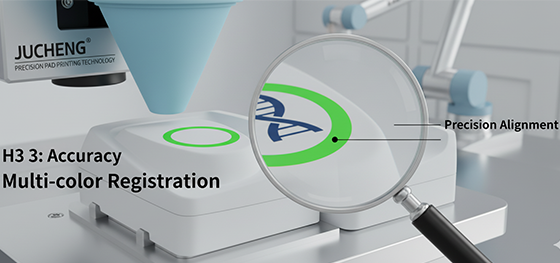
Printing complex, multi-color graphics (such as indicator symbols or colored logos) requires perfect registration—each color layer must align precisely with the others:
Precision Fixturing: The component must be securely held in a custom-designed fixture that perfectly aligns its three-dimensional geometry with the printing plate. Any movement during the multi-pass printing cycle will result in a misaligned (out-of-register) image.
Pad Selection: The hardness and shape of the silicone pad are critical. The pad must be soft enough to conform to the shape but rigid enough to prevent the image from smearing or distorting during ink transfer.
Curing Strategy: Between each color pass, the ink layer must be quickly cured (often using UV light or a short burst of heat) to ensure the subsequent color adheres without bleeding or mixing with the previous layer.
Injection Molding Integration: Preparing the Substrate Surface
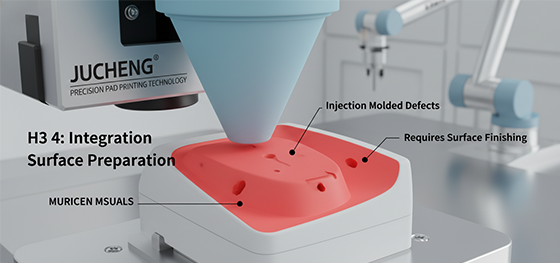
For the highest quality results, the Injection Molding process must be optimized to deliver a print-ready surface, minimizing the need for extensive, costly pre-treatment:
Surface Finish: The mold steel should be polished to a standard that matches the required texture (e.g., SPI B-3 or higher). Sanding and aggressive machining should be avoided, as they can introduce surface roughness that shows up through the thin ink layer.
Demolding Agents: Silicone-based mold release agents must be strictly avoided during molding, as they are chemically incompatible with the ink and severely inhibit adhesion, requiring complex cleaning protocols later.
In-Mold Labeling (Alternative): For ultimate durability, In-Mold Labeling (IML) may be used. IML integrates the graphic directly into the plastic during the molding cycle, offering superior durability to any post-molding printing process.
Pad Printing is the key to accurate, durable graphics on complex surfaces. Jucheng Precision Technology integrates expert Pad Printing with mandatory surface activation and precision fixturing to ensure your component markings achieve ultimate adhesion and flawless registration.
Secure durable, high-quality graphics on your curved components. Contact us today to discuss the optimal marking and Injection Molding strategy for your complex plastic parts.

