


Transforming digital three-dimensional CAD geometry into physical, functional components requires mastering the invisible physics of polymer contraction. Every thermoplastic resin undergoes volumetric shrinkage as it cools from a high-pressure molten state inside a rapid tool down to ambient room temperature. Ignoring this thermodynamic reality results in parts that fall completely outside acceptable linear dimensional limits. Controlling plastic material shrinkage tolerance in rapid molding ensures your functional bridge components match engineering drawings despite aggressive material contraction.
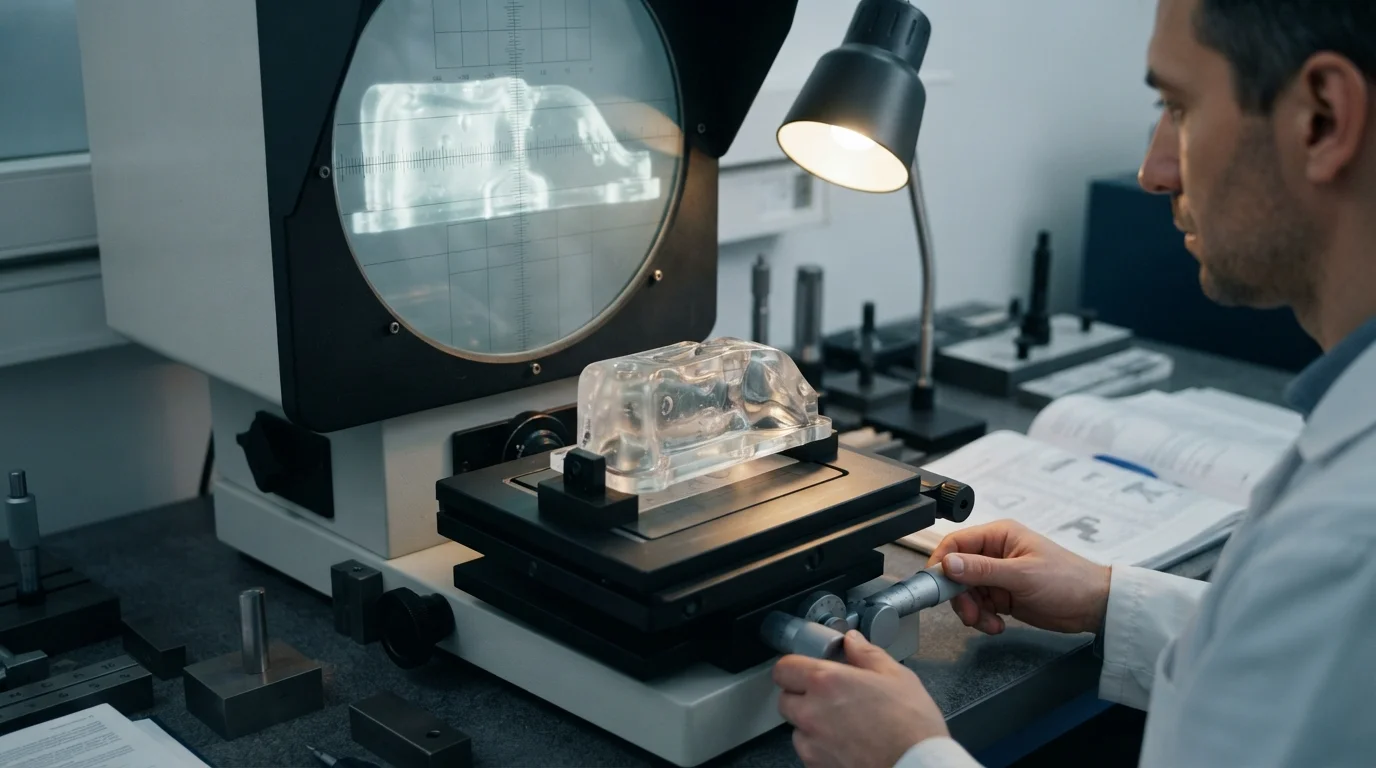
Analyzing physical shrinkage behavior within Rapid tooling tolerances requires distinguishing between distinct polymer molecular structures and implementing accurate cavity pre-scaling. Utilizing modular aluminum or pre-hardened steel bridge tools accelerates design iterations while injecting genuine engineering resins under real press pressures. Let us examine the mechanics of polymer contraction and discover how expert mold design neutralizes shrinkage errors.
Table of Contents
1. The Physics of Polymer Shrinkage: Crystalline vs. Amorphous Resins
2. Compensating for Shrinkage Variations in Rapid Mold Design
The Physics of Polymer Shrinkage: Crystalline vs. Amorphous Resins
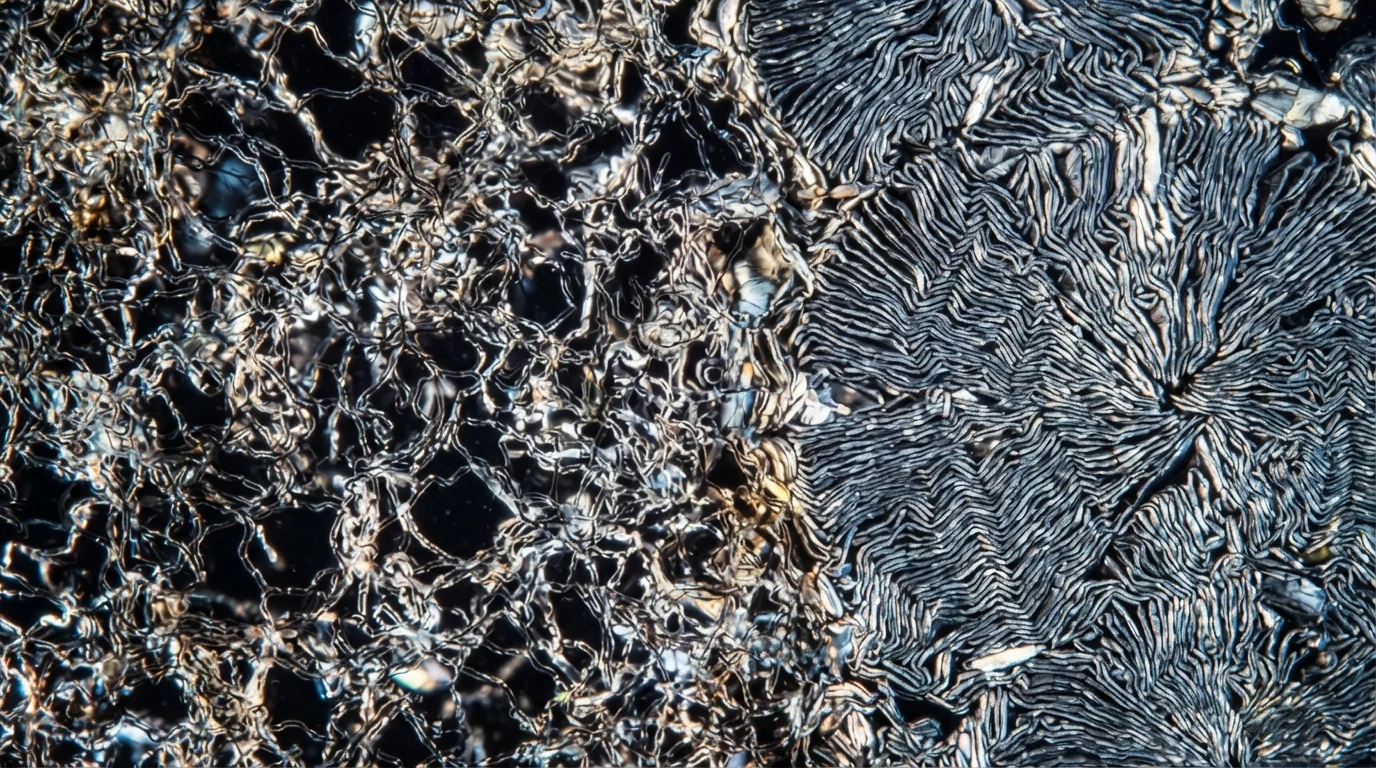
Question: Why do different plastic material families exhibit such wildly contrasting shrinkage rates during rapid injection molding? Amorphous polymers feature random molecular structures that contract uniformly, whereas semi-crystalline polymers form tightly packed crystal lattices that trigger heavy volumetric contraction.
Amorphous engineering plastics like ABS and Polycarbonate (PC) demonstrate predictable, low shrinkage rates typically ranging between 0.4 percent and 0.7 percent. Conversely, semi-crystalline materials like standard Nylon (PA) can contract by over 2.0 percent as polymer chains fold into dense ordered structures during cooling. Utilizing an agile Injection Molding Service ensures process thermal controls keep contraction predictable. Sourcing professional analysis through a specialized Prototype Service helps engineering teams anticipate resin behavior before metal cutting begins.
Comparing typical shrinkage profiles across common resin families outlines essential scaling parameters:
| Polymer Family | Molecular Structure Type | Average Linear Shrinkage Rate | Dimensional Predictability |
|---|---|---|---|
| Polycarbonate (PC) | Amorphous | 0.5% to 0.7% | High (Isotropic contraction) |
| Standard ABS | Amorphous | 0.4% to 0.6% | High (Minimal warpage risk) |
| Unfilled Nylon (PA6/6) | Semi-Crystalline | 1.5% to 2.5% | Moderate (Requires careful gating) |
Compensating for Shrinkage Variations in Rapid Mold Design
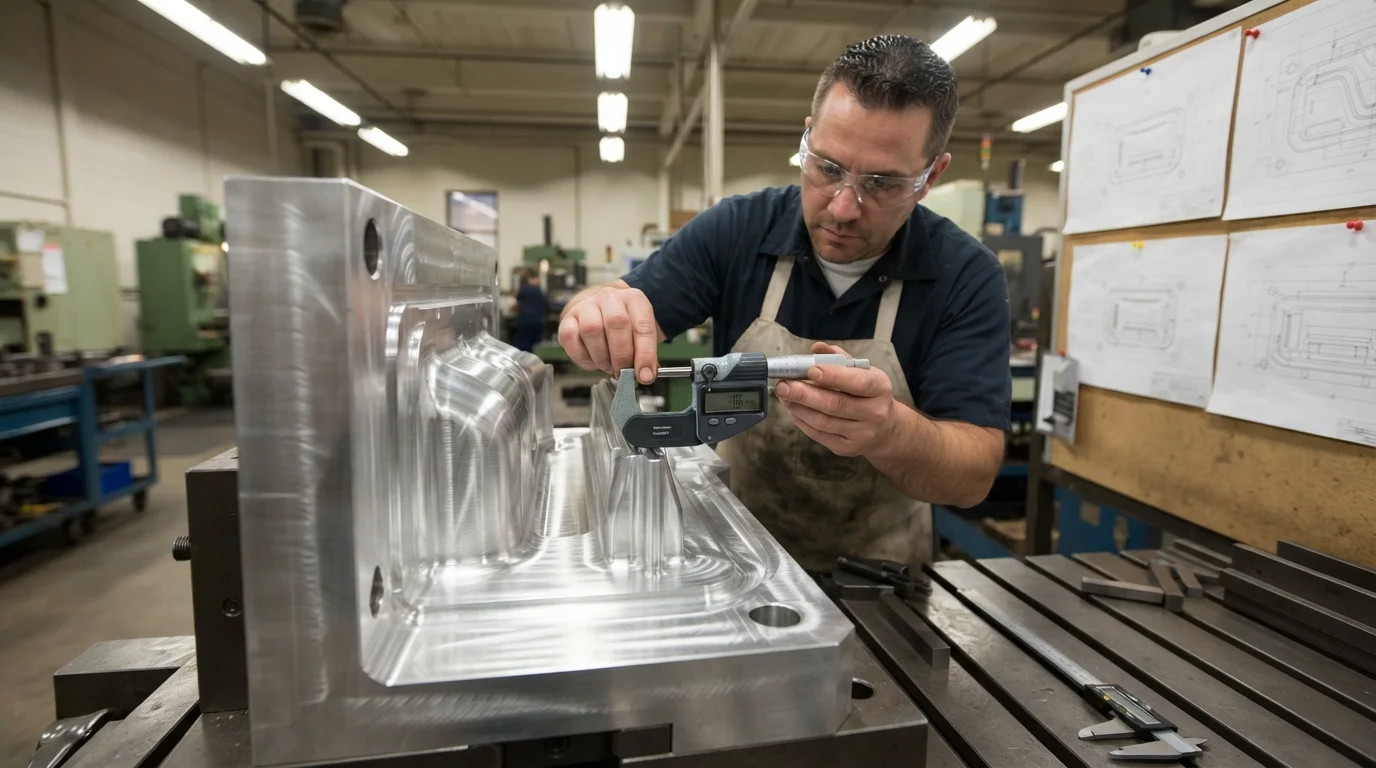
Question: How do professional toolmakers pre-scale rapid metal cavities to offset expected polymer contraction? Experienced CAM programmers apply specific shrinkage multipliers directly into CAD cavity models, carving aluminum or steel inserts slightly oversized.
Because different resins contract at unique rates, a mold cut for ABS will produce undersized, out-of-tolerance parts if injected with Nylon. Toolmakers must program precise scaling factors into high-speed CNC cutting paths. Furthermore, advanced computational Moldflow Analysis simulates melt front progression and cooling distribution, identifying potential warp zones before bridge tooling fabrication begins.
Mitigating volumetric contraction risks and ensuring precise cavity scaling involves monitoring specific engineering milestones:
- Resin-specific CAD scaling—Applying exact material manufacturer shrinkage percentages directly to tool cavity models
- Mold temperature uniformity—Balanced cooling channel layouts prevent uneven thermal contraction across the part
- Holding pressure duration—Maintaining adequate clamp pressure during gate freeze minimizes localized sink marks
How Glass-Filled Resins Alter Dimensional Stability
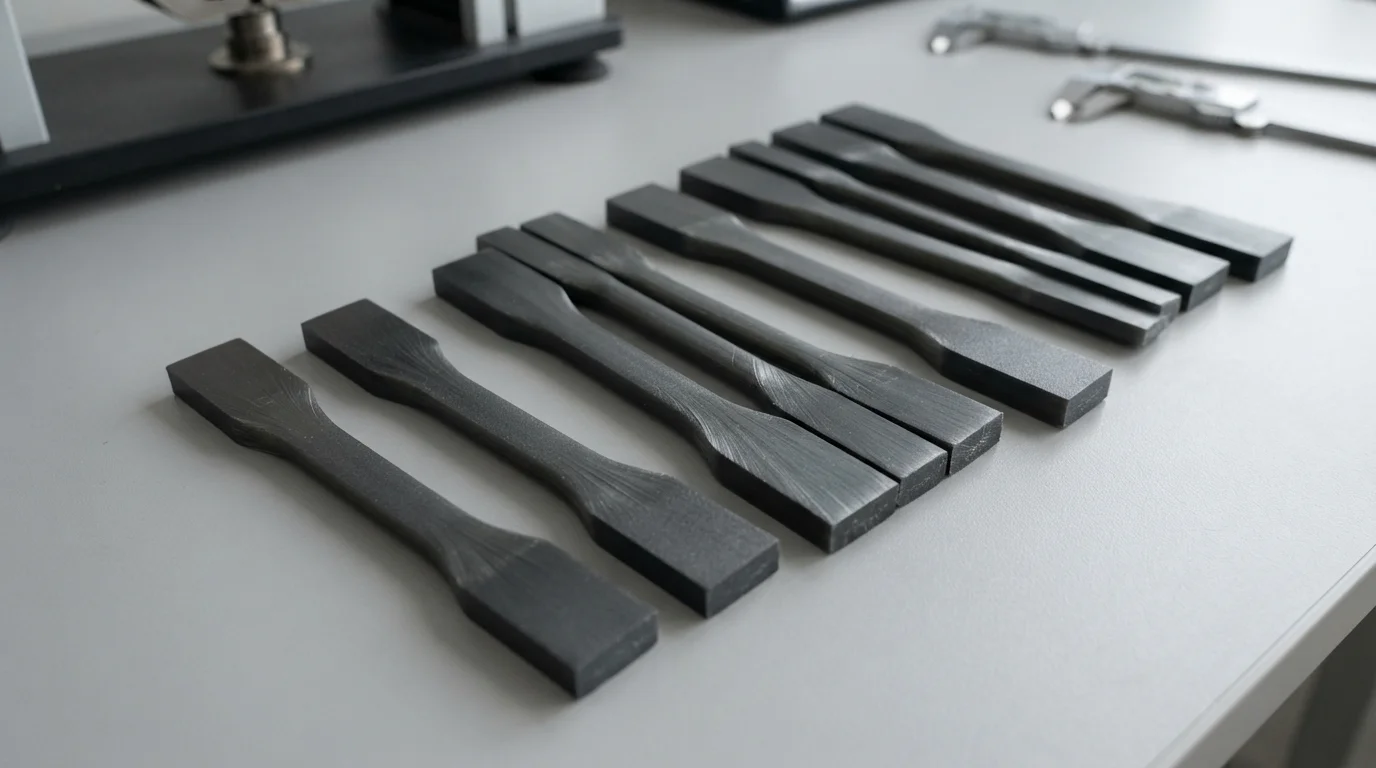
Question: Why do glass-fiber reinforced thermoplastics behave differently regarding shrinkage compared to unfilled base resins? Embedded glass strands restrict polymer chain movement along the fiber orientation axis, creating highly anisotropic shrinkage behavior.
Adding glass or mineral reinforcements to polymers like Glass-Filled Nylon (PA+GF) dramatically increases tensile strength and stiffness while slashing overall linear shrinkage. However, resin flow alignment causes uneven contraction: parts shrink significantly more across the transverse flow direction than along the longitudinal fiber path. Jucheng Precision supports hardware developers by providing comprehensive 24-hour free DFM reviews and advanced simulation analyses to predict anisotropic warp risks prior to cutting metal.
Partnering with an internationally certified manufacturer guarantees full material traceability and rigorous tooling performance. Key operational strengths of our engineering framework include:
- Advanced Moldflow simulation—Predicting anisotropic fiber orientation and warp tendencies before tool production
- High-precision CNC machining—Utilizing 150+ advanced CNC machines to carve accurate, pre-scaled metal cavities
- Zero minimum order constraints—No MOQ policies allow exact inventory alignment with customized pilot production runs
Frequently Asked Questions (FAQ)
How does polymer shrinkage affect rapid injection molding tolerances?
As molten plastic cools and transitions into a solid part, it undergoes volumetric contraction ranging from 0.4 percent to over 2.0 percent, requiring toolmakers to pre-scale mold cavities to achieve accurate dimensions.
Why do glass-filled resins exhibit anisotropic shrinkage in rapid molds?
Embedded glass fibers align with the direction of resin flow during injection, restricting longitudinal contraction while allowing higher transverse shrinkage, which can cause part warping if unmanaged.
How does Jucheng Precision help manage polymer shrinkage risks?
Jucheng Precision provides 24-hour free DFM reviews, advanced Moldflow simulation, resin-specific cavity pre-scaling, and certified precision injection molding.

