


Reamers are essential cutting tools in manufacturing and machining, designed to refine and size pre-drilled holes to achieve high precision and smooth surface finishes. Their role is critical in industries such as aerospace, automotive, and general engineering, where tight tolerances are paramount. This article delves into the various materials used in reamer construction and the different types available, providing insights to help professionals make informed decisions. We will explore key aspects like HSS reamers, carbide reamers, Carbon tool steel T12, PCD reamers, CBN reamers, and overall types of reamers, ensuring a thorough understanding of their applications and benefits. By examining these elements, readers can appreciate how material selection and reamer design impact performance, durability, and cost-effectiveness in real-world scenarios.
content:
What is a Reamer and Why is it Important?
What Are Reamers Made Of?
What Are the Different Types of Reamers?
How Do You Choose the Right One?
What is a Reamer and Why is it Important?
Imagine drilling a hole in a piece of wood. The edges are often rough and the size isn't always perfect. A reamer is a tool that follows the drill. Its job is to gently shave the inside of the hole to make it very, very smooth and to make it the exact size needed.
This is super important for parts that have to fit together perfectly, like a wheel on an axle. If the hole is even a little too big or too small, the parts won't work right. Reamers help make sure everything fits perfectly every time.
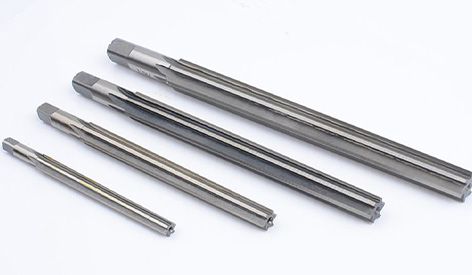
What Are Reamers Made Of?
Reamers can be made from different materials, kind of like how knives can be made from different types of metal. The material chosen depends on what job the reamer needs to do.
HSS Reamers (The All-Star): HSS stands for "High-Speed Steel." This is a very strong and durable type of steel. Think of it like a reliable, all-purpose kitchen knife. HSS reamers are great for most everyday jobs. They can be used on common metals like aluminum and steel and are a good balance of strength and cost. They can even be given a special coating to make them last longer.
Carbide Reamers (The Super Strong): Carbide reamers are like the superhero of tool materials. They are much harder and more wear-resistant than steel. They are used for the toughest jobs, like working with very hard metals or in factories that make thousands of parts. They last a lot longer than steel reamers but can be more brittle, meaning they can chip if they are bumped too hard.
Carbon Tool Steel T12 (The Old Reliable): This is a classic type of tool steel that was used a lot in the past. It's good for making very sharp edges. However, it's not as hard as modern steels and can lose its sharpness if it gets too hot. You might still find it in some simple, hand-held tools, but for most big machines, stronger materials are used today.
PCD Reamers (The Diamond Tool): PCD stands for "Polycrystalline Diamond." Yes, that means diamond! These reamers have tips made from tiny, man-made diamond pieces. Diamond is one of the hardest materials on Earth. PCD reamers are amazing for working with soft, sticky, or very abrasive materials like aluminum, copper, or plastic. They stay sharp for a very, very long time and can make the inside of a hole as smooth as a mirror.
CBN Reamers (The Iron Specialist): CBN stands for "Cubic Boron Nitride." This is another super-hard material, right after diamond. But unlike diamond, which doesn't like iron, CBN reamers are perfect for cutting very hard, iron-based metals. They are used on tough, hardened steels that would wear down other reamers almost instantly.
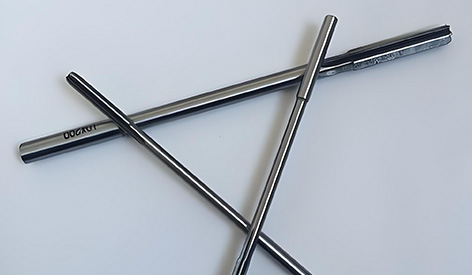
What Are the Different Types of Reamers?
Just like there are different types of spoons (teaspoon, tablespoon, soup spoon), there are many types of reamers for different jobs.
Hand Reamers: These are made to be turned by hand, usually with a wrench. They are used for fixing things or for jobs where you need a lot of control.
Machine Reamers: These are designed to be used in powerful machines like lathes or drills. They are used in factories to make many parts quickly and accurately.
Adjustable Reamers: These are clever because you can change their size slightly! They have blades that can be moved to make the reamer a tiny bit bigger or smaller. This is great for making custom-sized holes or when the tool starts to get worn down.
How Do You Choose the Right One?
Picking the right reamer is like choosing the right tool for any job. You need to think about:
What material are you cutting? Soft aluminum? Use HSS or PCD. Hard steel? Use Carbide or CBN.
How many parts are you making? For a few parts, an HSS reamer is fine. For thousands, a long-lasting Carbide reamer is better.
Are you using a machine or your hands? You need a machine reamer for a power tool and a hand reamer for manual work.
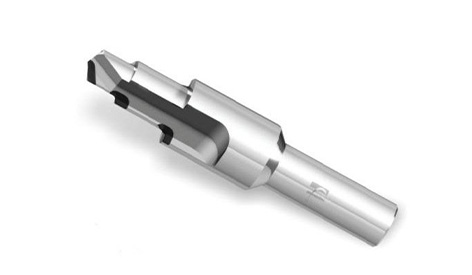
In summary, reamers play a vital role in achieving precision and quality in machining operations. The choice of reamer materials—from HSS and carbide to Carbon tool steel T12, PCD, and CBN—directly impacts performance, durability, and suitability for specific applications. Similarly, the diverse types of reamers, including hand, machine, adjustable, and specialized designs, offer tailored solutions for various industrial needs. By understanding these elements, professionals can make informed decisions that balance efficiency, cost, and precision. As technology advances, materials like PCD and CBN continue to push boundaries, enabling higher speeds and longer tool life. Ultimately, selecting the right reamer involves a holistic approach, considering both material properties and reamer types to meet the demands of modern manufacturing.

