


In B2B manufacturing, sanding is not just a preparation step—it is a critical final-stage process used to correct flaws and achieve the specific texture required for high-end cosmetic or optical parts. Successfully integrating sanding into the workflow—a process we call Precision Surface Finishing—is essential for transforming a raw Injection Molded component into a flawless consumer product or automotive part.
The success of this labor-intensive process hinges on an expert understanding of how different sanding media interact with specific plastics, how to remove subsurface defects without introducing new ones, and how to prepare the surface for perfect paint adhesion or mirror polishing. This guide details the advanced techniques used to manage surface quality after injection molding.
content:
Defect Correction: Removing Flow Lines, Sink Marks, and Flash
Grit Progression: The Multi-Stage Path to a Flawless Finish
Optical Preparation: Achieving the Transparent, Lens-Quality Finish
Tooling Texture vs. Finishing: When to Sand and When to Etch
Defect Correction: Removing Flow Lines, Sink Marks, and Flash
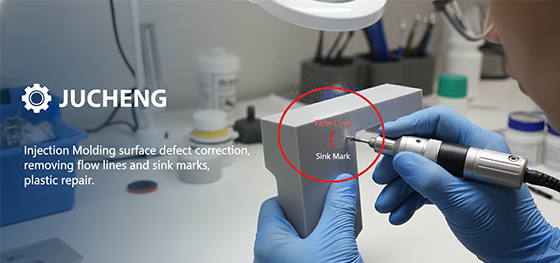
Injection molding defects—even minor ones—must be manually corrected before final assembly or painting. Sanding is the primary tool for correcting these surface irregularities:
Flow Lines and Weld Lines: These are visible, swirl-like patterns in the plastic caused by the molten material flowing together. Sanding is used to gently remove the surface layer until the flow lines disappear, especially in areas destined for high-gloss finishing.
Sink Marks: These are slight depressions caused by inconsistent cooling or poor packing. Sanding flattens the area around the sink mark, blending the depression into the surrounding surface. For deeper marks, a two-part epoxy filler may be required before sanding.
Flash and Ejector Pin Marks: Flash (thin excess material at the mold split line) and overly prominent ejector pin marks are mechanically removed using coarse files or sanders, followed by progressive finishing to match the surrounding surface texture.
Grit Progression: The Multi-Stage Path to a Flawless Finish
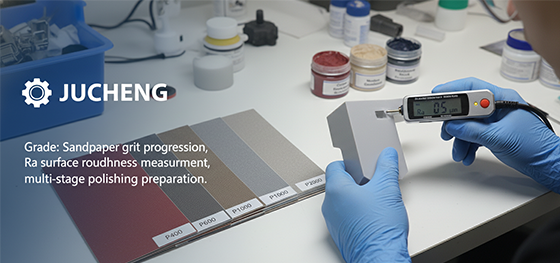
Achieving a smooth, high-end cosmetic finish requires a precise progression of grit sizes. Skipping a step creates scratches that are too deep for the next, finer grit to remove, leading to visible flaws in the final coat:
Coarse Grit (P80 to P320): Used for initial heavy removal—leveling flash, removing large surface imperfections, and preparing deep repair areas. This stage is followed by an immediate jump to the next finer grit.
Medium Grit (P400 to P800): Used to remove the scratches left by the coarse grit. This is the starting point for surfaces that will receive a light texture or non-glossy paint.
Fine Grit (P1000 to P2500+): Used for high-gloss preparation. Wet sanding with these very fine grits removes microscopic scratches, preparing the surface for final compound polishing or clear coat application.
Optical Preparation: Achieving the Transparent, Lens-Quality Finish
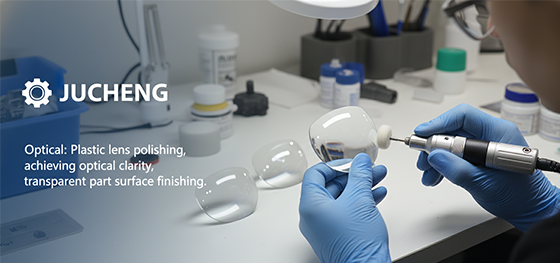
For transparent parts (like PC or PMMA lenses), sanding transitions into specialized polishing to achieve a flawless, light-transmitting surface:
Focus on Scratch Depth: For lenses, a scratch that is invisible to the naked eye can still scatter light and ruin optical performance. The sanding process must be meticulous, with the final stages utilizing specialized buffing wheels and ultra-fine polishing compounds.
Tooling Baseline: The best result for a clear lens is achieved when the Injection Molding tool is already mirror-polished. Sanding is then only used to remove minor mold parting lines or gate vestige, minimizing material removal.
Dimensional Risk: Unlike painted parts, sanding a transparent lens risks changing its critical optical geometry (its curvature). Specialized fixtures are required to support the lens and ensure material removal is uniform across the entire surface.
Tooling Texture vs. Finishing: When to Sand and When to Etch
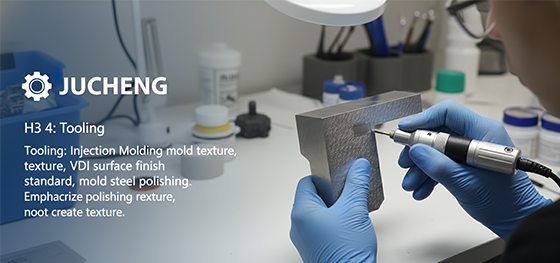
When a textured surface (like matte or fine leather grain) is required, the decision shifts from sanding the part to texturing the steel mold itself:
Mold Etching: The most consistent way to achieve a uniform textured surface is through chemical etching or laser ablation of the mold steel. The mold texture is then perfectly transferred to the plastic part during Injection Molding.
Sanding's Limit: Sanding can remove an unwanted texture, but it cannot create a uniform texture (like a VDI finish) that is required across an entire production run. Sanding should be reserved for smoothing and contouring, not for final texture application.
Paint Preparation: Even parts with an etched texture often require a light sanding (scuffing) with a very fine grit to provide micro-anchor points for the paint primer, balancing the surface energy for adhesion.
Precision Surface Finishing is the art and science of perfecting the molded surface. Jucheng Precision Technology integrates expert manual and mechanical sanding processes into the Injection Molding workflow, ensuring the removal of defects and the flawless preparation of surfaces for high-end cosmetic paint, polishing, or optical clarity.
Secure flawlessly finished plastic components. Contact us today to discuss the optimal surface finishing protocol for your cosmetic and optical plastic parts.

