


In the world of additive manufacturing, success hinges on the perfect calibration of numerous variables. While much attention is given to layer height, print speed, and temperature, one of the most critical yet often underestimated aspects is the infill. This internal structure, hidden between the outer shells of a 3D print, is the backbone of your creation, dictating its strength, weight, print time, and material usage. Selecting the right infill type is not a mere afterthought; it is a fundamental engineering decision that bridges the gap between a fragile prototype and a durable, functional part.
Understanding the Core: What is 3D Print Infill?
A Catalog of Common Infill Patterns
The Pursuit of Speed: What is the Fastest Infill?
Beyond the Interior: The Role of Infill Walls
Infill as a Support Structure
The Impact of Infill Type on 3D Prints
Understanding the Core: What is 3D Print Infill?
Before diving into the varieties, it’s crucial to grasp the basic 3d printer infill type explanation. Infill is the internal pattern that a 3D printer creates to fill a printed object. It is typically expressed as a percentage density. A 0% density means the object is completely hollow, while 100% density signifies a completely solid object. However, printing at 100% density is rarely practical due to excessive material consumption and print time. Instead, a lower infill density with a wisely chosen pattern provides an optimal strength-to-weight ratio. The primary purpose of infill is to provide structural integrity, support the top layers of the print (preventing sagging), and in some cases, add specific mechanical properties like flexibility or impact absorption.
A Catalog of Common Infill Patterns
The landscape of infill types 3d printing offers is diverse, each with unique advantages and ideal use cases. Understanding these different types of infill 3d printing is key to mastering print quality.
Rectilinear and Grid: This is one of the most basic and fastest patterns. It consists of a simple grid of parallel lines in alternating directions for each layer. While fast, it can be weak under certain shear forces because the lines do not interconnect between layers in a robust way.
Cellular Infill: The Strength Paradigm
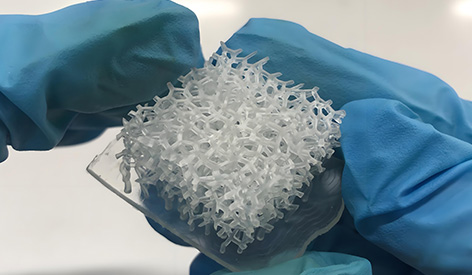
When discussing 3d printing infill type cellular, we are often referring to patterns that mimic natural structures, like honeycombs. The most famous example is the Hexagonal or Honeycomb pattern. This design is renowned for its exceptional strength-to-weight ratio. The hexagonal cells distribute stress evenly in all directions, making it ideal for functional parts that must withstand multidirectional forces. Its interconnected nature provides excellent stability.
Another star in the cellular category is Gyroid. This is a complex, tri-periodic minimal surface pattern that appears as a series of swirling, interconnected waves. Unlike grid patterns, the Gyroid is isotropic, meaning it has nearly identical strength properties in all three dimensions (X, Y, and Z). It also allows for easier resin drainage in SLA printing and performs exceptionally well for flexible materials because it can compress and rebound without collapsing.
The Pursuit of Speed: What is the Fastest Infill?
For many users, especially during prototyping, print speed is paramount. So, 3d printing whats the fastest infill type? The answer is typically Lines (or Rectilinear) and Grid. These patterns require the least number of directional changes for the print head, allowing it to maintain high speeds with consistent extrusion. Their simplicity means less computational overhead for the slicer and fewer retractions. However, this speed comes at a cost: reduced strength. For non-functional models or quick drafts, these are perfect. For stronger parts that still print relatively quickly, Cubic and Cubic Subdivision offer a good middle ground, providing better strength than a grid without a massive time penalty.
Beyond the Interior: The Role of Infill Walls
A crucial factor that interacts directly with the infill is the perimeter, or the different types of infill walls. The infill walls are the outer shells that define the shape and surface quality of the object. The relationship between the wall count and the infill is synergistic. A common rule of thumb is that more perimeter walls often contribute more to a part’s strength than increasing the infill percentage. For instance, a part with four walls and 15% infill can be significantly stronger and have a better surface finish than a part with two walls and 40% infill. The walls bear the brunt of external stresses and provide a solid anchor for the infill to support internal loads.
Infill as a Support Structure
A highly specialized application of infill is for 3d printing different types of infill for supports. Standard support structures are often dense and difficult to remove. However, some advanced slicers allow for using specific infill patterns for supports. For example, using a Gyroid or Lightning infill for supports can drastically reduce material usage and print time while making the supports much easier to break away from the model. This approach creates a strong yet sparse support structure that adequately holds up overhangs but is not fully solid, easing post-processing.
The Impact of Infill Type on 3D Prints
The choice of pattern has a profound impact of infill type on 3d prints, influencing far more than just strength.
Mechanical Properties: This is the most direct impact. A Hexagonal pattern excels in compressive strength, making it great for parts that will be load-bearing. A Gyroid or Cubic pattern offers superior all-around strength and layer adhesion. For parts that need to bend, a Grid or Lines pattern might allow more predictable flex than a rigid cellular structure.
Print Time and Material Use: As discussed, simple patterns like Lines are fastest. Complex, continuously curving patterns like Gyroid require more printer movements and can slightly increase print time but often use material more efficiently for the strength achieved.
Top Surface Quality: The infill must adequately support the top layers. A sparse or poorly chosen infill can lead to "pillowing," where the top layers sag into the gaps below. Denser infill or patterns with good support distribution, like Gyroid or a high-density Grid, create a smoother top surface.
Weight and Buoyancy: The infill percentage and type directly control the final weight of the object. This is critical for applications like drones or RC vehicles, where every gram matters. Some patterns achieve stiffness with less material, aiding in weight reduction.
There is no single "best" infill type. The optimal choice is a strategic decision based on the intended use of the printed object. Is it a decorative vase? Use 0-10% Lightning infill to save time and material. Is it a tool handle that needs to withstand impact? A higher density of Cubic or Gyroid is a superb choice. Is it a prototype that needs to be ready in an hour? The speedy Rectilinear pattern will suffice. By understanding the different types of infill 3d printing provides and their specific properties, makers and engineers can transcend basic printing and elevate their creations to new levels of performance and efficiency.

