


Uploading a generic CAD file into an automated 3d printing cost calculator usually yields dangerously inaccurate estimates. Hardware procurement executives frequently suffer massive financial shocks when the final factory invoice arrives padded with unexpected manual labor fees. Relying purely on basic material weight algorithms guarantees you will severely underestimate the true industrial burden of rapid prototyping.
Evaluating raw plastic filament prices provides absolutely zero insight into actual factory floor dynamics. Running a highly advanced laser sintering machine burns thousands of dollars in electricity, inert gases, and facility maintenance monthly. Bypassing these harsh physical realities creates a dangerous illusion that scaling hardware from one unit to one thousand units scales linearly in price.
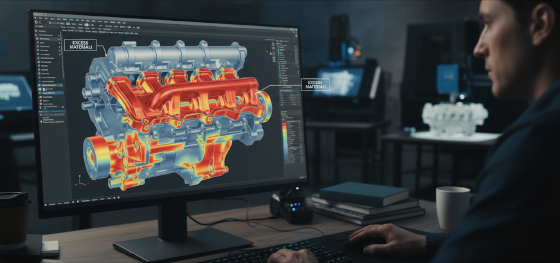
Calculating true financial exposure requires stripping away the digital marketing hype surrounding automated quoting platforms. Engineers must ruthlessly factor in the catastrophic cost of physical failures, warped dimensions, and heavily rejected batches. Discovering exactly what drives the hourly machine rate upwards protects your venture capital funding from vanishing instantly.
Operating deep inside the Shenzhen precision manufacturing hub equips our veteran estimators to expose these algorithmic lies. We force hardware designers to confront the exact physical thermodynamics of their chosen geometry before locking in a final price. Managing global supply chains demands brutal transparency regarding exactly where every single dollar of your manufacturing budget goes.
content:
Mastering Heavy Machine Amortization Rates
Exposing Post-Processing Manual Labor Costs
Executing Strategic NRE Tooling Avoidance
JUCHENG Hub: Defeating Blind Algorithmic Quotes
Frequently Asked Questions: Estimating Physics
Mastering Heavy Machine Amortization Rates
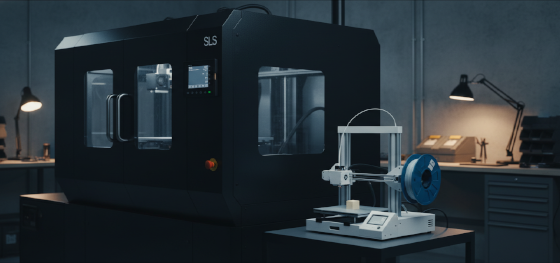
Does running a massive industrial powder bed cost exactly the same as a desktop extrusion machine?
Absolutely not. Industrial machines require heavy nitrogen generation, massive electrical pulls, and expensive annual maintenance contracts that heavily drive up the baseline hourly operational fee.
Calculating heavy machine amortization rates fundamentally dictates the initial price floor before any raw plastic is even consumed. Purchasing a half-million-dollar HP Multi Jet Fusion system requires factory owners to recoup that massive capital investment over thousands of running hours. Simple quoting algorithms rarely separate the cheap material cost from this terrifyingly high machine dependency.
Maximizing the entire build volume aggressively drives this specific unit cost downward. Dropping a single small plastic gear into a massive powder bed forces that single part to absorb the entire hourly machine rate. Smart engineers nest dozens of different components into the exact same vertical build chamber, violently dividing the operational overhead and slashing the individual piece price.
Pushing aggressive layer heights alters the financial equation instantly. Instructing the machine to print at fifty microns delivers flawless, retail-ready cosmetic surfaces but drastically multiplies the total running hours. Sacrificing this visual perfection by utilizing thicker layers cuts the machine time in half, providing critical budget relief for early-stage functional prototypes.
Exposing Post-Processing Manual Labor Costs
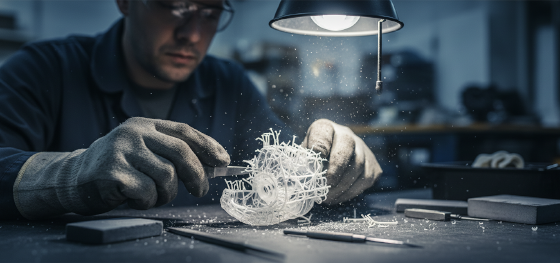
Will a visually flawless prototype drop out of the machine completely ready for retail packaging?
Rarely. Highly complex geometries require extensive physical support structures that must be meticulously scraped, sanded, and polished away by exhausted human hands.
Surviving unpredictable post-processing manual labor destroys lean hardware budgets instantly. Many automated platforms completely ignore the terrifying amount of human intervention required to finish a raw print. Handing a technician a delicate resin fluid manifold filled with internal support scaffolding guarantees hours of tedious, highly expensive manual cleaning.
Failing to design self-supporting angles directly into your CAD geometry actively sabotages your profit margin. Every single overhang exceeding forty-five degrees mathematically forces the slicing software to generate wasteful breakaway supports. You pay heavily for the extra plastic consumed, the extra machine time required to print it, and the human wages to tear it off.
Applying premium secondary finishes drastically shifts the final quote. Requesting military-grade matte black painting or specialized chemical vapor smoothing requires moving the part to entirely different factory departments. Entering basic dimensions into a 3d printing cost calculator never accurately reflects these highly customized, labor-intensive secondary chemical treatments.
| Hidden Cost Variable | Impact on Basic Extrusion (FDM) | Impact on Laser Powder (SLS) | Financial Mitigation Strategy |
|---|---|---|---|
| Support Removal Labor | Extremely High (Requires pliers and sanding) | Zero (Powder is self-supporting) | Design 45-degree chamfers to avoid supports |
| Machine Setup Time | Low (Fast bed leveling) | High (Requires lengthy thermal warm-up) | Batch multiple orders into a single long run |
| Material Waste Rate | Moderate (Support structures thrown away) | Low (Un-sintered powder is recycled) | Hollow out massive solid models heavily |
| Failure & Warpage Risk | High (Especially for large ABS parts) | Low (Uniform ambient cooling) | Utilize strict DFM reviews before printing |
Executing Strategic NRE Tooling Avoidance
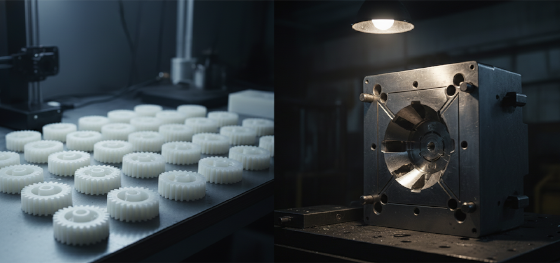
Is printing ten thousand plastic brackets financially smarter than injecting them?
Never. Producing massive volumes mathematically favors injection molding, but executing smart volume thresholds protects early-stage companies from premature bankruptcy.
Discovering the exact threshold for NRE tooling avoidance protects your corporate treasury from hemorrhaging cash. Cutting a hardened steel mold demands a massive non-refundable upfront payment. If your hardware project only requires two hundred beta-testing units, tying up fifty thousand dollars in heavy steel completely destroys your runway.
Utilizing agile additive technologies for mid-volume runs incurs a higher price per individual unit but absolutely zeroes out the massive tooling overhead. Smart hardware executives actively run a trustworthy 3d printing cost calculator explicitly to find this break-even point. Plotting the exact volume where additive manufacturing becomes mathematically more expensive than molding dictates your entire supply chain strategy.
JUCHENG Hub: Defeating Blind Algorithmic Quotes
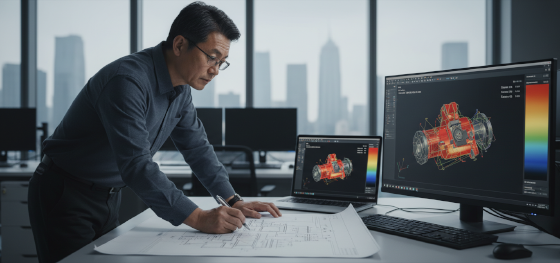
Why do aggressive hardware startups abandon blind algorithmic quoting platforms entirely?
Because software cannot physically evaluate destructive thermodynamic risks hiding inside complex CAD geometry, leading to massive downstream failure costs.
Partnering with Jucheng Precision replaces dangerous software guessing with brutal engineering reality. Submitting your file to our Shenzhen facility immediately triggers a hardcore manual Design for Manufacturing (DFM) audit. We actively interrogate the physics of your design to calculate an honest, fully-loaded production price.
Eliminating surprise invoices completely safeguards your product launch. Operating our own massive fleet of industrial machinery ensures we control the exact machine amortization rates internally. We deliver flawless, functional prototypes at the exact price promised without holding your project hostage over hidden manual labor fees.
Frequently Asked Questions: Estimating Physics
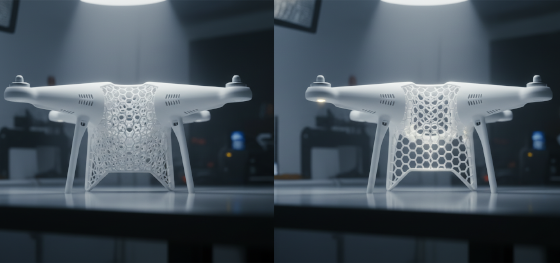
Can hollowing out my digital model significantly reduce the final production quote?
Yes. Reducing internal solid mass drastically slashes both physical material consumption and total spindle time. Replacing a solid core with a fifteen-percent honeycomb infill cuts overall costs dramatically.
Why does requesting extreme tight tolerances increase the estimate so aggressively?
Demanding single-digit micron accuracy physically requires transitioning the part to a secondary CNC milling center. This introduces expensive fixture setups, specialized tooling, and additional labor hours to perfectly machine the printed faces.
Does the physical orientation of the part on the digital build plate affect the price?
Absolutely. Printing a tall, skinny part vertically takes significantly longer than laying it flat. Every vertical layer transition requires the machine to stop, move, and reset, violently driving up billable machine hours.

