


The world of high-performance plastics relies on Polymethyl Methacrylate (PMMA), commonly known as acrylic, for its exceptional clarity and scratch resistance. For B2B clients in demanding sectors like Automotive Lighting, Medical Devices, and high-end Consumer Products, PMMA Injection Molding is the definitive process for manufacturing optical components and transparent housings.
Unlike standard injection molding of opaque parts, achieving a flawless, optically clear PMMA component requires specialized expertise in material handling, mirror-finish tooling, and precise process control. At Jucheng Precision Technology, our certified processes and deep knowledge base ensure that your transparent prototypes and production runs meet the highest standards of optical clarity and durability.
Material Excellence – The Foundation of Optical Grade PMMA
The Critical Tooling Challenge – Achieving Mirror Finish Cavities
Molding Process Control – Eliminating Bubbles and Flow Lines
Quality Assurance – Certified Standards for Transparent Parts
Material Excellence – The Foundation of Optical Grade PMMA
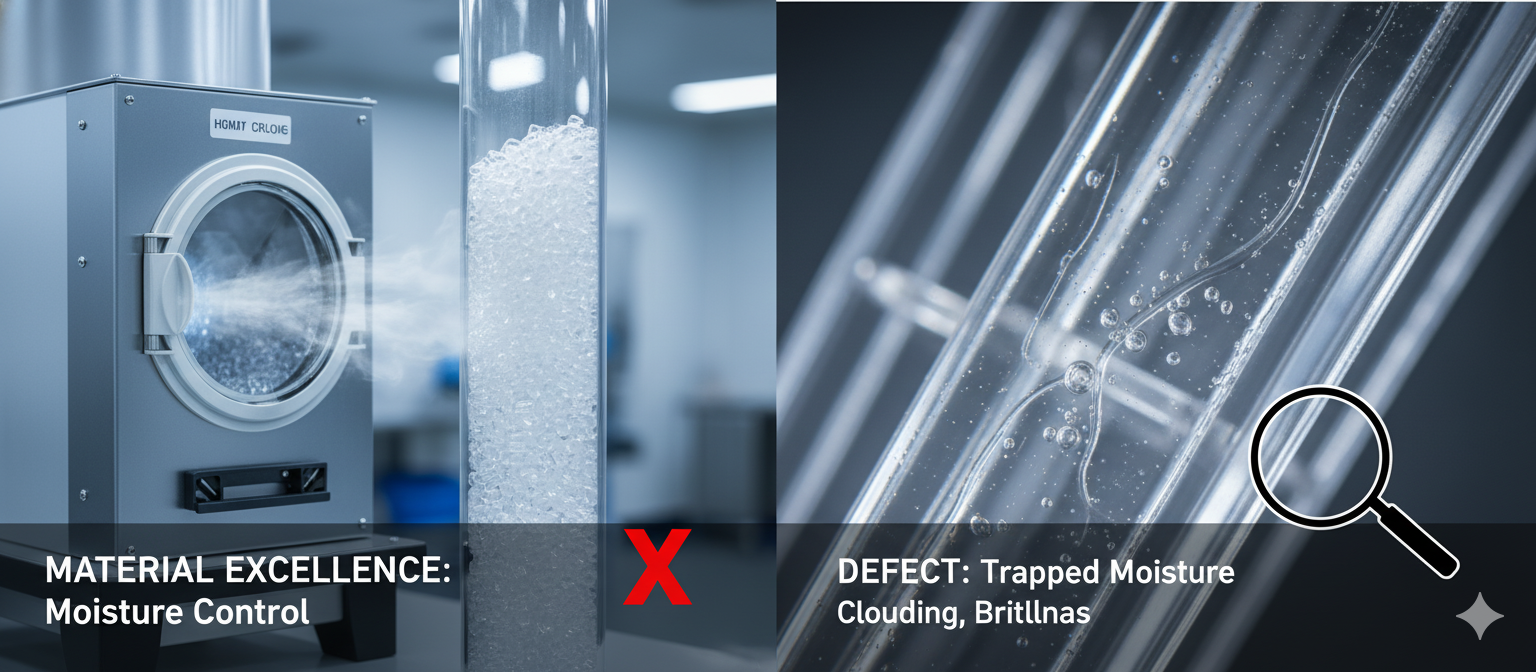
The success of PMMA Injection Molding starts long before the resin enters the machine. PMMA is highly susceptible to moisture and dust, which can lead to visible defects (bubbles, streaking) that destroy optical clarity.
Material Handling: Raw PMMA resin must be meticulously dried to low moisture levels (often below 0.04%) in a dehumidifying dryer. Any residual moisture converts to steam during molding, resulting in internal voids or cosmetic defects.
Alternative PC: While PMMA offers superior scratch resistance, Polycarbonate (PC) is often used for transparent parts requiring extreme impact strength, highlighting the importance of choosing the correct transparent polymer.
The Critical Tooling Challenge – Achieving Mirror Finish Cavities
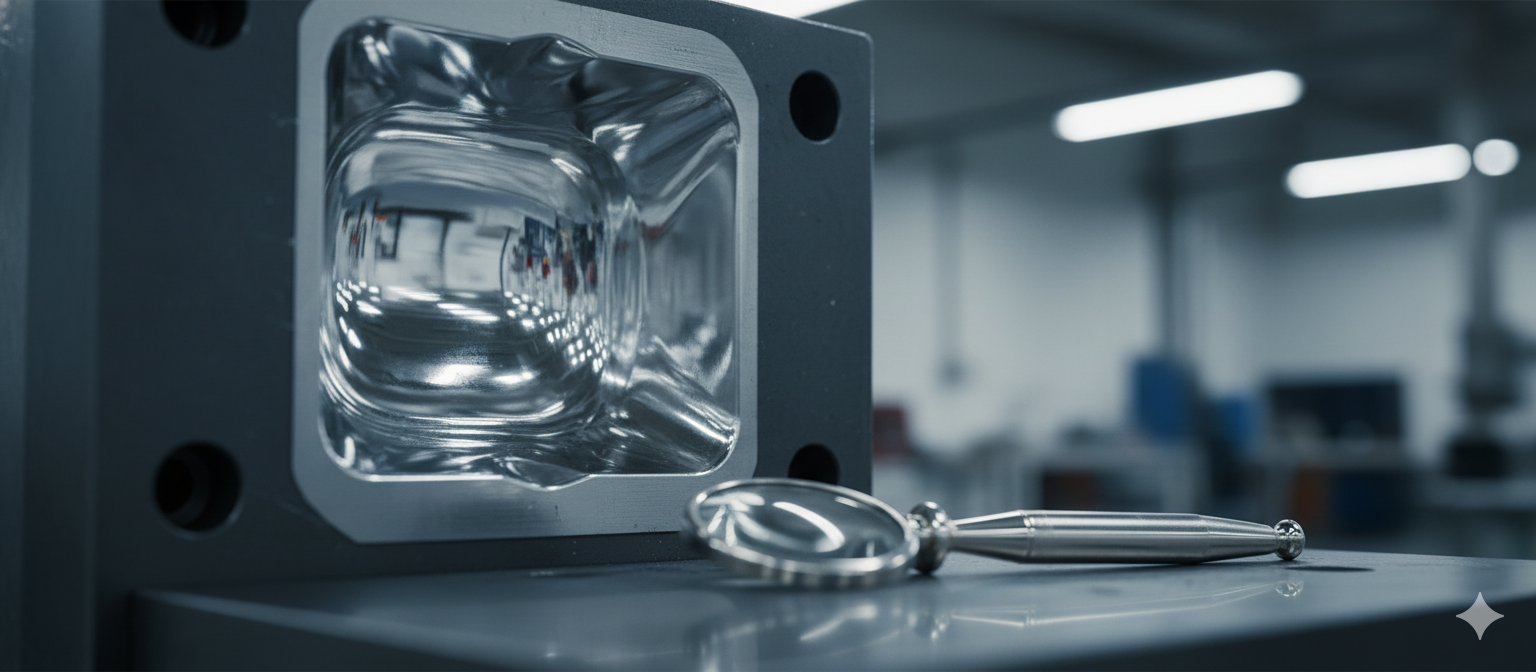
For transparent parts, the finish of the mold tooling is directly transferred to the finished part. To achieve optical clarity, a standard SPI A-1 mirror polish is often required, which poses unique challenges:
Tool Steel Selection: High-hardness, corrosion-resistant steel is required for the tooling to maintain the mirror finish over thousands of cycles.
Precision Machining and Polishing: Initial CNC Machining of the mold must be extremely precise. The subsequent polishing process, often performed by highly skilled personnel, is critical, as any micro-scratches on the tool will appear as optical defects on the final PMMA part.
Molding Process Control – Eliminating Bubbles and Flow Lines
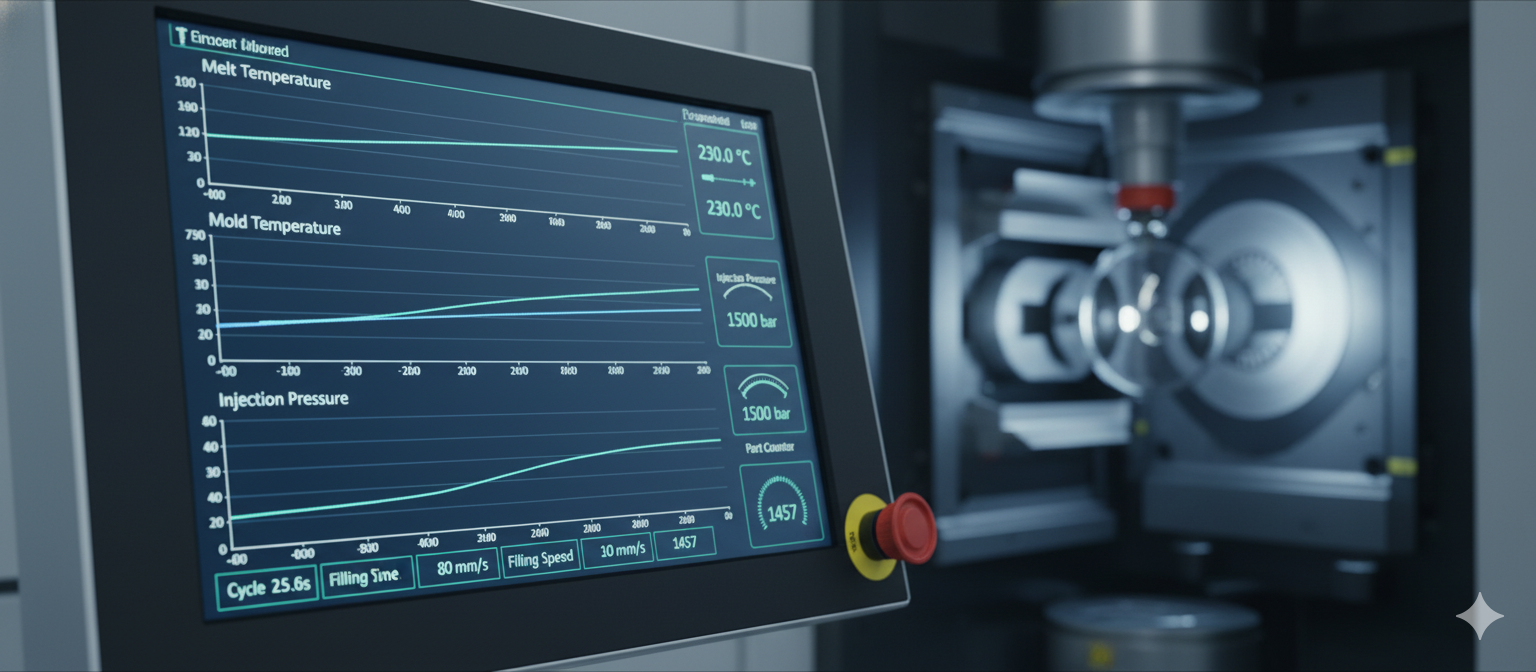
The actual Injection Molding of PMMA requires tighter control over temperature and pressure than most standard thermoplastics to prevent material degradation and stress:
Melt Temperature: PMMA requires high temperatures, but excessive heat can cause thermal degradation, leading to discoloration or gas formation. Precise control ensures optimal flow without burning.
Gate and Runner Design: To minimize flow lines and gate blush (common defects in transparent parts), the tooling must feature optimized runner and gate systems that allow the molten PMMA to fill the cavity quickly and uniformly.
Quality Assurance – Certified Standards for Transparent Parts
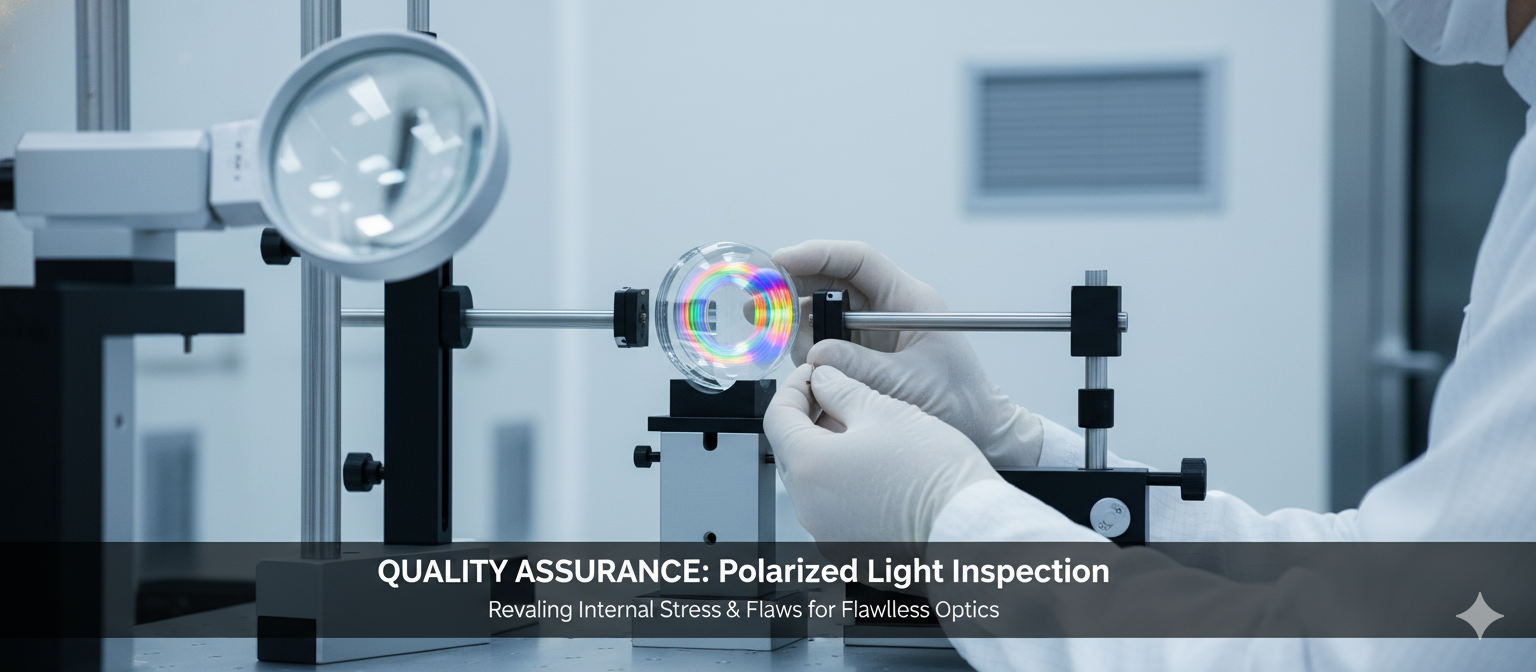
For high-volume production, compliance is non-negotiable. Our focus on quality ensures that every molded PMMA part meets the specified industry standard:
Compliance: As an IATF16949 certified specialist, JUCHENG applies stringent automotive quality management standards to all Injection Molding, ensuring consistency for high-volume parts like automotive lighting components.
Inspection: Optical components require more than dimensional checks. We employ visual and light transmission inspection protocols to verify the absence of flaws, contributing to our tested 99.8% product qualification rate.
Achieving true optical clarity in PMMA Injection Molding is a blend of specialized tooling expertise and scientific process control. From precise CNC Machining of the mold to certified quality assurance, Jucheng Precision Technology offers the end-to-end solution for your transparent prototypes and high-volume optical parts.
Accelerate your project with defect-free optical components. Contact us today to discuss your specific PMMA Injection Molding requirements.

