


Preparing raw metal plates to withstand aggressive outdoor environments begins long before the first layer of paint is sprayed in custom sheet metal fabrication. Specifying sandblasting sheet metal provides your custom cabinets, structural brackets, and heavy carbon steel enclosures with a highly textured, chemically clean anchor pattern that guarantees maximum paint adhesion. This aggressive mechanical cleaning process fires high-velocity abrasive grits at bare metal surfaces, stripping away scale and oxide contaminants while building a controlled surface roughness.
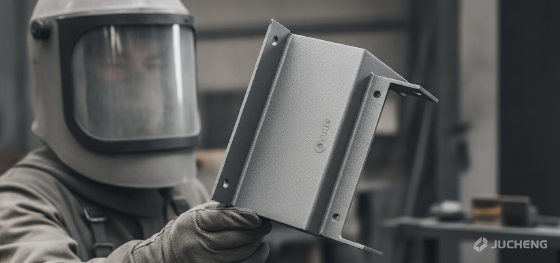
Wasting capital on powder-coated panels that blister, peel, or rust around welded joints is a major setback for industrial hardware rollouts. If your fabrication partner skips physical abrasive blasting, microscopic mill scale and oil residues will remain trapped beneath the paint, initiating rapid sub-film corrosion. Implementing a rugged mechanical blast pretreatment completely eliminates these bonding failures, delivering pristine surfaces ready for high-durability coatings.
Let's explore how abrasive blasting removes stubborn mill oxides and environmental scale, analyze how surface profile depth controls coating adhesion, and review the structural design rules to prevent thin-gauge warping during high-pressure cycles.
Removing Rust, Mill Scale, and Old Coatings

How does abrasive blasting cleanly strip away stubborn oxides on hot-rolled plates?
The process uses high-pressure compressed air to launch specialized abrasive grits at the metal surface, physically fracturing and shearing away brittle mill scale and corrosion.
Hot-rolled steel inherently carries a dark, brittle layer of iron oxides known as mill scale. While mill scale appears solid, it is highly prone to micro-cracking and will eventually flake off, carrying any topcoat layer with it. Standard chemical acid pickling can dissolve light rust, but it often struggles with thick, weathered scale.
Abrasive blasting resolves this by physically pounding the metal surface. Choosing the correct abrasive grit is critical; angular materials like aluminum oxide or steel grit act like micro-chisels, fracturing and stripping away mill scale, deep-seated rust, and old paint in seconds, leaving behind a pristine, uniform metallurgical finish.
Creating Surface Profile for Paint Adhesion
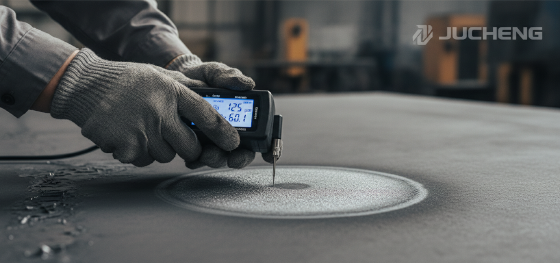
Why is creating a controlled surface roughness essential for coating performance?
Abrasive impact creates a microscopic anchor pattern that increases the total surface area, allowing liquid primers or electrostatic powders to lock mechanically to the metal.
Slick, polished metal surfaces are highly prone to paint delamination because they offer no mechanical 'teeth' for the coating to grip. To secure high-strength bonding, the raw plate must undergo a controlled texturing process to establish a target surface profile (anchor pattern) measured in mils or microns.
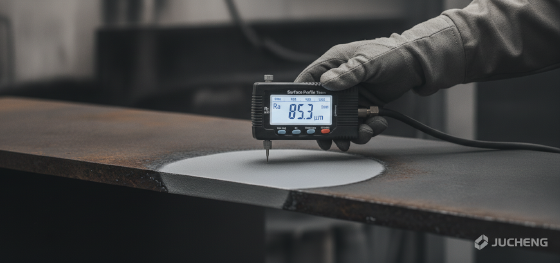
We measure this profile depth according to ASTM D4417 standards using digital replica tape or profilometers. A profile of 1.5 to 3.0 mils (38 to 75 microns) is the standard range for industrial liquid primers. This rough surface area acts as a microscopic lock-and-key system, preventing moisture from creeping beneath the paint and doubling the service life of your protective barriers:
| Abrasive Media Type | Material Compatibility | Average Profile Depth | Best B2B Application |
|---|---|---|---|
| Aluminum Oxide (Angular) | Carbon Steel & Stainless Steel | 1.5 to 3.0 mils (38 to 75 µm) | Heavy scale removal and profile anchoring |
| Glass Beads (Spherical) | Aluminum & Copper Alloys | 0.5 to 1.0 mils (12 to 25 µm) | Satin-matte cosmetic finishing (often called bead blasting) |
| Steel Grit (Angular) | Heavy Structural Steel | 2.5 to 4.5 mils (63 to 114 µm) | Deep profiling for high-build industrial coatings |
Prepping Steel for Powder Coating
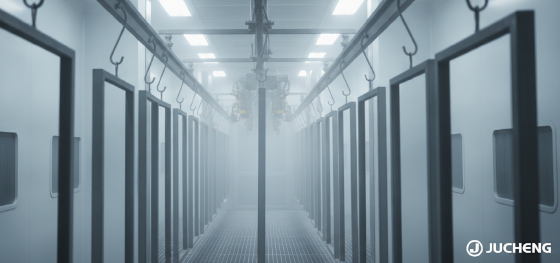
How does mechanical blasting optimize the subsequent electrostatic powder process?
Blasting strips away non-conductive oxides to ensure perfect electrical grounding, which is essential for uniform electrostatic powder attraction.
Integrating this heavy-duty mechanical prep step into your turnkey sheet metal surface treatment flow is the single most effective way to eliminate paint delamination. At Jucheng Precision, our sandblasting sheet metal services are fully integrated into our 8000-square-meter facility, ensuring that freshly blasted steel is coated immediately before environmental moisture can trigger flash rusting.
We process a wide range of materials, including lightweight aluminum, high-yield stainless steel, and easily formable carbon steel during high-precision sheet metal fabrication cycles. We execute rigorous salt contamination testing using the Bresle method to detect and remove invisible chloride salts before we spray. This thorough mechanical-chemical prep process ensures that every finished enclosure meets your strict outdoor durability and salt-spray resistance requirements.
FAQ: Critical Questions About Sandblasting Sheet Metal
Our engineering team has compiled professional solutions to the most common quality challenges faced during industrial abrasive blasting runs:
Why do thin-gauge sheet metal panels warp during sandblasting, and how is it prevented?
Thin-gauge sheets (under 2mm) possess low structural rigidity and are highly susceptible to thermal warping and physical deformation under the intense mechanical hammering of high-pressure blasting. To prevent warping, we utilize softer abrasive media (such as glass beads or walnut shells), reduce the blasting pressure below 40 PSI, and maintain an acute 45-degree nozzle angle to sweep the surface gently.Can aluminum parts be blasted with standard steel grit?
Absolutely not. Blasting aluminum with carbon steel grit embeds microscopic iron particles into the soft aluminum surface. When exposed to ambient humidity, these trapped iron particles initiate rapid galvanic corrosion, causing the aluminum to develop dark pits and white powdery rust. We utilize strictly iron-free aluminum oxide or glass beads to process all non-ferrous metals.What is the difference between sandblasting and bead blasting in sheet metal finishing?
Sandblasting utilizes angular, sharp-edged media to aggressively cut and profile the metal, making it ideal for stripping rust and preparing steel for heavy-duty coatings. Bead blasting utilizes spherical glass beads to gently peen the surface, removing minor tool marks and leaving a beautiful, satin-matte cosmetic finish without removing any parent metal.How does Jucheng Precision prevent flash rusting on custom sandblasting sheet metal orders?
Freshly blasted carbon steel is highly reactive and will develop micro-rust (flash rust) within hours if exposed to high humidity. To prevent this, we maintain a strictly climate-controlled holding area and schedule our blasting and powder coating operations back-to-back. This ensures that blasted parts are transferred to the paint booth and sealed within a strict, four-hour window.

