


Specifying strictly North American metal standards for overseas manufacturing contracts creates massive, unnecessary friction within your supply chain. Procurement teams constantly demand highly specialized Western alloys, forcing Asian factories to import expensive, rare raw ingots to fulfill the order. Embracing the local standard by utilizing adc12 die casting material instantly slashes your unit costs without sacrificing a single drop of structural integrity. Fighting the regional supply chain is a losing financial battle that hardware startups simply cannot afford.

Evaluating baseline die casting materials requires understanding what metals are naturally abundant near your chosen factory. Attempting to force an Asian supplier to use American-grade metals means you will pay heavy premiums for logistics and delayed lead times. Operating out of our massive Shenzhen precision manufacturing hub, Jucheng Precision successfully transitions countless global clients over to this highly optimized, regional metal grade.
Securing aggressive pricing demands flexibility on the engineering drawing board. Let's decode exactly how this specific Japanese Industrial Standard (JIS) matches Western benchmarks perfectly, why factory operators actually prefer pouring it, and how adopting it accelerates your global product launch.
content:
The Asian Standard Equivalent to A380
Fluidity vs Strength: Understanding the Differences
Excellent Machinability and Mechanical Properties
Global Supply Chain: Shipping ADC12 Parts Worldwide
FAQ: Honest Answers About Compliance and Finishes
The Asian Standard Equivalent to A380
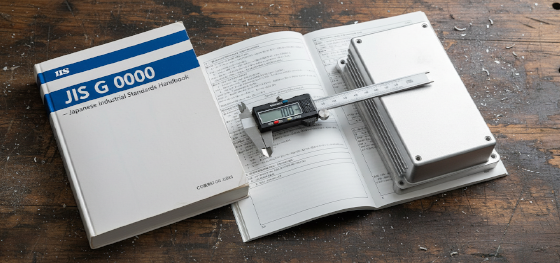
Can European and American buyers safely swap their blueprints to this Asian metal?
Absolutely. It serves as the direct, functional equivalent to the Western A380 standard, providing nearly identical mechanical strength, thermal conductivity, and overall physical performance.
Hardware engineers are naturally cautious about altering materials approved during the prototyping phase. When you look at the fundamental chemistry, both of these alloys rely heavily on a combination of silicon and copper to achieve their strength. They are practically twins in the metallurgical world.
Sourcing locally available ingots drops your piece price immediately. Every foundry and contract manufacturer operating in Shenzhen stocks massive volumes of this exact material. This incredible abundance guarantees that you will never face production delays due to raw material shortages.
Fluidity vs Strength: Understanding the Differences

Why do factory machine operators actually prefer pouring this specific Japanese standard?
It features a slightly elevated silicon content compared to its Western counterpart, which drastically increases the fluidity of the molten metal, allowing it to fill complex molds much faster.
Comparing standard a380 aluminum die cast material to this regional alloy reveals subtle factory advantages. When designing ultra-thin heatsink fins for telecommunications equipment, sluggish metal will freeze halfway down the cavity. The higher silicon content in this Asian alloy turns the liquid into a fast-flowing river.
Slashing your internal scrap rate is the ultimate goal for massive production runs. Because this metal fills tight corners flawlessly without trapping massive air bubbles, factory operators can confidently increase the injection speed. You get better parts, fewer defects, and lower machine overhead.
Excellent Machinability and Mechanical Properties
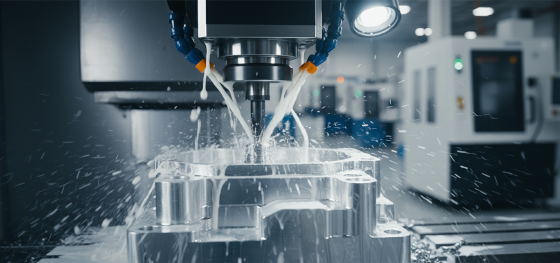
Does this regional metal compromise your ability to drill fine threads?
Not at all. The balanced copper additives ensure the metal chips cleanly during secondary CNC operations, preventing the gummy buildup that destroys fragile drill bits.
Evaluating comprehensive die casting material properties proves why this alloy dominates the global automotive sector. It delivers a highly respectable yield strength, ensuring that heavy brackets do not bend or deform under brutal highway vibrations.
Dimensional stability remains incredibly solid even under extreme operating temperatures. If you are building an electric vehicle engine casing or an outdoor LED lighting fixture, this material acts as a massive thermal radiator, actively protecting your sensitive electronics from overheating.
Global Supply Chain: Shipping ADC12 Parts Worldwide
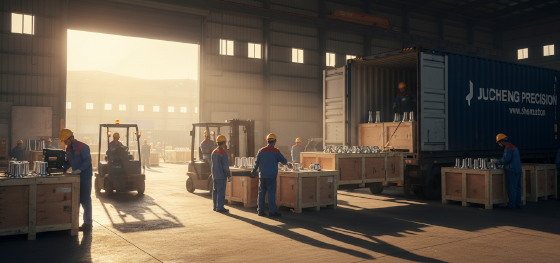
Why trust Jucheng Precision to execute this material swap safely?
Because our senior engineers review your Western CAD files, confirm the structural math, and manage the transition flawlessly within our massive Shenzhen precision manufacturing hub.
Transitioning materials with an inexperienced broker usually leads to horrible cosmetic finishes. Like all high-silicon alloys, this metal turns dark and ugly if you attempt to apply bright anodizing. We protect your product aesthetic by routing your parts directly into our internal powder-coating and painting booths.
Stop fighting regional economics and start leveraging them. Send your heavy-duty structural CAD files to our engineering team today for a completely free DFM review. We will map the physical equivalents, slash your raw material costs, and deliver fully finished hardware directly to your global assembly line.
FAQ: Honest Answers About Compliance and Finishes
Will this alloy pass strict European RoHS and REACH compliance standards?
Absolutely. We strictly source high-purity ingots that contain zero banned heavy metals, guaranteeing your hardware legally clears international customs without any friction.
Does the higher silicon content make the metal significantly heavier?
No. The overall density remains virtually identical to standard North American grades, meaning your shipping weights and structural payloads will not change.
Can I heat-treat this metal to increase its tensile strength further?
Standard injection processing traps gas, meaning traditional T6 heat treatments will cause surface blistering. We must utilize specialized vacuum evacuation techniques if high-heat tempering is required.
What surface finish works best to protect this metal from outdoor rust?
Because bright anodizing fails cosmetically on this alloy, we highly recommend heavy-duty industrial powder coating or chromate conversion coatings to ensure decades of corrosion resistance.

