


The challenge of creating flexible, functional prototypes has historically been a bottleneck in product development. While "rubber" implies a singular material, the reality involves a complex range of elastomers like TPE, TPU, and silicone. Achieving accurate, durable, and flexible parts for seals, gaskets, and grips requires specialized processes beyond typical rigid 3D printing.
For B2B buyers focused on functional testing and small-batch production, the decision matrix often involves both additive manufacturing (3D Printing) and soft tooling (Vacuum Casting). This guide focuses on the critical factors for successful Elastomers 3D Printing and its production counterparts, ensuring your flexible components meet real-world performance criteria.
content:
The Material Spectrum: TPE, TPU, and Silicone Alternatives
Process Selection: When to Choose 3D Printing vs. Vacuum Casting
Critical Design Considerations for Flexible Prototypes
Functional Applications: Seals, Grips, and Dampeners
The Material Spectrum: TPE, TPU, and Silicone Alternatives
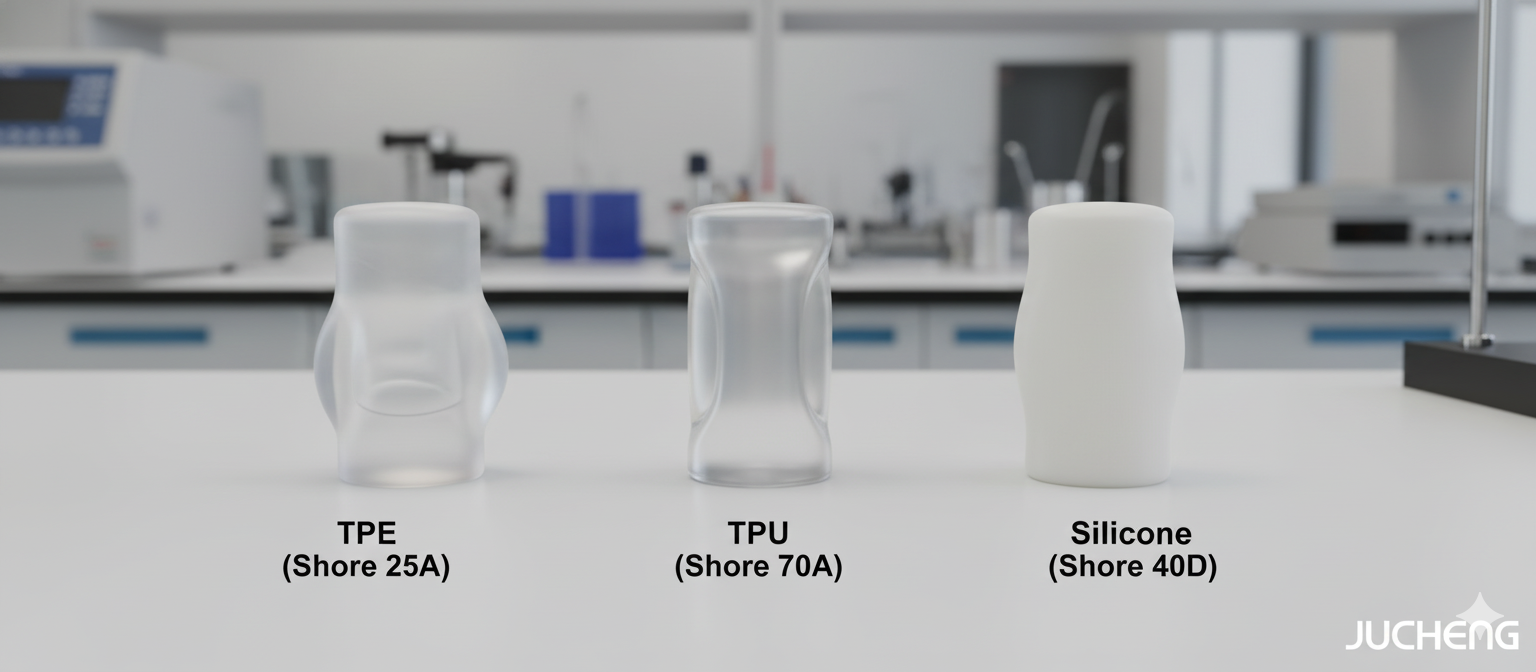
While pure rubber is difficult to 3D print directly, specialized thermoplastic elastomers (TPEs) and silicones offer excellent rubber-like properties. Material choice is driven by the required Shore hardness and operating environment:
Thermoplastic Polyurethane (TPU): Used in FDM and selective laser sintering (SLS) 3D printing, offering good wear resistance and elasticity, ideal for flexible housings and impact dampeners.
SLA Flexible Resins: Specialized SLA resins mimic TPEs, providing highly detailed, smooth prototypes for visual and fit checks, though often less durable for true functional testing.
Vacuum Casting Urethanes: Polyurethane elastomers (e.g., T0387, 8570, 8743 series) can precisely replicate the properties of soft TPU or silicone, offering the most accurate material properties for functional prototypes.
Process Selection: When to Choose 3D Printing vs. Vacuum Casting
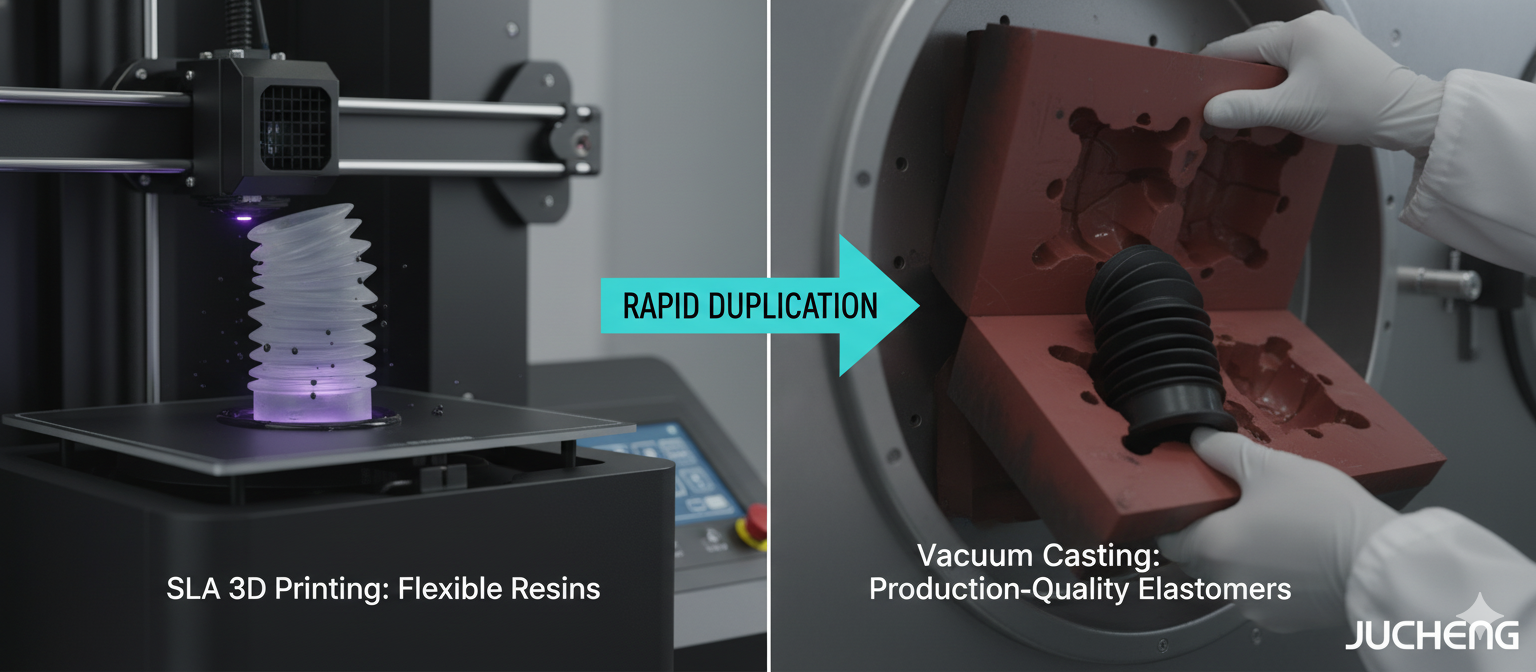
The optimal process for a Rubber 3D Printing project depends heavily on the production volume and required mechanical fidelity:
3D Printing (SLS/SLA): Best for one-off design verification, fit checks, or when geometry is extremely complex. Offers the fastest turnaround (4-7 days) without hard tooling commitment.
Vacuum Casting (Urethane Casting): The superior choice for functional prototypes (20-500 parts) and low-volume production. It uses a silicone mold made from a 3D printed master, offering the most accurate replication of end-use elastomer properties, including various Shore hardness and flexibility.
Long-Term Scaling: For mass production (5000+ parts), the material is often transitioned to true Silicone Injection Molding or Insert Molding, leveraging specialized Rapid Tooling services.
Critical Design Considerations for Flexible Prototypes
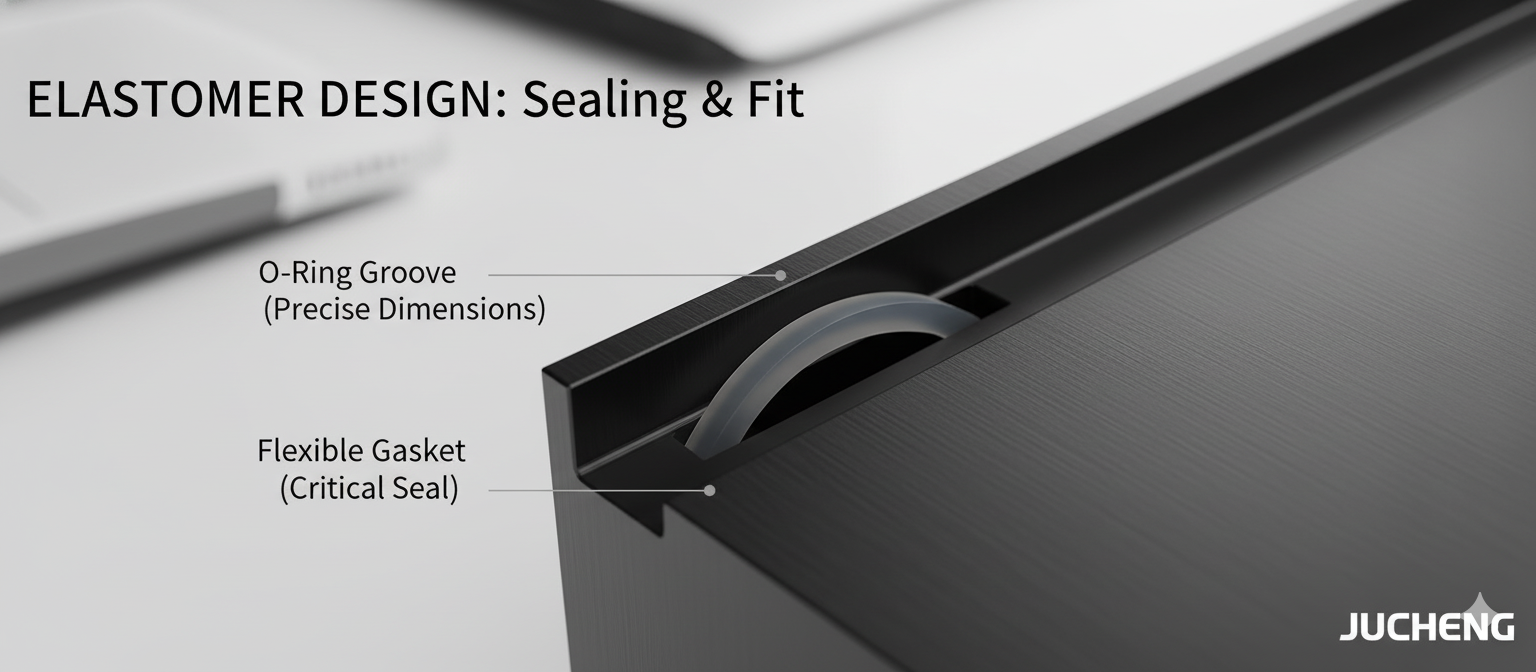
Designing for flexible materials requires attention to tear strength, thin walls, and demolding mechanics, particularly when using softer Shore hardnesses:
Wall Thickness: Flexible parts require thicker minimum walls (e.g., >1.0mm) than rigid plastics to maintain structural integrity during handling and testing.
Sealing Surfaces: For O-rings and gaskets, the sealing face must be kept extremely flat and smooth, often requiring minimal post-processing to avoid damaging the crucial sealing lip.
Undercuts: Flexible materials can accommodate significant undercuts during demolding, especially in Vacuum Casting, which utilizes the flexibility of the silicone mold.
Functional Applications: Seals, Grips, and Dampeners
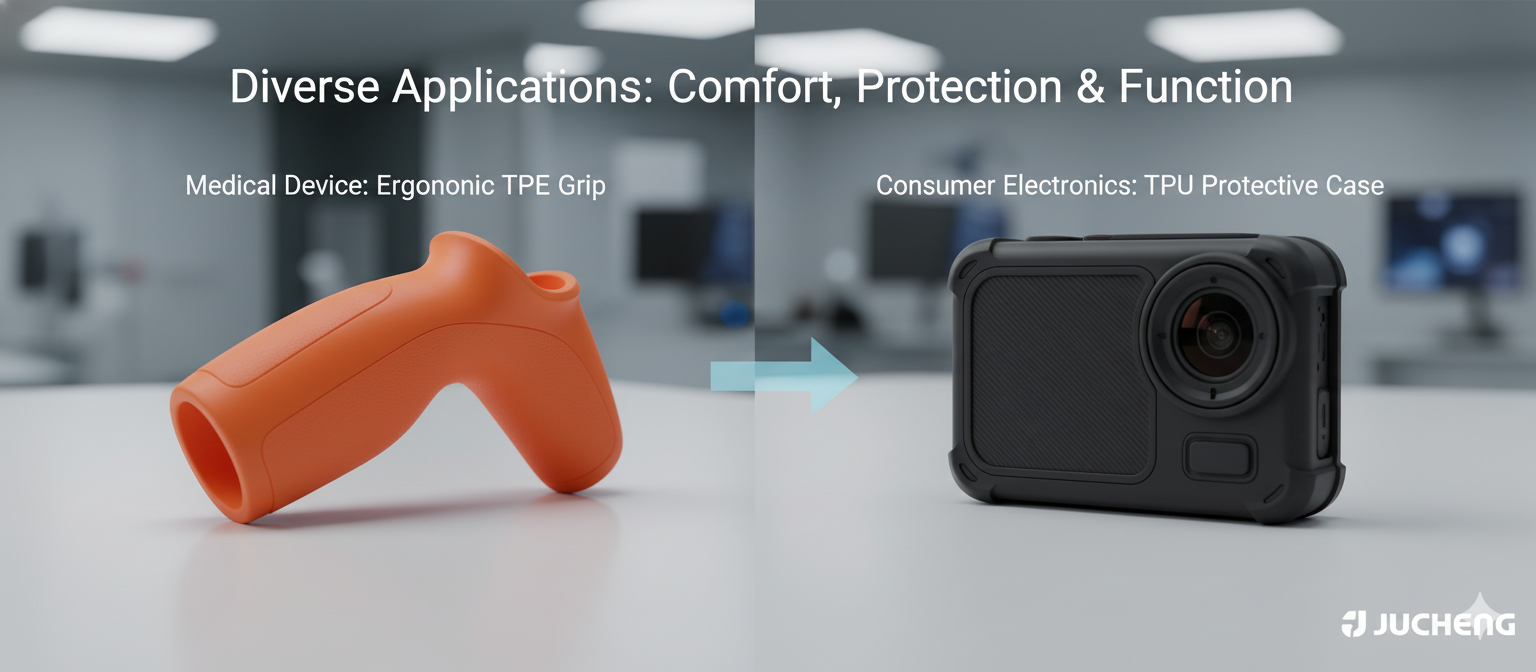
Successful elastomer prototyping allows testing of the most critical mechanical functions in real-world scenarios across Automotive, Medical, and Consumer Products:
Sealing and Gasketing: Testing the water-tight integrity and compression set of seals in medical device enclosures or automotive lighting is essential for certification.
Ergonomics and Haptics: Prototyping grips, handles, and soft-touch buttons allows for critical user-testing of comfort, tactile feedback, and shock absorption.
Vibration Dampening: Testing the durometer and geometry of vibration isolation mounts using cast urethanes provides accurate mechanical feedback for final design validation.
Whether your project demands the speed of Rubber 3D Printing or the material fidelity of Vacuum Casting, Jucheng Precision Technology offers the comprehensive solution. Our certified processes and dual-technology approach ensure your flexible prototypes perform flawlessly, accelerating your time-to-market.
Don't compromise on flexibility and function. Contact us today to discuss the best elastomer prototyping strategy for your next innovation.

