


Payload efficiency determines the economic survival of modern autonomous systems. In the hyper-agile development of collaborative robots (cobots), Automated Guided Vehicles (AGVs), and surgical manipulators, gravity is the primary mechanical tax. Every gram of dead weight in a robot’s chassis or arm assembly represents a direct reduction in battery life, motor responsiveness, and overall payload capacity. Traditional metal-centric designs are being aggressively replaced by high-performance injection molded robot parts to secure market sovereignty. This structural shift requires moving beyond simple plastic mockups and entering the domain of aerospace-grade polymer engineering. Jucheng Precision operates as a high-fidelity manufacturing partner for the robotics elite, utilizing advanced fiber-reinforced resins and multi-material integration to bridge the gap between "Digital Kinetic Design" and "Physical Field Readiness" within the Injection molding application industries. We understand that a robot component is not just a housing; it is a structural skeleton that must withstand high-vibration duty cycles and accidental collisions without a single molecular tear.
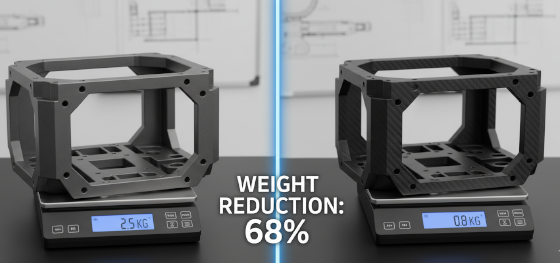
Establishing a resilient robotics supply chain demands the rejection of "Over-Designed" metal components. Amateurs often default to CNC machining for small batches of robotic brackets, unaware that the high strength-to-weight ratios of modern composites can deliver identical stiffness with an 80% reduction in mass. Jucheng Precision eliminates these "Mechanical Anchors" by providing a specialized material library designed for the automation sector. We don't just "mold plastic"; we engineer high-modulus surrogates that mirror the rigidity of aluminum while offering superior vibration damping. Whether you are validating a ruggedized AGV bumper or an intricate micro-actuator gearbox, our facility provides the manufacturing insurance needed to ensure your hardware is as agile as the software that controls it. This guide deconstructs the necessity of carbon-fiber reinforcement, the physics of sensor overmolding, and why our "Rapid Tooling" strategy is the mandatory foundation for anyone launching injection molded robot parts in 2026.
The Robotics Paradox: Balancing Mass and Mechanical Spine
Material Sovereignty: Carbon Fiber and Self-Lubricating Resins
Kinetic Defense: Overmolding for Sensor and LiDAR Protection
Assembly Rigor: Insert Molding for High-Torque Repeatability
JUCHENG Protocol: Rapid Tooling for High-Velocity Startups
The Robotics Paradox: Balancing Mass and Mechanical Spine
Mechanical instability often originates from the conflict between battery endurance and structural rigidity. If a robot's shell is too heavy, its motors work harder, generating heat and draining power. If it is too light, the chassis flexes under load, ruining the sub-millimeter precision required for pick-and-place tasks. injection molded robot parts solve this paradox through "Structural Thin-Walling." Jucheng Precision engineers utilize Moldflow simulation to design thin nominal walls (1.5mm - 2.5mm) supported by a dense network of internal ribs. This approach allows us to achieve high torsional stiffness without the thermal mass of a solid block. By utilizing "Coring-out" strategies, we ensure that your robot's "Exoskeleton" remains dimensionally stable and structurally indifferent to external torque, providing the rigid platform needed for high-speed automated maneuvers.
Material Sovereignty: Carbon Fiber and Self-Lubricating Resins
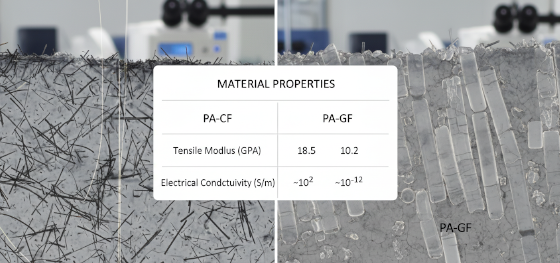
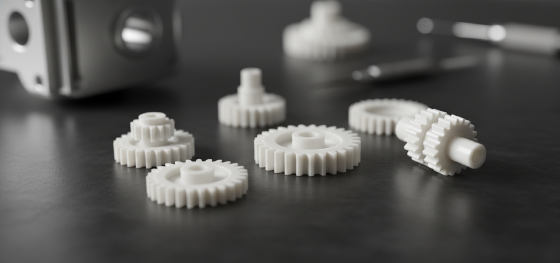
Molecular reinforcement dictates the "Structural Truth" of modern automation hardware. To assist robotics engineers in early-stage material routing, Jucheng Precision provides a specialized Injection molding materials matrix focused on metal replacement. For load-bearing frames and joints, we process Carbon-Fiber Reinforced Nylon (PA-CF), which offers a tensile modulus approaching 20,000 MPa—rivaling die-cast alloys. For internal actuator mechanisms, we utilize POM (Acetal) for its self-lubricating soul and zero-drift dimensional stability. Below is the technical performance matrix utilized by our engineers:
| Requirement | Material Solution | Key Advantage |
|---|---|---|
| Extreme Rigidity | Nylon + 30% CF | Aluminum-level Stiffness |
| Kinetic Impact | Nylon + 35% GF | Impact Absorption / Cost |
| Precision Gears | POM (Acetal) | Self-Lubricating / Low Friction |
| Sensor Shield | Flame Retardant PC | UV Stable / UL94 V-0 |
Kinetic Defense: Overmolding for Sensor and LiDAR Protection
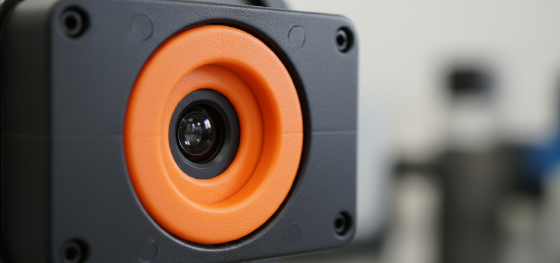
Vulnerability in autonomous systems is concentrated around their expensive sensor arrays. LiDAR sensors, depth cameras, and ultrasonic transducers are sensitive instruments that cannot survive the hard kinetic impacts common in warehouse automation. Jucheng Precision excels in the art of robotic overmolding, creating "Integrated Shock Absorbers" directly in the tool. We bond soft-touch Shore A elastomers (TPU/TPE) onto the rigid PA-CF chassis of your injection molded robot parts. This dual-material approach provides a permanent chemical bond that acts as a sacrificial crumple zone, dissipating the energy of an impact before it can damage the internal logic boards. By utilizing our Low Volume Injection Molding capability, we allow you to test these protective geometries in the field, ensuring your sensor mounts are hermetically sealed and mechanically armored against the sweltering heat and vibration of an industrial warehouse.
Assembly Rigor: Insert Molding for High-Torque Repeatability
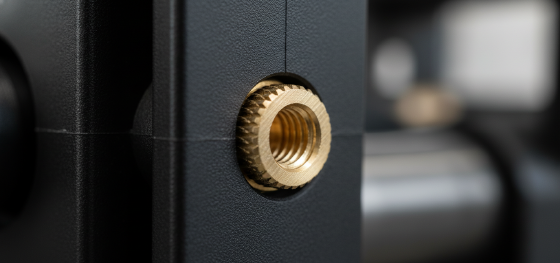
Maintenance accessibility is a non-negotiable requirement for robotics hardware. Cobots and AGVs are frequently disassembled for motor repairs or sensor upgrades, meaning a simple self-tapping screw is a liability that will eventually strip the plastic threads. Professional injection molded robot parts mandate the use of in-mold brass threaded inserts. Jucheng Precision utilizes high-precision "Positive Location" pins to hold these metal anchors in place during the high-pressure injection cycle. This creates a monolithic metal-to-plastic interface that provides 300% more torque-out resistance than secondary heat staking. We turn a fragile plastic hole into an industrial-grade mounting point that can survive hundreds of service cycles. By integrating these inserts during the overmolding vs insert molding phase, we deliver assembly-ready frames that possess the mechanical spine needed for high-tension cable routing and heavy-duty battery mounting.
JUCHENG Protocol: Rapid Tooling for High-Velocity Startups
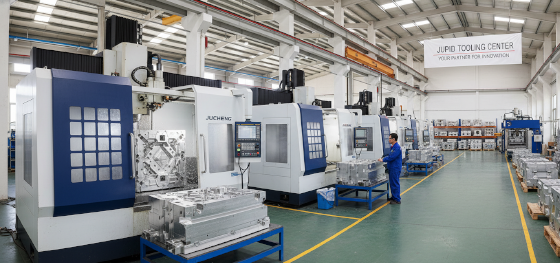
Manufacturing excellence at Jucheng Precision is built on the foundation of iterative agility. We recognize that robotics hardware evolves faster than traditional steel molds can follow. Our "Rapid Tooling" strategy is designed for the robotics startup cadence—delivering 500 sets of production-grade parts in just two to three weeks. We utilize Aluminum 7075-T6 molds to slash your lead times by 70%, allowing your engineering team to iterate on drivetrain geometries and sensor mounts with the speed of software. We provide the full material lot traceability and CMM inspection reports required for clinical and industrial safety certification. Stop being "Procurement Ransom" to shops that treat low volume like a distraction. Leverage our decade of Injection molding materials mastery to validate rapidly, launch early, and scale profitably. Contact our technical team today for a free DFM review and see how we can turn your autonomous vision into an indestructible physical reality.

