


3D printing has transformed from a niche hobby into a cornerstone of modern manufacturing, enabling rapid prototyping, custom part production, and innovative design solutions. Among the various technologies available, Fused Deposition Modeling (FDM) remains one of the most accessible and widely adopted methods due to its affordability and versatility. Recently, the industry has seen significant strides in enhancing FDM systems to support multicolor outputs and larger build volumes, catering to diverse applications from education to industrial manufacturing. This article delves into the evolution of multicolor 3D printers, large multi-color FDM setups, and the materials driving these innovations, providing a comprehensive overview of how these advancements are reshaping the landscape of additive manufacturing.
content:
What is 3D Printing?
How Do 3D Printers Use Different Colors?
Printing Big and Colorful!
What Are These Prints Made Of?
Why is This So Awesome?
What is 3D Printing?
Imagine you have a glue gun that can squirt out hot, melted plastic. Now, imagine that glue gun is attached to a robot arm that moves very precisely, drawing a picture layer by layer until a solid object pops up. That's basically what 3D printing is! One of the most popular and affordable types is called FDM 3D printing. These machines, called FDM printers, are like super-smart hot glue guns that build things from the bottom up using a string of plastic, known as FDM material. It's a fun way to create almost anything you can dream up on your computer.
How Do 3D Printers Use Different Colors?
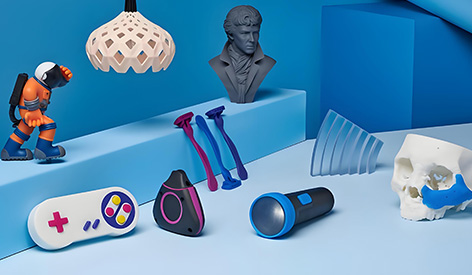
Now, let's make things more colorful! A standard 3D printer usually uses just one color of plastic. But a multicolor 3d printer is much more exciting. Think of it like having a box of many different colored crayons instead of just one.
These special machines, often called a multi filament 3d printer or a multi color 3d printer, can use several different colored strings of plastic at once. They have a clever way of switching between colors while they print. So, you can print a model of a rainbow, a superhero with a detailed costume, or a map where each country is a different color—all in one go! It makes the finished object look amazing and realistic without needing to paint it afterward.
Printing Big and Colorful!
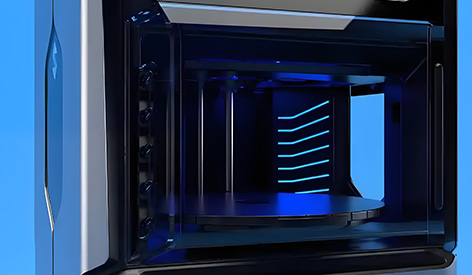
What if you want to print something really big, like a full-sized helmet or a large toy castle? That's where a large multi color 3d printer comes in. This is a giant version of the colorful printer we just talked about. A large multicolor 3d printer has a huge building area, like a big baking oven, so it can create large objects all in one piece.
Combining big size with multiple colors is a superpower for FDM 3d printing. Instead of printing a big robot in many small, boring gray pieces that you have to glue and paint later, you can print it as one giant, colorful object. This saves a lot of time and work. Engineers and artists love these big machines because they can bring their biggest and brightest ideas to life.

What Are These Prints Made Of?
The "ink" for these printers is the FDM material, which is just a fancy name for the plastic string that gets melted inside the printer. This isn't just any plastic—it's special stuff made to melt nicely and become strong when it cools. The most common type is called PLA, which is made from plants like corn and is easy to use and safe. There are other types too, some that are bendy, some that are super tough, and some that can even handle hot water. Picking the right material is like choosing the right paper for an art project; it helps make sure your creation turns out perfect.
Why is This So Awesome?
So, why does all this matter? Because it lets people create incredible things easily!
In schools, a multicolor 3d printer can help students learn by printing colorful dinosaurs for history class or planets for a science project.
At home, you could design and print your own multi-colored toys.
For grown-up jobs, a large multi color 3d printer can make special parts for machines, custom tools, or even large models of new buildings.
In summary, the progression from standard FDM to advanced multicolor and large-format systems represents a significant leap in additive manufacturing. By leveraging innovations in FDM printers and materials, users can achieve stunning, detailed outputs that were once impractical. As the industry continues to evolve, these technologies will likely become more integrated into everyday workflows, offering endless creative and practical opportunities. Whether for prototyping, art, or industrial use, the future of 3D printing is bright—and colorful.

