


In CNC Machining, the quality of a part is often judged by the precision of its holes. Whether dealing with standardized Metric Drill Bits or specialized letter-size tools like the F-Drill Bit, achieving high-quality holes requires more than just selecting the right size; it demands a deep technical understanding of tooling, machining strategy, and material science.
For B2B buyers in critical sectors, hole precision impacts assembly, fluid dynamics, and part integrity. This guide provides technical insights into the core strategies Jucheng Precision Technology employs—from selecting the correct drill geometry to optimizing process parameters—to guarantee your parts meet the tightest tolerance standards.
Tooling Standards: Metric, Imperial, and Letter Drill Bit Sizes
Achieving Hole Quality: Circularity, Finish, and Straightness
Machining Strategy: Pecking, Reaming, and Rigid Tapping
Material Factors: Tool Geometry for Plastics vs. Metals
Tooling Standards: Metric, Imperial, and Letter Drill Bit Sizes
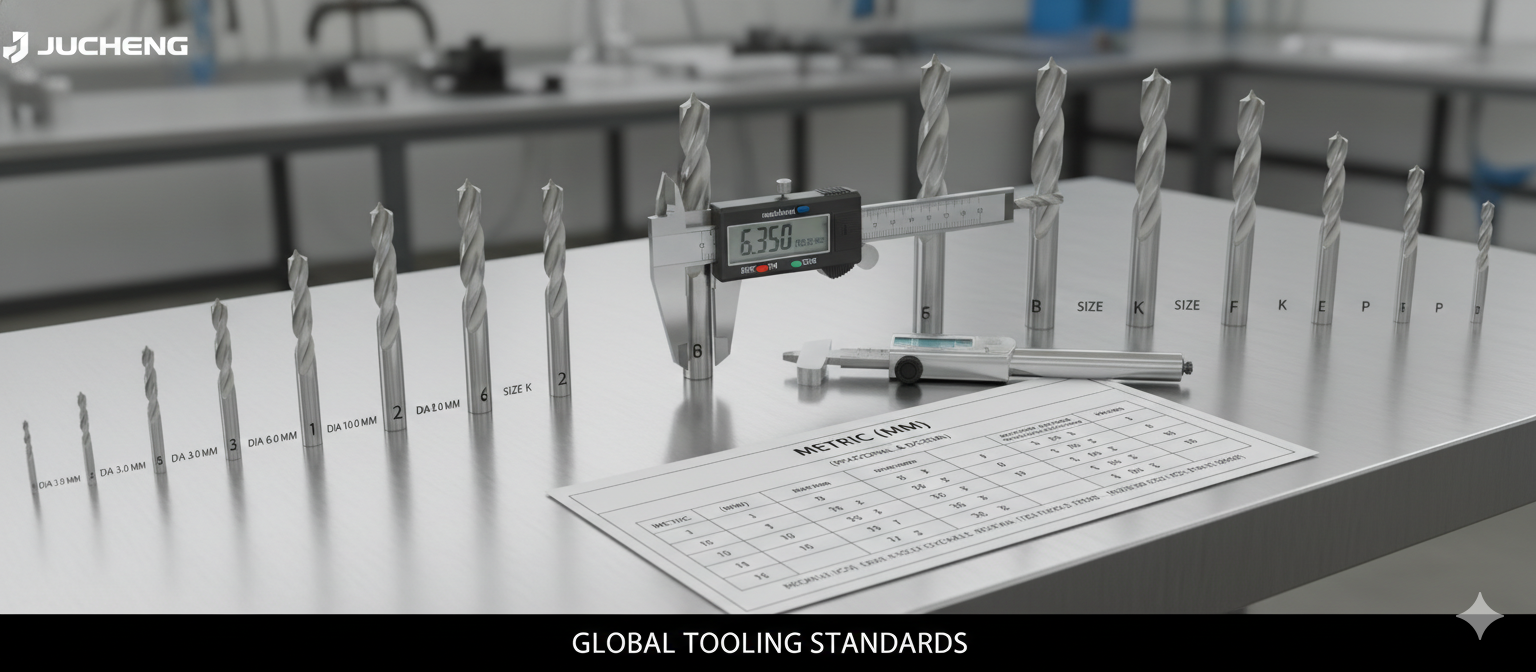
Selecting the correct drill bit standard is the first step in Precision Drilling, especially when transitioning between international designs. Errors here directly impact the final fit and function:
Metric vs. Imperial: Metric sizes are universal, while Imperial (fractional inch) and letter sizes (like the F-Drill Bit) are common in North American engineering prints. A high-quality CNC shop must stock and manage both tool libraries precisely.
Drill Tip Geometry: Different materials require specific tip angles and coatings. For hard materials, a specialized coating and flatter tip angle are necessary to manage heat and wear.
Achieving Hole Quality: Circularity, Finish, and Straightness
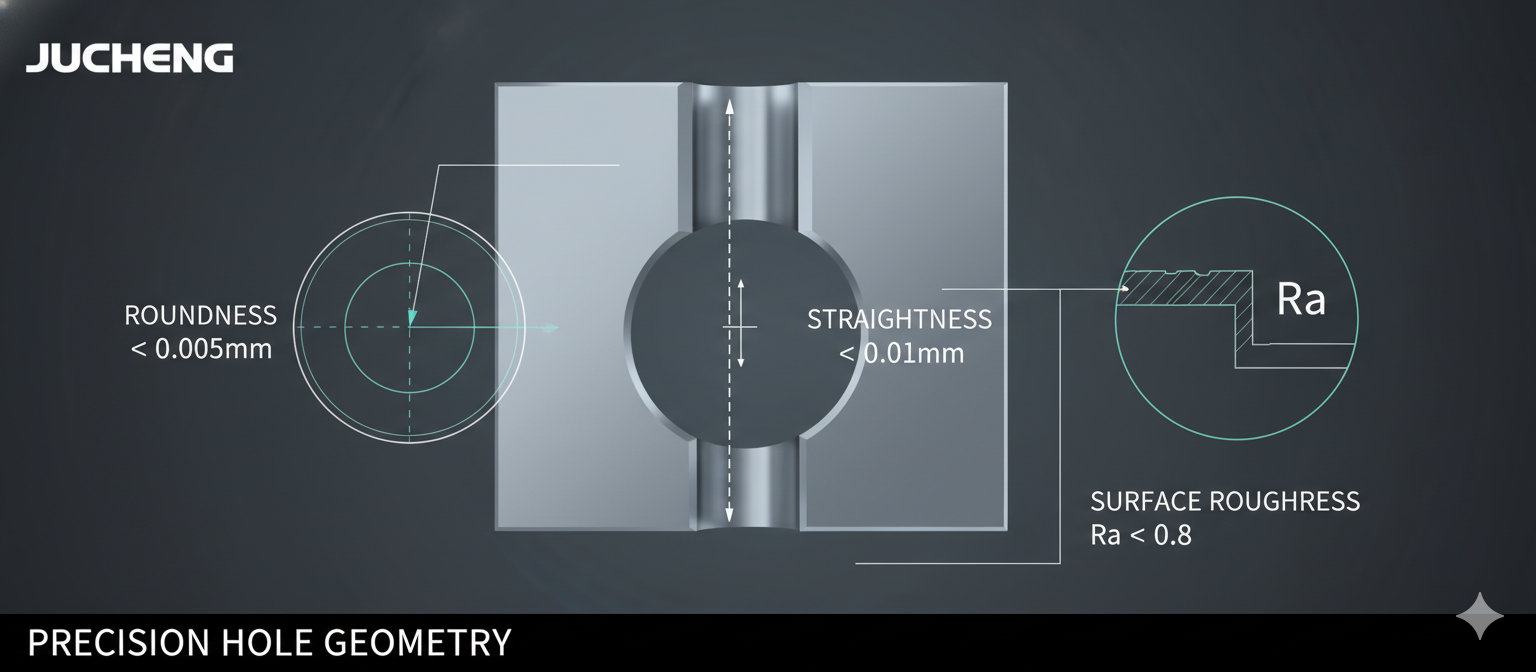
Hole quality is defined by three key geometric factors beyond just the diameter. In high-precision applications, defects in any of these areas can render a critical part unusable:
Circularity (Roundness): The hole must be perfectly round, without the lobing effect caused by vibration or poor tool runout. Checked by advanced metrology equipment like CMM.
Surface Finish (Roughness): The inner wall of the hole must be smooth (low Ra value), especially for fluid dynamics or sealing applications (O-rings).
Straightness (True Position): The hole must be perfectly straight and centered according to the print. Deep holes are prone to 'wandering,' requiring pecking and reduced feed rates to control.
Machining Strategy: Pecking, Reaming, and Rigid Tapping
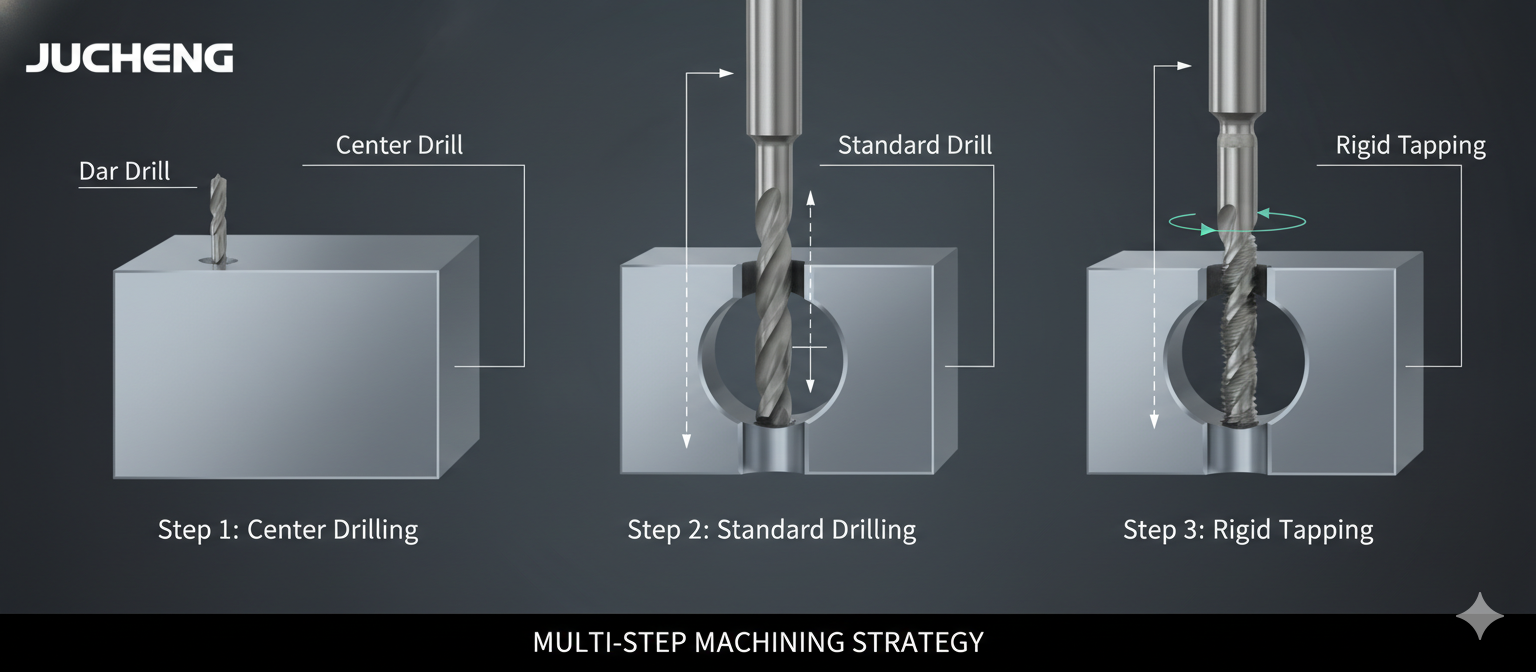
Achieving the tightest tolerances often requires a multi-step machining strategy, utilizing different tools and cycles:
Center Drilling: A crucial first step using a short, stiff tool to create a perfectly positioned start point, preventing the main drill from deflecting upon entry.
Reaming: For holes requiring the highest precision (e.g., H7 tolerance), drilling is followed by reaming—a slow, fine cutting pass that removes minimal material to achieve the final, exact diameter and superior surface finish.
Rigid Tapping: For threaded holes, rigid tapping is essential. This synchronized process of tool rotation and feed ensures the threads are cut accurately and consistently, crucial for high-reliability assemblies.
Material Factors: Tool Geometry for Plastics vs. Metals

The material being drilled dictates the required cutting parameters and drill geometry:
Drilling Metals: Requires high-pressure coolant to manage heat, which is the primary cause of tool wear and material hardening. Lower helix angles are often used for greater strength.
Drilling Plastics (e.g., Acrylic, Nylon): Requires sharp, highly polished tools and specific geometries to prevent melting (due to friction) or chipping (due to brittleness). Cooling is critical, but coolant may not be used to avoid chemical damage to the plastic.
Precision Drilling is more than simply pushing a drill bit. It is an advanced CNC Machining strategy that combines the correct tool standards (Metric, Imperial, Letter), multi-step processes, and material-specific control. Jucheng Precision Technology’s certified expertise ensures your high-tolerance holes are always accurate and structurally sound.
Secure ultimate hole quality for your critical components. Contact us today to discuss your precision drilling and CNC machining needs.

