


Engineering high-security entrances, cleanroom barriers, or fire-rated security barriers for industrial facilities requires extreme physical durability. Executing robust sheet metal door design ensures that your heavy-duty steel panels can withstand immense force, prevent unauthorized access, and resist thermal deformation during fire emergencies, while maintaining maximum torsional rigidity under continuous cyclic stress. For architectural and facility engineers, this structural barrier is the key to delivering safe, compliant, and long-lasting security gates.

Suffer from industrial doors that sag on their hinges, twist out of alignment, or fail local fire resistance ratings? When thick metal frames are designed without pre-calculating the internal stiffener spacing, lock plate reinforcements, or raw forming limits, it leads to rapid structural warping and high maintenance costs. Proactively integrating exact internal bracing, precise cutouts for locking hardware, and high-penetration structural welds is the best way to secure your facility safety.
Let's examine how internal core structures maximize security and fire block ratings, explore the precision cutting required for hinges and locks, and review the high-tonnage bending and welding capabilities needed to process thick steel sheets.
content:
Core Structures for Security and Fire Resistance
Precision Cutting for Hinges and Locks
Thick Plate Bending and Welding Capabilities
Custom Industrial Door Fabrication at JUCHENG
FAQ: Critical Questions About Sheet Metal Door Design
Core Structures for Security and Fire Resistance

How do you design a hollow metal door to achieve high security and fire-resistance ratings?
We reinforce the hollow interior with a dense grid of vertical steel channels welded to both skins, filling the voids with high-density mineral wool insulation.
The primary purpose of running a hollow metal door assembly is to optimize the strength-to-weight ratio. The standard structure comprises two outer sheet skins welded to an internal support core. The main mechanism behind this strength is a grid of vertical stiffener channels. These ribs prevent the thin outer skins from flexing under impact, resisting severe mechanical attacks.
The Unmatched Corrosion Resistance of Stainless Steel
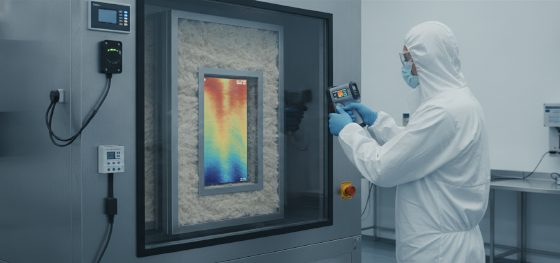
For fire-rated applications, the interior cavity is filled with high-density mineral wool or ceramic fiber insulation. This non-combustible core blocks thermal transfer, preventing the unexposed surface of the door from heating up during a fire. This physical insulation is essential to meeting strict building safety standards and keeping exit paths safe.
Precision Cutting for Hinges and Locks

Why is precise laser cutting critical for door locksets and hinge mounts?
Even a 0.5mm misalignment can cause lock latches to bind or door hinges to squeak, requiring high-precision CNC cutting to ensure perfect component alignment.
Analyzing galvanized vs stainless steel sheet metal in real-world weathering environments reveals distinct degradation curves. When implementing sheet metal door design configurations, cutting precise openings for complex locks and heavy hinges is critical to preventing alignment sag. If your hinge pockets are cut out of tolerance by even 0.5mm, the door will bind or fail to latch smoothly, requiring extensive manual correction on the line. We utilize advanced fiber laser cutting systems to slice precise hinge pockets and lock cylinder holes with extreme repeatability, ensuring a perfect fit.
Furthermore, mounting heavy industrial locks and automatic closers requires local structure reinforcement. We weld thick steel reinforcement plates (typically 3.0mm to 5.0mm thick) inside the lock and hinge zones. This localized reinforcement prevents the thin door skins from flexing or tearing under continuous door-slamming forces, securing long-term mechanical reliability.
Thick Plate Bending and Welding Capabilities
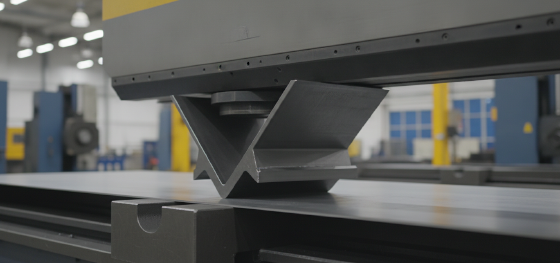
What machinery and fabrication capabilities are required to form heavy security doors?
Forming deep door frames demands high-tonnage CNC press brakes to fold thick plates cleanly, and certified MIG/TIG welding setups to assemble the multi-panel structure.
The outer frame of an industrial door (the jamb) must be exceptionally rigid to support the weight of the heavy steel panel. We fabricate these deep frames from thick carbon steel or galvanized sheets, requiring high-tonnage press brakes to execute deep multi-stage folds. Our programmers calculate the exact bend allowances to ensure the door sits perfectly flush in the frame.
Once the panels are formed, we execute heavy-duty MIG welding to assemble the structural shell. Our certified welders place continuous, full-penetration weld beads along the corners and internal stiffener channels, ensuring a solid, unified structure that resists twisting. Every weld joint is ground flat and polished to ensure a clean, seamless surface before powder coating.
Custom Industrial Door Fabrication at JUCHENG

How does JUCHENG deliver high-durability, certified industrial security doors?
We operate heavy CNC laser cutters, high-tonnage benders, and automated powder coating lines managed by certified operators, checking all alignments before assembly.
Integrating these internal stiffener grids, lock cutouts, and high-tonnage welded seams into your early sheet metal design cycle is the single most effective way to eliminate production defects. JUCHENG integrates these advanced geometric and material validations into our digital manufacturing network, ensuring that your CAD files translate into fully finished, durable structural panels with extreme dimensional precision.
We process a wide range of raw sheets, including high-strength galvanized steel, heavy carbon steel, and custom alloys. Our technical department provides a 24-hour free DFM analysis to check your CAD models, checking tolerances and load-bearing parameters before production. Supported by our no MOQ policy and rapid delivery guarantee, we manage your project from initial flat pattern cutting to final, high-durability powder coating and assembly.
FAQ: Critical Questions About Sheet Metal Door Design
What is a hinge pocket, and how is it reinforced in a hollow metal door?
A hinge pocket is a recessed cutout on the edge of the door panel where the hinge plate sits flush with the surface. To support the door's weight, we weld a thick steel reinforcement plate directly behind this pocket. This prevents the hinge from bending the outer door skin, eliminating sag and ensuring a smooth swing.
Why is galvanized steel preferred over standard mild steel for outdoor doors?
Outdoor industrial doors are exposed to continuous moisture and rain, which causes standard mild steel to rust rapidly. Utilizing pre-galvanized steel sheets ensures that the entire steel panel, including the hidden internal stiffener channels, is protected by a sacrificial zinc layer, preventing rust from forming from the inside out.
How does JUCHENG prevent welding distortion on large, flat door skins?
Welding internal channels directly to a thin outer skin can easily cause heat warping, leaving permanent waves on the door surface. To prevent this, we utilize advanced resistance spot welding with precise force controls or deploy low-heat laser welding. This keeps the outer surface flat and pristine, ready for immediate powder coating.
How does JUCHENG support custom sheet metal door design projects?
Our technical department reviews your CAD designs during our complimentary DFM stage. If your door design features skins that are too thin to support heavy locks, or stiffeners with inadequate spacing to pass local fire ratings, we suggest clear modifications like increasing the steel gauge, adding reinforcement plates, or optimizing weld depths, delivering safe and highly durable security solutions.

