


Stepping into a modern commercial jet or a private Gulfstream reveals a relentless engineering battle: every kilogram of interior hardware is a direct penalty on fuel range and payload capacity. In the sophisticated landscape of Reaction Injection Molding Application Industries, the cabin environment represents the ultimate test of material performance and regulatory safety. Traditional manufacturing methods, such as hand-laid fiberglass or heavy injection-molded thermoplastics, often struggle to balance the need for organic ergonomic shapes with the unyielding fire safety standards required for flight. Mastering the deployment of RIM for Aerospace & Aviation Interiors is the essential strategy for OEMs who need to reduce part mass while ensuring that every seat-back, tray table, and side-wall panel meets the most stringent certification tiers.

Mechanical integrity in the aviation sector is governed by the SWaP Objective (Size, Weight, and Power). When I evaluate a cabin design, the goal is always to consolidate multiple small metal brackets into a single, high-strength structural polymer panel. Jucheng Precision addresses these lightweighting hurdles by utilizing high-pressure machine-injected polyurethanes that offer the stiffness of aluminum but at a fraction of the weight. Jucheng Precision utilize a fleet of 150+ CNC machines and 25 5-axis Haas/Mazak units to manufacture the oversized aluminum tools required to produce these complex geometries. By delivering hardware that survives the unrelenting vibrations of flight, Jucheng Precision provides the unyielding foundations that the global aerospace supply chain demands from its Shenzhen factory hub.
Operating under a dual mandate of ISO 9001 and ISO 14001, Jucheng Precision acts as the high-tier material engineering partner for aviation innovators. Jucheng Precision delivers a free DFM analysis in 24 hours to ensure your interior CAD models are optimized for FST Compliance (Flame, Smoke, and Toxicity), preventing the expensive redesign cycles that stall aircraft certification. This guide explores the essential weight-saving logic, the physics of fire-safe chemistry, and the ergonomic integration required for mastering RIM for Aerospace & Aviation Interiors to ensure your innovation secures its place in the sky.
content:
The SWaP Objective: How RIM Slashes Cabin Weight?
FST Compliance: Meeting FAA and EASA Fire Safety Standards
Technical Data: Comparing Density and Flame Retardancy in Polymers
Cabin Ergonomics: Molding in Leather Textures and Soft Grips
JUCHENG Hub: Delivering Certified Flight Hardware from Shenzhen
FAQ: Real Answers for Lead Times, Sizing, and Certification
The SWaP Objective: How RIM Slashes Cabin Weight?

Achieving a 30% weight reduction in a seat-back assembly or a galley enclosure is the primary driver for utilizing RIM for Aerospace & Aviation Interiors. In the aviation world, every gram saved translates directly into thousands of dollars in fuel savings over the aircraft's lifecycle. Traditional thermoplastic injection molding often requires uniform wall thicknesses to prevent sink marks, resulting in parts that are thicker and heavier than necessary. The reaction injection molding process allows for variable wall thickness limits (3mm-15mm). This means Jucheng Precision can mold a part with a thin 2.5mm aesthetic skin and 10mm thick structural reinforcement ribs exactly where the stress analysis demands it, providing the unyielding stiffness of a heavy part at a fraction of the mass.
Can RIM parts replace heavy metallic seat frames?
Yes. By utilizing Reinforced Polyurethane RIM (RRIM) with milled glass fibers, Jucheng Precision creates structural panels that offer the specific stiffness of aluminum while significantly reducing the aircraft's take-off weight.
Integral skin technology is the secondary weight-saving tool for cabin designers. For armrests and tray table edges, the traditional method involves gluing a soft foam to a plastic substrate and then hand-wrapping it in vinyl. This multi-step process is not only heavy but prone to peeling. Jucheng Precision utilize integral skin polyurethane foam to create these parts in a single shot. The result is a part with a dense, tear-resistant outer skin and a soft micro-porous core. This "Monolithic Bionic" design eliminates the weight of adhesives and secondary skins, providing a durable, hygienic surface that survives thousands of flight hours in the [2026] market.
Internal damping is the third benefit of the foamed core. Aircraft cabins are loud environments where engine drone and air friction create constant low-frequency noise. RIM for Aerospace & Aviation Interiors components act as natural acoustic damping barriers. The micro-bubbles within the polyurethane core break up sound waves, preventing the "Rattle" and vibration common in thin-walled plastic interiors. This enhances the passenger experience, creating a quieter, more premium environment. Jucheng Precision’s Shenzhen facility manages these density targets with +/- 2% precision, ensuring that your fleet of interior hardware meets both weight and acoustic comfort requirements.
FST Compliance: Meeting FAA and EASA Fire Safety Standards
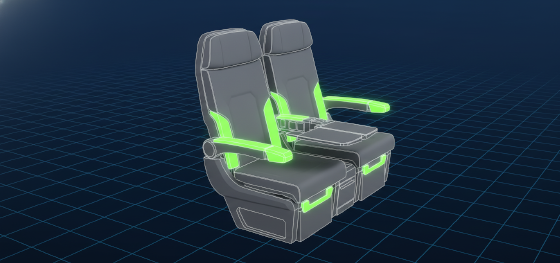
Protecting passengers from fire and toxic fumes is the most rigid requirement for any airborne hardware. In the application of RIM for Aerospace & Aviation Interiors, achieving FST Compliance is a legal mandate. Standard industrial polyurethanes are naturally flammable, but Jucheng Precision utilize specialized polyether systems that are engineered for self-extinguishing performance. Our Flame Retardant Polyurethane RIM formulations meet the FAR 25.853 standards, ensuring the material stops burning within seconds and, more importantly, releases minimal smoke and zero toxic halogens. This level of chemical engineering ensures your hardware survives the most aggressive safety audits.
What is the difference between V-0 and Aviation FST?
While V-0 focuses on self-extinguishing, FST also measures the optical density of smoke and the toxicity of the off-gas to ensure passenger survivability during an emergency.
Molecular cross-linking provides a silent safety advantage over thermoplastics. When a traditional plastic part like an ABS air-duct is exposed to high heat, it melts and creates "Flaming Drips," which spread the fire. Jucheng Precision’s thermoset RIM parts utilize a 3D molecular lattice that does not have a melting point. Under extreme heat, the material undergoes pyrolysis—turning into a stable carbon char that actually insulates the core of the part and prevents further fire propagation. This "Char-Shield" behavior is why RIM is often preferred for high-voltage electronic enclosures within the aircraft galley and cockpit areas.
| Safety Metric | Standard RIM PU | JUCHENG Aerospace Grade | Regulatory Standard |
|---|---|---|---|
| Vertical Burn Time | > 60 Seconds | Less than 10 Seconds | FAR 25.853 (a) |
| Smoke Density (Ds) | High | Low (Halogen-Free) | FAR 25.853 (d) |
| Drip Characteristic | High (Melt flow) | Zero (Char forming) | Passenger Safety |
| Toxicity (PPM) | Moderate | Ultra-Low | ABD0031 / BSS 7239 |
This data illustrates the jump in technical complexity required for flight hardware. Jucheng Precision’s quality lab in Shenzhen performs 100% material lot tracking, ensuring that every batch of aviation-grade resin matches the certified Master File. We understand that in the aerospace sector, material purity is not just a quality goal; it is a life-safety requirement. By delivering hardware with full metallurgical and chemical traceability, Jucheng Precision helps global aircraft manufacturers maintain their safety ratings while pushing the boundaries of cabin design and passenger comfort.
Technical Data: Comparing Density and Flame Retardancy in Polymers
Success in aerospace hardware optimization depends on matching the density to the structural mission. If your design assumes the weight of standard plastic but you need fire protection, your aircraft’s fuel efficiency will suffer. Jucheng Precision provides full material characterization reports to help your engineering team validate their FEA models. Traditional fire-rated plastics are often 20% heavier than their non-rated counterparts due to heavy mineral fillers. Jucheng Precision’s liquid-additive technology allows for V-0 fire safety with near-zero density increase. This "Lean Chemistry" is the primary reason why RIM remains the preferred choice for medical device prototyping and aviation interiors where every gram counts.
Structural rigidity over large spans is the second mechanical win. Cockpit side-consoles and galley partitions must handle the torque of door hinges and mounting brackets. Jucheng Precision utilize Reinforced Polyurethane RIM (RRIM) with carbon or glass fibers to achieve a flexural modulus that rivals sheet-metal. This composite strength ensures that your interior hardware maintains its fitment and "Zero-Rattle" performance during takeoff and turbulence. By delivering high-stiffness foundations, Jucheng Precision ensures your autonomous or manned innovation survives the most aggressive flight testing cycles in our Shenzhen hub.
Dimensional stability after aging is the final pillar of aviation material logic. Aircraft are expected to remain in service for 20 years. The cross-linked matrix of RIM parts ensures they do not experience the long-term dimensional creep common in thermoplastics. Jucheng Precision’s hardware maintains its exact CAD dimensions throughout thousands of cabin pressurization cycles and temperature swings. This stability ensures that the high-precision interfaces between seat electronics and the molded shell remain aligned, preventing the mechanical binding that ruins the passenger experience. We provide the material intelligence required to ensure your flight-ready hardware is unyielding over its entire lifecycle.
Cabin Ergonomics: Molding in Leather Textures and Soft Grips

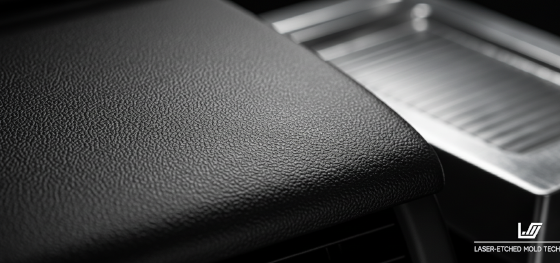
Visual and tactile identity define the "Premium feel" of a flight cabin. In RIM for Aerospace & Aviation Interiors, the part takes on the exact texture of the tool. Jucheng Precision leverages its 150+ CNC machines capacity to machine high-fidelity textures directly into our aluminum mold cavities. We can simulate the organic grain of fine leather, the non-slip grit of a galley floor, or the smooth satin finish of a modern cockpit. This eliminates the need for expensive secondary vinyl wrapping or hand-painting, providing a "Finished-in-the-Mold" component that saves up to 40% in secondary labor costs and weight. This integrated aesthetic ensures your hardware looks showroom-ready from day one.
How to achieve a multi-texture cabin interior?
Jucheng Precision utilize 5-axis CNC laser texturing to apply multiple grain patterns to different zones of the same oversized mold, creating integrated "High-Grip" and "Soft-Touch" zones for passenger interaction.
Chemical resistance is another silent advantage of the RIM process. Cabin interiors are subjected to aggressive cleaning with aviation-grade disinfectants and solvent-based wipe-downs. Standard painted parts or wrapped panels often bubble or peel under this chemical assault. Because Jucheng’s RIM parts are color-through—with pigments mixed directly into the resin—there is no surface layer to lift. Our thermoset polyurethanes are chemically inert to most clinical and industrial cleaners, ensuring your interior hardware maintains its pristine look throughout years of high-volume usage. This durability is why our industrial robot parts are trusted by the world's most demanding transit OEMs.
Integrated hardware registration features are the final design details that maximize ROI. Jucheng Precision machines "Locating Bosses" and recessed sensor seats directly into the structural shell. By holding +/- 0.05mm tolerances on these features using our 25 5-axis Haas/Mazak units, we ensure that your cabin electronics and sensors bolt on perfectly with zero manual shimming. This "Self-Aligning" hardware approach is essential for high-velocity Beta trials and multi-site assembly, providing a stable platform for your next-generation prototype robot or aviation system. We deliver the unyielding foundations that keep your innovation moving through the high-stakes cycles of the aerospace market.
JUCHENG Hub: Delivering Certified Flight Hardware from Shenzhen
Dominating the large-format hardware market requires a partner that doesn't just mold plastic, but understands the economics of flight safety. Jucheng Precision operates with a 24/7 manufacturing mindset in our Shenzhen precision manufacturing hub, delivering high-tolerance RIM components and structural industrial robot parts with industry-leading speed. Jucheng Precision provides the bridge to production that ensures your innovations move from CAD to certified flight-test with 100% metallurgical confidence. Jucheng Precision provides 4-day rapid delivery for initial functional iterations, allowing your team to perform early FST and impact testing before committing to high-volume tools.
Integrating your structural design with Jucheng Precision’s expertise ensures that your RIM for Aerospace & Aviation Interiors decision is based on performance data, not guesswork. Jucheng Precision offer comprehensive DFM reviews within 24 hours, identifying potential weight-saving opportunities or thermal-expansion risks in your cabin design before they become field failures. Whether you are building a fleet of private jet seat-backs or a high-density commercial galley system, Jucheng Precision provides the rigid, precise, and *fire-safe* foundations that keep your innovation moving through the high-stakes cycles and the years of hard labor.
Our facility is equipped with dedicated high-pressure RIM assembly cells and dedicated ISO 13485 and ISO 14001 quality labs, allowing Jucheng Precision to manage the entire hardware lifecycle in one location. Jucheng Precision manage the complexity of multi-material bonding and automotive-grade finishing so your engineering team can focus on the interior aesthetics and the passenger experience. By combining Shenzhen's speed with industrial-grade material verification and global quality standards, Jucheng Precision remains the preferred partner for the world's most aggressive aerospace hardware challenges. Contact the Shenzhen hub today to start your next project.
FAQ: Real Answers for Lead Times, Sizing, and Certification
What is the maximum part size for an aerospace RIM enclosure?
We regularly produce structural side-wall panels and seat-back shells up to 2,000mm in length with consistent FST properties.
Does Jucheng Precision provide the flammability test reports?
Yes. We provide material batch logs and certificates of analysis (COA) to support your FAR 25.853 certification data.
Can I get a set of 10 interior parts for a private jet prototype?
Yes. We have No MOQ, allowing you to source small batches for luxury private aviation or R&D flight trials.
How do you handle the mounting of metal hinges in aviation plastic?
We specialize in the encapsulation with Polyurethane RIM of threaded steel or titanium inserts for unyielding connection strength.
What is the typical lead time for an aviation-grade aluminum RIM tool?
Custom rapid tools and initial T1 flight samples are typically delivered in 18 to 22 business days.
Tooling debt and material safety failures are absolute innovation killers for aerospace systems. Partnering with Jucheng Precision ensures that your functional iterations are built with the unyielding polyurethane reaction injection molding and specialized RIM for Aerospace & Aviation Interiors knowledge the industry demands. Reach out to our Shenzhen manufacturing hub today for a complete DFM review and build the unyielding foundation your autonomous fleet requires.

