


Struggling with the restrictive "Uniform Wall" rules of traditional injection molding often leads to over-engineered, heavy assemblies in the medical device prototyping and robotics sectors. When a single large-scale enclosure requires both a thin aesthetic skin and a thick structural backbone, the physics of high-pressure melts often result in ugly sink marks and internal voids. The reaction injection molding process offers a sophisticated departure from these constraints. Mastering the technical nuances of RIM molding wall thickness guidelines allows engineers to utilize variable wall thickness freedom to consolidate multiple parts into a single monolithic shell. In the current market, this capability is the primary driver for achieving retail-ready aesthetics and structural unyieldingness in 2-meter tall diagnostic consoles and heavy-duty autonomous fenders.
Precision in large-format hardware is not achieved by following old rules, but by leveraging the low-pressure liquid chemistry of polyurethane. Because the material expands chemically within the mold rather than being forced in by hydraulic hammers, the Anti-Sink properties of the process are unrivaled. Jucheng Precision addresses these complex Design for Manufacturing (DFM) challenges by providing a free DFM analysis in 24 hours for every CAD upload. We utilize our fleet of 150+ CNC machines and 25 5-axis Haas/Mazak units to manufacture the aluminum tools that turn these radical thickness variations into physical reality in our Shenzhen factory hub.
Operating under the unyielding quality standards of ISO 13485, ISO 14001, and IATF 16949, Jucheng Precision serves as the technical engine for global hardware OEMs. JUCHENG transforms raw liquid chemistry into validated structural components with 4-day rapid delivery for initial functional iterations. This guide explores the essential RIM molding design guidelines, the physics of transition ramps, and the weight-reduction strategies required for manufacturing hardware that survives the scrutiny of clinical trials and the harsh reality of the industrial field.
content:
Variable Wall Thickness: Why Uniformity is Optional in RIM?
Nominal Standards: Sizing the Foundation for Large Enclosures
Technical Data: Comparing Wall Limits and Transition Ratios
Ramp Logic: How to Manage Transitions from 3mm to 15mm?
JUCHENG Hub: Optimizing Your CAD in the Shenzhen Shop
FAQ: Real Answers for Sink Marks and Wall Flexibility
Variable Wall Thickness: Why Uniformity is Optional in RIM?
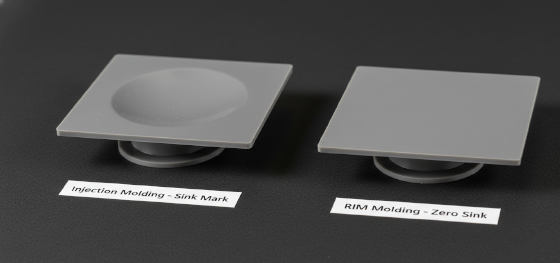
Breaking the uniform wall thickness rule is the single greatest competitive advantage of RIM molding wall thickness guidelines. In traditional injection molding, any rib or boss that exceeds 60% of the nominal wall thickness will cause a visible sink mark on the exterior surface. This forces designers to use "hollowed-out" or "cored" designs that often lack the structural rigidity required for a prototype robot chassis. In the RIM process, the low-pressure chemical expansion ensures that even a 20mm thick structural block can be molded against a 4mm aesthetic wall with zero surface depression. This allows JUCHENG to deliver parts that look like sleek consumer products but behave like heavy industrial components.
Can RIM parts have solid sections up to 25mm thick?
Yes. By managing the exothermic heat within our temperature-controlled aluminum tools, JUCHENG can produce solid cross-sections that provide immense strength for mounting hinges and high-torque actuators.
Structural consolidation is the secondary benefit of this thickness freedom. Instead of designing a separate aluminum internal frame and a plastic external cover, engineers can integrate the mounting hard-points directly into the RIM part's thicker sections. Jucheng Precision performs No MOQ production of these consolidated parts, allowing you to validate your "Integrated Skeleton" design with 10 units for Beta testing. This approach reduces your total part count, simplifies your assembly labor, and eliminates the rattling noises associated with multi-material bolted assemblies in autonomous delivery vehicles.
Internal stress management is also improved by ignoring the uniformity rule. In high-pressure molding, trying to force plastic into varying thicknesses creates high-stress "Frozen-In" zones that lead to warpage months after the part is molded. Because JUCHENG’s RIM parts cure in a relaxed state at low pressure, they are essentially stress-free regardless of the thickness shifts. This ensures that the door seals and sensor windows of your medical console remain perfectly aligned through thousands of clinical cycles, providing the long-term reliability required for the [2026] healthcare sector.
Nominal Standards: Sizing the Foundation for Large Enclosures
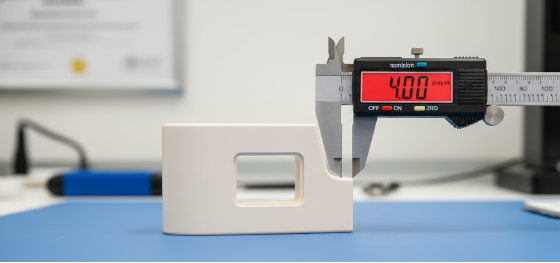
Establishing a stable nominal wall is the first step in successful RIM molding wall thickness guidelines. For oversized robotic shells and diagnostic equipment, JUCHENG recommends a nominal thickness range of 4mm to 6mm. While 3mm is possible for smaller handheld components, larger spans require the extra "Meat" to prevent the panels from feeling flimsy or sounding hollow. A thicker nominal wall also provides more space for internal reinforcement ribs, ensuring that a 1.5-meter long diagnostic console can support the weight of heavy displays and user interfaces without any sagging or "Oil-Canning" effects.
What is the minimum wall thickness for an IP67 enclosure?
JUCHENG recommends a minimum of 3.5mm for any wall containing a gasket groove to ensure enough material remains after CNC-finishing the seal interface.
Density management through structural foam is a hallmark of JUCHENG’s engineering approach. For the most demanding lightweighting projects, we utilize a "Sandwich Construction" where the part has a dense solid skin and a micro-porous foam core. This allows us to increase the nominal wall to 10mm for extreme bending stiffness while keeping the overall part weight lower than a 4mm solid plastic shell. This technique is a core competency of our Polyurethane Molding Services, helping our clients build robots that move faster and consume less power without compromising on the "Industrial-Duty" feel of their machine.
Surface roughness (Ra) is also influenced by the nominal wall. A thicker wall takes longer to cool, allowing the liquid resin more time to replicate the exact texture of the mold surface. JUCHENG utilize 5-axis CNC laser texturing to apply VDI 3400 standardized grains directly to our aluminum tools. By optimizing the nominal wall thickness, we ensure that every square centimeter of your robot's skin possesses a uniform matte finish that hides fingerprints and scuffs from the field. This level of aesthetic control is essential for maintaining a premium brand identity in the competitive [2026] hardware market.
Technical Data: Comparing Wall Limits and Transition Ratios
Success in hardware optimization depends on the numbers. If your design assumes the limits of injection molding, you are leaving performance on the table. Jucheng Precision provides full mechanical characterization reports to help your engineering team validate their material choices. The following table compares the essential performance metrics of RIM molding design guidelines against conventional high-pressure molding for a 1-meter robotic enclosure.
| Design Parameter | RIM (Polyurethane) | Conventional Injection | Engineering Driver |
|---|---|---|---|
| Max Wall Variation | 5:1 Ratio (Extreme) | 1.5:1 Ratio (Limited) | Integrated Structural Blocks |
| Nominal Range (mm) | 3.0 - 25.0+ | 2.0 - 4.5 | Bending Stiffness |
| Rib-to-Wall Ratio | Up to 100% | Max 60% | Anti-Sink Appearance |
| Transition Ramp | 3:1 (Gradual) | Near-Instant (Risky) | Laminar Flow Control |
The "5:1 Ratio" for wall variation is the standout feature of JUCHENG’s RIM process. It means you can have a 3mm wall for a cable access panel that transitions into a 15mm thick mounting flange for a heavy-duty motor. This level of Design Freedom eliminates the mechanical weak points associated with traditional plastic-to-metal bolted joints. By delivering isotropic strength through variable thickness, JUCHENG ensures your hardware survives the high-vibration environment of the modern warehouse or farm without the need for expensive secondary reinforcing plates.
Ramp Logic: How to Manage Transitions from 3mm to 15mm?
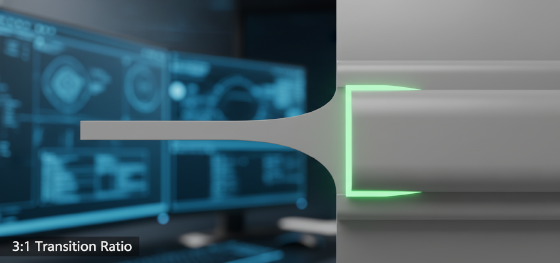
While RIM allows for massive thickness changes, managing the "Fluid Handshake" between these zones is essential for part purity. In RIM molding wall thickness guidelines, the 3:1 transition ramp is the industry's gold standard. If the resin flows from a thin area into a thick area too abruptly, it can create localized "Eddy Currents" that trap microscopic air bubbles. JUCHENG recommends designing smooth, sweeping fillets at every thickness shift. This ensures that the liquid front remains stable and laminar, resulting in a 100% solid polymer matrix that exceeds the ISO 13485 requirements for surgical-grade hardware reliability.
What happens if the transition is too sharp?
You may experience "Internal Porosity" in the thickest areas, which can lead to localized brittle failure under high-impact loads in the field.
Radii and fillets are the silent guardians of your robot’s life cycle. Sharp internal corners act as stress risers that concentrate dynamic loads, leading to premature fatigue cracks. JUCHENG’s RIM molding design guidelines prioritize a minimum internal radius of 1.5mm for all structural transitions. By distributing the load over a larger surface area, we ensure that your autonomous tractor hood or hospital scanner shell can absorb hammer-like hits without cracking. Our Shenzhen metrology lab utilizes 3D scanning to verify these radii on every T1 sample, providing the "Manufacturing Evidence" your engineering team needs for final hardware sign-off.
Gating placement must be coordinated with these ramps. JUCHENG typically places the injection gate at the thickest part of the design. This allows the resin to flow from "Thick to Thin," ensuring that the highest volume areas are filled under the highest pressure. This strategy minimizes the risk of "Cold Slugs" and ensures a uniform molecular cross-linking across the entire part. By integrating these gating strategies with our 5-axis aluminum tooling, JUCHENG delivers 2.5-meter long panels that possess a surface flatness within +/- 0.5mm, providing the unyielding foundation your autonomous fleet requires.
JUCHENG Hub: Optimizing Your CAD in the Shenzhen Shop
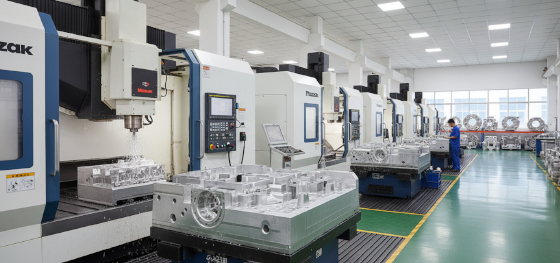
Dominating the large-format hardware market requires a partner that doesn't just mold plastic, but understands the chemistry of performance. Jucheng Precision operates with a 24/7 manufacturing mindset in our Shenzhen precision manufacturing hub, delivering high-tolerance RIM molding wall thickness guidelines results with industry-leading speed. we provide a "Bridge to Production" that allows you to move from a single functional Alpha unit to a commercial deployment of 5,000 Beta robots with consistent chemical and mechanical quality. we provide a free DFM analysis in 24 hours to ensure your design is optimized for the unyielding reality of the field.
Integrating your structural design with JUCHENG’s expertise ensures that your hardware survives the regulatory audit season and moves into mass adoption. JUCHENG offers comprehensive DFM reviews within 24 hours, identifying potential gas-trap zones or wall-thickness bottlenecks in your design before they become field failures. Whether you are building an autonomous medical assistant or a heavy-duty industrial mobile base, Jucheng Precision provides the rigid, precise, and chemically optimized foundations that keep your innovation moving through the high-speed cycles and the years of hard labor.
Our facility is equipped with dedicated high-pressure RIM assembly cells and dedicated quality labs, allowing JUCHENG to manage the entire hardware lifecycle in one location. we manage the complexity of multi-material bonding and automotive-grade finishing so your engineering team can focus on the motion control and the AI. By combining Shenzhen's speed with industrial-grade material verification and global quality standards, JUCHENG remains the preferred partner for the world's most aggressive hardware challenges. Contact us today to start your next 4-day rapid delivery project.
FAQ: Real Answers for Sink Marks and Wall Flexibility
What is the maximum wall thickness for a RIM structural part?
We regularly mold structural zones up to 25mm thick, provided they use gradual transitions to prevent heat buildup.
Does variable thickness increase the cycle time?
Slightly. Thicker parts take 2-4 minutes longer to cure, but they eliminate the need for secondary structural assembly.
Can JUCHENG achieve Class-A finishes on variable walls?
Yes. The Anti-Sink nature of RIM ensures a perfectly flat exterior even over 15mm thick mounting blocks.
Is a 1.5mm wall too thin for RIM?
For large parts, we recommend a minimum of 2.5mm to ensure proper resin flow across long distances.
How do you handle design changes mid-project?
Since we use aluminum molds, we can often weld and re-machine thickness changes in our CNC bay within 48 hours.
Tooling debt and surface sink marks are absolute innovation killers for high-end robotic systems. Partnering with Jucheng Precision ensures that your functional iterations are built with the unyielding polyurethane reaction injection molding and specialized RIM molding wall thickness guidelines knowledge the industry demands. Reach out to our Shenzhen manufacturing hub today for a complete DFM review and build the unyielding foundation your autonomous fleet requires.

