


Navigating the complex hardware transition from a desktop Alpha model to a full-scale commercial deployment requires a departure from traditional "Melt-Flow" thinking. In the high-stakes sectors of autonomous robotics and MedTech, the limitations of standard plastics often become a financial and technical bottleneck. While high-pressure injection molding forces engineers into a rigid "Uniform Wall Thickness" cage, the reaction injection molding process offers a physical escape. Achieving the structural integrity and retail-ready aesthetics required for a 2-meter tall diagnostic console or a heavy-duty tractor fender demands a deep mastery of RIM molding design guidelines. In the current market, these rules allow for a level of Design Freedom that was previously impossible, enabling the consolidation of multi-part assemblies into a single, high-performance monolithic shell.
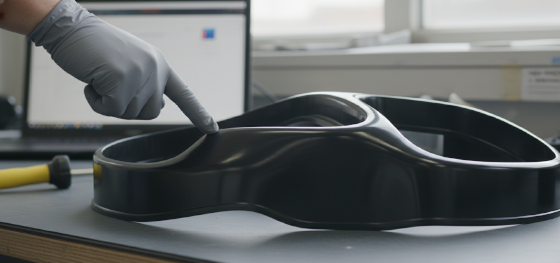
Engineering for the RIM process is governed by liquid chemistry rather than high-heat thermal dynamics. Because the material enters the mold as a low-viscosity liquid at less than 100 psi, the traditional "Anti-Sink" rules are fundamentally different. Jucheng Precision addresses these critical Design for Manufacturing (DFM) challenges by acting as a technical consultant during your earliest CAD stages. JUCHENG leverages its capacity of 150+ CNC machines and 25 5-axis Haas/Mazak units to manufacture the high-tolerance aluminum tools that bring these unique geometries to life. Whether your goal is medical device prototyping or building the skeleton for an autonomous fleet, these guidelines provide the blueprint for hardware that survives the field.
Operating under a triple mandate of ISO 13485, ISO 14001, and IATF 16949, Jucheng Precision provides the unyielding foundations for global innovators. JUCHENG delivers a free DFM analysis in 24 hours to ensure your design is optimized for cost, speed, and structural stability. This guide serves as the definitive hub for mastering RIM molding design guidelines, exploring the essential wall thickness flexibility, draft angle requirements, and encapsulation strategies required for manufacturing hardware that defines the future of automation.
content:
Wall Thickness: Breaking the Uniformity Rule
Draft Angles: Ensuring Smooth Ejection for Large Shells
Structural Elements: Sizing Ribs and Bosses for Stiffness
Precision Standards: Managing Tolerances and Shrinkage
Smart Hardware: The Logic of Insert Molding and Encapsulation
Scaling Up: Specific Design Strategies for Large Enclosures
Finishing Design: Planning for Painting and Branding
FAQ: Logistics and Technical Design for Polyurethane Hardware
Wall Thickness: Breaking the Uniformity Rule
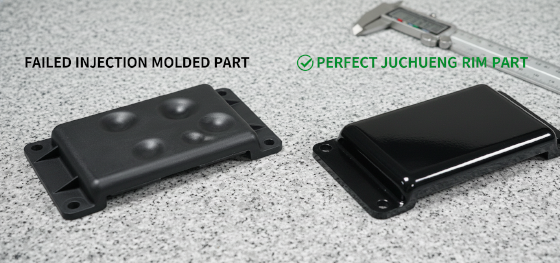
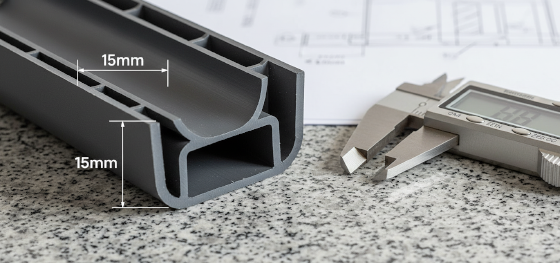
Managing wall thickness in a 2-meter long part is the most significant differentiator between the RIM process and traditional injection molding. In standard RIM molding wall thickness guidelines, the requirement for absolute uniformity is replaced by a "Function-First" approach. Because the low-pressure liquid polymer expands during the chemical reaction, it exerts outward pressure that prevents the "Sink Marks" common in thick thermoplastic sections. This allows JUCHENG to manufacture parts with wall thicknesses ranging from 3mm in aesthetic zones to 15mm in structural load-bearing areas within the same component. This variable wall thickness limits (3mm-15mm) capability allows you to integrate mounting blocks and heavy-duty ribs directly into the shell, eliminating the need for dozens of secondary brackets.
Is a 10mm wall thickness safe for RIM parts?
Yes. Unlike injection molding where 10mm would cause voids and massive sink marks, RIM can handle thick sections easily, provided the heat of the exothermic reaction is managed by the aluminum tool.
Transitioning between different thicknesses must be handled with a "Gradual Ramp" logic to optimize resin flow. Even though RIM is forgiving, a sudden 90-degree step from 3mm to 10mm can cause flow turbulence and air entrapment. JUCHENG recommends a 3:1 transition ratio, where the thickness change occurs over a distance three times the change in height. This ensures that the liquid polymer fills the mold in a stable, laminar fashion, resulting in a 100% dense matrix with no internal porosity. This level of fluid-dynamic foresight is what ensures your prototype robot chassis can handle high-torque reversals without developing microscopic stress fractures in the polymer.
Weight reduction through nominal thickness optimization is the final pillar of this guideline. For the majority of medical and industrial enclosures, JUCHENG recommends a nominal wall thickness of 4mm to 6mm. This range provides the ideal balance between structural rigidity and material cost. By utilizing the Anti-Sink properties of the RIM process, we can reduce the nominal wall to 3mm in non-structural panels while using local thickening only where fasteners or sensors are mounted. This optimization extends the battery life of autonomous vehicles and makes large diagnostic scanners easier for clinical staff to maneuver, providing a clear competitive edge in the [2026] market.
Draft Angles: Ensuring Smooth Ejection for Large Shells
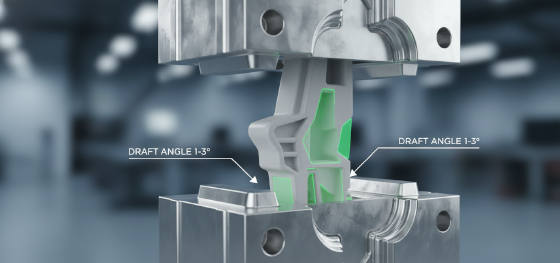
Ensuring easy part ejection is a critical safety requirement for large-format hardware. In Draft angles for reaction injection molding, the rules are slightly more demanding than standard molding because of the material's unyielding nature once cured. A prototype robot part with insufficient draft will "Stiction" to the mold, leading to surface scuffs or even structural cracks during the demolding cycle. JUCHENG recommends a baseline of 1 to 2 degrees of draft for all external vertical walls. This allows the atmospheric pressure to break the vacuum between the polyurethane and the aluminum mold instantly as the tool opens, preserving the mirror-smooth Ra 0.8 finish required for high-gloss automotive painting.
Do internal walls need more draft than external ones?
Yes. Polyurethane naturally shrinks *onto* the internal core of the mold; JUCHENG recommends 3 degrees of draft for internal features to compensate for this mechanical grip.
The texture-draft correlation is a vital detail often missed in generic RIM molding design guidelines. If your design specifies a deep VDI 30 texture to hide fingerprints on a medical console, the "Micro-Peaks" of that texture act as tiny hooks that grip the mold. JUCHENG’s rule of thumb is to add an additional 1.5 degrees of draft for every 0.025mm (0.001") of texture depth. By accurately predicting these friction forces during our DFM review, we ensure that your parts release cleanly with zero dragging marks, maintaining the "Retail-Quality" aesthetic that defines a premium industrial product.
Zero-draft areas can be managed through the use of side-actions and cam-slides, but these increase the NRE cost and lead time of the tool. JUCHENG’s mold making department utilize 5-axis CNC machining to carve these moving components with sub-micron precision, but we always look for geometric alternatives first. During our free DFM analysis in 24 hours, we might suggest "Parting Line Shifts" or "Shadowing" techniques that eliminate the need for complex slides while maintaining your design's aesthetic intent. This "Agile Tooling" mindset is how JUCHENG delivers large-scale hardware fleets in as fast as 15 business days, keeping your R&D cycle on the fast track.
Structural Elements: Sizing Ribs and Bosses for Stiffness
Reinforcing a large plastic shell requires a strategic approach to internal geometry. In Designing ribs and bosses for RIM parts, the traditional 60% rib-to-wall ratio of injection molding is discarded. Because the RIM process is low-pressure and the material is expanding, JUCHENG can support ribs that are 100% of the thickness of the nominal wall with zero risk of surface sink marks. This allows for the creation of incredibly stiff "Honeycombed" internal structures that turn a 2mm aesthetic skin into a structural component capable of supporting 50kg payloads. This bionic rigidity is essential for industrial robot parts that must maintain sensor alignment during high-acceleration moves.
How to prevent air traps in deep ribs?
JUCHENG utilize "Venting Pins" and strategic gating to ensure the liquid resin displaces all internal air as it fills the deepest pockets of the skeleton.
Boss design for threaded inserts dictates the reliability of your assembly in the field. In medical device prototyping, components are frequently disassembled for maintenance or sensor upgrades. JUCHENG recommends "Gusseted Bosses" where the mounting cylinder is connected to the side walls by three or four triangular support fins. This design prevents the boss from "Snapping" at the base under the torque of a high-power driver. By machining the mold pins for these bosses with absolute verticality, we ensure that your threaded inserts are perfectly square to the chassis, providing the "Ready-to-Assemble" quality that differentiates JUCHENG from standard prototype shops.
Integrated hardware registration is the final step in boss optimization. JUCHENG often machines "Pilot Features" directly into the bosses that align with the motor or sensor frame. By holding +/- 0.05mm tolerances on these features, we eliminate the "Slop" in your assembly, ensuring that the primary drivetrain and optics are mechanically locked to the chassis. This level of Precision and Stability is a core requirement for [2026] autonomous systems, where even a minor vibration in a sensor mount can lead to a total navigation failure. Our Shenzhen hub manages these variables through 100% CMM verification of all functional bosses before shipping your Beta units.
Precision Standards: Managing Tolerances and Shrinkage
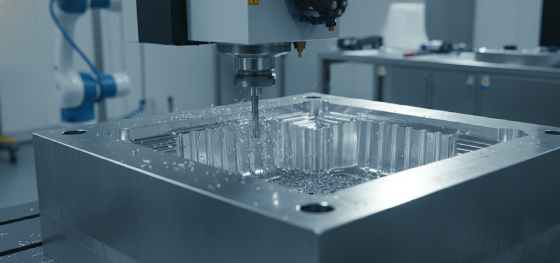
Managing dimensional accuracy in a part that spans 2.5 meters requires a partner who masters the chemistry of shrinkage. In RIM molding tolerances and shrinkage, the low-pressure curing cycle results in a predictable shrinkage rate of only 0.1% to 0.15%, which is ten times lower than many standard thermoplastics. This stability is the primary reason why RIM is the preferred choice for medical device hardware validation services. Jucheng Precision utilize Coordinate Measuring Machines (CMM) to track this shrinkage in real-time during the T1 sampling phase, adjusting the CNC toolpaths of the aluminum mold to hit your exact "Nominal" dimensions on the first try.
What is the standard tolerance for a 1-meter RIM part?
JUCHENG regularly achieves +/- 0.5mm across 1,000mm spans, providing a level of geometric certainty that rivals machined assemblies.
Environmental stability after demolding is the second half of the precision equation. Thermoset polyurethanes do not exhibit the same "Post-Mold Creep" as thermoplastics because the molecular bonds are cross-linked and permanent. JUCHENG performs an industrial "Oven-Cure" at 80°C for every high-precision enclosure, ensuring that the chemical reaction reaches 100% completion before the part is measured. This ensures that the tightness of your seams and the fitment of your doors will remain constant from the cool lab environment to the hot factory floor, meeting the ISO 13485 requirements for long-term clinical safety and device efficacy.
| Dimension Length | Commercial Tolerance | JUCHENG Precision Tier | Technical driver |
|---|---|---|---|
| 0 - 250mm | +/- 0.25mm | +/- 0.10mm | CNC Mold Accuracy |
| 250 - 1000mm | +/- 0.75mm | +/- 0.40mm | Low Shrinkage PU |
| 1000 - 2500mm | +/- 1.50mm | +/- 0.80mm | Large Gantry Milling |
Precision fits for high-value components often require post-machining allowances. For bearing seats or sensor windows that require +/- 0.01mm tolerances, JUCHENG recommends adding a 2mm "machining stock" to the design. After the RIM part is molded, we return it to our 5-axis CNC machines to finish these critical features. This hybrid approach—combining the speed of molding with the precision of CNC—is what allows JUCHENG to support the world's most aggressive autonomous surgical and industrial robotics projects, where "close enough" is never an option.
Smart Hardware: The Logic of Insert Molding and Encapsulation
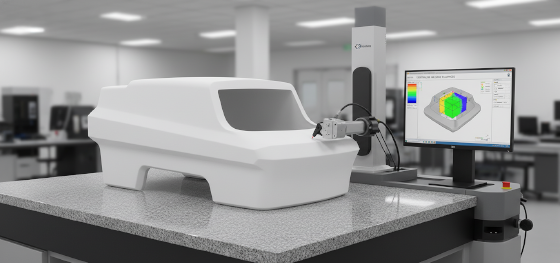
Integrating electronics and structural metal into a single component is the "Holy Grail" of modern robotics design. In Insert molding and encapsulation in RIM, the low-pressure nature of the process allows JUCHENG to safely overmold delicate sensors, PCBs, and multi-strand wiring harnesses without crushing them. By physically bonding the electronics into the polymer matrix, we create a shock-proof "Cocoon" that protects your autonomy stack from moisture and vibrational fatigue. This level of Hermetic Sealing is essential for robots operating in the muddy environments of the farm or the high-humidity sterilized rooms of a hospital.
Can I mold a full steel frame into a RIM part?
Yes. JUCHENG specializes in the encapsulation of large aluminum and steel skeletons, creating "Bionic Panels" that have the strength of metal and the complex form of plastic.
Threaded insert security is the secondary goal of encapsulation. In the [2026] market, the "Insert Pull-Out" strength is a primary safety metric for heavy-duty hardware. By molding high-strength brass or stainless steel inserts directly into the RIM part, JUCHENG creates a molecular bond that is significantly stronger than post-mold heat-staking. We utilize specialized Metal-Polymer Leak Path Prevention coatings on these inserts to ensure that no moisture can "wick" along the metal-plastic interface, maintaining an IP69K seal even under high-pressure steam cleaning. This unyielding integrity is why JUCHENG is the preferred partner for IATF 16949-compliant automotive and heavy industrial projects.
Thermal expansion management for encapsulated inserts must be addressed during the DFM phase. Because metal and plastic expand at different rates, a "Hard-Bonded" insert can cause internal stress cracks during thermal cycling. JUCHENG’s engineers utilize "Flexible-Structural" resins and geometric "Stress-Relief Trenches" around large inserts to accommodate these shifts. By delivering "Thermal-Sync" hardware, JUCHENG ensures that your prototype robot maintains its structural integrity from the first day of R&D to its five-year commercial anniversary. We provide the material intelligence required to ensure your multi-material assemblies are "Life-Cycle Ready."
Scaling Up: Specific Design Strategies for Large Enclosures
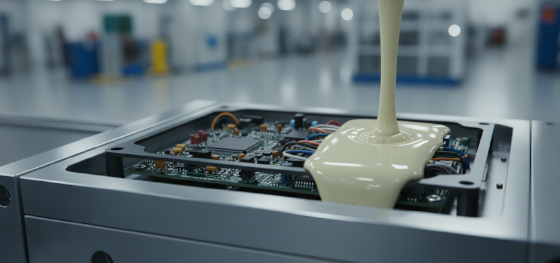
Engineering for the "Big Stuff"—such as MRI covers, car bumpers, and autonomous tractor hoods—requires a shift toward "Kinetic Design." In RIM molding design for large parts, maintaining absolute flatness over a 2-meter span is the primary technical challenge. If a large panel is designed as a flat plane, it will always look "wavy" due to microscopic environmental shifts. JUCHENG recommends utilizing "Curvature and Crown" logic, where every large surface has a slight 1% to 2% arc. This pre-tensioned geometry masks any minor material movement and provides a significantly higher bending stiffness, delivering the "Billion-Dollar-Company" look your investors and customers expect.
How to hide the parting lines on giant parts?
JUCHENG utilize "Stepped Parting Lines" and "Self-Masking Seams" where the mold split is integrated into a design groove or a break in the texture, making the tool-split invisible to the user.
Gating strategies for large parts dictate the "Surface Purity" of the shell. In oversized RIM molding design for large parts, the liquid must travel a long distance from the injection point. JUCHENG utilizes "After-Mix" manifolds and laminar-flow gates to ensure the resin front moves uniformly across the span. This prevents the "Knit Lines" and air traps that can ruin a Class-A surface. By utilizing specialized Tilt-Filling machines that use gravity to guide the liquid, we ensure that every square centimeter of your 2.5-meter part is 100% solid density with zero surface pinholes, reducing your painting prep time by up to 50% in our Shenzhen hub.
Logistics and handling features must be integrated into the design of oversized hardware. A 20kg plastic shell is difficult for a human operator to handle safely. JUCHENG’s DFM reviews often suggest integrating hidden hand-holds or "Robot-Pick" features into the internal ribs of large parts. This simplifies the assembly process in our facility and the installation at the customer's site. By designing with the entire lifecycle in mind—from the mold exit to the final hospital ward—JUCHENG ensures that your RIM molding design guidelines result in hardware that is as efficient to build and ship as it is to operate.
Finishing Design: Planning for Painting and Branding
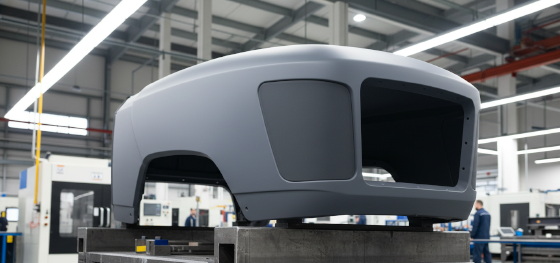
Planning for the "Final Polish" should happen at the CAD level, not at the assembly bench. In the world of high-end robotics, Polyurethane RIM painting and bonding is the standard for visual excellence. JUCHENG recommends adding "Paint Stop" grooves—microscopic recessed lines—wherever two different colors or textures meet. This allows our paint department to achieve "Sharp-Line" precision without the risk of bleed-over. By integrating these features into your RIM molding design guidelines, you ensure that your prototype robot has the retail-ready perfection that secures funding and dominates trade show floors.
Can I integrate my company logo into the mold?
Yes. JUCHENG utilize 5-axis CNC laser engraving to machine high-fidelity logos directly into the mold cavity, resulting in an embossed or debossed "Permanent Brand" that never fades or peels.
Alignment features for silk-screening and laser marking are the final design details that maximize ROI. JUCHENG utilize "Locating Bosses" on the non-aesthetic side of the part that lock into our custom printing fixtures. This ensures that every logo and instruction label is applied with +/- 0.1mm positional accuracy across the entire Beta fleet. Our Shenzhen facility is equipped with dedicated dust-free painting suites and high-precision laser marking booths, allowing us to deliver "Market-Ready" hardware that incorporates your corporate identity into the very molecular structure of the part.
Designing for "Seamless Assembly" is a core JUCHENG expertise. We often suggest utilizing structural adhesives rather than mechanical fasteners to join large RIM panels. To enable this, we machine Tongue-and-Groove features into the part edges using our CNC fleet. This increases the bonding surface area by 300% and provides a joint that is chemically fused and unyielding. By delivering hardware with integrated bonding features, JUCHENG allows your team to move from crate to functional machine in minutes, providing the unyielding foundation your autonomous innovation demands. Contact our Shenzhen manufacturing hub today for a complete DFM review and secure the future of your next large-scale hardware project.
FAQ: Logistics and Technical Design for Polyurethane Hardware
What is the maximum wall thickness for a RIM structural boss?
We regularly mold structural bosses up to 25mm thick, provided they are gusseted and the cooling cycle is managed via our aluminum tools.
Does JUCHENG charge for the DFM review?
No. JUCHENG provide a free DFM analysis in 24 hours for every project to ensure your innovation is optimized for our Shenzhen hub.
How do you handle design changes after the mold is cut?
Because we use aluminum molds, we can often weld and re-machine features in 48 hours, providing the agility required for R&D.
What is the tightest tolerance JUCHENG can hold on a 1-meter part?
By combining RIM molding with 5-axis CNC finishing, we hold +/- 0.05mm on critical bearing and sensor seats.
Are RIM materials environmentally compliant?
Yes. Our ISO 14001 certification guarantees that all materials meet the latest REACH and RoHS standards for global sustainability.
Mechanical instability and high tooling debt are absolute innovation killers for large-scale robotics. Partnering with Jucheng Precision ensures that your functional iterations are built with the cost-effective polyurethane reaction injection molding and specialized RIM molding design guidelines knowledge the industry demands. Reach out to our Shenzhen manufacturing hub today for a complete DFM review and build the unyielding foundation your autonomous fleet requires.

