


Preventing localized rust and surface degradation on high-precision stainless steel assemblies is a critical milestone in custom sheet metal fabrication. Specifying professional sheet metal passivation provides your custom medical enclosures, surgical trays, and food processing equipment with a completely clean, iron-free surface that maximizes corrosion resistance. This chemical finishing process utilizes specialized acid baths to selectively dissolve surface impurities, restoring the metal's natural protective barriers without altering its dimensional tolerances.
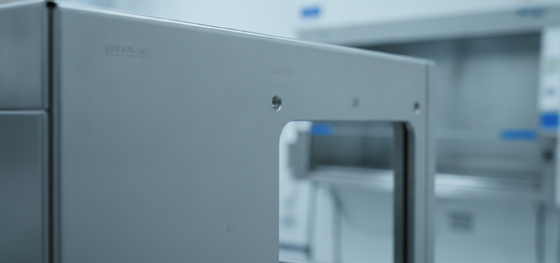
Wasting resources on standard welded panels that rust along joint seams, collect surface contamination, or fail strict bio-compatibility standards is a major setback for high-purity industrial hardware. If your manufacturing partner skips chemical de-ironing or utilizes contaminated acid baths, microscopic carbon iron particles will remain embedded in the outer skin, initiating rapid crevice corrosion. Transitioning to a certified chemical washing process completely eliminates these structural failures.
Let's explore how chemical baths selectively strip away embedded contaminants, analyze the core differences between organic citric and aggressive nitric acids, and review why high-purity medical and aerospace devices require strict passivation protocols.
What is Passivation?
How does the chemical passivation process permanently protect stainless steel?
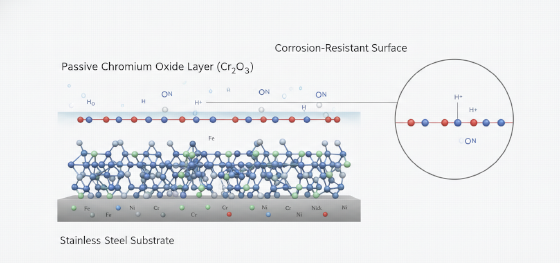
The process utilizes specialized acid baths to dissolve microscopic free iron contaminants from the surface, allowing chromium to react with oxygen and form a continuous passive oxide layer.
When stainless steel components undergo mechanical cutting, bending, or welding, they come into direct contact with carbon steel tooling. This contact embeds microscopic particles of free iron (tramp iron) into the outer skin of the alloy. If left untreated, this free iron will oxidize immediately when exposed to moisture, disrupting the metal's natural self-healing capabilities.
Chemical de-ironing resolves this by stripping away these metallic contaminants. Submerging the parts into an acid bath selectively dissolves the free iron without attacking the underlying chromium. Once the free iron is removed, the exposed chromium instantly reacts with ambient oxygen, building a highly uniform, microscopic passive layer of chromium oxide. This passive layer acts as an impervious barrier, blocking moisture and preventing localized pitting corrosion.
Citric Acid vs. Nitric Acid Passivation
When should a product designer select citric acid over traditional nitric acid passivation?
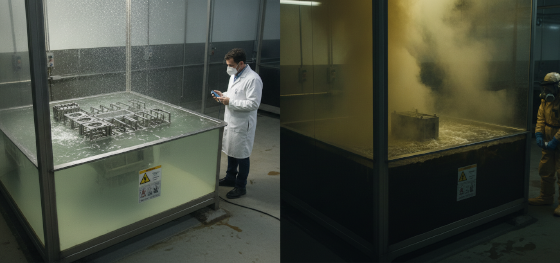
Choose citric acid for an eco-friendly, fast-acting treatment that leaves no hazardous fumes; select nitric acid for aggressive processing of older alloys or heavily greased assemblies.
Evaluating the differences between these two common acid treatments reveals distinct chemical and environmental properties. Traditional nitric acid passivation is highly effective and has been the military standard (MIL-SPEC) for decades. However, nitric acid is a hazardous, highly corrosive chemical that releases toxic nitrogen oxide fumes during processing, and can dull the cosmetic surface finish of delicate alloys if the bath chemistry is not monitored precisely.
Conversely, citric acid passivation utilizes organic fruit-derived acids to dissolve surface iron. Citric acid is highly environmentally compliant, biodegradable, and completely safe for operators. Additionally, citric acid selectively targets only the free iron molecules, leaving the chromium completely untouched. This chemical selectivity allows for faster cycle times, lower acid concentrations, and maintains a highly consistent, bright cosmetic finish on polished components.
| Passivation Variable | Citric Acid Passivation (ASTM A967) | Nitric Acid Passivation (ASTM A967) |
|---|---|---|
| Chemical Composition | Organic fruit-derived citric acid | Inorganic, highly corrosive nitric acid |
| Environmental Safety | Excellent (Biodegradable, zero toxic fumes) | Poor (Requires scrubbing systems for acid fumes) |
| Processing Cycle Time | Fast (Typically 20 to 30 minutes) | Moderate (Typically 30 to 60 minutes) |
| Surface Finish Impact | Zero (Preserves highly reflective mirror finishes) | High Risk (Can etch or dull polished surfaces) |
Strict Passivation Requirements for Medical Devices (ISO 13485)

Why do healthcare and surgical device standards mandate certified passivation?
Medical devices require 100% biocompatibility, meaning any trace surface iron can contaminate sterile fields, harbor bio-films, or cause localized corrosion during autoclaving.
In medical device manufacturing, managing surface hygiene is a strict regulatory requirement. Surgical trays, diagnostic housings, and implantable bracket assemblies must be completely free from metallic contaminants. We operate our finishing lines under strict ISO 13485 guidelines, ensuring that our medical assemblies are processed inside clean-room bays with ultra-pure water rinsing to prevent cross-contamination.
Our multi-stage medical passivation process completely removes all residual carbon dust, grease, and free iron from the parts. This de-ironing process is essential to ensure that the finished components can survive hundreds of aggressive sterilization and steam autoclaving cycles without experiencing surface pitting or rusting, protecting both patient safety and device longevity.
Finishing and Passivating Polished Stainless
Why is chemical passivation essential immediately after mechanical mirror polishing?
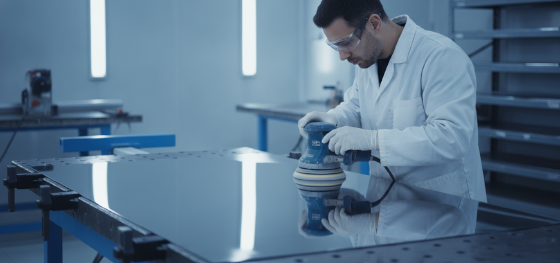
Mechanical buffing wheels deplete the surface chromium and embed microscopic iron particles, requiring chemical acid washes to rebuild the protective oxide barrier.
To restore the full anti-corrosion properties of your mirror-finished components, incorporating this chemical sheet metal surface treatment into your turnkey sheet metal fabrication cycle is critical. After our finishing technicians have polished the metal to a pristine #8 mirror finish, the polished surfaces must be chemically cleaned. We execute high-purity passivation over the polished stainless steel sheet metal to rebuild the protective chromium oxide layer.
This passivation process removes any polishing compounds or iron particles that were pressed into the soft surface grains during abrasive polishing. Jucheng Precision houses both our mechanical polishing wheels and our clean-room acid tanks under one roof, ensuring that your parts are cut, folded, polished, and passivated without any handling scratches or environmental dust contamination.
High-Quality Custom Passivation at Jucheng Precision

How does Jucheng Precision maintain extreme quality control across chemical de-ironing lines?
We operate automated acid titration systems and strict temperature controls, validating every batch with standardized chemical testing.
We manage our chemical finishing lines inside our 8000-square-meter facility, running automated bath monitoring to keep acid ratios within strict tolerances. This integrated fabrication-to-finishing loop eliminates the risk of transport contamination, ensuring that your parts are laser-cut, bended, polished, and passivated under a unified quality system.
We process a wide range of materials, including lightweight aluminum, high-yield stainless steel, and easily formable carbon steel during high-precision sheet metal fabrication cycles. Our technical department provides a 24-hour free DFM analysis to check your CAD models, checking tolerances and hinge clearances before production. Supported by our no MOQ policy and rapid delivery guarantee, we manage your project from initial flat pattern cutting to final, high-durability passivation and assembly.
FAQ: Critical Questions About Sheet Metal Passivation
Our engineering team has compiled professional solutions to the most common quality challenges faced during stainless steel passivation runs:
How do you test the effectiveness of passivated sheet metal parts?
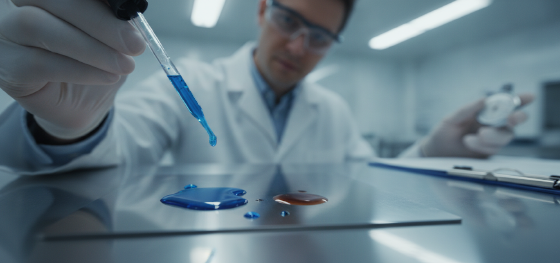
We perform standardized copper sulfate tests (according to ASTM A967 standards). Our quality control team applies a drop of copper sulfate solution to the passivated surface. If free iron is present, the copper will chemically displace the iron, leaving a visible copper-colored spot within six minutes. If the surface remains bright and clear, it confirms that the free iron has been completely dissolved and the passive layer is fully restored.Can galvanized steel or aluminum parts be passivated using citric acid?
No, passivation is strictly optimized for stainless steel alloys. Citric and nitric acid baths will aggressively attack and dissolve the zinc layer on galvanized steel, and can severely etch the soft surface of aluminum alloys. For aluminum, we apply chemical conversion coatings (such as chromate conversion film), and for galvanized steel, we utilize specialized zinc chromate sealers to prevent rust.What is the difference between passivation and pickling?
Pickling utilizes aggressive, highly concentrated acid mixtures (such as hydrofluoric and nitric acids) to physically strip away thick weld scale, heat tint, and surface metal layers, leaving a dull grey finish. Passivation utilizes milder acids to selectively remove microscopic free iron from the surface without removing any parent metal, preserving highly polished cosmetic finishes.How does Jucheng Precision prevent surface contamination during stainless steel passivation orders?
We keep our stainless steel fabrication area strictly segregated from our carbon steel processing bays to prevent airborne iron dust cross-contamination. Our quality control team measures acid bath concentrations and temperature profiles in real time, executes rigorous copper sulfate tests, and delivers certified IATF 16949 / ISO 13485 quality reports with every shipment.

