


Welding stainless steel demands precision and an understanding of the unique properties of this alloy family. Unlike mild steel, stainless steels rely on a passive chromium oxide layer for corrosion resistance. The wrong choice in consumables can compromise this layer, leading to oxidation, cracking, and premature failure. Therefore, selecting the correct stainless steel welding rod is not merely a recommendation—it is the most critical factor in ensuring a weldment's integrity, durability, and corrosion performance. This guide delves into the various types of rods and electrodes, helping you make an informed decision for your specific project.
content:
Understanding the Basics: Electrodes vs. Filler Rods
The Workhorse: 308 Stainless Steel Welding Rod
Stick Welding with Stainless Electrodes
TIG Welding: Precision with the Right Filler
Bridging Different Metals: Dissimilar Welding
How to Choose: A Practical Selection Guide
The Key to a Successful Weld
Understanding the Basics: Electrodes vs. Filler Rods
The terminology can be confusing, but it's fundamental. In Stick welding (SMAW), the consumable is called an electrode or a "stick." In TIG welding (GTAW), the consumable is a stainless steel tig welding rod, also known as a filler rod, which is fed manually into the weld puddle. Both are designed to match the base metal's composition and properties, but they come in different forms for different processes. MIG welding (GMAW) uses a continuous spool of wire. The core principle remains: the filler metal must be compatible with the base metal to create a homogeneous, corrosion-resistant joint.

The Workhorse: 308 Stainless Steel Welding Rod
The 308 stainless steel welding rod is arguably the most common consumable used for welding 304 and 304L grades, which are the most widely used stainless steels. The 308 classification has a chemical composition designed to balance the weld deposit and preserve corrosion resistance. It is available for all major welding processes. For Stick welding, an electrode like E308L-16 is ubiquitous in workshops and fabrication sites. For TIG welding, ER308L filler rod is the standard choice. The 'L' designation indicates low carbon content, which is crucial for preventing carbide precipitation (sensitization) during the welding of corrosion-resistant grades, thereby maintaining the integrity of the material in its welded state.
Stick Welding with Stainless Electrodes
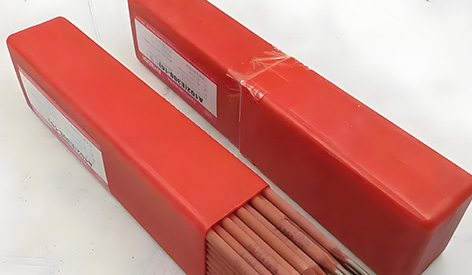
Stainless steel stick welding rod operations are favored for their portability and effectiveness in outdoor or less-than-ideal conditions. These electrodes have a flux coating that stabilizes the arc, provides shielding from the atmosphere, and forms a slag covering that protects the molten weld metal as it cools. Choosing the right type involves not just the alloy (e.g., 308, 316, 309) but also the flux composition, denoted by the suffix number (e.g., -15, -16, -17). For instance, a -15 electrode is for DC+ current only and offers deep penetration, while a -16 electrode can be used with AC or DC and is known for its easy arc striking and smooth bead appearance, making it a versatile choice for many welders.
TIG Welding: Precision with the Right Filler
Tungsten Inert Gas (TIG) welding is renowned for producing the cleanest, highest-quality welds on stainless steel. The process requires a separate filler rod for tig welding stainless steel, which is hand-fed into the arc. The choice of filler metal is paramount. Using the correct tig welding stainless steel filler rod ensures the finished weld has mechanical properties and corrosion resistance matching the base metal. For example, welding 316L stainless requires an ER316L filler rod. The TIG process offers unparalleled control over the heat input and weld puddle, allowing a skilled welder to precisely manage the amount of filler metal added, which is essential for critical applications in aerospace, pharmaceuticals, and food processing.
Bridging Different Metals: Dissimilar Welding
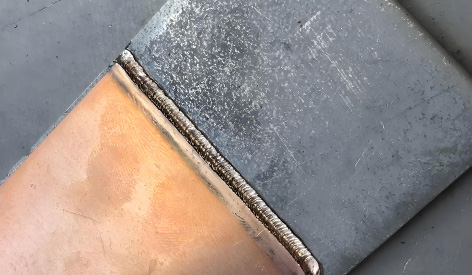
One of the most challenging scenarios is joining stainless steel to other metals like carbon or mild steel. You cannot use a standard 308 or 316 rod for this, as the resulting weld would be prone to cracking due to the vastly different chemical compositions and thermal expansion rates. For these applications, you need a specific mild steel to stainless steel welding rod or, more generally, a stainless steel to carbon steel welding rod. The most common solution is a 309-grade filler metal. The stainless to mild steel welding rod, such as ER309L, has a higher chromium and nickel content. This composition helps dilute the carbon from the mild steel and creates a buffer zone that is more resistant to cracking, resulting in a strong, reliable bond between the two dissimilar materials.
How to Choose: A Practical Selection Guide
Selecting the right rod involves a systematic approach:
Identify the Base Metal: Determine the specific grade of stainless steel (e.g., 304, 316, 410). Consult material certificates if available.
Match the Filler Metal: Use a compatibility chart. Generally, match the rod to the base metal (308 for 304, 316 for 316). For dissimilar welding, default to 309 for joining stainless to carbon steel.
Consider the Service Environment: Will the weld be exposed to high temperatures, chemicals, or corrosive atmospheres? For high-temperature service, a 347 rod might be needed; for superior corrosion resistance, a 316L is often specified.
Choose the Process: Decide between Stick, TIG, or MIG based on the required weld quality, equipment availability, and the working environment.
The Key to a Successful Weld
There is no universal stainless steel welding rod that fits every situation. The success of your welding project hinges on a meticulous selection process. Understanding the nuances between a stainless steel stick welding rod and a stainless steel tig welding rod, knowing when to deploy a 308 stainless steel welding rod, and recognizing the need for a specialized consumable like a stainless to mild steel welding rod are all essential skills. By prioritizing material compatibility, process requirements, and the final application, you can ensure your stainless steel welds are not only strong and beautiful but also durable and corrosion-resistant for years to come.

