


For critical assemblies in medical, food, or aerospace sectors, the expectation is simple: the final part must be strong and never rust. Yet, achieving a flawless, structurally sound, and corrosion-resistant stainless steel weld is far more challenging than joining mild steel. The key lies in understanding and mitigating four hidden risks in the fabrication process.
While a local "Welding Shop Near Me" might offer a quick service, true quality is determined by advanced control over contamination, heat, and post-weld treatment. This guide provides B2B buyers with a practical checklist to ensure your stainless steel components—a core part of our Sheet Metal Fabrication service—maintain their integrity and pass certification. Our commitment is backed by 13+ years of industry experience, ISO 13485 (Medical), and IATF 16949 (Automotive) certifications, providing you with a global partner that prioritizes quality over proximity.
The #1 Invisible Risk: Avoiding Weld Contamination
Technique Breakdown: TIG vs. MIG for Your Specific Project
Warping Control: Managing Heat Stress in Stainless Steel Parts
The Post-Weld Essential: Restoring Corrosion Resistance
The #1 Invisible Risk: Avoiding Weld Contamination
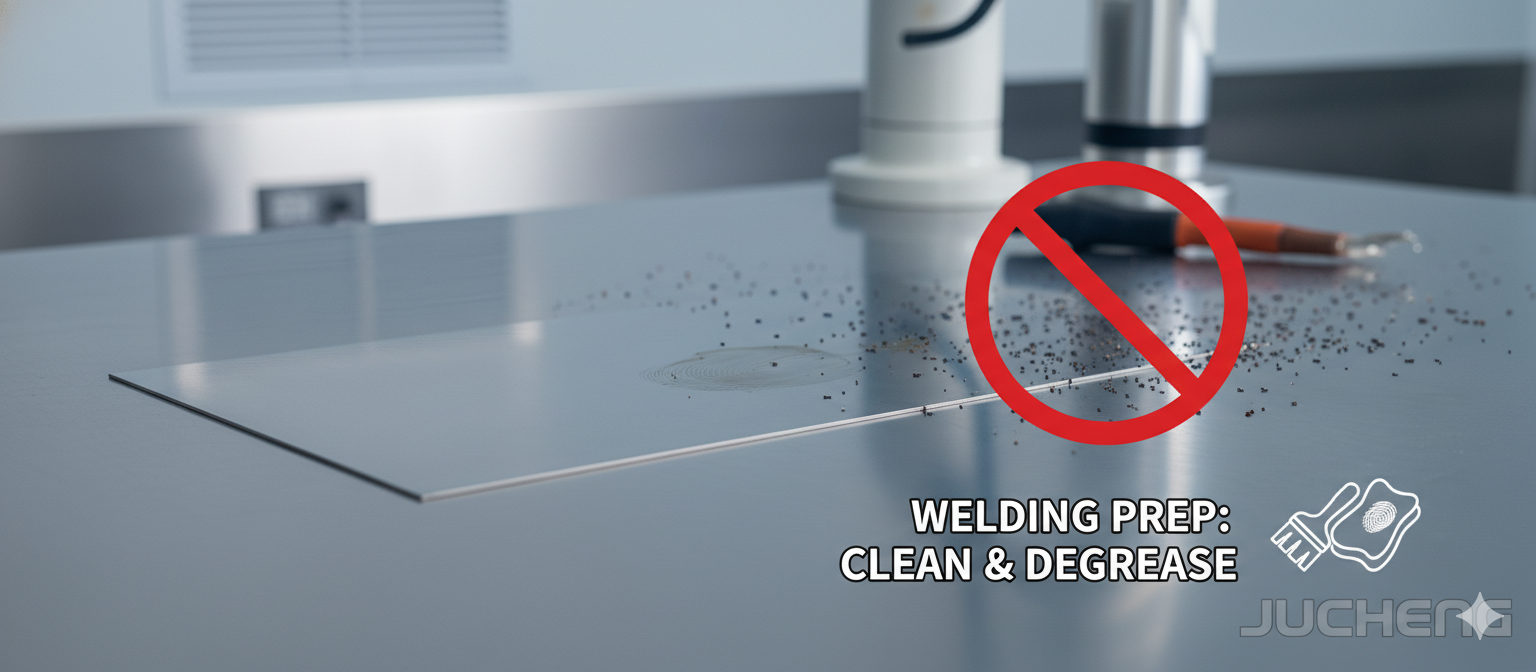
Stainless steel’s ability to resist rust comes from a thin, invisible layer of chromium oxide on its surface. When you weld, this layer can be destroyed or contaminated, leading to future failure. Contamination is the single biggest reason stainless steel fails in corrosive environments.
The Contamination Trap: Using the same tools (brushes, grinders, cutting blades) on stainless steel as on regular carbon steel is the most common mistake. Iron particles from the carbon steel embed in the stainless surface, destroying the protective layer and causing them to rust quickly. This is often called "free iron."
Shop Segregation: A professional sheet metal facility dedicates separate workspaces, storage areas, and tools exclusively for stainless steel to ensure zero cross-contamination—a non-negotiable step for high-integrity components, particularly those used in medical or semiconductor equipment.
The Buyer's Acceptance Test: For critical parts, insist on a Ferroxyl Test. This simple, visible chemical test confirms the absence of iron particles on the finished surface, providing an objective final check against contamination risk. It's the ultimate proof that the manufacturer maintained a clean process.
Technique Breakdown: TIG vs. MIG for Your Specific Project
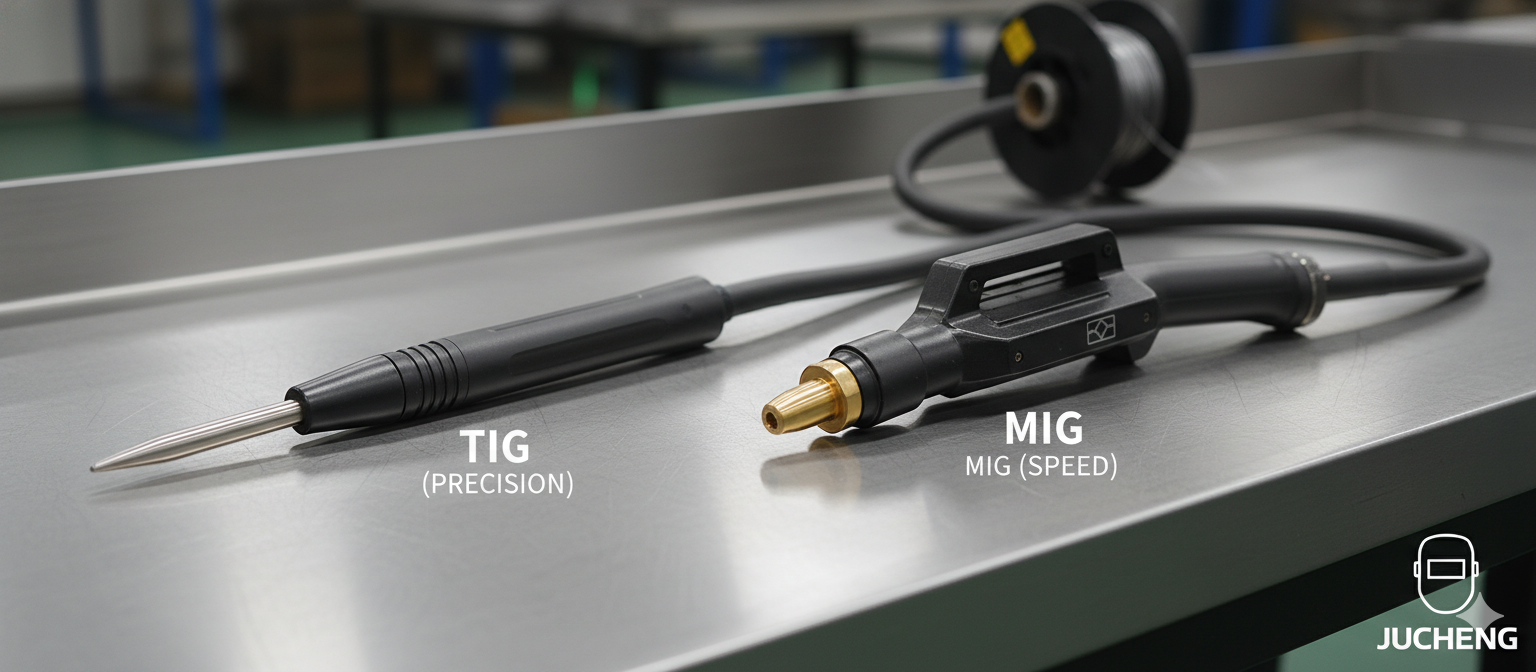
Choosing the right welding process impacts both cost and the integrity of the final structural joint. Both TIG and MIG (GMAW) have their ideal uses in stainless steel fabrication, depending on the required thickness and finish quality:
TIG (Tungsten Inert Gas) Precision: Best for thin materials, intricate work, and applications demanding the highest cosmetic quality (e.g., control panels, fine enclosures). TIG provides the most precise heat control, minimizing the heat-affected zone (HAZ) and resulting in the cleanest, most aesthetically pleasing weld bead.
MIG (Metal Inert Gas) Speed: Used for thicker materials and long, straight structural seams where speed is essential for high production volumes. While faster, it generates more heat and results in a larger, rougher weld, often requiring more grinding and finishing work.
Weld Specification Review: Experienced B2B partners work with buyers to specify the correct American Welding Society (AWS) or ISO standard for the joint, ensuring the chosen technique is structurally appropriate for the load-bearing requirements.
Warping Control: Managing Heat Stress in Stainless Steel Parts
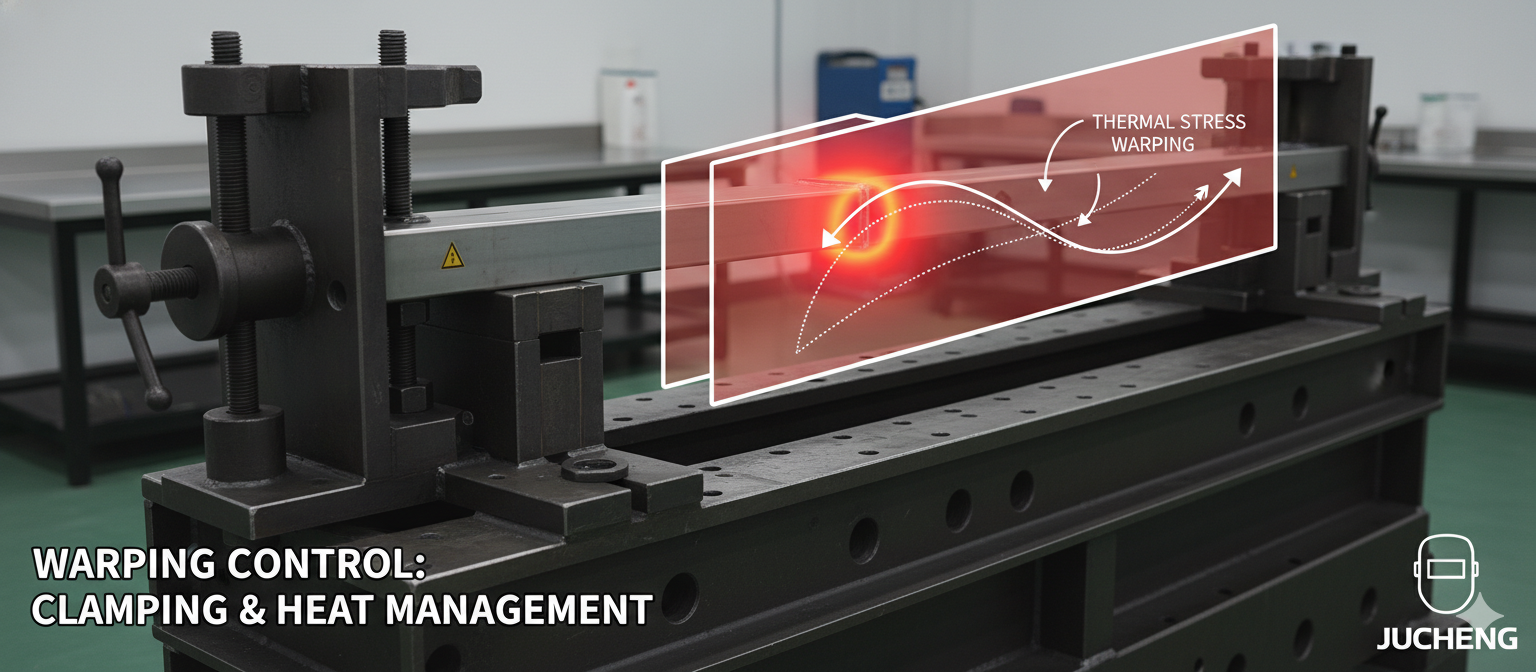
Stainless steel’s high coefficient of thermal expansion means it moves dramatically when subjected to welding heat, making it highly prone to warping. Controlling this is crucial for the dimensional accuracy of large parts like control panels or chassis.
Heat Input Management: Expert welders use techniques like skip welding, back-step welding, and pulsating current to minimize the overall heat input into the component and distribute the thermal energy evenly across the material.
Pre-Set Stressing: Advanced facilities use custom-designed, heavy-duty clamping fixtures that apply pre-set, counteracting stress to the metal. This pre-stresses the component in the opposite direction of the anticipated warp, ensuring it remains flat upon cooling.
Post-Weld Verification: After welding, final dimensional checks are performed using CMM (Coordinate Measuring Machine) equipment. If warpage exceeds tolerance, controlled mechanical straightening or stress-relieving heat treatments are performed, a service offered by integrated facilities.
The Post-Weld Essential: Restoring Corrosion Resistance
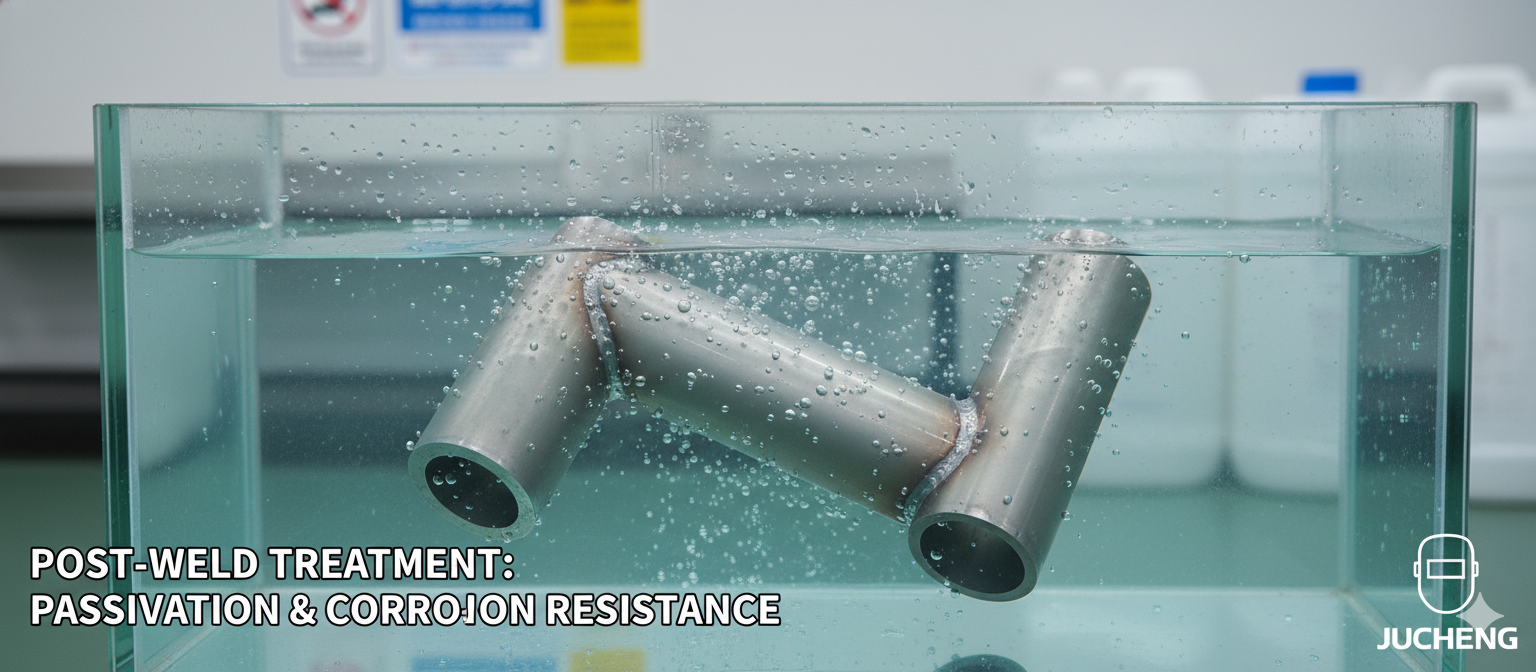
After welding, the heat-affected zone (HAZ) is typically discolored (heat tint or scale) and temporarily loses its protective chromium oxide layer. To restore the steel's intended corrosion resistance, a final chemical step is mandatory—often required by IATF 16949 or ISO 13485 standards.
Pickling: A necessary step for heavy discoloration (scale). This aggressive chemical process removes the chromium-depleted surface layer and the heavy heat tint, preparing the steel for the final recovery step.
Passivation (The Recovery Step): This is the most crucial post-weld chemical cleaning process. It removes free iron and promotes the rapid, uniform regrowth of the protective chromium oxide layer across the entire surface. This procedure is mandatory for certification in clean-environment industries.
Surface Finish Integration: Integrated facilities can follow welding and passivation with final aesthetic finishes, such as brushing, bead blasting, or even specialized coatings, ensuring the part is structurally sound and visually compliant upon delivery.
Stainless steel welding is a precision fabrication process where quality is only as good as the least controlled step. Jucheng Precision Technology offers specialized welding services backed by strict process segregation, expert TIG/MIG control, and mandatory passivation protocols to ensure structural integrity and enduring corrosion resistance for your Sheet Metal Fabrication projects.
Mitigate your risks and secure flawless stainless steel assemblies. Contact us today to discuss the advanced welding and fabrication needs of your critical components.

