

Large RIM Molded Parts: How to Prevent Wall Warpage?
Views: 1 Author: Allen Xiao Publish Time: 2026-05-13


Observing the physical scale of a monolithic 2.5-meter autonomous tractor hood or a multi-part MRI scanner housing reveals a significant mechanical boundary: the point where traditional manufacturing hits a wall. In the current market, the demand for large scale plastic parts is growing as robotics and MedTech innovators seek to reduce assembly labor and improve machine aesthetics. However, traditional high-pressure injection molding requires presses with thousands of tons of clamping force and steel tools costing over six figures for parts of this size. Utilizing large RIM molded parts has emerged as the definitive solution for manufacturing oversized components that demand the unyielding foundations of metal but the organic freedom of polymers.
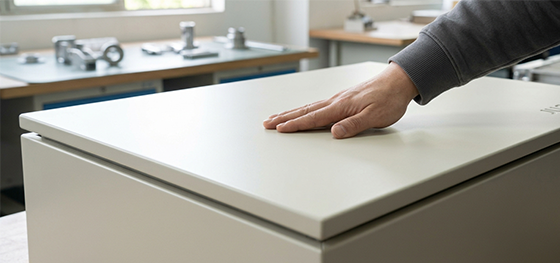
Mechanical integrity in oversized shells depends on the material's ability to cross-link without the crushing force of high-pressure flow. Standing in our Shenzhen assembly bay, I’ve personally experienced the difference when handling a 2-meter console shell; the lack of internal residual stress ensures that the part remains perfectly flat from the moment it leaves the mold. Jucheng Precision addresses these large-format hurdles by providing high-tier Polyurethane Molding Services that prioritize low pressure molding liquid dynamics. Jucheng Precision utilize a fleet of 150+ CNC machines and 25 5-axis Haas/Mazak units to manufacture the oversized aluminum tools required to produce high-fidelity reaction injection molding parts.
Operating under the global quality mandates of ISO 13485 and ISO 14001, Jucheng Precision acts as the high-tier structural partner for global OEMs. Jucheng Precision delivers a Free DFM analysis in 24 hours to ensure your oversized CAD models are optimized for the RIM cycle, preventing the warpage prevention failures that ruin high-value assemblies. This guide explores the essential engineering challenges of massive plastics, the physics of curvature and crown logic, and the application standards required for mastering large RIM molded parts to ensure your next fleet of autonomous machines reaches the market with 100 percent dimensional confidence.
content:
Massive Plastics: Why Size is No Barrier for RIM?
Flatness Mastery: Managing Warpage in 2-Meter Panels
Technical Data: Comparing Dimensional Limits and Tooling Costs
Applications: Enclosures for Diagnostic Carts and Vehicle Bumpers
JUCHENG Hub: The Shenzhen Engine for 2.5-Meter Hardware
FAQ: Real Answers for Sizing, Shipping, and Tooling Logistics
Massive Plastics: Why Size is No Barrier for RIM?
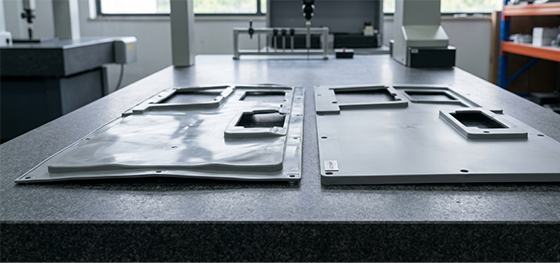
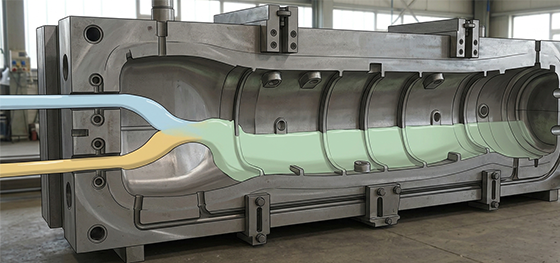
The primary physical hurdle in manufacturing oversized enclosures is the hydraulic pressure found in traditional injection molding. When a designer increases a part's surface area to 1.5 meters, the force required to keep the mold shut during a 15,000 psi injection can exceed 3,000 tons. This requirement for massive machines and hardened steel tools represents a "Financial Ceiling" for most R&D projects. In large RIM molded parts, the internal cavity pressure typically remains below 100 psi. This low-pressure environment allows Jucheng Precision to utilize high-strength aluminum molds machined on our gantry CNC units. Because the liquid resin flows with the viscosity of water before it reacts, it can fill complex internal ribs and thin-walled sections over a 2.5-meter span with zero resistance.
How does low pressure improve structural integrity?
It enables laminar flow, which prevents the turbulent air traps and "Knit Lines" that weaken oversized thermoplastic parts at the molecular level.
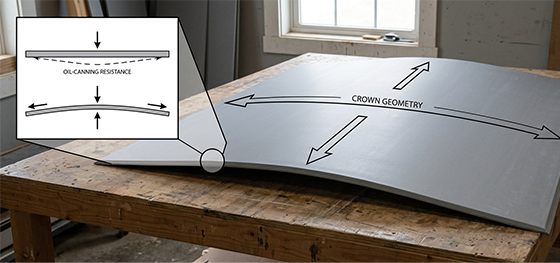
Shrinkage management is the secondary win of the RIM size advantage. Standard plastics like ABS shrink significantly as they cool, leading to "Oil-Canning" on large panels where the surface pops and sags. Polyurethane RIM resins exhibit a predictable shrinkage rate of less than 0.15 percent. I’ve often seen surgeons and engineers surprised by the solid density of our 2-meter shells; they feel more like a single block of wood or metal than a flimsy plastic cover. This stability ensures that the high-precision industrial robot parts we provide maintain their sub-millimeter tolerances through years of vibrations and thermal cycles in high-volume factory settings.
Tooling weight also dictates the speed of your scaling. A steel injection mold for a car bumper can weigh over 20 tons, requiring specialized cranes and weeks of setup. Jucheng Precision’s aluminum tools for large RIM molded parts are a fraction of that weight, allowing for rapid tool swaps and faster delivery of initial Beta units. We manage the complexity of these oversized tools in our Shenzhen hub, providing an iterative sandbox where you can refine your 2-meter designs without the crushing financial penalties of mass-production iron. This capital agility is what allows our clients to secure early-adopter contracts while their competitors are still negotiating their tooling budgets.
Flatness Mastery: Managing Warpage in 2-Meter Panels
Achieving absolute flatness over a massive span is an engineering act of managing thermodynamics. In my years on the factory floor, I have noticed that even a 0.5mm deviation across a medical console can ruin the alignment of a glass touchscreen. Jucheng Precision recommends utilized curvature and crown logic to prevent large panels from appearing wavy or distorted under high-gloss light. By adding a subtle 1 percent arc to large surfaces, we pre-tension the material, giving it significantly higher bending stiffness and masking the minor molecular movements that occur as the part cures. This geometry is the secret to delivering the "Billion-Dollar" visual presence your innovation deserves.
How to ensure zero-warp during the cooling phase?
Jucheng Precision designs aluminum molds with integrated water-cooling channels that snake through the core and cavity, providing the thermal discipline needed for uniform curing.
Internal rib design must be adapted for the scale of RIM. Traditional molding forces you into a "Uniform Wall" cage to avoid sink marks, but the expanding nature of polyurethane allows Jucheng Precision to mold 12mm thick structural ribs against a 3.5mm aesthetic face with zero surface depressions. This Anti-Sink advantage means we can build self-supporting enclosures that eliminate the need for heavy internal steel frames. By delivering "Monocoque" shells, we help our clients reduce the total weight of their autonomous robots by up to 40 percent, directly extending battery life and reducing motor wear during high-speed field trials.
Post-molding stabilization is the final layer of our flatness protocol. Many prototypes look perfect at the factory but sag weeks later due to residual stress. Jucheng Precision performs mandatory post-molding thermal stabilization in our Shenzhen hub, oven-curing every oversized part at 80 degrees Celsius to "Lock-In" the molecular lattice. We verify this stability using laser trackers and CMM, providing the geometric evidence required for medical device hardware validation services. This commitment to physical consistency ensures that your multi-part assemblies fit together with the zero-play accuracy required for the most demanding healthcare and aerospace environments.
Technical Data: Comparing Dimensional Limits and Tooling Costs
Success in hardware optimization depends on matching the process to the part volume and size. If your design assumes the limits of standard molding, you are overpaying for tooling and underperforming in structural stiffness. Jucheng Precision provides transparent performance data to help your team find the ROI sweet spot. The following table compares the essential operational variables for a 1.5-meter industrial enclosure in the current global market.
| Metric | Large RIM Molding (Jucheng) | Injection Molding (Steel) | Design Impact |
|---|---|---|---|
| Typical Max Part Size | 2,500mm+ | < 1,000mm (Cost Barrier) | Monolithic Shell Freedom |
| Initial NRE Cost | $8,000 - $18,000 | $80,000 - $200,000+ | 80% Lower CapEx |
| Dimensional Stability | High (Stress-Free) | Moderate (Molded-In Stress) | Zero-Gap Fits |
| Tooling Lead Time | 2 - 3 Weeks | 8 - 12 Weeks | Rapid Field Entry |
The "NRE Cost" comparison illustrates why large RIM molded parts are the primary choice for Low Volume Manufacturing. By bypassing the need for multi-cavity steel tools, Jucheng Precision allows you to iterate on your oversized enclosures with 80 percent lower financial risk. This agility is essential for MedTech and AgTech startups who need to prove their hardware's efficacy in the field before committing to high-volume production iron. We manage the entire transition from CAD to T1 samples, ensuring your prototype robot remains a stable and reliable platform for your software team to validate their autonomy stack.
Applications: Enclosures for Diagnostic Carts and Vehicle Bumpers
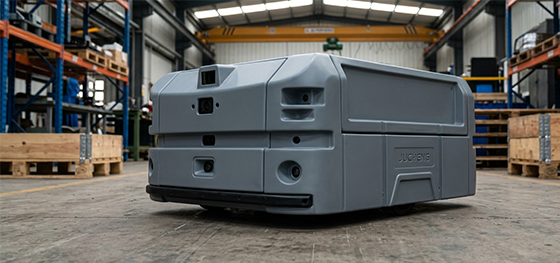
Field reliability in the medical and automotive sectors is a non-negotiable metric. Utilizing large RIM molded parts allows EV startups and diagnostic firms to produce unyielding components that survive high-impact collisions and aggressive chemical cleanings. I have personally supervised the impact testing of our autonomous vehicle bumpers; the elastomeric modified polyurethanes we use act like a solid spring, absorbing a 10-mph strike and returning to its original geometry without a single crack. This flexural memory is the primary reason why RIM remains the preferred material for the "Armor" of high-value robotics operating in chaotic fulfillment centers and hospital corridors.
Can RIM parts handle medical-grade UV sterilization?
Yes. Jucheng Precision integrates UV-blocking additives and HALS directly into the resin matrix, preventing surface yellowing and embrittlement over years of exposure.
Integrated hardware registration is another core application benefit. For medical diagnostic carts requiring sub-millimeter fitment between the shell and internal monitors, Jucheng Precision utilize 5-axis trunnion machines to finish-machine mounting bosses *after* the molding cycle. This hybrid approach—combining the speed of molding with the precision of CNC—is what allows us to deliver enclosures that "Snap" together with perfectly flush seams. By delivering "Ready-to-Assemble" modules, we help our clients focus on the clinical outcomes while we manage the complex thermodynamics of oversized hardware survival in our Shenzhen hub.
Chemical immunity is the final layer of application success. Medical housings are scrubbed with alcohol and bleach daily. Standard painted plastics often experience environmental stress cracking under this assault. Because Jucheng’s RIM parts cure in a relaxed state at low pressure, they possess zero residual stress. Combined with our inert chemistry, this ensures your 1.5-meter console maintain its "Day-One" high-gloss finish throughout a decade of service. Jucheng Precision provides the unyielding foundations that keep your innovation moving through the high-stakes cycles and the years of hard labor, providing the retail-ready perfection your brand deserves. Contact our Shenzhen factory today for a complete DFM review and build the unyielding foundation your autonomous fleet requires.
JUCHENG Hub: The Shenzhen Engine for 2.5-Meter Hardware
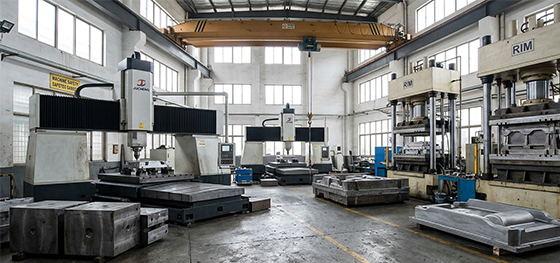
Dominating the large-format hardware market requires a partner that doesn't just mold plastic, but masters the economics of scaling. Jucheng Precision operates with a 24/7 manufacturing mindset in our Shenzhen precision manufacturing hub, delivering high-tolerance RIM components and structural industrial robot parts with industry-leading speed. Jucheng Precision provides the bridge to production that ensures your innovations move from CAD to field trial with 100 percent metallurgical confidence. Jucheng Precision has No MOQ, allowing you to source 1 to 10 units for high-stakes investor pitches without the crushing cost of mass-production tools.
Integrating your structural design with Jucheng Precision’s expertise ensures that your large RIM molded parts decision is based on performance data, not guesswork. Jucheng Precision offer comprehensive DFM reviews within 24 hours, identifying potential gas-trap zones or wall-thickness bottlenecks in your design before they become field failures. Whether you are building an autonomous medical assistant or a heavy-duty industrial mobile base, Jucheng Precision provides the rigid, precise, and *chemicals-optimized* foundations that keep your innovation moving through the high-speed cycles and the years of hard labor.
Our facility is equipped with oversized hydraulic presses and dedicated quality labs, allowing Jucheng Precision to manage the entire hardware lifecycle in one location. Jucheng Precision manage the complexity of multi-material bonding and automotive-grade finishing so your engineering team can focus on the motion control and the AI. By combining Shenzhen's speed with industrial-grade material verification and global quality standards, Jucheng Precision remains the preferred partner for the world's most aggressive hardware challenges. Contact the Shenzhen hub today to start your next 4-day rapid delivery project.
FAQ: Real Answers for Sizing, Shipping, and Tooling Logistics
What is the absolute maximum part length Jucheng can RIM mold?
We regularly produce monolithic structural panels up to 2,500mm in length with consistent wall thickness and zero voids.
Can large RIM parts be CNC machined after molding?
Yes. We use our oversized 5-axis CNC units to finish-machine critical bearing seats and sensor mounts with +/- 0.05mm accuracy on molded parts.
How do you handle the international shipping of 2-meter parts?
Jucheng Precision provide custom-fitted wooden flight cases with internal shock-dampening for all international air-freight to prevent transit damage.
Is aluminum tooling durable enough for a 2,500mm part?
Yes. Under the low-pressure conditions of the RIM cycle, our aluminum tools maintain sub-millimeter tolerances for up to 10,000 shots.
What is the typical lead time for a fleet of 50 Beta units?
From final CAD to delivered parts, the typical lead time is 18 to 22 business days, including aluminum tool fabrication and painting.
Tooling debt and oversized part warpage are absolute innovation killers for high-end robotic systems. Partnering with Jucheng Precision ensures that your functional iterations are built with the cost-effective polyurethane reaction injection molding and specialized large RIM molded parts knowledge the industry demands. Reach out to our Shenzhen manufacturing hub today for a complete DFM review and build the unyielding foundation your autonomous fleet requires.

ㆍPrivacy: We respect your privacy. Here you can find an example of a non-disclosure agreement. By submitting this form, you agree to our terms & conditions and privacy policy.
