


Blueprints are two-dimensional lies that demand a physical witness to be understood by the human eye. In the expansive landscape of 3D printing industry applications, the built environment has found a new medium of expression that bypasses the fragile labor of the traditional model-maker. This is the tactical world of 3d printing architecture. It is a sector that has moved past simple massing blocks to embrace the era of "Parametric Realism"—the ability to manifest complex, algorithmically derived facades and urban master plans with the fluidity of a digital file. When a design requires a twisting skyscraper skin or an intricate internal atrium that would take weeks to assemble from foam board, industrial additive manufacturing provides the structural speed and geometric fidelity needed to secure a design competition victory.
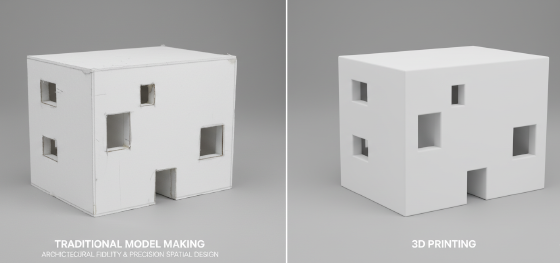
JUCHENG operates as a high-fidelity hub for the world’s most ambitious architectural firms. We recognize that an architectural model is more than a toy; it is a legal and aesthetic contract between the architect and the stakeholder. By utilizing our massive large-format SLA platforms, we eliminate the "seams" and glue joints that ruin the visual continuity of large scale models. We understand that success in this sector is found in the resolution of the fine details—the window mullions, the textured cladding, and the precise topography of the site. This guide moves beyond the basic massing models to explore the physics of resin transparency, the logic of monolithic builds, and why JUCHENG’s commitment to gallery-quality post-processing ensures your spatial visions are delivered with absolute professional integrity.
Efficiency in spatial design is won through the removal of manual fabrication errors. When you can print an entire building core in a single cycle, you ensure that every floor plate is perfectly aligned and every aperture is sharp. Whether you are building a high-fidelity museum model or a large-scale urban development plan, the logic of the print is your most persuasive presentation tool. Let us break down the technical pillars of architectural additive solutions and see how technical foresight can lock the soul of your next spatial design into physical reality.
Facade Complexity: Resolving Parametric Designs in Resin
Monolithic Scale: The Power of 800mm SLA Platforms
Material Aesthetics: Simulating Glass, Stone, and Steel
Prototyping Velocity: Accelerating the Design Cycle
JUCHENG’s Finishing Artistry: From Raw Print to Gallery Ready
Facade Complexity: Resolving Parametric Designs in Resin
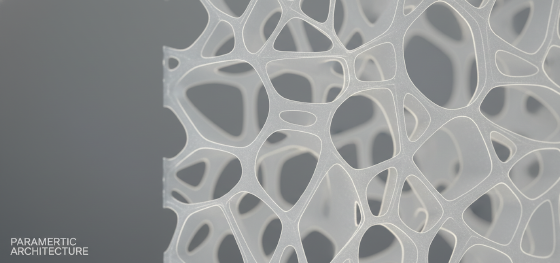
Modern architecture is increasingly defined by "Non-Standard" geometry—curved, organic, and interlocking facades that defy traditional drafting. Replicating these designs in a physical model used to require a master craftsman and months of labor. 3d printing architecture has solved this geometric crisis. By utilizing SLA (Stereolithography), we can resolve features as small as 0.05mm, allowing us to print the microscopic textures of a perforated metal skin or the complex curvature of a glass curtain wall with absolute fidelity.
The technical advantage of resin-based printing for architecture is the lack of "directional grain." Unlike FDM, which leaves visible layer ridges that can obscure fine window details, SLA produces isotropic surfaces that are smooth in every axis. This is vital for "Parametric Design," where light and shadow play across complex surfaces. JUCHENG’s high-resolution systems ensure that the shadow-gap in your facade is exactly as you designed it in Rhino or Grasshopper. We don't just provide a representation; we deliver a physical clone of your digital math. This allows architects to test the visual impact of their building’s "skin" under different lighting conditions, providing a level of aesthetic validation that ensures the final structure looks exactly as promised.
Monolithic Scale: The Power of 800mm SLA Platforms
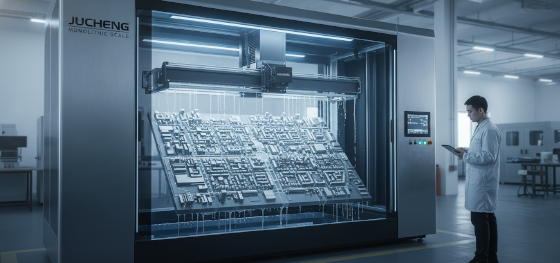
Scale is the primary metric of architectural awe. In many additive facilities, large models must be "sliced" into small chunks and glued together, leaving behind unsightly seams that ruin the monolithic feel of a building. JUCHENG has dismantled this limitation by investing in massive, industrial-tier SLA machines with build envelopes up to 800mm. This allows us to print entire skyscrapers or large sections of an urban site plan as a single, seamless block.
The structural integrity of a monolithic print is superior to an assembled one. There is no risk of a glue joint failing during transit, and the dimensional accuracy remains perfect across the entire length of the part. For master planning projects, we can print multiple city blocks on a single platform, ensuring that the relationships between buildings are captured with technical certainty. This scale capability is a cornerstone of our service within the 3D printing industry applications portfolio. We help you move beyond the "puzzle-piece" mindset, delivering large-format models that have the weight, presence, and crispness of a museum artifact. By removing the assembly bottleneck, JUCHENG ensures your large-scale visions are delivered with a visual purity that glue and seams simply cannot provide.
Material Aesthetics: Simulating Glass, Stone, and Steel
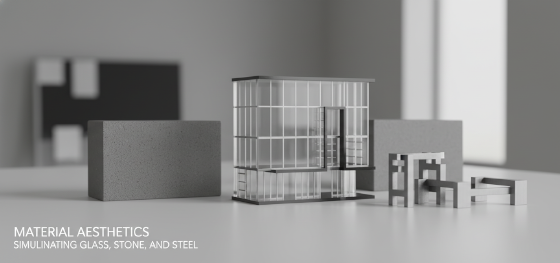
An architectural model is a visual lie that must be believable. To communicate the "Materiality" of a building, the model must differentiate between the transparency of glass, the weight of concrete, and the luster of steel. JUCHENG utilizes a specialized library of 3D printing materials to replicate these diverse textures. We utilize clear resins that, when polished, provide the exact refractive index of glass, allowing for the creation of models with visible internal atriums and complex fluid fluid fluid fluid fluid flow paths.
For the "Stone" elements of a design, we utilize matte-finish resins or specialized ceramic-filled polymers that offer the cool-to-the-touch density of concrete. We can also integrate 3D printed metal components—using our DMLS titanium or aluminum lines—to provide the structural skeleton for high-end exhibition models. This multi-material capability is what allows JUCHENG to produce "High-Fidelity" prototypes that go beyond shape to communicate weight and light. We don't just print in "plastic white"; we provide an engineered palette of finishes that allow you to show your clients exactly how the different materials of their building will harmonize in reality. This aesthetic depth is vital for securing approvals from stakeholders who need to "see" the final building before the foundation is even dug.
Prototyping Velocity: Accelerating the Design Cycle
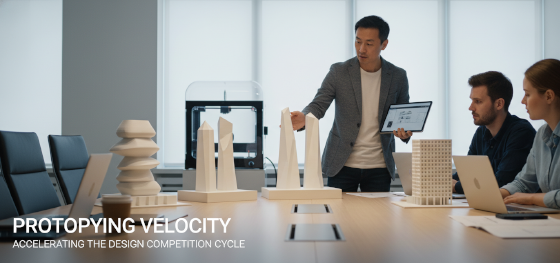
Architecture is a process of constant revision. In a traditional model shop, a design change on a Friday means the model is useless by Monday. 3d printing architecture replaces this "Sunk Cost" with a high-speed digital loop. Because the model is grown directly from the CAD data, a design change is as simple as re-uploading a file. At Jucheng Precision, we operate a 24/7 additive floor, allowing us to deliver complex massing models or facade iterations in 48 to 72 hours.
This "Prototyping Velocity" is a strategic weapon during the bidding phase. We allow architectural teams to explore multiple massing options or facade patterns simultaneously, providing the physical data needed to make rapid design decisions. If a client wants to see how a building looks with 10% more glazing, we can provide that physical answer the same week. This agility reduces the risk of expensive errors discovered late in the construction cycle. We don't just ship models; we ship speed. By compressing the time between a digital concept and a tangible object, JUCHENG enables your team to stay agile, responsive, and innovative in a market where the fastest firm often wins the contract.
JUCHENG’s Finishing Artistry: From Raw Print to Gallery Ready
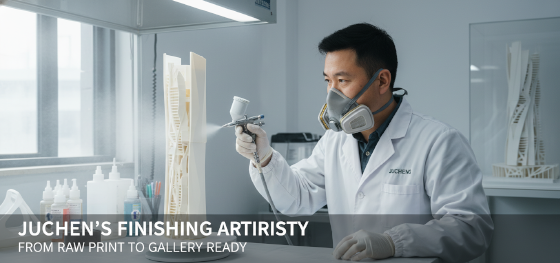
The final hallmark of a world-class architectural facility is the pursuit of aesthetic perfection. A raw 3D print is a technical achievement; a finished JUCHENG model is an art piece. We understand that architectural models are often the centerpieces of galleries and sales offices. Our dedicated finishing lab utilizes professional automotive-grade paints and specialized clear-coats to transform raw resin into a premium finished product.
Our finishing protocol includes multi-stage sanding and vapor smoothing to ensure that every surface is flawlessly uniform. We can apply custom textures—like a "brushed metal" look for window frames or a "grit-texture" for ground-planes. We also integrate electronics directly into our models, including LED lighting systems that allow your model to "glow" from within, simulating the building’s nocturnal appearance. This attention to the "Visual Soul" of the part is why JUCHENG is the preferred partner for global icons in the spatial design world. We bridge the gap between industrial additive manufacturing and artisanal craftsmanship, providing you with a model that is as inspiring as the architecture it represents. Contact Jucheng Precision today for a technical DFM review and see how our large-format additive protocols can clarify and elevate your next spatial masterpiece.

