


For years, 3D printing lived in the shadow of its own name. The word "prototyping" was attached to it. It was seen as a tool for making temporary models. A stepping stone on the way to "real" manufacturing.
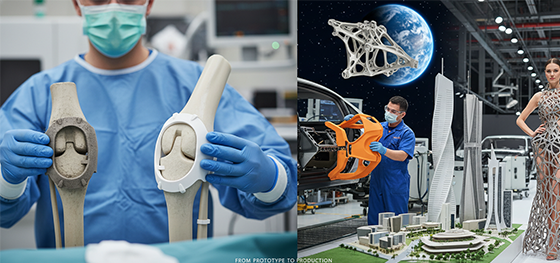
That era is over. The stepping stone has become the destination.
Today, Industrial 3D Printing is a powerful, direct manufacturing technology. It is not just for making models anymore. It is for making final, end-use parts. This is not a future prediction. It is happening right now, across a huge range of industries. These real-world 3D printing industry applications are changing what is possible.
content:
Redefining 'Custom': The Medical Revolution
Chasing Lightness: Aerospace and Aviation
Accelerating Innovation: The Automotive Edge
Building the Impossible: Architectural Visions
Freedom of Form: The Fashion Frontier
Redefining 'Custom': The Medical Revolution
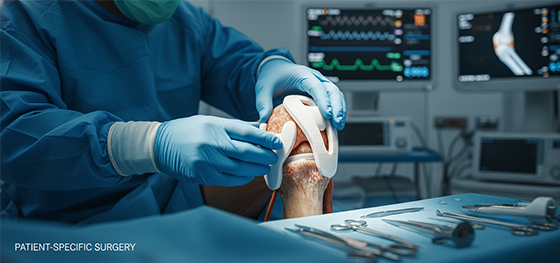
Perhaps no industry has been more profoundly impacted than medicine. 3D printing has unleashed a new era of "patient-specific" medicine.
Before a complex surgery, a doctor can take a patient's CT scan. They can use this data to 3D print an exact replica of the patient's unique anatomy. This allows the surgeon to practice the surgery beforehand, reducing risk and improving outcomes.
Even more powerfully, they can design and print custom surgical guides. These are tools that snap onto the patient's bone during surgery, guiding the surgeon's drill or saw with perfect accuracy. This is not a prototype. It is a sterile, end-use medical device.
And for permanent solutions, metal 3D printing (DMLS) is used to create custom orthopedic implants, like hip and knee replacements. The technology can create porous surfaces that encourage the patient's own bone to grow into the implant, creating a stronger, more permanent bond.
Chasing Lightness: Aerospace and Aviation
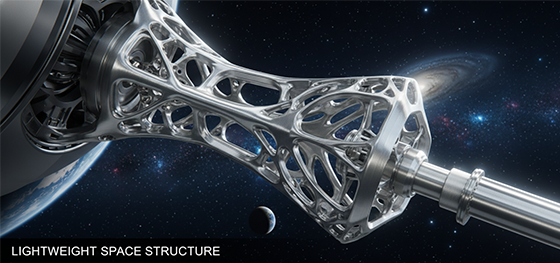
In the aerospace industry, weight is everything. Every gram saved is fuel saved. 3D printing is a revolutionary tool in this quest for lightness.
Using a design technique called "topology optimization," engineers can use software to figure out the absolute minimum amount of material needed for a part to do its job. The resulting designs are often bizarre and organic. They look like alien skeletons.
These "generative designs" are impossible to make with traditional CNC machining. But they are perfect for metal 3D printing. The laser can build these complex shapes, layer by layer, from high-strength, lightweight materials like Titanium and Aluminum.
The result is a new generation of aircraft and satellite brackets that are 30-50% lighter than their machined counterparts, but just as strong. These are not prototypes. They are flying on commercial jets and orbiting the Earth right now.
Accelerating Innovation: The Automotive Edge

While the automotive industry uses 3D printing extensively for prototyping, it is also a powerful tool for the factory floor itself.
A modern car assembly line needs hundreds of custom tools, jigs, and fixtures. These are devices that hold parts in the correct position during assembly. Traditionally, these tools were expensive and slow to make with CNC machining.
Now, automotive companies are 3D printing them. Using tough, durable materials like Carbon Fiber Nylon, they can design and print a custom fixture in a single day, at a fraction of the cost.
This makes the assembly line more agile. If a design changes, they can print a new tool overnight. It saves a huge amount of time and money in the manufacturing process. These are not prototypes. They are the workhorses of the modern factory.
Building the Impossible: Architectural Visions
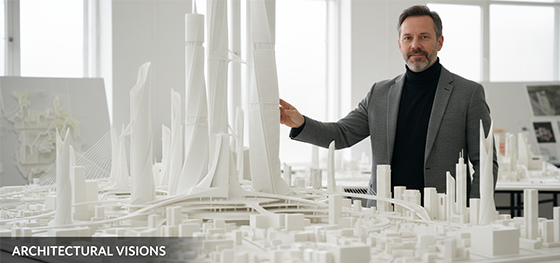
For architects, 3D printing is a tool for communicating a vision. Before spending millions on construction, an architect needs to show their client a physical model.
Traditionally, these models were painstakingly built by hand from wood and cardboard. This was slow, expensive, and limited in detail.
Today, large-format SLA 3D printing has revolutionized architectural models. A printer can run for days, creating a huge, single-piece model of an entire city block or a complex skyscraper.
The level of detail is incredible. The printer can replicate every window, every balcony, every intricate facade. These are not just blocky representations. They are stunning, art-like representations of the final vision. They are the ultimate communication tool.
Freedom of Form: The Fashion Frontier
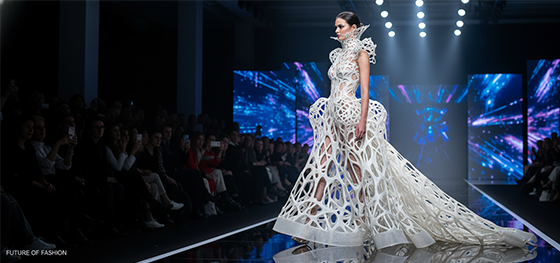
The fashion industry is always pushing boundaries. 3D printing is giving designers a completely new set of tools to express their creativity.
Using tough but flexible materials like Nylon powder (in an SLS process), designers can create wearable items with geometries that are impossible with traditional textiles.
Think of a dress made from a complex, interlocking lattice structure that moves with the body. Or a custom-fit, futuristic piece of jewelry or eyewear that is printed to the exact dimensions of the wearer.
These are not just prototypes. They are the final, haute couture products themselves. This is one of the most exciting 3D printing industry applications, where the technology is not just solving an engineering problem, but creating a new form of art.

