


Choosing an Industrial 3D Printing technology can feel like choosing a vehicle for a journey. Do you need the surgical precision of a race car? The rugged, all-terrain capability of a truck? Or the raw power of a rocket?
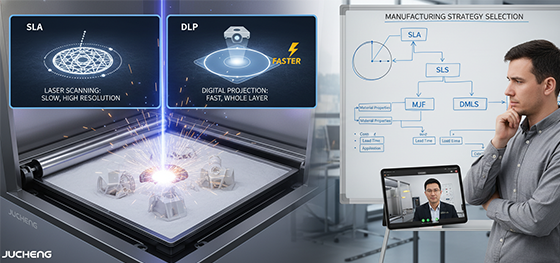
They are all "vehicles," but choosing the wrong one for your specific journey will lead to failure. The same is true for the 3D printing process. SLA, SLS, MJF, DMLS... they are not just a collection of acronyms. They are fundamentally different tools, each designed for a specific mission.
This guide will act as your compass. We will navigate the landscape of these core industrial processes, not by their names, but by how they work and what they do best.
Working with Liquids: Vat Polymerization
A Spotlight on Speed: Digital Light Processing (DLP)
Building with Powder: Powder Bed Fusion
From Powder to Steel: Metal 3D Printing
Making an Informed Choice
Working with Liquids: Vat Polymerization
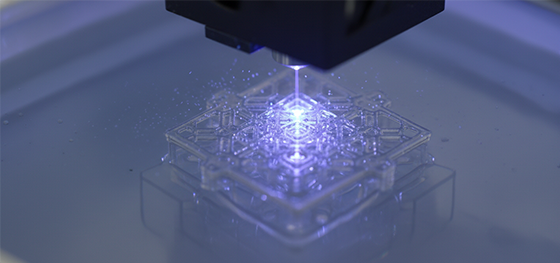
This family of processes creates parts from a liquid photopolymer resin. It is the art of turning liquid into solid with light.
The most well-known technology is Stereolithography (SLA). An SLA machine has a vat of translucent liquid resin. A build platform lowers into the vat. Then, a highly precise ultraviolet laser beam traces the cross-section of the part onto the surface of the resin.
Where the laser hits, a chemical reaction called photopolymerization occurs. The liquid cures and hardens instantly. The platform then lowers by one layer-height, and the laser draws the next layer.
The superpower of SLA is its incredible accuracy and surface finish. Because it uses a tiny laser point, it can create extremely fine details. The resulting parts are almost perfectly smooth. This makes SLA the number one choice for visual prototypes, master patterns for casting, and any part where cosmetic appearance is critical.
A Spotlight on Speed: Digital Light Processing (DLP)
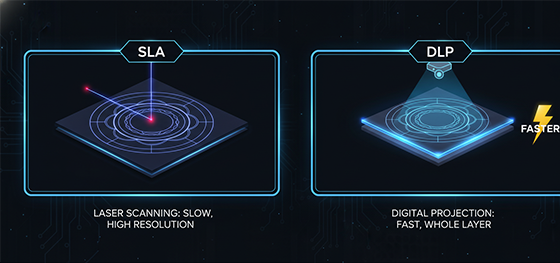
A close cousin of SLA is digital light processing 3d printing, or DLP. It also uses a vat of liquid resin. But it has a different light source.
Instead of a single laser point that has to trace the entire layer, a DLP machine uses a digital projector. It flashes an image of the entire layer all at once, like a slide in a slide projector.
This has one huge advantage: speed. It does not matter how complex the layer is. It is cured in a single flash that takes only a few seconds. This makes DLP much faster than SLA, especially for large, dense parts or for printing many small parts at once. While the resolution might be slightly lower than the very best SLA machines, the speed advantage is often a critical factor.
Building with Powder: Powder Bed Fusion
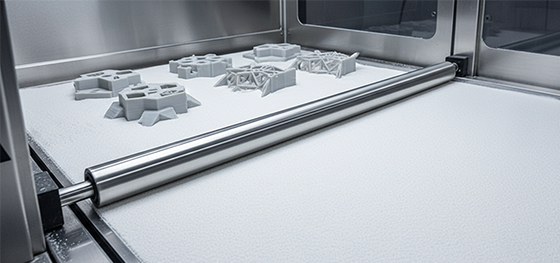
This family of processes works with a completely different material state: a fine polymer powder.
In Selective Laser Sintering (SLS), a roller spreads a very thin layer of powder (usually Nylon) over a build platform. A powerful CO2 laser then quickly scans the cross-section of the part. Where the laser hits, it sinters, or fuses, the powder particles together into a solid mass.
Multi Jet Fusion (MJF) is a similar process, but it uses an inkjet array to print a fusing agent onto the powder where the part should be. A heat lamp then passes over the bed, and the areas with the fusing agent absorb the energy and melt into a solid layer.
The superpower of these processes is that they produce very tough, durable, functional parts. The Nylon material is strong and slightly flexible. Even better, the surrounding, unsintered powder acts as a support structure during the build. This means you can create very complex, interlocking geometries with no need for separate support structures.
From Powder to Steel: Metal 3D Printing
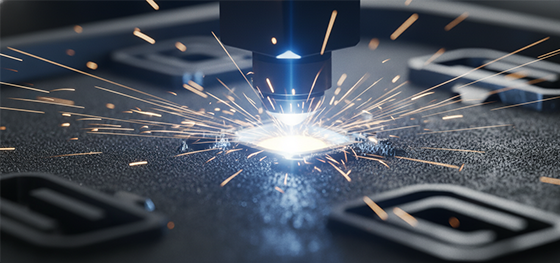
Direct Metal Laser Sintering (DMLS) is in the same family as SLS, but it is a much more extreme process. It uses a bed of very fine metal powder, such as Stainless Steel, Aluminum, or Titanium.
A much more powerful fiber laser is used. It does not just sinter the powder. It fully melts it, creating a tiny, mobile weld pool. The laser scans the layer, welding the powder together into a completely solid, dense metal.
The process must take place in a sealed chamber filled with inert gas, like argon. This prevents the hot metal from reacting with oxygen in the air.
The superpower of DMLS is obvious. It can create fully dense metal parts with complex internal features that are impossible to make with traditional CNC machining. It is a game-changing technology for aerospace, medical, and high-performance automotive applications.
Making an Informed Choice
So, which process is right for you? It always comes back to your part's mission.
If your mission is a beautiful, smooth surface, the answer is a liquid-based process like SLA or DLP.
If your mission is a tough, durable, functional part with complex geometry, the answer is a powder-based process like SLS or MJF.
If your mission is a complex metal part that cannot be machined, the answer is DMLS.
Understanding these fundamental differences is the first step. The next step is talking to an expert. A manufacturing partner like JUCHENG, who operates all of these technologies, can give you unbiased advice. We can help you choose the vehicle that will get your project to its destination successfully.

