


Innovation in the world’s most demanding hardware hubs is a relentless race against time. In the sophisticated corridors of Akihabara’s robotics labs and the sprawling automotive research centers surrounding the Kanto plain, the ability to manifest a physical component from a digital rendering is the primary engine of market survival. Tokyo has long been the global standard for mechanical excellence, yet even here, the traditional prototyping cycle often creates a dangerous bottleneck. High-precision tooling for injection molding can take months to deliver, while domestic boutique bureaus often struggle with the capacity for industrial-scale batches. This is where 3d printing tokyo transitions from an occasional R&D tool into a critical cornerstone of the high-tech supply chain. It represents a move toward "Digital Agility"—the capacity to produce flight-certified titanium nodes or injection-molded quality nylon housings in as little as 72 hours.
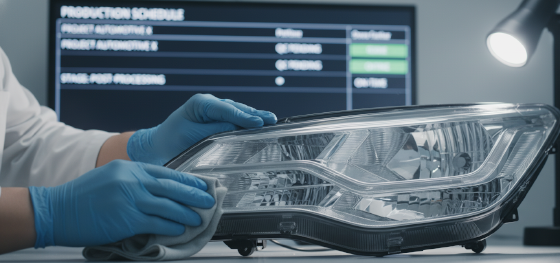
At JUCHENG, we recognize that a Tokyo-based engineering team isn't just looking for a "3D print"; they are looking for a technical sanctuary capable of bridging the gap between an anatomical medical file and a validated, sterile-ready component. We operate as an integrated manufacturing hub that understands the unique cultural and technical reverence for precision in the Japanese market. By integrating our 25 high-performance 5-axis CNC centers with our industrial MJF and DMLS fleets, we provide a unified roadmap for high-stakes innovation. We understand that success in 3d printing tokyo is found in the final five microns of a bearing seat and the absolute material traceability required for regulatory compliance. This 2,000-word guide explores the thermodynamic grit of functional prototyping, the architectural shifts in robotic end-effector design, and why JUCHENG’s integrated approach to 3D Printing Tokyo ensures your hardware thrives in the field, not just on the drawing board.
Profitability in hardware development is won by those who can fail fast and iterate faster. You aren't just buying a polymer shape; you are buying the right to trust your engineering data before committing to expensive production tooling. Whether you are building an innovative heart-pump prototype or a high-torque robotic gripper, the logic of the print is your greatest competitive asset. Let us break down the technical pillars of industrial additive manufacturing and see how JUCHENG transforms digital data into physical certainty for Tokyo's engineering elite.
Industrial Precision: Moving Beyond Desktop Limitations in Japan
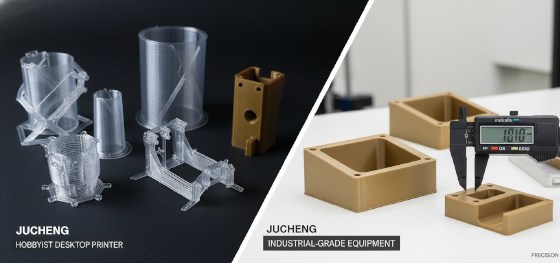
The biggest trap in the current 3d printing tokyo market is the "Desktop Delusion." Many local firms rely on small-scale, open-frame printers for their early R&D, assuming that these machines provide a valid representation of industrial quality. For engineers in Tokyo’s precision-gear and high-frequency electronics sectors, this is a dangerous assumption. A desktop machine might manage the shape, but it cannot manage the thermodynamics. Without an actively heated chamber and industrial-grade laser control, high-performance polymers like PEEK 3D Printing or Ultem will suffer from interlayer delamination and microscopic voids.
JUCHENG eliminates this technical risk by providing Tokyo’s designers with access to an elite manufacturing tier. Our facility operates industrial-grade SLS, MJF, and SLA systems capable of holding tolerances as tight as +/- 0.1mm over large spans. We understand that a component for a high-speed assembly line in Ota City requires a level of dimensional lock that only a stabilized build environment can provide. By removing the "graininess" and instability of hobbyist hardware, we deliver prototypes that possess the structural spine needed for functional assembly. We treat the 3D printing process as a rigorous aerospace discipline, ensuring that your parts meet the mechanical expectations of Japan’s most critical engineering firms. For us, "good enough" is a failure; we aim for the same sub-micron fidelity in our additive work that Tokyo’s machinists expect from a precision mill.
Functional Resilience: MJF and SLS for Robotics Excellence
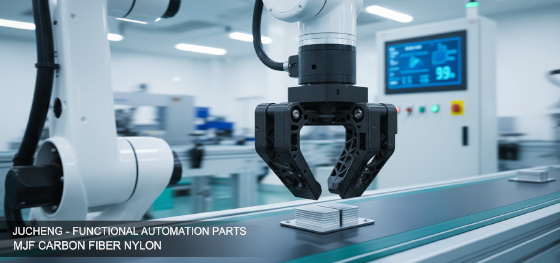
Tokyo is the undisputed global epicenter of robotics innovation. From the articulated joints of humanoid servants to the high-speed end-effectors of automotive production lines, the requirement for lightweight strength is absolute. Traditional aluminum grippers are often too heavy, limiting the acceleration and payload of the arm. This is where 3d printing tokyo through Multi Jet Fusion (MJF) and Selective Laser Sintering (SLS) offers a radical advantage. These technologies allow JUCHENG to "grow" skeletal, topologically optimized frames that are 60% lighter than metal but possess the rigidity of an industrial polymer.
The technical brilliance of JUCHENG’s MJF line lies in its isotropic strength. Because the infrared lamps fuse the Nylon 12 powder with such intensity, the bonds between layers are as strong as the material within the layer. This mechanical predictability is vital for Tokyo’s automation engineers. You can design complex pneumatic manifolds with internal air channels integrated directly into the robot’s "hand," eliminating the need for heavy external hoses and fittings. We utilize Carbon-Fiber reinforced nylons to provide the mechanical modulus needed for high-torque brackets that must survive millions of cycles without fatigue. By leveraging the geometric freedom of additive manufacturing, we help our Japanese partners build robots that move faster, consume less energy, and require zero maintenance on their structural joints. We don't just print parts; we engineer the kinetic future of Tokyo’s factories.
Optical Fidelity: SLA Prototypes for Automotive Lighting
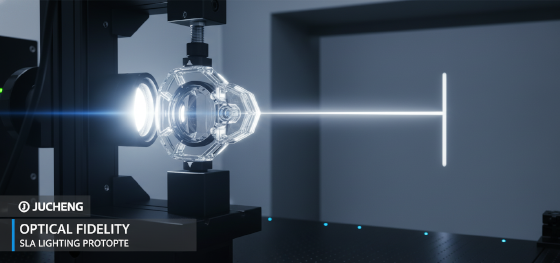
The visual soul of a modern vehicle is defined by its lighting signature. Tokyo’s automotive giants are constantly pushing the boundaries of LED light pipes, thick-walled lenses, and intricate reflectors. Prototyping these components is the ultimate test of 3d printing tokyo capability. Any internal haze, microscopic bubble, or surface ripple will cause light scattering, ruining the beam pattern and making photometric testing impossible. JUCHENG has developed a specialized workflow for high-fidelity optical prototypes.
We utilize ultra-clear SLA resins specifically formulated for minimal yellowing and high refractive stability. Achieving "Glass-Like" clarity is a two-stage battle. First, we print with thin layer heights (25 microns) to minimize the stair-step effect. Second, the part moves to our integrated finishing lab for Vapor Smoothing and multi-stage mechanical buffing. This process melts the microscopic tool marks, creating a lens that is indistinguishable from a production-grade injection molded part. Our lighting prototypes allow Japanese Tier 1 suppliers to verify their nocturnal brand identities on a light bench within days of finalizing a CAD file. By providing this level of visual honesty, we ensure that your R&D data is a reliable roadmap for final production, saving months of lead time and millions in potential mold revisions.
Metallurgical Sovereignty: DMLS Titanium for Aerospace Nodes

Metal is the ultimate frontier of structural integrity, especially for the high-stakes aerospace and satellite sectors headquartered around the Tokyo Bay area. For decades, titanium parts were limited by the massive costs of specialized forged tooling and the slow, tool-destroying nature of CNC milling. DMLS (Direct Metal Laser Sintering) has fundamentally liberated these designs. By utilizing a 400W fiber laser to micro-weld particles of Grade 5 (Ti-6Al-4V) or Grade 23 (ELI) titanium powder, we can now grow skeletal structures that possess a strength-to-weight ratio that was previously the domain of theory.
Achieving success in 3d printing tokyo for aerospace requires a technical mastery of the "Melt Pool." It isn't just about melting dust; it is about managing a high-speed metallurgical event that occurs in an inert argon environment. JUCHENG utilizes advanced build strategies that achieve 99.9% theoretical density, ensuring that your parts are free of the microscopic porosity that leads to fatigue failure in flight. We also implement mandatory vacuum stress-relief cycles for every titanium build, relaxing the internal crystalline structure to prevent the warping and delamination that often occur in lower-tier additive shops. This level of metallurgical sovereignty allows our Japanese partners to replace heavy, assembled brackets with monolithic, topologically optimized titanium parts that survive the violent vibrations of a launch or the extreme thermal cycling of orbit. We bridge the gap between digital topology and physical survival.
Supply Chain Velocity: From Global Hub to Tokyo Doorstep

Geography is a solved problem in the modern industrial landscape. For an engineering team in Minato or Chiyoda, the physical location of the machine spindle is less important than the speed and reliability of the data loop. JUCHENG has re-engineered the 3D printing process to function as a seamless extension of Tokyo’s agile R&D cycles. We recognize that waiting ten days for a domestic prototype is often slower than receiving a high-fidelity component from our integrated facility in three.
Efficiency in logistics is won through digital integration and dedicated customs protocols. We utilize a "Fast-Track Japan" lane for all 3d printing tokyo orders, ensuring that parts move from our final CMM inspection directly to priority air-freight handlers. By managing the entire value chain—from material procurement to professional finishing—under one roof, we eliminate the vendor-to-vendor handoffs that cause most international manufacturing delays. When you upload a file on a Monday, you are often holding the physical part by Thursday. This velocity is vital for Tokyo’s electronics and automotive sectors, where a missed milestone can cost millions in market share. We don't just ship parts; we deliver the temporal agility needed to keep your innovation cycles moving at the speed of light, proving that our global hub is functionally closer to your desk than a traditional local machine shop.
Quality Standards: ISO 13485 and IATF 16949 for Global Compliance

Choosing a manufacturing partner for the healthcare or EV sectors is a decision of technical liability. In the high-fidelity landscape of Tokyo’s medical device market, a component without a documented quality pedigree is a dangerous risk. JUCHENG operates as a validated facility, certified to both ISO 9001 and ISO 13485:2016 standards. This is not just a certificate; it is our "Regulatory Sovereignty." It means every medical-grade PEEK implant or surgical guide we produce is backed by a proactive risk-management culture and full lot-based traceability.
Our automotive protocols are equally rigorous, aligned with the IATF 16949 mindset of zero-defect production. We perform PFMEA (Process Failure Mode and Effects Analysis) for every new industrial project, identifying and mitigating thermal and mechanical risks before a single chip is cut or a single droplet is jetted. This technical discipline ensures that your functional prototypes for Tokyo’s EV platforms aren't just visual mockups—they are verified mechanical benchmarks. We provide the CMM inspection heatmaps and material certifications required to pass the most stringent internal quality audits of Japan’s corporate giants. By mirroring the technical reverence of our clients, we ensure that your 3D printed components arrive validated for performance, protecting your brand's integrity and accelerating your journey toward regulatory approval.
Collaborative DFM: Engineering Partnerships for Japan's Innovators
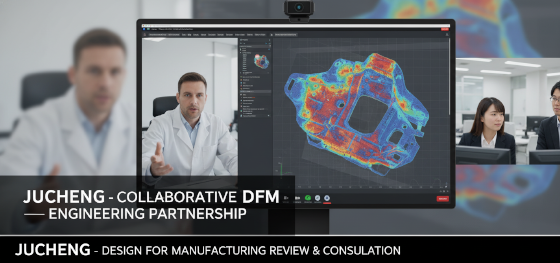
The real value of 3d printing tokyo at JUCHENG is found in the removal of geometric compromise. Too many shops act as passive "printers," merely following a CAD file without understanding its functional destiny. We operate as a collaborative engineering partner. Our DFM (Design for Manufacturing) team analyzes your complex assemblies to identify opportunities for "Part Consolidation"—merging five separate components into a single monolithic 3D printed part to reduce weight and eliminate fasteners.
This partnership extends into the realm of "Material Optimization." If we see a Tokyo designer specifying expensive titanium for a part that only sees static room-temperature loads, we will suggest a more cost-effective nylon or aluminum alternative. We utilize advanced simulation software to predict the thermal behavior of your parts during the build, suggesting radii modifications or support strategies that preserve surface finish and dimensional lock. When you engage with JUCHENG, you are engaging with a decade of industrial data and a team that speaks the technical language of your specific industry. We clarify the complex, elevate the possible, and ensure your next hardware breakthrough is armored for the real world. Visit our dedicated service page for 3D Printing Tokyo to learn more about our regional support. Let our engineers help you build a bigger, better, and more profitable physical reality.
Technical Verdict: Accelerating Tokyo’s Industrial Vision
Success in Japan’s most demanding industrial hub requires a manufacturing partner that matches its intensity. The decision to outsource your additive needs is a move toward strategic agility. By utilizing JUCHENG’s integrated 5-axis CNC and high-fidelity 3D printing systems, you are buying the ability to fail fast and fix faster. We remove the uncertainty of material choice and the friction of the supply chain, delivering engineered components that fit your assembly the first time.
Don't let the high cost of traditional tooling or the low quality of desktop prints stifle your innovation. Experience the clarity and the capability that professional, industrial-grade 3D printing can bring to your next Tokyo-based project. We bridge the gap between digital theory and the visceral reality of hardware that survives. From the first prototype to the 500-unit batch, Jucheng Precision provides the technical rigor and the massive capacity to deliver perfection. Contact our engineering team today for a comprehensive DFM review and see how our global manufacturing protocols can armor your next breakthrough in the robotics, automotive, or medical sectors.

